
When the words of the inspired pen are given a meaning different from what the inspired writings reveal by context and consensus, confusion invariably results. A recent online article claiming the church to be at the crossroads regarding “legalism” and “righteousness by faith” offers a classic example of this confusion [1].
The article begins with the following statement:
The Bible itself rarely suggests that one must give assent to a checklist of beliefs to be saved, and never as a condition for relationship with God. Jesus certainly didn’t go around quizzing people on doctrine before healing them, feeding them, or calling them to discipleship. His encounters were marked by grace, not doctrinal exams [2].
Jesus on Salvation
I would suggest this author check her Bible again, starting with the words of Jesus. While our Lord certainly never “quizzed” anyone before healing or feeding them—neither have any Adventists of my acquaintance, past or present—He certainly made plain, more than once, the conditions of discipleship.
When tempted by Satan in the wilderness, Jesus declared that man shall live “by every word that proceedeth out of the mouth of God” (Matt. 4:4). (“Every word” includes the beasts as well as the Beatitudes, Daniel 8:14 as surely as John 3:16, Revelation 13 as truly as First Corinthians 13.) To those gathered in the temple on a later occasion, Jesus admonished: “If ye continue in My Word, then are ye My disciples indeed” (John 8:31). That sounds quite doctrinal to me.
When the rich young ruler asked Him about the conditions of salvation, He declared, “If thou wilt enter into life, keep the commandments” (Matt. 19:17). Jesus was clear, of course, that such obedience can’t be rendered in our own strength. When the young man walked away after learning the conditions for receiving eternal life, the disciples asked, “Who then can be saved?” (verse 25). Jesus replied, “With men this is impossible, but with God all things are possible” (verse 26).
When the lawyer to whom Jesus told the Good Samaritan story asked the same question, Jesus gave the same answer (Luke 10:25-28). And in His parable of the sheep and the goats, Jesus was clear that how we treat the disadvantaged and downtrodden will decide our eternal destiny (Matt. 25:31-46).
The Biblical Imperative of Sound Doctrine
Jesus’ statement about living “by every word” from the mouth of God is taken, of course, from the Old Testament (Deut. 8:3). Through the prophet Hosea God declared, “My people are destroyed for lack of knowledge; because thou hast rejected knowledge, I will also reject thee” (Hosea 4:6). The New Testament echoes the imperative of sound doctrine in such passages as Second Thessalonians 2:13, where the apostle Paul writes that “God hath from the beginning chosen you to salvation through sanctification of the Spirit and belief of the truth.” Elsewhere he admonished Timothy to “charge some that they teach no other doctrine” (I Tim. 1:3)—no other doctrine, in other words, than what the apostles were teaching. Elsewhere Paul wrote to the Galatians:
But though we, or an angel from heaven, preach any other gospel unto you than that which we have preached unto you, let him be accursed (Gal. 1:8).
It’s hard to read verses like the above and conclude that doctrinal correctness was merely optional to the first preachers of the Christian message. The connection between adhering to correct doctrine and being ultimately saved is underscored even more strongly by the apostle, when he writes to Timothy:
Take heed unto thyself, and unto the doctrine: continue in them: for in doing this thou shalt both save thyself, and them that hear thee (I Tim. 4:16).
The apostle wasn’t speaking here, of course, of a mere theoretical knowledge, as the Bible is clear in countless passages that God’s Word and law must be inscribed in the human heart in order for sin to be expelled and the human agent fitted for heaven (e.g. Deut. 30:14; Psalm 119:11; Jer. 31:31-34; Rom. 10:6-8; II Cor. 3:2-3; Heb. 8:8-10). When the written Word is in fact brought into the human heart, as the above verses state, it becomes transformative and ultimately saving, not merely something superficially acknowledged.
“Against Legalism”
The article in question claims—correctly, to be sure—that “from her earliest years, [Ellen White] was a clear and insistent voice against legalism” [3]. Yet, like those in American politics just now who apply without definition such incendiary labels as “socialism,” “Marxism,” “communism,” “fascism,” “woke,” and others we could mention, the article under review speaks of “legalism” without defining it. Such a broad use of this label, as with the political labels noted above, too often leads not to enlightened understanding, but to the closing of minds, the shutting down of dialogue, and knee-jerk polarization.
Ellen White is clear in her writings what “legal religion” and “legal obedience” are all about, in such statements as the following:
God has given us the rule of conduct which every one of His servants must follow. It is obedience to His law, not merely a legal obedience, but an obedience which enters into the life and is exemplified in the character [##4|Ellen G. White, The Desire of Ages, p. 523.##].
The spirit of bondage is engendered by seeking to live in accordance with legal religion, through striving to fulfill the claims of the law in our own strength [##5|——SDA Bible Commentary, vol. 6, p. 1077.##].
Commenting on Matthew 5:20, where Jesus declared, “Except your righteousness shall exceed the righteousness of the scribes and Pharisees, ye shall in no case enter into the kingdom of heaven,” Ellen White again distinguishes the works which cannot save from those which are in fact a condition of salvation. Speaking of pharisaic piety, she writes:
All their pretensions of piety, their human inventions and ceremonies, and even their boasted performance of the outward requirements of the law, could not avail to make them holy. They were not pure in heart or noble and Christlike in character.
A legal religion is insufficient to bring the soul into harmony with God. The hard, rigid orthodoxy of the Pharisees, destitute of contrition, tenderness, or love, was only a stumbling block to sinners…. The only true faith is that which “worketh by love” (Galatians 5:6) to purify the soul. It is as leaven that transforms the character.
All this the Jews should have learned from the teachings of the prophets. Centuries before, the cry of the soul for justification with God had found voice and answer in the words of the prophet Micah: “Wherewith shall I come before the Lord, and bow myself before the high God? Shall I come before Him with burnt offerings, with calves of a year old? Will the Lord be pleased with thousands of rams, or with ten thousands of rivers of oil? .... He hath showed thee, O man, what is good; and what doth the Lord require of thee, but to do justly, and to love mercy, and to walk humbly with thy God?” Micah 6:6-8 [##6|——Thoughts from the Mount of Blessing, pp. 53-54.##].
Notice how this statement draws a contrast between a “legal religion” devoid of contrition, tenderness, or love, and that “faith which worketh by love” (Gal. 5:6) that purifies the soul and brings Christlikeness of character. Notice again how legalism is not defined as including sanctified obedience in the conditions of salvation, with salvation by justification alone as the presumed remedy. Indeed, the above statement is clear that “the cry of the soul for justification with God” is answered by the prophet Micah, who declares God’s requirements—obviously for justification—as being “to do justly, and to love mercy, and to walk humbly with thy God” (Micah 6:8).
The article in question states that Ellen White “warned repeatedly against making law-keeping the ground of hope” [7]. Ellen White did warn often against making humanity’s own efforts the ground of hope, but the combining of human with divine effort is quite another matter. In one statement she makes it plain that the ground of our hope includes both imputed and imparted righteousness, as well as what this righteousness accomplishes in the Christian life:
So we have nothing in ourselves of which to boast. We have no ground for self-exaltation. Our only ground of hope is in the righteousness of Christ imputed to us, and in that wrought by His Spirit working in and through us [##8|White, Steps to Christ, p. 63.##].
The following Ellen White statements, echoing the words of Scripture (e.g. Matt. 7:21; 19:17; 25:31-46; Rom. 2:6-10; 8:13; Heb. 5:9), are clearer still that Spirit-empowered obedience—as distinct from fabricated piety produced in our own strength—is in fact the condition of our salvation:
Thank God, He attends us every step of the way through, if we are willing to be saved in Christ’s appointed way—through obedience to His requirements [##9|——This Day With God, p. 72.##].
In the strength of God alone can you bring yourself where you can be a recipient of His grace, an instrument of righteousness. Not only does God require you to control your thoughts, but also your passions and affections. Your salvation depends upon your governing yourself in these things [##10|——Testimonies, vol. 2, p. 561.##].
The work of gaining salvation is one of copartnership, a joint operation…. Human effort of itself is not sufficient. Without the aid of divine power it avails nothing. God works and man works [##11|——Acts of the Apostles, p. 482.##].
We are saved by climbing round after round of the ladder, looking to Christ, clinging to Christ, mounting step by step to the height of Christ, so that He is made unto us wisdom, and righteousness, and sanctification, and redemption. Faith, virtue, knowledge, temperance, patience, godliness, brotherly-kindness, and charity are the rounds of this ladder [##12|——Testimonies, vol. 6, p. 147.##].
An Ellen White Statement That Doesn’t Exist
The article in question, early in its discussion, quotes the following (alleged) Ellen White statement:
Let the law take care of itself. We are to fix the eye of faith upon Jesus, the Sin-bearer. We are to believe in Christ as our personal Saviour. Then we shall have love in our hearts for the fallen race as Christ had love for us (Signs of the Times, Sept. 5, 1905) [13].
One has a hard time believing Ellen White would tell the church to “let the law take care of itself,” when in fact her writings—like the Bible—contain countless pages exhorting God’s people to correct behavior, made possible by the empowerment of sanctifying grace. But in preparing for this article I searched the White Estate website for the above statement, and looked in the bound volumes of the Signs of the Times articles for the reference cited. Neither the statement nor the article from which it is supposedly taken could be found.
I then contacted the Center for Adventist Research here at Andrews University, and asked one of the workers to see if she could find the alleged statement. This was her reply to me, via e-mail:
I searched the https://egwwritings.org/ website, and I also could not find that she said that. I did find, however, that exact quote on Adventist Today. Maybe this is where you also saw it? I put that link below. If it's not coming up in the EGW Writings website, and it's not in the hard copy book, I would say it's a misquote [##14|E-mail of Karin Orsburn to Kevin Paulson, Sept. 18, 2025.##].
“Christ in the Law”
The article in question claims that Ellen White “called the emphasis on doctrinal correctness and law-keeping without Christ “dry as the hills of Gilboa that had neither dew nor rain” (Review and Herald, March 11, 1890)” [15]. No argument here. But the key phrase is “without Christ.” Unfortunately, the author of this article failed to quote the next sentence in the above Ellen White article, where she gives the solution to the problem. She writes in the next sentence: “We must preach Christ in the law” [##16|White, Review and Herald, March 11, 1890.##].
Notice how she doesn’t say, “Preach Christ, then the law,” or “Preach Christ, and the law will take care of itself, as the fictive Ellen White statement noted above would have us believe. Rather, she exhorts us to “preach Christ in the law,” as it is through the law and the doctrines of Holy Writ that Christ is revealed. Hence the following Ellen White statements:
All truth is to be received as the life of Jesus. Truth cleanses us from all impurity, and prepares the soul for Christ’s presence [##17|——Our High Calling, p. 208.##].
The whole Bible is a manifestation of Christ [##18|——The Desire of Ages, p. 390.##].
The Anti-Creedal Diversion
Like others of similar thinking, the author of the article in question accuses the church of “creedalism” for requiring church members to adhere to the 28 Fundamental Beliefs as a condition for joining the denomination [19]. She writes how the dictionary defines a creed as “a brief authoritative formula of religious belief” or “a set of fundamental beliefs” [20]. However, as I noted some years ago in an article of my own on this subject [21], there is in fact no Christian of my awareness—in or out of Adventism—who wouldn’t subscribe to a particular set of beliefs and moral principles, to which contradiction would be disallowed within the faith community.
If, for example, a religion professor on one of our campuses were to deny the deity of Christ or His bodily resurrection from the dead, one would be hard-pressed to find anyone who would defend the right of such a one to be employed by the church. If a professor in the same context were to advocate the intellectual and spiritual superiority of the white race over other races of humanity, it would be equally difficult to find anyone who would accuse the church of creedalism or intolerance for urging the termination of such a teacher.
Thus, when all is said and done, the question is not whether the church should require adherence to a particular set of doctrinal beliefs and moral standards as a condition of membership, but rather, to which beliefs and standards should the church require adherence as a condition of membership and institutional employment.
The claim of the article in question that “early Adventists would be aghast” at the present doctrinal requirements of the church relative to admission and membership retention [22], misses the point so far as the early Adventist opposition to creedalism was concerned. As was noted in my article referenced above [23], early Adventists did not oppose a doctrinal standard for the church that was based on Scripture. What they opposed was a doctrinal standard based on man-made traditions and ecclesiastical maxims, as is seen in too many of the popular churches of modern and postmodern times.
Conclusion: Distorting Inspired Language
Biblical righteousness by faith, as taught in Scripture and in the writings of the Spirit of Prophecy, has nothing to do with doctrinal and moral ambiguity or the distinguishing of one’s relationship with Christ from the doctrinal and moral imperatives taught in the Sacred Writings. Rather, the Bible doctrine of salvation through faith in Christ is about the writing of the law and the Word of the living God in the heart of the believer, thus making genuine obedience to the divine will a reality in the daily life.
By the same token, legalism as defined by the inspired writings has nothing to do with the necessity of obedience as a condition of salvation, but rather, with endeavoring to produce such obedience apart from Spirit-empowered conversion and sanctification. When words and phrases such as “legalism” and “righteousness by faith” are used in theological discourse, they must be defined by the inspired writings themselves, not distorted by scholarly speculation and experience-driven testimonies.
REFERENCES
1. Rhonda Dinwiddie, “Adventists at the Crossroads of Legalism and Righteousness by Faith,” Adventist Today, September 11, 2025 https://atoday.org/adventists-at-the-crossroads-of-legalism-and-righteousness-by-faith/
2. Ibid.
3. Ibid.
4. Ellen G. White, The Desire of Ages, p. 523.
5. ----SDA Bible Commentary, vol. 6, p. 1077.
6. ----Thoughts from the Mount of Blessing, pp. 53-54.
7. Dinwiddie, “Adventists at the Crossroads of Legalism and Righteousness by Faith,” Adventist Today, September 11, 2025 https://atoday.org/adventists-at-the-crossroads-of-legalism-and-righteousness-by-faith/
8. White, Steps to Christ, p. 63.
9. ----This Day With God, p. 72.
10. ----Testimonies, vol. 2, p. 561.
11. ----Acts of the Apostles, p. 482.
12. ----Testimonies, vol. 6, p. 147.
13. Dinwiddie, “Adventists at the Crossroads of Legalism and Righteousness by Faith,” Adventist Today, September 11, 2025 https://atoday.org/adventists-at-the-crossroads-of-legalism-and-righteousness-by-faith/
14. E-mail of Karin Orsburn to Kevin Paulson, Sept. 18, 2025.
15. Dinwiddie, “Adventists at the Crossroads of Legalism and Righteousness by Faith,” Adventist Today, September 11, 2025 https://atoday.org/adventists-at-the-crossroads-of-legalism-and-righteousness-by-faith/
16. White, Review and Herald, March 11, 1890.
17. ----Our High Calling, p. 208.
18. ----The Desire of Ages, p. 390.
19. Dinwiddie, “Adventists at the Crossroads of Legalism and Righteousness by Faith,” Adventist Today, September 11, 2025 https://atoday.org/adventists-at-the-crossroads-of-legalism-and-righteousness-by-faith/
20. Ibid.
21. Kevin D. Paulson, “The Red Herring of Creedalism,” ADvindicate, Sept. 16, 2018 https://advindicate.com/articles/2018/9/16/the-red-herring-of-creedalism
22. Dinwiddie, “Adventists at the Crossroads of Legalism and Righteousness by Faith,” Adventist Today, September 11, 2025 https://atoday.org/adventists-at-the-crossroads-of-legalism-and-righteousness-by-faith/
23. Paulson, “The Red Herring of Creedalism,” ADvindicate, Sept. 16, 2018 https://advindicate.com/articles/2018/9/16/the-red-herring-of-creedalism
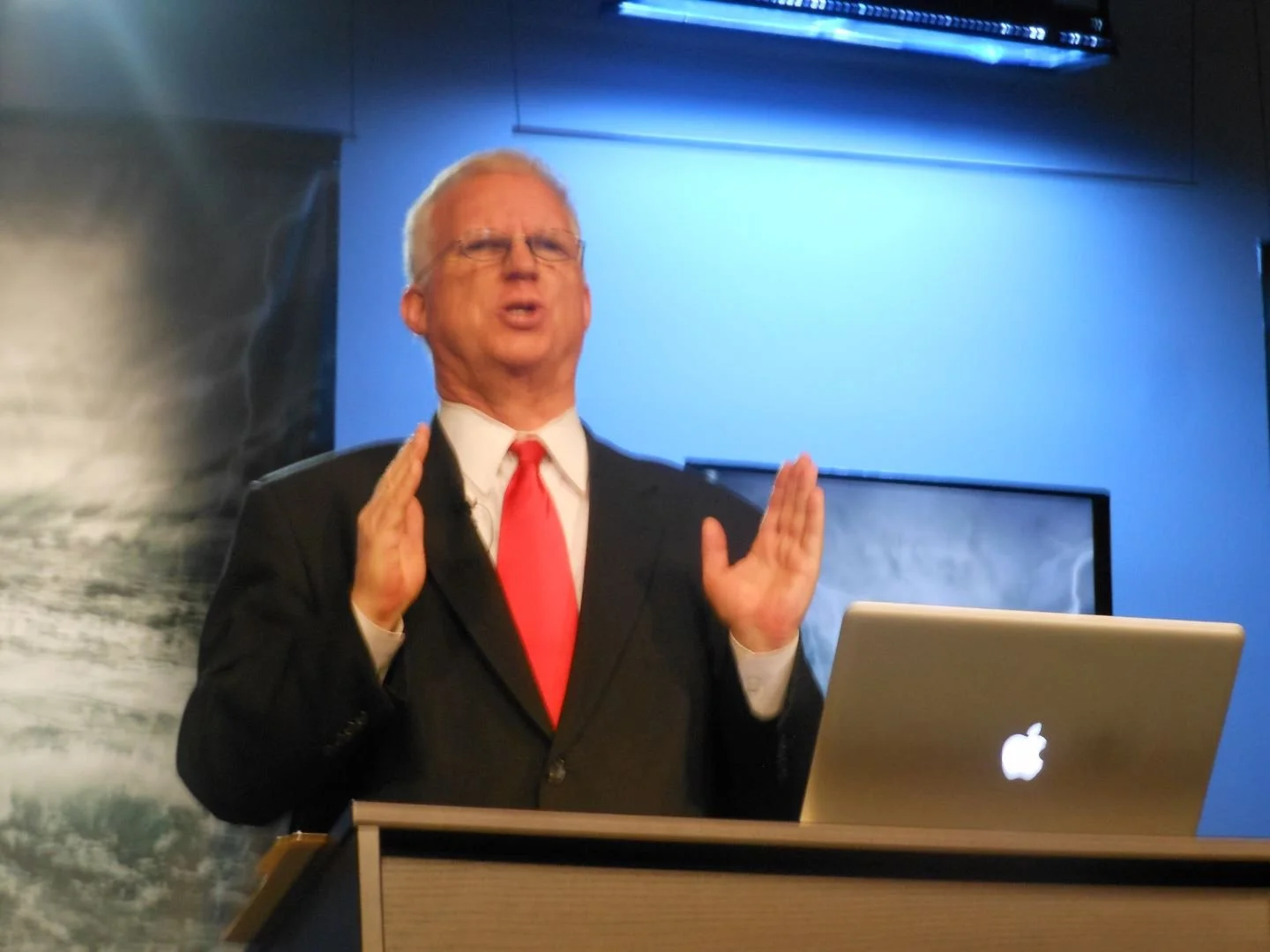
Pastor Kevin Paulson holds a Bachelor’s degree in theology from Pacific Union College, a Master of Arts in systematic theology from Loma Linda University, and a Master of Divinity from the SDA Theological Seminary at Andrews University. He served the Greater New York Conference of Seventh-day Adventists for ten years as a Bible instructor, evangelist, and local pastor. He writes regularly for Liberty magazine and does script writing for various evangelistic ministries within the denomination. He continues to hold evangelistic and revival meetings throughout the North American Division and beyond, and is a sought-after seminar speaker relative to current issues in the Seventh-day Adventist Church. He presently resides in Berrien Springs, Michigan