
A recently published “progressive” Adventist article again seeks to admonish the church as to the “outdated” nature of its educational and outreach methods [1], attempting to relegate the church’s message and spiritual priorities to the trash heap of irrelevance. In the author’s words:
For many of us—at least above 25 years old—the world we grew up in no longer exists.. We now risk operating under outdated assumptions, answering questions that no one is asking, speaking to outdated anxieties, and presenting products that no one consumes. Though we are now faced with a generation that relates to religion in vastly unusual ways, many Adventists remain stubborn—preferring to blame external factors rather than investing in being students of today’s culture [2].
Relevance—Or Decadence?
Accurately or not, the author depicts the present generation as one that “longs for community but shuns commitment” [3], one that “looks for meaning without sacrifice and freedom detached from responsibility” [4], desirous of “meaning in their present lives rather than being sedated into being heavenly-minded” [5]. possessed by a “consumer mentality” that asks, “What can I get here? and “What’s in it for me?” [6]. prizing “authenticity, transparency, and inclusivity—values often lacking in our traditional church environments” [7].
The author goes on to speak of the present generation as “digitally savvy” and “exposed to a world they were taught to avoid. On the internet, they encounter an unregulated market of ideas and views that often contradict the church’s teaching. No wonder questions we thought were settled are now resurfacing with more nuance, dismantling our long-held assumptions” [8]. And of course, no allegedly “progressive” theological agenda in Adventism can avoid hurling the following projectile at their church:
Furthermore, this generation of Adventists is becoming increasingly uncomfortable with the label of being the remnant church, openly questioning the idea that any one denomination has a monopoly on truth [9].
One has a hard time surveying this litany of postmodern spiritual priorities without asking if the pursuit of such an agenda truly constitutes “relevance,” as the author and his fellow travelers seem to think, or whether a better label for it would be decadence. Should the valueless void depicted in the above statements be honored in any way by the Lord’s end-time messengers? Or, in the tradition of such as Enoch, Noah, Jeremiah, John the Baptist, and the Savior Himself, should it be denounced as the genuine evil it surely is?
Accommodation and Ambiguity Don’t Work
A few years ago we published two articles on this site—more than a couple years apart—regarding the steady numerical decline of theologically liberal denominations and the simultaneous numerical strength of theologically conservative ones [##10|Kevin . Paulson, ““Why Conservative Denominations Are Still Growing,” ADvindicate, Feb. 12, 2017; “The Trend Continues,” ADvindicate, July 26, 2019.##]. The articles note research extending over several decades, going back to the early 1970s, indicating that those religious bodies holding firmly to transcendent beliefs and moral standards tend to draw and retain members far more consistently than do those faith communities where accommodation, ambiguity, nuance, and unregulated openness characterize their spiritual witness.
Most importantly for the present discussion, these articles show documented evidence as to how these trends have continued into the twenty-first century.
The article under review insists, “The challenge for the Adventist Church is to learn” [11]. Yet one is truly astounded at the extent to which theological liberals in the Seventh-day Adventist Church—and perhaps elsewhere—seem to learn so little, even from the very recent past. It wasn’t too long ago that the “relevance rage” in Adventism, at least in the developed world, focused on the establishment of “seeker-sensitive” churches where doctrines and lifestyle standards were marginalized and entertainment emphasized as tools for “reclaiming former members” and retaining youth and young adults. To the present writer’s knowledge, very few of these congregations still exist. The splashy “church growth” seminars that were once annual gatherings for so-called “up and coming” pastors and supporting laity haven’t been held in years. (At least I haven’t heard of any!)
By contrast, old-fashioned evangelism and the proclamation of our distinctive message continue to garner the only tangible and enduring church growth results in the denomination. Objections to these methods give every evidence of being less a problem with those outside the church than with those inside who resent the doctrinal and moral imperatives attendant to our classic teachings.
Failure in the Pursuit of Relevance
The appeal to accommodation and ambiguity might have more credence if the digitally savvy, unregulated culture of today were in fact succeeding—in the words of Robert F. Kennedy so long ago—in “taming the savageness of man, and making gentle the life of this world.” The loss of theoretical and moral absolutes has definitely not made the world a nicer place, a fact to which the daily news bears constant and painful testimony. Calling out right from wrong makes far more sense in our present context than softening the church’s condemnation of society’s growing decadence.
At a time when the global power of the Roman papacy, the moral corruption and political conniving of apostate Protestantism, and the assault of the above forces on the guardrails of American democracy have never been so obvious, one is again mystified at Seventh-day Adventists who persist in looking beyond our classic faith and prophetic expectations for what they are pleased to call “spiritual relevance.” Again, one must ask if the desire to truly reach people where they are—or simple resistance to the moral summons of distinctive Adventism—is in fact the issue here.
Conclusion
The article in question closes with the ornate but historically absurd statement, cited from another author:
In a world of change, the learners shall inherit the earth while the learned shall find themselves perfectly suited for a world that no longer exists [12].
As I recall from the words of our Lord, it is the meek who will inherit the earth” (Matt. 5:5), and the inspired Word does not define meekness after the manner of theological liberalism. Ellen White perhaps says it best when she writes: “Skepticism and unbelief are not humility. Implicit belief in Christ’s word is true humility, true self-surrender” [##13|Ellen G. White, The Desire of Ages, p. 535.##].
REFERENCES
1. Admiral Ncube, “The Tipping Point: Rethinking Adventism for Today’s World,” Spectrum, Sept. 3, 2025 https://spectrummagazine.org/views/the-tipping-point-rethinking-adventism-for-todays-world/
2. Ibid.
3. Ibid.
4. Ibid.
5. Ibid.
6. Ibid.
7. Ibid.
8. Ibid.
9. Ibid.
10. Kevin D. Paulson, “Why Conservative Denominations Are Still Growing,” ADvindicate, Feb. 12, 2017 http://advindicate.com/articles/2017/2/2/why-conservative-denominations-are-still-growing; “The Trend Continues,” ADvindicate, July 26, 2019 https://advindicate.com/articles/2019/7/17/paulson-draft-1-atack-kn4n4-n82ly
11. Ncube, “The Tipping Point: Rethinking Adventism for Today’s World,” Spectrum, Sept. 3, 2025 https://spectrummagazine.org/views/the-tipping-point-rethinking-adventism-for-todays-world/
12. Ibid.
13. Ellen G. White, The Desire of Ages, p. 535.
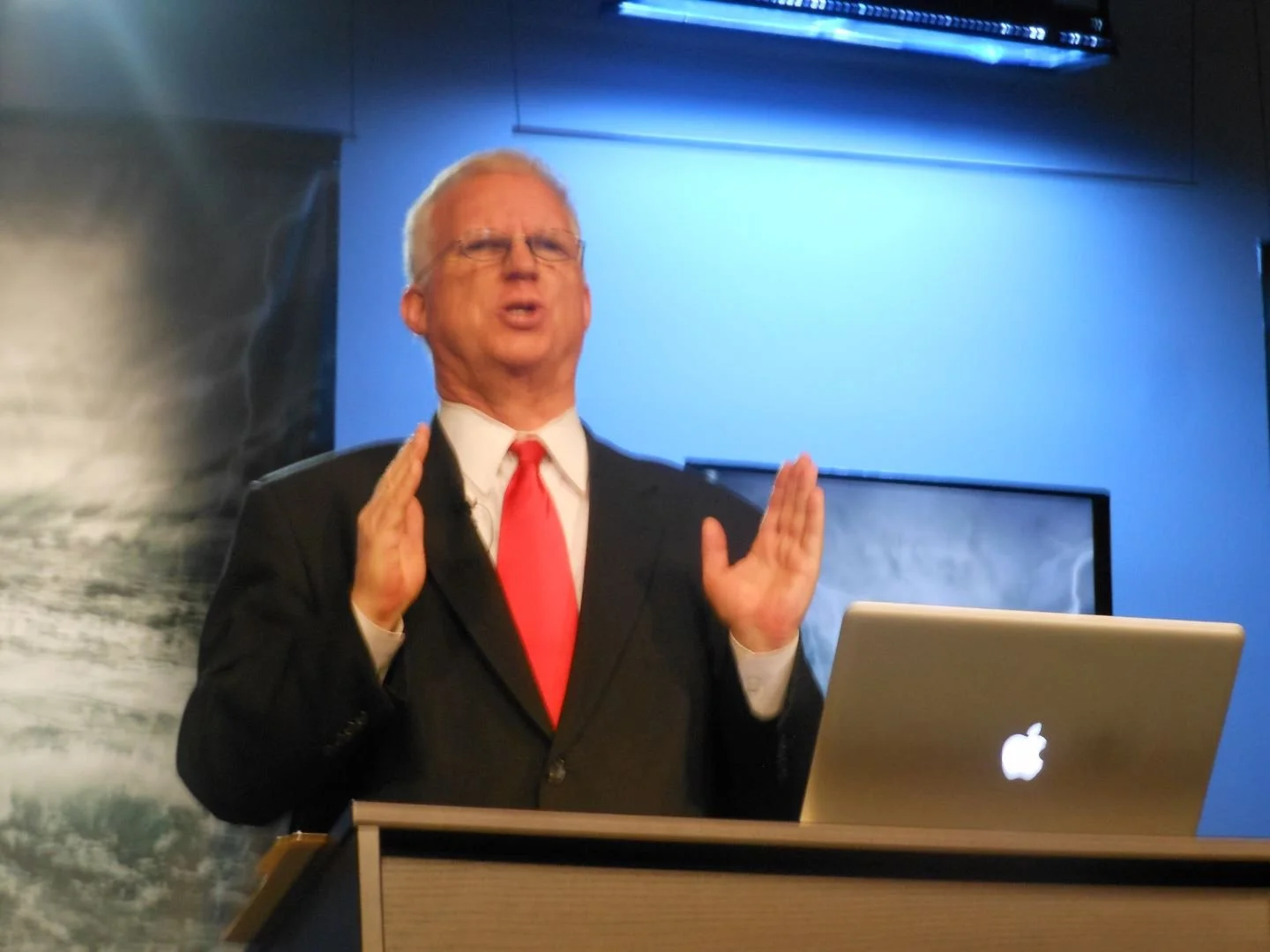
Pastor Kevin Paulson holds a Bachelor’s degree in theology from Pacific Union College, a Master of Arts in systematic theology from Loma Linda University, and a Master of Divinity from the SDA Theological Seminary at Andrews University. He served the Greater New York Conference of Seventh-day Adventists for ten years as a Bible instructor, evangelist, and local pastor. He writes regularly for Liberty magazine and does script writing for various evangelistic ministries within the denomination. He continues to hold evangelistic and revival meetings throughout the North American Division and beyond, and is a sought-after seminar speaker relative to current issues in the Seventh-day Adventist Church. He presently resides in Berrien Springs, Michigan