
I grew up during the opening years of the space program. Children my age were fascinated by space rockets and boosters; many made models of them for display in their rooms. How well I remember when the Apollo 8 mission orbited the moon in 1968, and the astronauts read to the world the opening verses of Genesis. And who of my generation can forget the words of Neil Armstrong as the Eagle landing craft settled in the crater-scarred Sea of Tranquility: “It’s one small step for a man, one giant leap for mankind.”
Watching the launch of Artemis II yesterday, I couldn’t help reflecting on how millions who witnessed the history-making event weren’t even alive when the last lunar expedition—the flight of Apollo 17—took place in December 1972. Already there is talk of the “Artemis generation”—presumably those for whom this moment will be life-transforming. None at this point, of course, can be certain of this. But talk of a new perception of societal, even global unity as a result of the current space expedition abounded from commentators as the capsule soared beyond the launching pad.
Optimism
Boundless, even mindless optimism has been endemic to the American spirit almost since the founding of the Republic. Americans, so the thought goes, can do anything to which they set their minds, their energy, their creative genius. Many of these illusions, of course, collapsed under the dissolution that followed the First World War. Historian Barbara Tuchman writes: “For the price it had paid, humanity’s major gain was a painful view of its own limitations” [##1|Barbara W. Tuchman, The Proud Tower: A Portrait of the World Before the War, 1890-1914 (New York: Ballantine Books, 1994), p. 463.##].
The space program has seen enough mishaps of its own, from the pre-flight test for the first Apollo mission in 1967 to the loss of two Space Shuttles in subsequent decades. Greater care in every technical detail has become a staple to these adventures, and rightly so. The momentary pauses in the Artemis II countdown bear witness to this fact. Human self-confidence can be a glorious feeling, but when it results in death, destruction, and embarrassment it becomes yet another reminder of human frailty.
If nothing else, the warning should be clear that to trust in material things can be perilous, even fatal.
Science, Technology, and Character
But the biggest problem with the optimism and self-assurance that so often attends scientific and technological advancement is the simple fact that while science and technology can accomplish much, they don’t make better people. William Jennings Bryan, in his argument against the theory of evolution at the famous Scopes Trial of 1925, perhaps said it best:
Science is a magnificent material force, but it is not a teacher of morals. It can perfect machinery, but it adds no moral restraints to protect society from the machine [##2|Michael Kazin, A Godly Hero: The Life of William Jennings Bryan (New York: Alfred A. Knopf, 2006), p. 295.##].
The spirit of the Renaissance inspired men to sail beyond the horizon and explore unknown lands, but it didn’t prevent either the exploitation of those lands nor the enslavement and slaughter of indigenous peoples that attended these discoveries. The acquisition of wealth and power by a growing number of persons may temporarily alleviate material conditions, but it doesn’t build character. The Western Gilded Age and the Nazi experience aptly demonstrate this point.
Conclusion: Artemis II and the Last Generation
It does us well to remember once again the warning in Allen Drury’s Cold War narrative A Shade of Difference, in which a United States Senator—then doubling as America’s ambassador to the United Nations—admonished the globe as follows:
Though we fly to the moon and far beyond, we shall carry with us what is in our hearts, and if it be not pure, we shall slaughter one another where’er we meet, as surely on some outward star as here on earth [##3|Allen Drury, A Shade of Difference (Garden City, NY: Doubleday and Co, 1962), p. 584.##].
Neither science nor technology can create purity of heart. Only the grace of God can do this. Which is why Scripture speaks so decidedly of the spiritual purity expected of God’s end-time faith community when Jesus returns (Zeph. 3:13; I Thess. 5:23; II Peter 3:10-14; I John 3:2-3; Rev. 3:21; 14:5), and why Ellen White echoes these Biblical words in such powerful statements as the following:
When He comes, He is not to cleanse us of our sins, to remove from us the defects in our characters, or to cure us of the infirmities of our tempers and dispositions. If wrought for us at all, this work will be accomplished before that time. When the Lord comes, those who are holy will be holy still. . . . The Refiner does not then sit to pursue His refining process and remove their sins and their corruption. This is all to be done in these hours of probation [##4|Ellen G. White, Testimonies, vol. 2, p. 355.##].
Rather than inspiring the “Artemis generation”—with a new and ill-founded confidence in human achievement—let us pray that new efforts to explore the universe will remind us that only God can make good people, and that like the Senator before the UN said, if our hearts remain impure, it won’t matter how far into space we travel. Human evil will invariably attend our steps. May the final, victorious generation promised in the inspired writings be gathered soon, out of “every nation, and kindred, and tongue, and people” (Rev. 14:6).
REFERENCES
1. Barbara W. Tuchman, The Proud Tower: A Portrait of the World Before the War, 1890-1914 (New York: Ballantine Books, 1994), p. 463.
2. Michael Kazin, A Godly Hero: The Life of William Jennings Bryan (New York: Alfred A. Knopf, 2006), p. 295.
3. Allen Drury, A Shade of Difference (Garden City, NY: Doubleday and Co, 1962), p. 584.
4. Ellen G. White, Testimonies, vol. 2, p. 355.
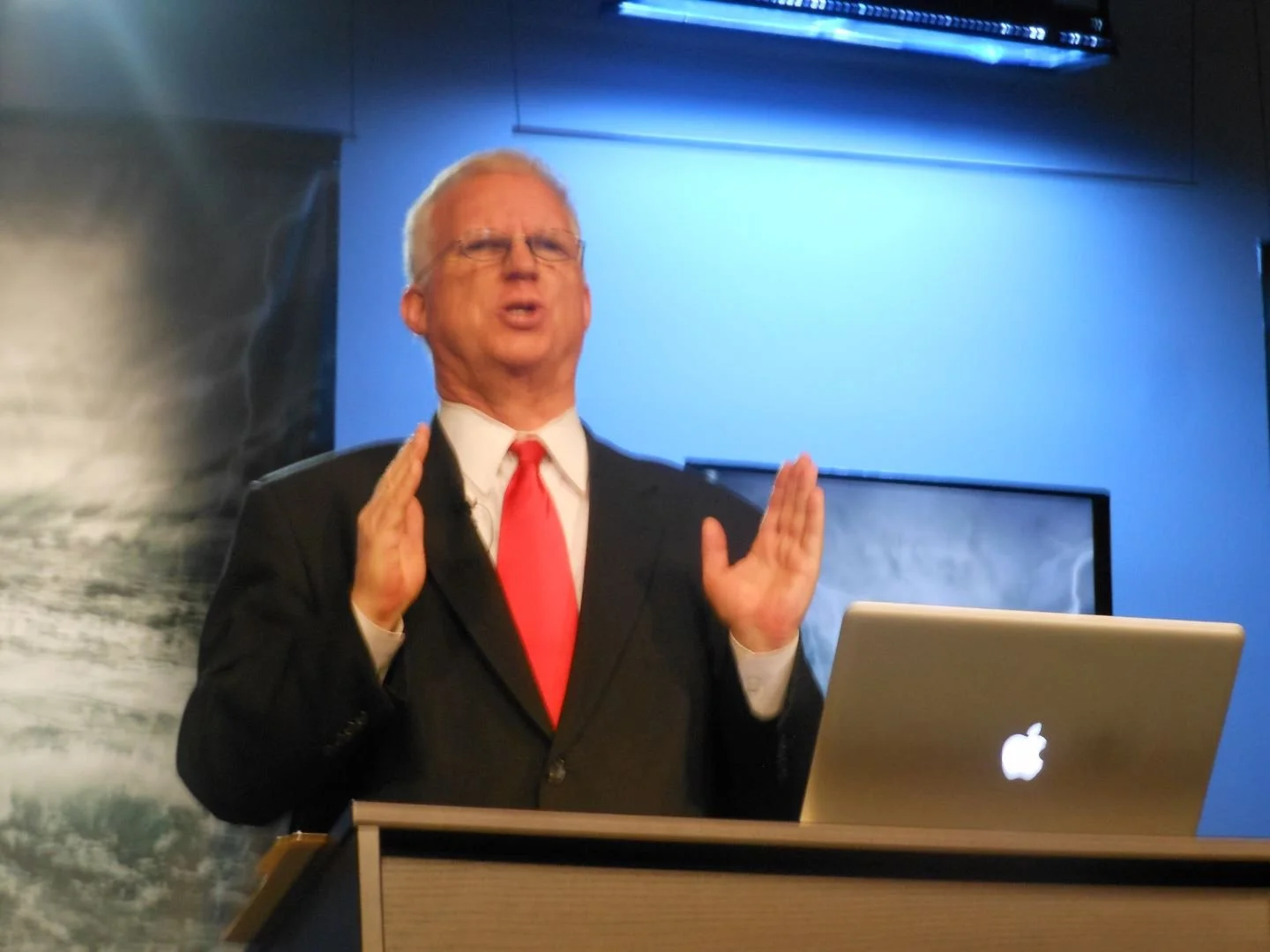
Pastor Kevin Paulson holds a Bachelor’s degree in theology from Pacific Union College, a Master of Arts in systematic theology from Loma Linda University, and a Master of Divinity from the SDA Theological Seminary at Andrews University. He served the Greater New York Conference of Seventh-day Adventists for ten years as a Bible instructor, evangelist, and local pastor. He writes regularly for Liberty magazine and does script writing for various evangelistic ministries within the denomination. He continues to hold evangelistic and revival meetings throughout the North American Division and beyond, and is a sought-after seminar speaker relative to current issues in the Seventh-day Adventist Church. He presently resides in Berrien Springs, Michigan