
A recent article in a prominent denominational magazine noted a presentation delivered not too long ago at a European Youth Congress on the subject of sexual purity and marriage, a presentation which demonstrated—perhaps unwittingly—that opposite extremes can work in tandem to compromise Biblical integrity [1].
The article addressed such issues as sexual abuse (both before and after marriage) and unresolved guilt resulting from wrongful past choices [2]. The wounds inflicted by so-called “purity culture” are also noted [3], which we will address in a moment. While these problems are very real, even in Christian homes and lives, the lecturer in question appears to stray beyond the Word of God in such observations as the following, recounted by the published article:
“My goal today is that whatever your past, we will leave shame-free and accepted just as we are,” she said, because “anxiety and shame are not from God.” At the same time, she called for young people to develop their own sexual ethics with God and perhaps in community with others. Finally, she reminded attendees to remember that even though they don’t need to be perfect, they need to be honest with themselves as part of a safe community in their quest to achieve sexual fulfillment as God intended it [4].
What is deeply disturbing about the article is that it contains almost no Biblical references, and none whatsoever from the writings of Ellen White, often called the Spirit of Prophecy. Its reasoning, by contrast, appears to be driven by pop “Christian psychology” and postmodern spirituality. Neither the young nor the not-so-young can possibly benefit from such musings.
Major Problems
The misguidance fostered in the above statements is more than slightly perilous. The sentiments here expressed come across as more postmodern than Biblical. To say that “anxiety and shame are not from God” is to run afoul of some very notable themes in the Scriptures. Jesus declared of the Holy Spirit who was to come following His departure:
When He is come, He will reprove the world of sin, and of righteousness, and of judgment: Of sin, because they believe not on Me (John 16:8-9).
The apostle Paul writes of how men and women are convicted of sin when he states on one verse that “by the law is the knowledge of sin” (Rom. 3:20), and elsewhere when he writes that “the law was our schoolmaster to bring us to Christ, that we might be justified by faith” (Gal. 3:24). One is led to ask, How does such conviction differ from divinely-induced feelings of anxiety and shame? Didn’t King David experience shame when the prophet Nathan, after telling his parable of the stolen lamb, declared to the king, “Thou art the man” (II Sam. 12:7)? Can one rightly assume that the Samaritan woman at Jacob’s well felt no shame when Jesus told her, “Thou hast had five husbands, and he whom thou now hast is not thy husband” (John 4:18)?
What does the lecturer in question mean when she advises young people to “develop their own sexual ethics with God and perhaps in community with others” [5]. Should Seventh-day Adventist Christians set aside the sexual guardrails of Holy Scripture and start from scratch? No one is denying that certain dynamics within marital relationships merit wise and even unique evaluation. But God’s Word is sufficiently clear as to where sexual relations belong, and with whom. The lecturer in question leaves far too much open water out there. Theological liberals and postmoderns may adore ambiguity in matters spiritual, but the inspired text does not.
No one should leave a spiritual gathering “shame-free” if they still cling to practices forbidden in God’s Word. Ultimate sexual intimacy outside of the marriage relationship—the latter defined in Scripture exclusively as between one man and one woman—is condemned without qualification in the pages of the Bible (John 4:18; I Cor. 6:9-10; 7:2). Many conservative Christians have wrongly categorized such sin as more egregious than many others, but that doesn’t mean sexual intimacy outside of marriage isn’t still sin. And just as it took only one sin to remove our first parents from Eden, so it will take only one sin—unconfessed and unforsaken—to keep any of us from returning to Eden (James 2:10-12).
Another problematic statement by the lecturer in question is not only that those leaving her meeting “leave shame-free,” but that they feel “accepted just as [they] are [6]. Exactly what does this mean? To be loved by God unconditionally is a Bible principle (John 3:16). But acceptance with God is clearly defined in Scripture as conditional on obedience. Peter declared in the house of Cornelius that “in every nation he that feareth [God], and worketh righteousness, is accepted with Him” (Acts 10:35). Unconditional love, yes. Unconditional acceptance, no.
Thoughtful Bible students couldn’t help but be shocked by the article’s statement that “many of those who grew up in the Adventist Church were told as children to do the right thing ‘so that Jesus would not be sad,’” claiming instead that “’We are not responsible for Jesus’ feelings’” [7]. One hopes any number of the article’s readers recalled the apostle Paul’s statement in the book of Hebrews regarding those who “crucify to themselves the Son of God afresh, and put Him to an open shame” (Heb. 6:6).
Most dangerous of all, to be sure, is the lecturer’s insistence to her audience—at least as the article represents her thoughts—that “even though [Christians] don’t need to be perfect, they need to be honest with themselves as part of a safe community in their quest to achieve sexual fulfillment as God intended it” [8]. Popular though this heresy has become in certain circles of contemporary Adventism, it is a lie—pure and simple. Numerous Bible passages admonish the Christian to live without sinning through God’s imparted strength (e.g. Psalm 119:1-3,11; Zeph. 3:13; John 8:11; Rom. 6:14; 8:4; I Cor. 15:34; II Cor. 10:4-5; Eph. 5:27; I Thess. 5:23; I Peter 2:21-22; 4:1; II Peter 3:10-14; I John 1:7,9; 3:2-3,7; Jude 24; Rev. 3:21; 14:5). One of the strongest verses in this regard is the following:
Having therefore these promises, dearly beloved, let us cleanse ourselves from all filthiness of the flesh and spirit, perfecting holiness in the fear of God (II Cor. 7:1).
That sounds like sinlessness to me, and it sounds quite imperative. Yes, we can rejoice that if we fall and experience true repentance, God will forgive us (I John 1:9; 2:1). Indeed, if God could forgive wicked King Manasseh in the Old Testament (II Chron. 33:12-13), who filled Jerusalem with innocent blood (II Kings 21:16), offered his children to pagan gods (verse 6), tampered with spiritualism (verse 6), and committed countless other abominable deeds (verses 6-7), there’s no reason He can’t forgive those who indulge in sexual immorality and seek His pardon with a contrite heart. (I’ve often said that if there was hope for King Manasseh, there must still be some for me!) No one should wallow in guilt because of such choices, once the acts in question have been confessed and forsaken (II Chron. 7:14; Prov. 28:13; Isa. 55:7; I John 1:9).
But to tell people they can’t be perfect, that sin to one degree or another will persist in Christian lives till death or the return of Jesus, is to deny the clearest statements of God’s Word that all sin, through heaven’s power, can be conquered and avoided in the life of the transformed believer.
“Purity Culture”
Those who follow this website will recall an article written several years ago, titled, “’Purity Culture’ and the Commandments of Men” [9]. I recommend that all our readers review this article, even if they’ve read it already. Making light of sin will certainly place souls at risk, but so does the building of man-made barricades around God’s commandments, conveying even indirectly the impression that violating those humanly-contrived boundaries is indistinguishable from violating God’s law itself.
Without question, the negative consequences of this man-made “purity culture” have been felt by many sincere Christians, perhaps including some within the Seventh-day Adventist Church. Ellen White warns against such exaggerated piety in such statements as the following:
Now we read in the Bible of a good conscience, and there are not only good but bad consciences. There is a conscientiousness that will carry everything to extremes, and make Christian duties as burdensome as the Jews made the observance of the Sabbath [##10|Ellen G. White, Selected Messages, vol. 2, p. 319.##].
With all their minute and burdensome injunctions, it was an impossibility to keep the law. Those who desired to serve God, and who tried to observe the rabbinical precepts, toiled under a heavy burden. They could find no rest from the accusings of a troubled conscience. Thus Satan worked to discourage the people, to lower their conception of the character of God, and to bring the faith of Israel into contempt. He hoped to establish the claim put forth when he rebelled in heaven—that the requirements of God were unjust, and could not be obeyed. Even Israel, he declared, did not keep the law [##11|——The Desire of Ages, p. 29.##].
Strict obedience to the divine requirements is one thing, but no Christian is obligated to obey a humanly-fabricated set of relationship guidelines regarding when a couple in love prior to marriage is permitted to hold hands, to kiss, to embrace, etc. The famous, now ex-Christian author Joshua Harris listed a number of such rules which he and his now-former wife had crafted [##12|Joshua Harris, Boy Meets Girl: Say Hello to Courtship (Sisters, OR: Multnomah Publications, 2000), pp. 157-159.##], spurred on by a hyper-sensitive conscience [##13|——Boy Meets Girl, pp. 141-143.##].
How much wiser is the counsel of God’s prophet Ellen White, who leaves flexibility for the conscience in such matters in such statements as the following:
Not one word should be spoken, not one action performed, that you would not be willing the holy angels should look upon and register in the books above [##14|White, The Adventist Home, p. 55.##].
Conclusion: Avoiding Both Extremes
When we adhere exclusively to the inspired writings—which for Seventh-day Adventists includes the writings of Ellen White—we will eschew both extremes in focus here: the unscriptural doctrine of no perfection this side of heaven even through God’s power, and the temptation to build man-made hedges around the requirements of God. It makes no sense to fabricate “our own sexual ethics” [15], when our eternal Sovereign and Master Designer has already done this. And beyond what the Lord has articulated in His written counsel (Isa. 8:20; Acts 17:11), it is best to leave room for the individual conscience.
REFERENCES
1. Marcos Paseggi, “Why Purity Culture May Not Be the Answer to a Godly Sex Life,” Adventist Review, Sept. 10, 2026 https://adventistreview.org/news/why-purity-culture-may-not-be-the-answer-to-a-godly-sex-life/
2. Ibid.
3. Ibid.
4. Ibid.
5. Ibid.
6. Ibid.
7. Ibid.
8. Ibid.
9. Kevin Paulson, “’Purity Culture’ and the Commandments of Men” ADvindicate, Sept. 20, 2019 https://advindicate.com/articles/2019/9/20/purity-culture-and-the-commandments-of-men
10. Ellen G. White, Selected Messages, vol. 2, p. 319.
11. ----The Desire of Ages, p. 29.
12. Joshua Harris, Boy Meets Girl: Say Hello to Courtship (Sisters, OR: Multnomah Publications, 2000), pp. 157-159.
13. Ibid, pp. 141-143.
14. White, The Adventist Home, p. 55.
15. Paseggi, “Why Purity Culture May Not Be the Answer to a Godly Sex Life,” Adventist Review, Sept. 10, 2026 https://adventistreview.org/news/why-purity-culture-may-not-be-the-answer-to-a-godly-sex-life/
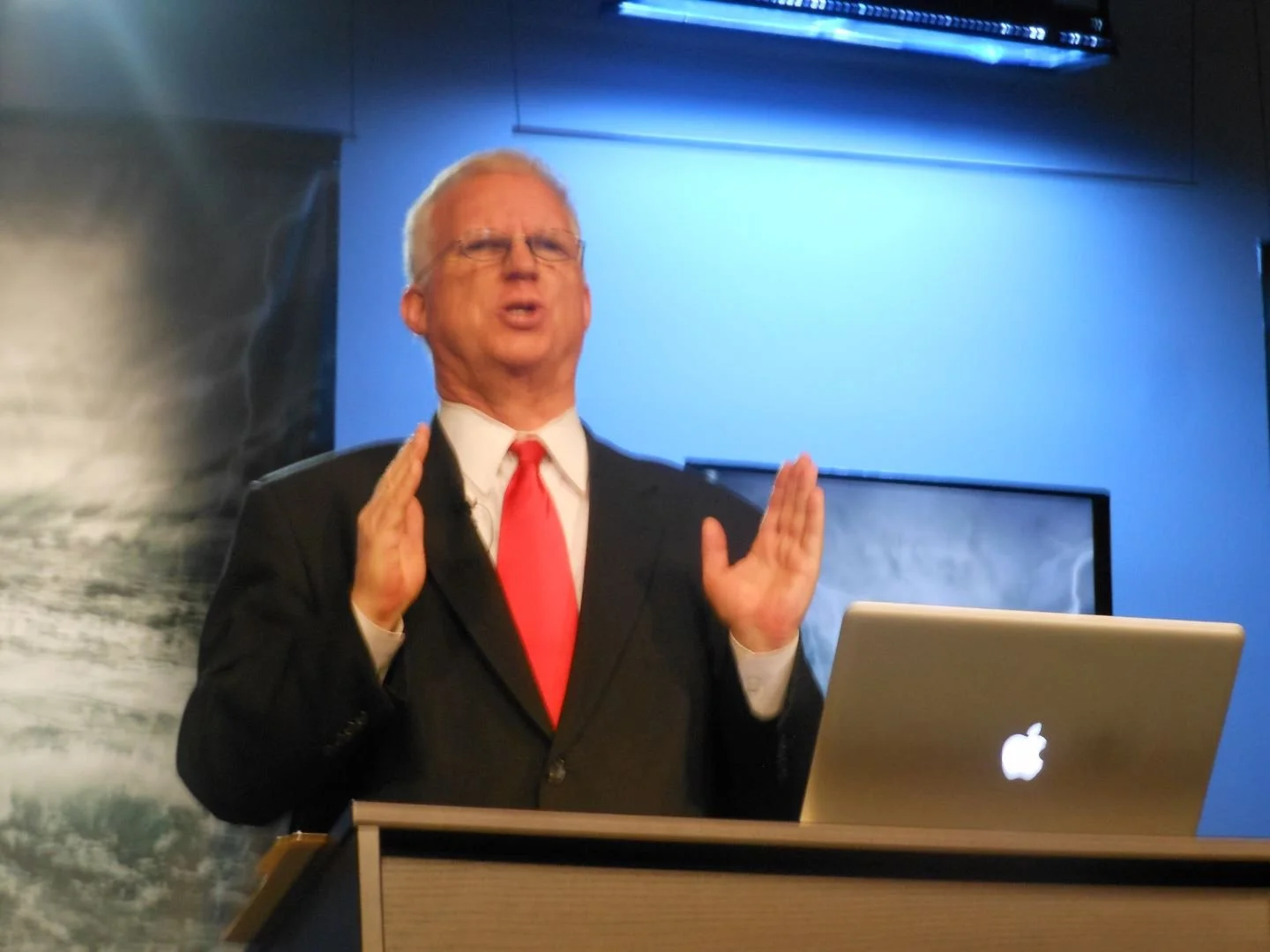
Pastor Kevin Paulson holds a Bachelor’s degree in theology from Pacific Union College, a Master of Arts in systematic theology from Loma Linda University, and a Master of Divinity from the SDA Theological Seminary at Andrews University. He served the Greater New York Conference of Seventh-day Adventists for ten years as a Bible instructor, evangelist, and local pastor. He writes regularly for Liberty magazine and does script writing for various evangelistic ministries within the denomination. He continues to hold evangelistic and revival meetings throughout the North American Division and beyond, and is a sought-after seminar speaker relative to current issues in the Seventh-day Adventist Church. He presently resides in Berrien Springs, Michigan