
The title of this article, of course, indulges a bit of historical fiction; to my knowledge there were no Seventh-day Adventists on that fateful maiden voyage over a century ago. But the allure of theology promising an unscriptural assurance of salvation—like the confidence mistakenly reposed in the “unsinkable” ocean queen—continues to beguile members of God’s remnant church in this present hour. And it is imperative that faithful guardians of the Lord’s flock sound appropriate warnings.
Two recent articles in a prominent church publication very subtly promote this false assurance, mostly through the omission of key inspired passages. False doctrine is nearly always based on a selective use of the inspired text, often attended by appeals to personal experience and uninspired scholarship. Sadly, the two articles in question—one in particular—fall victim to this error.
Error by Omission
One of these articles, the least problematic of the two, states correctly that Christ’s “priestly intercession will not last forever” [1]. But the article’s very next section moves directly to Jesus’ second coming, with no reference to the preceding close of probation and the need for total victory over sin through heaven’s power in the lives of believers, so that the mediation of Christ can safely cease.
While the close of probation is not denied by the article, this omission is an egregious one. Those reading the article’s effusive references to “good news” could easily conclude from this omission that Christ’s intercession ends with His second coming, and that forgiveness for sin thus remains available till that moment. But when we read the inspired writings, it is clear that nothing could be further from the truth. The Bible is clear that the time will come here on earth, before the second coming, when priestly mediation—the forgiveness of sins—will no longer be available (Rev. 8:5; 15:8; 22:11). Ellen White elaborates on this teaching with unmistakable clarity, too plain to be misunderstood:
Those who are living upon the earth when the intercession of Christ shall cease in the sanctuary above are to stand in the sight of a holy God without a mediator. Their robes must be spotless, their characters must be purified from sin by the blood of sprinkling. Through the grace of God and their own diligent effort they must be conquerors in the battle with evil. While the investigative judgment is going forward in heaven, while the sins of penitent believers are being removed from the sanctuary, there is to be a special work of purification, of putting away of sin, among God’s people upon the earth. . . .
When this work shall have been accomplished, the followers of Christ will be ready for His appearing [##2|Ellen G. White, The Great Controversy, p. 425.##].
When Christ shall cease His work as mediator in man’s behalf, then this time of trouble will begin. Then the case of every soul will have been decided, and there will be no atoning blood to cleanse from sin [##3|——Patriarchs and Prophets, p. 201.##].
When the seven last plagues shall be poured out without mixture into the cup of His indignation, then it will be forever too late to repent, and find shelter. No atoning blood will then wash away the stains of sin [##4|——Testimonies, vol. 5, p. 212.##].
For this reason, Ellen White declares that at the second coming, “the Refiner does not then sit to pursue His refining process and remove their sins and their corruption. This is all to be done in these hours of probation” [##5|——Testimonies, vol. 2, p. 355.##].
The other of the two articles speaks of David’s sin with Bathsheba and his repentance following Nathan’s rebuke of his transgression. But again, the peril of omission becomes evident. The author quotes the following passage from Psalm 51:
“For I know my transgressions, and my sin is ever before me. Against thee, thee only, have I sinned, and done that which is evil in thy sight, so that thou art justified in thy sentence and blameless in thy judgment” (Ps. 51:3, 4, NKJV) [6].
The article continues:
David comprehended the heinousness of his sin and the reality of the judgment. But he also understood the message of righteousness by faith! David saw that, sinful though he was, his sins could be covered and cleansed by the blood of the Substitute. In joy he could cry out, “Blessed is he whose transgression is forgiven, whose sin is covered” (Ps. 32:1) [7].
What the author means by “cleansed,” here and elsewhere in the article, is unclear, as he focuses almost exclusively on “the blood of the Substitute” [8]. But David’s understanding of righteousness by faith was in no way, in this passage or elsewhere, limited to substitutional righteousness. In verse 10 he declares, “Create in me a clean heart, O God, and renew a right spirit within me.” In verse 12 he entreats the Lord, “Restore unto me the joy of Thy salvation,” making it clear he was no longer saved on account of his disobedience. Ellen White is especially clear on the latter point in the following statement:
I was shown that it was when David was pure, and walking in the counsel of God, that God called him a man after His own heart. When David departed from God, and stained his virtuous character by his crimes, he was no longer a man after God’s own heart. God did not in the least degree justify him in his sins, but sent Nathan, His prophet, with dreadful denunciations to David because he had transgressed the commandment of the Lord [##9|White, Spirit of Prophecy, vol. 2, p. 379.##].
Ellen White is equally clear that divine forgiveness is synonymous with the cleansing of the heart from sin, and is therefore not merely a forensic (legal) act of God:
God’s forgiveness is not merely a judicial act by which He sets us free from condemnation. It is not only forgiveness for sin, but reclaiming from sin. It is the outflow of redeeming love that transforms the heart. David had the true conception of forgiveness when he prayed, “Create in me a clean heart, O God, and renew a right spirit within me.” Psalm 51:10 [##10|——Thoughts from the Mount of Blessing, p. 114 (italics original).##].
We note how the article in question cites Psalm 32:1: “Blessed is he whose transgression is forgiven, whose sin is covered” (NKJV). But it leaves out the subsequent verse, which again affirms that God’s forgiveness is transformative and not merely declarative:
Blessed is the man unto whom the Lord imputeth not iniquity, and in whose spirit there is no guile (verse 2).
This verse underscores a teaching found throughout Scripture—that sin is only eligible for forgiveness if it is confessed and forsaken (II Chron. 7:14; Prov. 28:13; Isa. 55:7; Matt. 6:14-15; I John 1:9). The psalmist is clear that only those free of guile can receive divine forgiveness. It is for this reason that Ellen White declares, “God requires the entire surrender of the heart, before justification can take place” [##11|——Selected Messages, vol. 1, p. 366.##].
Justification and Sanctification
The problem of error by omission continues when the article in focus speaks of the righteousness of Christ primarily if not exclusively with reference to justification. At one point the article quotes the following Ellen White statement, relative to the assurance of salvation:
I found the same glorious revelation in the words of Ellen White: “If you give yourself to Him, and accept Him as your Saviour, then, sinful as your life may have been, for His sake you are accounted righteous. Christ’s character stands in place of your character, and you are accepted before God just as if you had not sinned” [##12|——Steps to Christ, p. 62.##].
But the above Ellen White statement, quoted from Steps to Christ, p. 62, doesn’t stop there. The subsequent paragraphs state the following:
More than this, Christ changes the heart. He abides in your heart by faith. You are to maintain this connection with Christ by faith and the continual surrender of your will to Him; and so long as you do this, He will work in you to will and to do according to His good pleasure. So you may say, “The life which I now live in the flesh I live by the faith of the Son of God, who loved me, and gave Himself for me.” Galatians 2:20. So Jesus said to His disciples, “It is not ye that speak, but the Spirit of your Father which speaketh in you.” Matthew 10:20. Then with Christ working in you, you will manifest the same spirit and do the same good works—works of righteousness, obedience.
So we have nothing in ourselves of which to boast. We have no ground for self-exaltation. Our only ground of hope is in the righteousness of Christ imputed to us, and in that wrought by His Spirit working in and through us [##13|——Steps to Christ, pp. 62-63.##].
So according to the context of the Ellen White statement quoted by the article in question, substitute righteousness is not the only thing that saves us. Transformative righteousness is also part of the righteousness which saves us. This, of course, is the teaching of Scripture itself, which declares that saving righteousness is found in both justification (Eph. 1:7) and sanctification (II Thess. 2:13), both in Christ’s work for us (II Cor. 5:21) and His work in us (Titus 3:5).
Too many in contemporary Adventism, when they speak of the righteousness of Christ, equate this righteousness solely with justification. The author of the article in question, in another context, writes that “the ultimate ground of one’s acceptance in the judgment is not the believer’s Spirit-enabled works but the righteousness of Christ” [##14|Davidson, “How Shall a Person Stand Before God? What is the Meaning of Justification?” God’s Character and the Last Generation (Nampa, ID: Pacific Press Publishing Assn, 2018), p. 98.##]. But according to the Bible and the writings of the Spirit of Prophecy, the believer’s Spirit-enabled works and the righteousness of Christ are one and the same thing. It is humanity’s self-generated works that have no saving value with God, which is what Paul is describing when he says that “by grace are ye saved through faith, and that not of yourselves; it is the gift of God. Not of works, lest any man should boast” (Eph. 2:8-9).
Notice the parallel between “not of yourselves” and “not of works” in these verses. Self-generated works, the kind that produce boasting, are the focus of this passage (see also Rom. 2:17-23). By contrast, the sanctification produced by the Holy Spirit generates meekness (Gal. 5:23)—the opposite of boasting.
Ellen White defines the imputed and imparted righteousness of Christ when she speaks of how “the righteousness by which we are justified is imputed; the righteousness by which we are sanctified is imparted. The first is our title to heaven, the second is our fitness for heaven” [##15|White, Messages to Young People, p. 35.##]. Elsewhere she distinguishes both of these phases of Christ’s righteousness from the proud heart which seeks to earn salvation on its own:
The proud heart strives to earn salvation; but both our title to heaven and our fitness for it are found in the righteousness of Christ [##16|——The Desire of Ages, p. 300.##}.
So to be saved solely by Christ’s righteousness is not the same as being saved solely by justification. The Bible never teaches salvation by justification alone. Both justifying and sanctifying righteousness form the ground of the Christian’s salvation. Again, from the modern prophet’s pen:
Our only ground of hope is in the righteousness of Christ imputed to us, and in that wrought by His Spirit working in and through us [##17|——Steps to Christ, p. 63.##].
Acceptance
The article noted above states the following, on the subject of our acceptance with God:
Vindication in the judgment! Assurance in the judgment! That’s good news—almost too good to be true! And I dared not believe it even as a theology major in college, as a seminary student, and as a young pastor. Statements such as the following kept ringing in my ears: “Those who accept the Saviour, however sincere their conversion, should never be taught to say or to feel that they are saved.” I didn’t understand that Ellen White was refuting the erroneous belief of “once saved, always saved.” I thought she meant that one could never have present assurance of salvation. How tragic that I did not see in the very same paragraph God’s assurance that we can “give ourselves to Christ and know that He accepts us”! [18].
We will address the issue of once-saved-always-saved, and its no-less-dangerous Adventist version, as the present article proceeds. But the author of the above article should have simply allowed Ellen White to finish her thought as she wrote it out. Here is the context from which the above Ellen White reference is taken:
Those who accept the Saviour, however sincere their conversion, should never be taught to say or to feel that they are saved. This is misleading. Every one should be taught to cherish hope and faith; but even when we give ourselves to Christ and know that He accepts us, we are not beyond the reach of temptation. God’s word declares, “Many shall be purified, and made white, and tried.” Dan. 12:10. Only he who endures the trial will receive the crown of life. (James 1:12) [##19|White, Christ’s Object Lessons, p. 155.##].
Nothing in the above Ellen White statement, or elsewhere in her writings, teaches acceptance with God based on forgiveness only. Quite clearly, in the above passage, yielding to temptation jeopardizes salvation. It is not secured by forensic righteousness alone irrespective of our practical choices. Only those who endure the trials that temptation brings will ultimately be saved. Which is why Jesus Himself declared, “He that shall endure unto the end, the same shall be saved” (Matt. 24:13).
And we need to consider what the inspired writings tell us about acceptance with God. The Bible nowhere says such acceptance is based on justification alone. Peter declared in the house of Cornelius that “in every nation he that feareth [God], and worketh righteousness, is accepted with Him” (Acts 10:35). We saw earlier how in Ellen White’s theology, imparted righteousness is equated with sanctification [##20|——Messages to Young People, p. 35.##]. The following statement from the same author is clear that imparted righteousness helps the believer find acceptance with God:
It was impossible for the sinner to keep the law of God, which was holy, just, and good; but this impossibility was removed by the impartation of the righteousness of Christ to the repenting, believing soul. The life and death of Christ in behalf of sinful man were for the purpose of restoring the sinner to God’s favor, through imparting to him the righteousness that would meet the claims of the law and find acceptance with the Father [##21|——Faith and Works, p. 118 (italics supplied).##].
The author of the article in question writes of the “joy and peace” that filled his heart when he heard the “marvelous news that I was ‘accepted in the beloved’ (Eph. 1:6, KJV), and “that Christ is my righteousness” [22]. No argument here; this is marvelous news indeed! But Ellen White says repeatedly that sanctified obedience forms an important part of the means whereby the Christian is “accepted in the beloved”:
This (Ex. l9:7-8) is the pledge that God’s people are to make in these last days. Their acceptance with God depends on a faithful fulfillment of the terms of their agreement with Him. God includes in His covenant all who will obey Him [##23|White, God’s Amazing Grace, p. 142.##].
Many of those who claim to believe the testing truths for these last days, act as though God took no note of their disrespect of, and manifest disobedience to, the principles of His holy law. The law is the expression of His will, and it is through obedience to that law that God proposes to accept the children of men as His sons and daughters [##24|——Sons and Daughters of God, p. 45.##].
There is no way back to innocence and life except through repentance for having transgressed God’s law, and faith in the merits of the divine sacrifice, who has suffered for your transgressions of the past; and you are accepted in the Beloved on condition of obedience to the commandments of your Creator [##25|——Signs of the Times, Dec. 15, 1887.##].
Our faith requires us to elevate the standard of reform, and take advance steps. The condition of our acceptance with God is a practical separation from the world [##26|——Counsels on Health, p. 51.##].
Through Jesus there is divine sympathy between God and the human beings who, through obedience, are accepted in the Beloved. Thus humanity conforms to the will of divinity, fulfilling the words, “If ye love Me, keep My commandments.” The commandment-keeping people of God are to walk in the sunlight of Christ’s righteousness, their countenances expressing cheerfulness and thanksgiving, joyful in the assurance: “Blessed are they that do His commandments, that they may have right to the tree of life, and enter in through the gates into the city” [##27|——Review and Herald, May 3, 1898.##].
Through obedience to all the commandments of God, we are accepted in the Beloved [##28|——Signs of the Times, Dec. 28, 1891.##].
Assurance
The article in question states:
The sublime promises jumped out at me from Scripture: “Truly, truly, I say to you, he who believes has eternal life” (John 6:47). “I write this to you who believe in the name of the Son of God, that you may know that you have eternal life” (1 John 5:13; cf. verses 11, 12) [29].
But again, we find the inspired writings used selectively. Jesus never taught, nor did any of the apostles, that belief alone qualifies someone for eternal life. Both Jesus and Paul are clear that Spirit-empowered obedience constitutes one of the conditions for human salvation (Matt. 7:21; 19:16-26; Luke 10:25-28; Rom. 2:6-10; 8:13; Heb. 5:9). And the context of John’s statement that “ye may know that ye have eternal life” (I John 5:13) affirms the practical conditions of salvation described by Jesus and Paul. Verse 20 of First John 5 speaks of how “we are in Him that is true, even in His Son Jesus Christ. This is the true God, and eternal life.” Two chapters earlier, John tells us the prerequisite for being “in Christ”:
And he that keepeth His commandments dwelleth in Him, and He in him (I John 3:24; see also II Cor. 5:17).
The article in question makes reference to the erroneous doctrine of once-saved-always-saved [30]. But in truth, the evangelical Adventist version of this doctrine is far more dangerous than the mainstream evangelical one, the latter which denies that a once-saved Christian can lose salvation for any reason. The evangelical Adventist version, by contrast, assures people that while ceasing to believe in Jesus will cost us salvation, occasional sin will not. Ellen White, however, declares:
If we are disobedient, our characters are out of harmony with God’s moral rule of government, and it is stating a falsehood to say, “I am saved.” No one is saved who is a transgressor of the law of God, which is the foundation of His government in heaven and in earth [##31|White, Selected Messages, vol. 1, p. 315.##].
The following Ellen White statements reaffirm this truth in their stress on the role of Spirit-empowered obedience in the believer’s assurance of salvation:
We cannot have the assurance and perfect confiding trust in Christ as our Saviour until we acknowledge Him as our King and are obedient to His commandments [##32|——Faith and Works, p. 16.##].
His (the believer’s) life, cleansed from vanity and selfishness, is filled with the love of God. His daily obedience to the law of God obtains for him a character that assures him eternal life in the kingdom of God [##33|——Sons and Daughters of God, p. 42.##].
If we neglect the cases of the needy and the unfortunate that are brought under our notice, no matter who they may be, we have no assurance of eternal life, for we do not answer the claims that God has upon us [##34|——Testimonies, vol. 3, p. 524.##].
Inevitably, in a discussion such as this, the question arises as to whether salvation is lost through occasional, non-premeditated sin. The problem with such language is that there are degrees of premeditation for all of us. Ellen White, in recounting Moses’ sin at Kadesh in striking the rock, is very clear as to the ultimate responsibility for every sinful decision:
However great the pressure brought to bear upon the soul, transgression is our own act [##35|——Patriarchs and Prophets, p. 421.##].
In other statements she is equally clear as to what happens to our relationship with God when the choice to transgress takes place:
Just as soon as we separate ourselves from God by sin, which is the transgression of His law, Satan takes control of our minds [##36|——Review and Herald, July 12, 1887.##].
Every impurity of thought, every lustful passion, separates the soul from God; for Christ can never put His robe of righteousness upon a sinner, to hide his deformity [##37|——Our High Calling, p. 214.##].
Every transgression brings the soul into condemnation, and provokes the divine displeasure [##38|——Testimonies, vol. 4, p. 623.##].
When man transgresses he is under the condemnation of the law, and it becomes to him a yoke of bondage. Whatever his profession may be he is not justified [##39|——My Life Today, p. 250 (italics supplied).##].
The article in question uses a common illustration in its effort to prove that occasional sin won’t cost us assurance:
I have also discovered that the Christian life is a matter of continual growth, and if in the growing process I make mistakes, this does not rob me of my assurance. Just as a child taking his first steps is not disowned by his father when he trips and tumbles, so my heavenly Father does not cast me off when I slip and fall (see Ps. 37:24) [40].
But unlike a baby taking its first steps, the Christian who understands the divine will and chooses to depart from the same is fully accountable for the action taken. Again, from Ellen White: “However great the pressure brought to bear upon the soul, transgression is our own act” [##41|White, Patriarchs and Prophets, p. 421.##]. But the good news is that we serve a God who is “not willing that any should perish, but that all should come to repentance” (II Peter 3:9). In one of her most powerful statements on this subject, Ellen White declares:
The angels never leave the tempted one a prey to the enemy who would destroy the souls of men if permitted to do so. As long as there is hope, until they resist the Holy Spirit to their eternal ruin, men are guarded by heavenly intelligences [##42|——Our High Calling, p. 23.##].
Elsewhere she writes:
No soul is ever finally deserted of God, given up to his own ways, so long as there is any hope of his salvation. “Man turns from God, not God from him.” Our heavenly Father follows us with appeals and warnings and assurances of compassion, until further opportunities and privileges would be wholly in vain. The responsibility rests with the sinner. By resisting the Spirit of God today, he prepares the way for a second resistance of light when it comes with mightier power. Thus he passes on from one stage of resistance to another, until at last the light will fail to impress, and he will cease to respond in any measure to the Spirit of God [##43|——Thoughts from the Mount of Blessing, p. 93.##].
Here we find total harmony between the above Ellen White statements which speak of the rupture of our relationship with God through sin, and the following statement, quoted by the article in question [44]:
We shall often have to bow down and weep at the feet of Jesus because of our shortcomings and mistakes, but we are not to be discouraged. Even if we are overcome by the enemy, we are not cast off, not forsaken and rejected of God [##45|White, Steps to Christ, p. 64.##].
In other words, while we aren’t cast off by God because of our sins, we in fact sever ourselves from God by choosing to sin. But never should we forget the inspired statements cited above, that “no soul is ever finally deserted of God, given up to his own ways, so long as there is any hope of his salvation,” that “man turns from God, not God from him” [##46|——Thoughts from the Mount of Blessing, p. 93.##]. “As long as there is hope, until they resist the Holy Spirit to their eternal ruin, men are guarded by heavenly intelligences” [##47|——Our High Calling, p. 23.##].
None, therefore, need indulge in these popular “assurance” illustrations we hear so often, many of which range from the frivolous to the perverse—for example, a man nailing shingles on a rooftop who accidentally strikes his thumb, utters a curse word, then tumbles over with a heart attack, or the minister conducting a pastoral visit who encounters an attractive married woman at home alone, who then seduces the pastor into adultery, only to have her husband return unexpectedly and shoot the pastor dead. Both of the above illustrations usually end with the question, “Is the one dying in the act of sin lost or saved?”
The assumption behind such illustrations is that events take God by surprise, and that Christians thus need some sort of celestial “insurance policy” to cover them in case of accidents. But history never takes God by surprise. The Bible assures us that God knows the end from the beginning: “Behold, the former things are come to pass, and new things do I declare; before they spring forth I tell you of them” (Isa. 42:9). God knows intimately the state of every heart (1 Kings 8:39), and thus He knows when an individual’s probation can fairly and justly be brought to a close. Again, in the words of Ellen White: “As long as there is hope, until they resist the Holy Spirit to their eternal ruin, men are guarded by heavenly intelligences” [##48|——Our High Calling, p. 23.##].
Saved By Faith, Judged By Works
The article in question observes: “The Christian church has long wrestled with how we can have assurance of salvation totally by grace and yet be judged by our works” [49]. Theologians often revel in paradoxes, whether they are Biblically credible or not, as they make for lively discussion around college and university seminar tables. But when one examines the inspired evidence on this subject, the paradox ceases to exist.
Once we understand the Biblical distinction between the “works of the law” which justify no one (Rom. 3:20; Gal. 2:16; Eph. 2:8-9) and the works of faith which in fact fulfill the conditions of salvation (Matt. 19:16-17,26; Luke 10:25-28; Rom. 2:6-13; 8:13; Heb. 5:9; 11:7), the Biblical message regarding obedience and the final judgment involves no tension whatsoever with the doctrine of salvation by grace through faith (Eph. 2:8).
Both the Old and New Testaments speak of judgment according to works (Eccl. 12:13-14; Matt. 12:36-37; 25:31-46; Rom. 2:3-10; II Cor. 5:10; James 2:10-12; I Peter 1:17; Rev. 20:12-13; 22:12). But none of these passages speak of this judgment as merely affirming a finished salvation presumably based on justification alone. Rather, these verses describe the believer’s obedience as determining one’s eternal destiny, not merely affirming it. Ellen White speaks in certain statements of how “obedience is the fruit of faith” [##50|White, Steps to Christ, p. 61; see also The Great Controversy, p. 256.##], but never does she speak of obedience as the fruit of a finished salvation. In fact, she states quite clearly that “when souls are converted, their salvation is not yet accomplished. They then have the race to run; an arduous struggle is before them” [##51|——Review and Herald, Aug. 25, 1891.##].
In simple words, we are saved solely by faith because faith alone is able both to grasp the promise of divine forgiveness (Eph. 1:7; Col. 1:14) and to produce in our lives the obedience which fulfills the conditions of salvation (Matt. 19:16-17; Luke 10:25-28; Rom. 2:6-10; 8:13; Heb. 5:9). The Bible is clear that “whatsoever is not of faith is sin” (Rom. 14:23), and that “without faith it is impossible to please [God]” (Heb. 11:6). This is why Jesus said to His disciples, following His interview with the rich young ruler, that “with men this is impossible, but with God all things are possible” (Matt. 19:26). His later declaration that “without Me ye can do nothing” (John 15:5) affirms this same truth.
In Ellen White’s words:
The only question asked in the judgment will be, “Have they been obedient to My commandments?” [##52|——Gospel Workers, p. 315.##].
The world is soon to meet the great Lawgiver over His broken law. Those only who turn from transgression to obedience can hope for pardon and peace [##53|——Selected Messages, vol. 2, p. 402.##].
In the day of judgment the course of the man who has retained the frailty and imperfection of humanity will not be vindicated. For him there will be no place in heaven. He could not enjoy the perfection of the saints in light. He who has not sufficient faith in Christ to believe that He can keep him from sinning, has not the faith that will give him an entrance into the kingdom of God [##54|——Selected Messages, vol. 3, p. 360.##].
None of these statements, nor countless others that could be cited, teach an assurance of salvation in God’s judgment based on forgiveness only, with obedience merely serving to confirm that the forgiveness one has received is genuine. The Bible is clear that both justification and sanctification constitute saving righteousness (Eph. 1:7; II Thess. 2:13). The only works that don’t qualify as salvational are the boastful deeds of a heart not converted (Rom. 2:17-23; Eph. 2:8-9).
In sum:
1. Obedience is the condition of salvation (Matt. 7:21; 19:16-26; Luke 10:25-28; Rom. 2:6-10; 8:13; Heb. 5:9).
2. Faith claims the obedience of Christ to cover the record of past sins (Rom. 3:24; Eph. 1:7; Col. 1:14).
3. Faith claims the obedience of Christ to be lived out in the sanctified life (Rom. 8:3-4; Eph. 3:17-19; Heb. 11; I Peter 2:21-22).
4. The judgment examines the application of points 2 and 3 in the life of the Christian, thus deciding if the Biblical condition of salvation (point 1) has in fact been fulfilled (Eccl. 12:13-14; Matt. 12:36-37; 25:31-46; Rom. 2:6-13; II Cor. 5:10; James 2:10-12)
The Security That Matters Most
Experience-driven theology is a major problem in the spiritual thinking of too many contemporary Adventists. The author of the article in question spends considerable time focusing on his lack of assurance during his early spiritual journey [55]. But this particular focus is very dangerous, as no one but God can know the internal struggles, the personal baggage, the misconceptions—and yes, even the cherished sins—which can produce the insecurity to which such testimonies night bear witness.
The Bible declares of God, “Thou, even Thou only, knowest the hearts of all the children of men” (I Kings 8:39). At the bottom line, no one knows why a person might lack the assurance of salvation—whether because of a misunderstanding or because (like the rich young ruler) they cling to a darling idol. Like Barack Obama once said, such determinations lie “beyond my pay grade.”
But another big problem with this obsession with personal assurance is that it misdirects the Christian’s security focus. While God wishes for us to be confident in the reality of His forgiving and restoring grace, the most important security issue in the great controversy is my personal peace of mind, but rather, the security of God’s universe against another rebellion. God has to be sure that those He takes to heaven won’t start another revolution. The following Ellen White statements affirm this point:
God, in His wisdom and mercy, tests men and women here, to see if they will obey His voice and respect His law, or rebel as Satan did. If they choose the side of Satan, putting his way above God’s, it would not be safe to admit them into heaven; for they would cause another revolt against the government of God in the heavenly courts. He who fulfills the law in every respect, demonstrates that perfect obedience is possible [##56|White, Review and Herald, July 21, 1891.##].
God will accept nothing less than unreserved surrender. Halfhearted, sinful, professing Christians would spoil heaven, were they permitted to enter. They would stir up a second rebellion there [##57|——The Upward Look, p. 197.##].
Without perfection of character no one can enter the pearly gates of the city of God, for if, with all our imperfections, we were permitted to enter that city, there would soon be in heaven a second rebellion. We must first be tried and chosen, and found faithful and true. Upon the purification of our character rests our only hope of eternal life [##58|——Sermons and Talks, vol. 2, p. 294.##].
Unless we understand the terms of our salvation, and are willing to be wholly obedient to the word of God, we can never be admitted to the city of God. Could this be possible, and those who refuse to comply with the conditions of salvation be admitted to the home of the redeemed, they would introduce their own unsanctified ideas into the heavenly family, and a second rebellion would be created [##59|——Manuscript Releases, vol. 10, p. 147.##].
Without Christ, it is impossible for [man] to render perfect obedience to the law of God; and heaven can never be gained by an imperfect obedience, for this would place all heaven in jeopardy and make possible a second rebellion [##60|——Signs of the Times, Dec. 30, 1889.##].
Those who accept Christ as their Saviour, becoming partakers of His divine nature, are enabled to follow His example, living in obedience to every precept of the law. Through the merits of Christ, man is to show by his obedience that he could be trusted in heaven, that he would not rebel [##61|——That I May Know Him, p. 292.##].
Notice how man is to show “by his obedience” that he won’t start another rebellion in heaven. The universe is not secured against another revolt because the saved experience the blotting out of their sinful natures at the second coming. After all, sin began in the perfect environment of heaven, where no one had a sinful nature. (One thinks of those who seek to discredit Adventism by reminding us that David Koresh and the Branch Davidians came out of our denomination. The best response is, “Yes, and the devil came out of heaven.”) It is the will that causes free beings to sin, not the presence of disobedient urges in an inherited fallen nature.
What matters most, in other words, is not yours and my personal security and peace of mind, but rather, the eternal security and peace of God’s universe. That is why divinely-empowered perfection of character is imperative for all who enter the City of God.
Too Much Deference to the Sinner
Another big problem with this assurance obsession on the part of certain ones is that it feeds the notion that when people reject the proclamation of God’s Word, or have bad experiences with one or another aspect of their faith, that it most likely is the fault of the one who shared that faith or truth with them—whether parents, teachers, pastors, or the general culture of their spiritual upbringing.
None will deny that such forces can exert a negative impact on the spiritual journey of any number of us. And the Bible is not devoid of examples of persons who misrepresented God by unsanctified zeal; the examples of Jehu in the Old Testament (II Kings 10:16) and James and John in the New (Luke 9:54-55) come to mind in this regard. But in all, the inspired narrative says very little about people turning from divine truth because someone presented it badly. Far, far more often is this rejection depicted as the result of individual and corporate spiritual rebellion.
Too much of our culture has been saturated with the Dale Carnegie paradigm of “how to win friends and influence people.” Not that his suggestions are all bad, but one wonders how the style of John the Baptist would conform to the Carnegie rules! (Perhaps a good sermon title might be, “Dale Carnegie Meets John the Baptist.”) Such an approach in matters spiritual tends to give too much deference to the sinner in the practical exercise of ministry. The sweet spirit of Jesus is indispensable in the proclamation of the gospel; Ellen White’s admonition regarding our Lord that “tears were in His voice when He uttered His scathing rebukes” [##62|——Steps to Christ, p. 12.##] is one we dare not forget. But when we come to measure the impact and even the content of our message by means of its public or individual reception, it is easy to lose sight of the Sacred Record and its witness to humanity’s general resistance against truth, even when spoken and manifested in the life and labor of the Personification of love Himself.
At the bottom line, we need to consider that some people might lack assurance of salvation because they ought to! Many, in their heart of hearts, know they are unfit for heaven because of the sins they persist in committing, and of which they remain fond despite the clarity of God’s Word and the pain their conduct causes themselves and those around them. We do not service to the cause of Christ by assuring such people of salvation. If we use the Bible story as our template for spiritual reality, we can safely assume that the great majority among us who lack an assurance of salvation do so because they lack true repentance for any number of sins that through their own choice, linger in their lives.
Conclusion: Adventists on the Titanic
The infamous boast attributed to any number of persons connected with the Titanic, that “God Himself could not sink this ship,” appears to lack any reliable historical documentation [63]. But those Adventists sailing on the spiritual Titanic of false assurance seem under the illusion that once they accept forensic justification, any number of sinful choices cease to be capable of capsizing their hopes. When all is said and done, God wants us in heaven worse than we want to be there. But He won’t bring us there if it means jeopardizing the purity and security of His kingdom.
Here in this present life is the testing, trying time. Here we must demonstrate, through imparted divine grace, that we can be trusted in the courts of glory. All it took was one sin to remove our first parents from Eden, and all it will take is one sin—unconfessed and unforsaken—to compromise our standing in God’s final judgment (James 2:10-12).
REFERENCES
1. David Asscherick, “Lamb, Priest, King,” Adventist Review, Oct. 23, 2026 https://adventistreview.org/articles/lamb-priest-king
2. Ellen G. White, The Great Controversy, p. 425.
3. ----Patriarchs and Prophets, p. 201.
4. ----Testimonies, vol. 5, p. 212.
5. Ibid, vol. 2, p. 355.
6. Richard Davidson, “Assurance in the Judgment,” Adventist Review, October 2026 file:///C:/Users/Kevin/Downloads/AR-2026-10_English_web%20(1).pdf
7. Ibid.
8. Ibid.
9. White, Spirit of Prophecy, vol. 1, p. 379.
10. ----Thoughts from the Mount of Blessing, p. 114 (italics original).
11. ----Selected Messages, vol. 1, p. 366.
12. Davidson, “Assurance in the Judgment,” Adventist Review, October 2026 file:///C:/Users/Kevin/Downloads/AR-2026-10_English_web%20(1).pdf
13. White, Steps to Christ, pp. 62-63.
14. Davidson, “How Shall a Person Stand Before God? What is the Meaning of Justification?” God’s Character and the Last Generation (Nampa, ID: Pacific Press Publishing Assn, 2018), p. 98.
15. White, Messages to Young People, p. 35.
16. ----The Desire of Ages, p. 300.
17. ----Steps to Christ, p. 63.
18. Davidson, “Assurance in the Judgment,” Adventist Review, October 2026 file:///C:/Users/Kevin/Downloads/AR-2026-10_English_web%20(1).pdf
19. White, Christ’s Object Lessons, p. 155.
20. ----Messages to Young People, p. 35.
21. ----Faith and Works, p. 118.
22. Davidson, “Assurance in the Judgment,” Adventist Review, October 2026 file:///C:/Users/Kevin/Downloads/AR-2026-10_English_web%20(1).pdf
23. White, God’s Amazing Grace, p. 142.
24. ----Sons and Daughters of God, p. 45.
25. ----Signs of the Times, Dec. 15, 1887.
26. ----Counsels on Health, p. 51.
27. ----Review and Herald, May 3, 1898.
28. ----Signs of the Times, Dec. 28, 1891.
29. Davidson, “Assurance in the Judgment,” Adventist Review, October 2026 file:///C:/Users/Kevin/Downloads/AR-2026-10_English_web%20(1).pdf
30. Ibid.
31. White, Selected Messages, vol. 1, p. 315.
32. ----Faith and Works, p. 16.
33. ----Sons and Daughters of God, p. 42.
34. ----Testimonies, vol. 3, p. 524.
35. ----Patriarchs and Prophets, p. 421.
36. ----Review and Herald, July 12, 1887.
37. ----Our High Calling, p. 214.
38. ----Testimonies, vol. 4, p. 623.
39. ----My Life Today, p. 250 (italics supplied).
40. Davidson, “Assurance in the Judgment,” Adventist Review, October 2026 file:///C:/Users/Kevin/Downloads/AR-2026-10_English_web%20(1).pdf
41. White, Patriarchs and Prophets, p. 421.
42. ----Our High Calling, p. 23.
43. ----Thoughts from the Mount of Blessing, p. 93.
44. Davidson, “Assurance in the Judgment,” Adventist Review, October 2026 file:///C:/Users/Kevin/Downloads/AR-2026-10_English_web%20(1).pdf
45. White, Steps to Christ, p. 64.
46. ----Thoughts from the Mount of Blessing, p. 93.
47. ----Our High Calling, p. 23.
48. Ibid.
49. Davidson, “Assurance in the Judgment,” Adventist Review, October 2026 file:///C:/Users/Kevin/Downloads/AR-2026-10_English_web%20(1).pdf
50. White, Steps to Christ, p. 61; see also The Great Controversy, p. 256.
51. ----Review and Herald, Aug. 25, 1891.
52. ----Gospel Workers, p. 315.
53. ----Selected Messages, vol. 2, p. 402.
54. Ibid, vol. 3, p. 260.
55. Davidson, “Assurance in the Judgment,” Adventist Review, October 2026 file:///C:/Users/Kevin/Downloads/AR-2026-10_English_web%20(1).pdf
56. White, Review and Herald, July 21, 1891.
57. ----The Upward Look, p. 197.
58. ----Sermons and Talks, vol. 2, p. 294.
59. ----Manuscript Releases, vol. 10, p. 147.
60. ----Signs of the Times, Dec. 30, 1889.
61. ----That I May Know Him, p. 292.
62. ----Steps to Christ, p. 12.
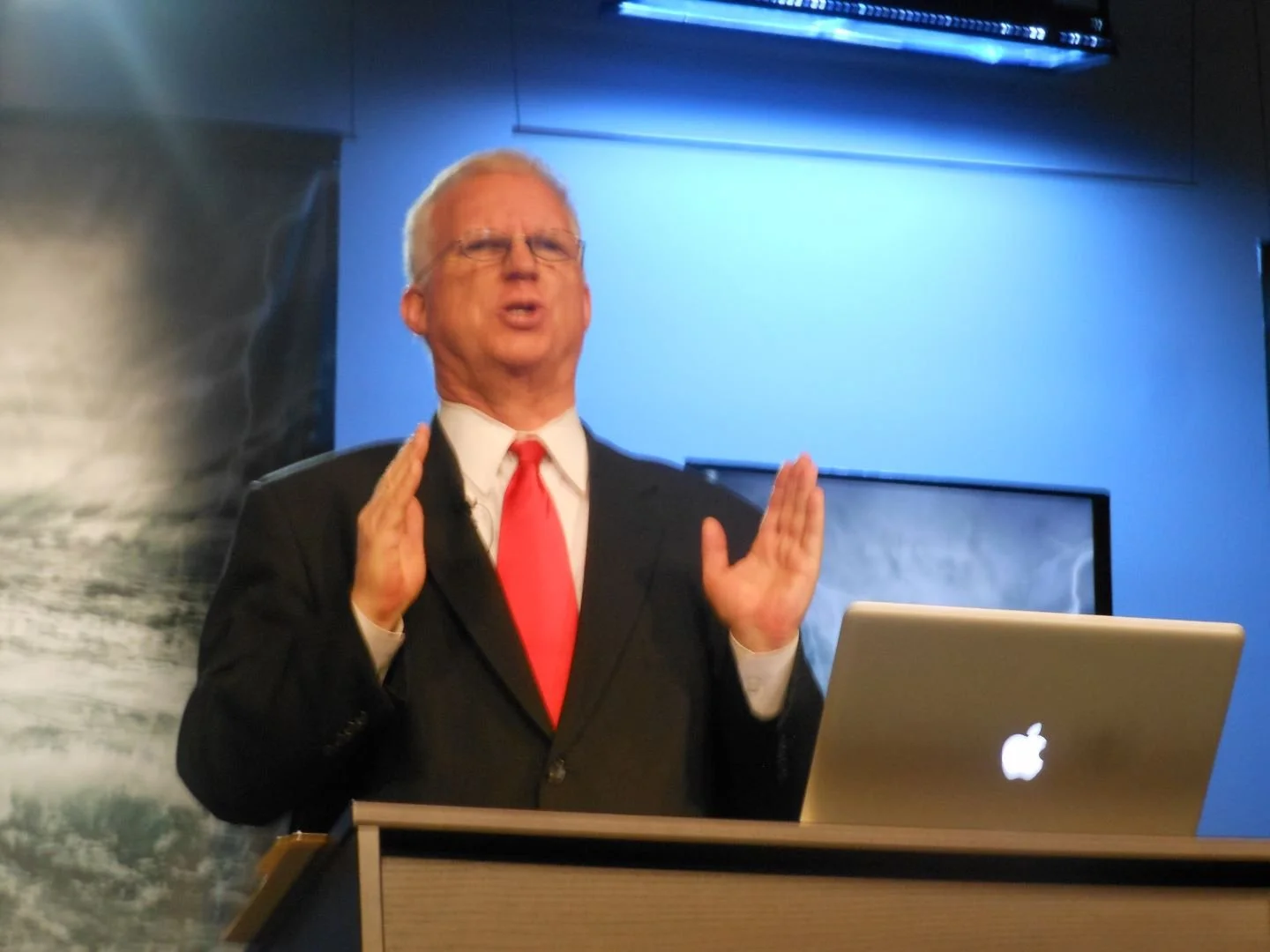
Pastor Kevin Paulson holds a Bachelor’s degree in theology from Pacific Union College, a Master of Arts in systematic theology from Loma Linda University, and a Master of Divinity from the SDA Theological Seminary at Andrews University. He served the Greater New York Conference of Seventh-day Adventists for ten years as a Bible instructor, evangelist, and local pastor. He writes regularly for Liberty magazine and does script writing for various evangelistic ministries within the denomination. He continues to hold evangelistic and revival meetings throughout the North American Division and beyond, and is a sought-after seminar speaker relative to current issues in the Seventh-day Adventist Church. He presently resides in Berrien Springs, Michigan