A recent article on a liberal Adventist website claims it is not necessary to believe in Ellen White’s prophetic gift in order to be a member of the Seventh-day Adventist Church [1].
The longstanding controversy in modern and postmodern Adventism over the doctrinal and moral authority of the Ellen G. White writings continues to crackle and erupt throughout the Seventh-day Adventist movement. It is understandable that this is so, as belief in the utterances of God’s prophets is imperative if revival, reformation, and the Spirit-empowered proclamation of Bible truth to the world is to persuade minds, convict hearts, and prepare a people to meet the Lord.
The article in question cites the following statement on this point from Ellen White’s husband, James White, in an 1856 Review and Herald article:
They [church leadership] do not, however, make belief in this work a test of Christian fellowship [##2|James White, Review and Herald, Feb. 14, 1856.##].
The article under review goes on to say:
Ellen White herself, John Andrews, Uriah Smith, George Butler, and a bunch of the other founders of our denomination were all clear on this: belief in the writings of or the prophetic position of Ellen White was not, and is not to be, a test of fellowship or membership in the Seventh-day Adventist Church [3].
Unfortunately for its case, the above article cites no Ellen White reference in support of its claim in this regard. It was understandable, of course, that denominational leaders not make a test of Ellen White’s prophetic gift in the early decades of its exercise, as many were still weighing the evidence as to the Biblical faithfulness and spiritual fruition of her ministry (Isa. 8:20; Matt. 7:16-20).
Baptismal Vows and Fundamental Beliefs
The article in question cites a portion of the current Baptismal Vow relative to the gift of prophecy, noting what it says and what it doesn’t say:
“8. Do you accept the biblical teaching of spiritual gifts and believe that the gift of prophecy is one of the identifying marks of the remnant church?” [##4|Seventh-day Adventist Church Manual, 2022 edition, p. 51.##].
The article in question then states:
Notice that it does not say anything about Ellen White. Also notice that gift of prophecy is all in lower case—it is not capitalized. When, within our tribe, Ellen White and her work is referred to, “the Gift of Prophecy” is capitalized like a title. Otherwise, the gift of prophecy, all lower case, refers to one of the gifts of the Spirit as outlined in scripture [5].
But what the above article fails to consider are two other statements in the two respective baptismal vows used by the church, one the full vow and the other a shorter alternative. The first of these statements, from the larger vow, reads as follows:
11. Do you know and understand the fundamental Bible principles as taught by the Seventh-day Adventist Church? Do you purpose, by the grace of God, to fulfill His will by ordering your life in harmony with these principles? [##6|Seventh-day Adventist Church Manual, 2022 edition, p. 52.##].
Point 2 from the alternative vow reads as follows:
2. Do you accept the teachings of the Bible as expressed in the Statement of Fundamental Beliefs of the Seventh-day Adventist Church, and do you pledge by God’s grace to live your life in harmony with these teachings? [##7|Seventh-day Adventist Church Manual, 2022 edition, p. 52.##].
Fundamental Belief No. 18, titled “The Gift of Prophecy,” declares concerning Ellen White that “her writings speak with prophetic authority and provide comfort, guidance, instruction, and correction to the church” [##8|Seventh-day Adventist Church Manual, 2022 edition, p. 174.##]. This is a significantly stronger statement than the previous affirmation of Ellen White’s prophetic gift in the former statement of Fundamental Beliefs, which declared her writings to be “a continuing and authoritative source of truth” [##9|Seventh-day Adventist Church Manual, 2010 edition, p. 162.##].
It helps to keep in mind that pastors, theologians, and church administrators are “an authoritative source of truth.” But to speak with “prophetic authority” means to have a direct connection with God Himself, a connection which other sources of spiritual authority do not possess.
Moreover, at the 2015 General Conference session, the delegates voted a Statement of Confidence in the Writings of Ellen White much stronger than any previous statement of this kind:
We reaffirm our conviction that her writings are divinely inspired, truly Christ-centered, and Bible-based. Rather than replacing the Bible, they uplift the normative character of Scripture and correct inaccurate interpretations of it derived from tradition, human reason, personal experience, and modern culture [##10|General Conference of 2015, San Antonio, Texas, voted July 9, 2015 (italics supplied).##].
For those who remember the discussion in San Antonio regarding this statement, it was the italicized portion that was strongly protested on the floor of the session by persons with a less-than-authoritative view of the writings of Ellen White. One European delegate protested that adoption of this statement would turn the Adventist Church into a cult! A motion was then made to strike out this portion of the statement.
Thankfully, the motion failed overwhelmingly.
It should also be noted that the first criterion for church discipline in the Seventh-day Adventist Church Manual reads as follows:
1. Denial of faith in the fundamentals of the gospel and in the Fundamental Beliefs of the Church or teaching doctrines contrary to the same [##11|Seventh-day Adventist Church Manual, 2022 edition, p. 67.##].
It is thus a profound misrepresentation and distortion of the official Seventh-day Adventist position relative to Ellen White’s prophetic gift, to claim that belief in this gift is merely optional. Both baptismal vows, the larger one and the shorter alternative, assume that the new believer has accepted the Fundamental Beliefs of the church [##12|Seventh-day Adventist Church Manual, 2022 edition, p. 52.##], which include acceptance of Ellen White’s prophetic authority [##13|Seventh-day Adventist Church Manual, 2022 edition, p. 174.##].
Conclusion
None of the 28 Fundamental Beliefs voted by the Seventh-day Adventist Church can rightly be viewed as merely discretionary for those choosing to be church members. What is more—and this can’t be stated often enough—never at any time in sacred history have God’s people set aside the counsels of a prophet without experiencing ruinous spiritual and temporal consequences. Whether the writings of the prophet in question were later canonized by the church or not—whether we speak of Moses, Isaiah, Jeremiah, Paul, or of Nathan, Elijah, Huldah, or John the Baptist—adherence to the prophetic Word has always been non-negotiable for those seeking prosperity in any line, spiritual or otherwise.
REFERENCES
1. Ron Hessel, “You Don’t Have to Believe Ellen White Is a Prophet to Be an Adventist,” Adventist Today, Nov. 14, 2025 https://atoday.org/you-dont-have-to-believe-ellen-white-is-a-prophet-to-be-an-adventist/
2. James White, Review and Herald, Feb. 14, 1856.
3. Hessel, “You Don’t Have to Believe Ellen White Is a Prophet to Be an Adventist,” Adventist Today, Nov. 14, 2025 https://atoday.org/you-dont-have-to-believe-ellen-white-is-a-prophet-to-be-an-adventist/
4. Seventh-day Adventist Church Manual, 2022 edition, p. 51.
5. Hessel, “You Don’t Have to Believe Ellen White Is a Prophet to Be an Adventist,” Adventist Today, Nov. 14, 2025 https://atoday.org/you-dont-have-to-believe-ellen-white-is-a-prophet-to-be-an-adventist/
6. Seventh-day Adventist Church Manual, 2022 edition, p. 52.
7. Ibid.
8. Ibid, p. 174.
9. Seventh-day Adventist Church Manual, 2010 edition, p. 162.
10. General Conference session, San Antonio, Texas, voted July 9, 2015 (italics supplied).
11. Seventh-day Adventist Church Manual, 2022 edition, p. 67.
12. Ibid, p. 52.
13. Ibid, p. 174.
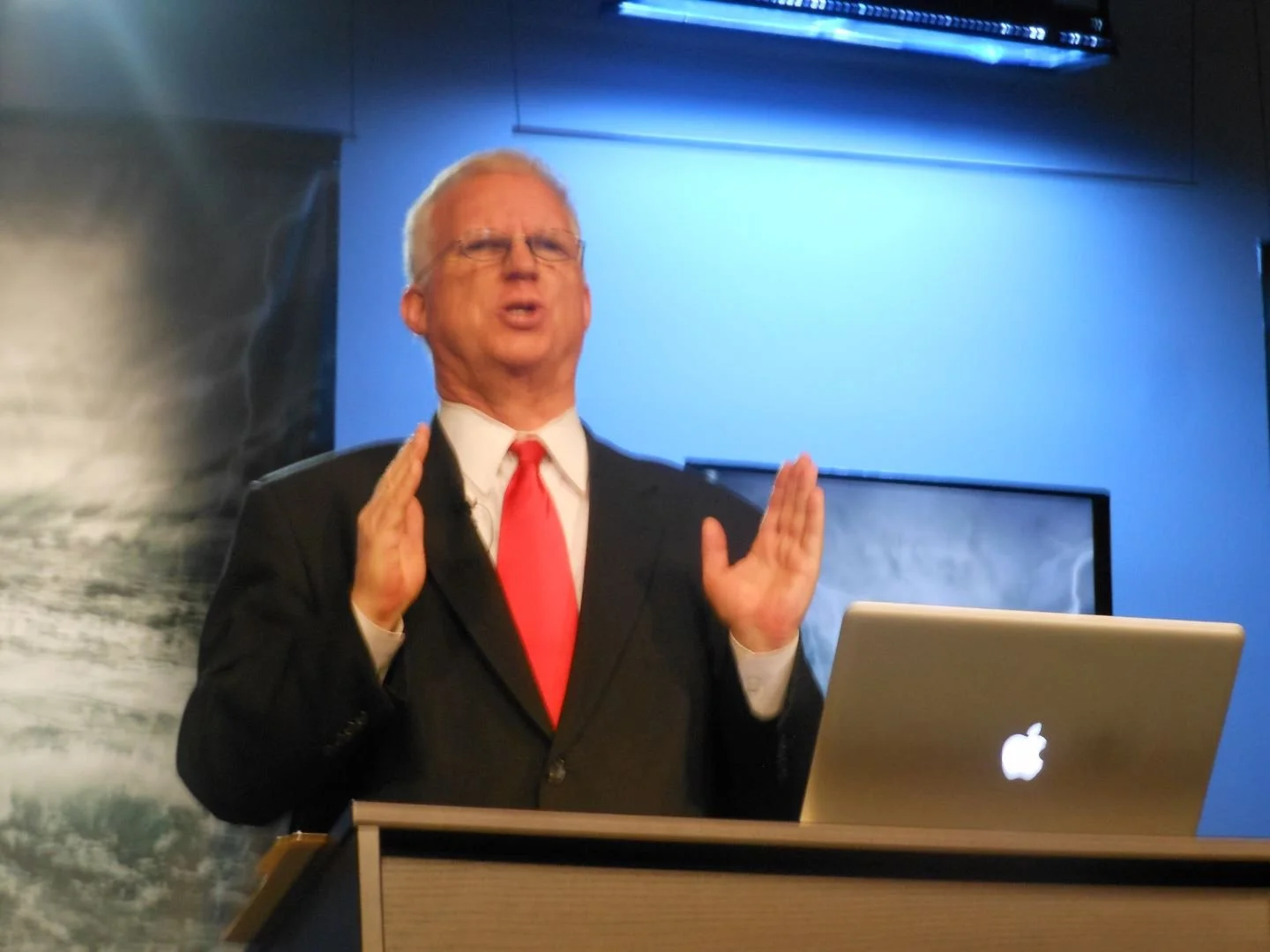
Pastor Kevin Paulson holds a Bachelor’s degree in theology from Pacific Union College, a Master of Arts in systematic theology from Loma Linda University, and a Master of Divinity from the SDA Theological Seminary at Andrews University. He served the Greater New York Conference of Seventh-day Adventists for ten years as a Bible instructor, evangelist, and local pastor. He writes regularly for Liberty magazine and does script writing for various evangelistic ministries within the denomination. He continues to hold evangelistic and revival meetings throughout the North American Division and beyond, and is a sought-after seminar speaker relative to current issues in the Seventh-day Adventist Church. He presently resides in Berrien Springs, Michigan