
At the 2025 General Conference session in St. Louis, the newly elected president of the General Conference stated several times in the course of two sermons that a major theme of his administration would be, “Grounded in the Bible, Focused on Mission.”
Again we are constrained as a church to recognize and explore the tandem relationship of the church’s identity and purpose—its message and mission to the world. Without the one, the other has no meaning. Without both, the church’s reason for existence collapses.
The Remnant and Its Mission
Fundamental Belief No. 13 as held by the Seventh-day Adventist Church, titled “The Remnant and Its Mission,” lays out the heart of the message divinely commissioned to the Seventh-day Adventist movement, identified in Scripture as the final covenant community of sacred history:
The universal church is composed of all who truly believe in Christ, but in the last days, a time of widespread apostasy, a remnant has been called out to keep the commandments of God and the faith of Jesus. This remnant announces the arrival of the judgment hour, proclaims salvation through Christ, and heralds the approach of His second advent. This proclamation is symbolized by the three angels of Revelation 14; it coincides with the work of judgment in heaven and results in a work of repentance and reform on earth. Every believer is called to have a personal part in this worldwide witness (Dan. 7:9-14; Isa. 1:9; 11:11; Jer. 23:3; Micah 2:12; 2 Cor. 5:10; 1 Peter 1:16-19; 4:17; 2 Peter 3:10-14; Jude 3,14; Rev. 12:17; 14:6-12; 18:1-4) [1].
The vision of a faithful, obedient, and victorious remnant among God’s professed people is first articulated in the prophetic writings of the Old Testament (e.g., Isa. 4:3-4; 11:11; Joel 2:32; Micah 2:12; 4:7; 5:3,7-8; Zeph. 3:13). A number of these verses explicitly foresee this remnant within the context of the Messiah’s first and second advents. This is especially clear in the above passage from Zephaniah:
The remnant of Israel shall not do iniquity, nor speak lies, neither shall a deceitful tongue be found in their mouth; for they shall feed and lie down, and none shall make them afraid (Zeph. 3:13; see also Rev. 14:5).
Like the remnant described in Zephaniah, the remnant depicted in Revelation are also portrayed as faithful commandment-keepers, faultless through the power of God’s forgiving and transforming grace (Rev. 12:17; 14:5,12). Indeed, it is through the faith of Jesus, as described in Revelation 14:12, that this faultless commandment-keeping is produced. In the Revelator’s words:
And the dragon was wroth with the woman, and went to make war with the remnant of her seed, which keep the commandments of God, and have the testimony of Jesus Christ (Rev. 12:17).
Two chapters later, the three angels who shatter the vaults of heaven with God’s last warning to humanity, proceed to identify the unique message, the global reach, and the ultimate task of this end-time movement, all inextricably bound together:
And I saw another angel fly in the midst of heaven, having the everlasting gospel to preach unto them that dwell on the earth, and to every nation, and kindred, and tongue, and people.
Saying with a loud voice, Fear God, and give glory to Him; for the hour of His judgment is come: and worship Him that made heaven, and earth, and the sea, and the fountains of waters.
And there followed another angel, saying, Babylon is fallen, is fallen, that great city, because she made all nations drink of the wine of the wrath of her fornication.
And the third angel followed them, saying with a loud voice, If any man worship the beast and his image, and receive his mark in his forehead, or in his hand.
The same shall drink of the wine of the wrath of God, which is poured out without mixture into the cup of His indignation; and he shall be tormented with fire and brimstone in the presence of the holy angels, and in the presence of the Lamb.
And the smoke of their torment ascendeth up for ever and ever: and they have no rest day nor night, who worship the beast and his image, and whosoever receiveth the mark of his name.
Here is the patience of the saints: here are they that keep the commandments of God, and the faith of Jesus (Rev. 14:6-12).
Message Must Drive Mission
Reading the above verses, it becomes clear that the messages of these angels spell out the mission of those on earth who deliver these messages. To fear God and give Him glory in preparation for the hour of God’s judgment means to reveal God’s glory—His character—to both the fallen world and the unfallen universe (Ex. 33:18-19; 34:6-7; Num. 14:21; Isa. 40:5; 60:1-3; Rom. 3:23; 8:18-19; I Cor. 4:9; Eph. 3:16-21; 5:27; Phil. 1:11), and to worship the Maker of heaven and earth through honoring His Sabbath, God’s everlasting sign of creation and redemption (Gen. 2:1-3; Ex. 20:11; Eze. 20:12,20). This divine summons sets its recipients apart from those in apostate Babylon, whose powerless gospel and resulting spiritual bankruptcy relies on civil force to achieve its goals (Rev. 14:8-11; 17:2).
If the church loses, compromises, or in any way dilutes these messages, its mission is forfeited. No focus on mission can accomplish God’s purpose for the church if the Biblical message which drives that mission is lost. Message must always drive mission, never the other way around.
Conclusion
When people try to devalue the importance of doctrinal and moral integrity as a means of refocusing the church on its mission, as some sadly do, they place the proverbial cart before the horse. Controversy over doctrinal, ecclesiastical, and moral issues can be vexing, even debilitating at times, but if the church’s Biblical standards regarding any of the above are either marginalized or set aside, the church’s mission will become captive to circumstances, cultural trends, scholarly speculation, and the vagaries of experience.
And its divine purpose will be lost.
Unless the church is firmly grounded in the written Word, none can be sure what mission lies within its focus. What in the military is called “mission creep” [2] dare not happen to God’s people. Our mission has been foreseen and articulated by the eternal God through His written counsel (Isa. 8:20; Acts 17:11), and it needs neither adaptation nor update.
REFERENCES
1. https://adventist.org/beliefs.
2. “Mission creep” https://en.wikipedia.org/wiki/Mission_creep
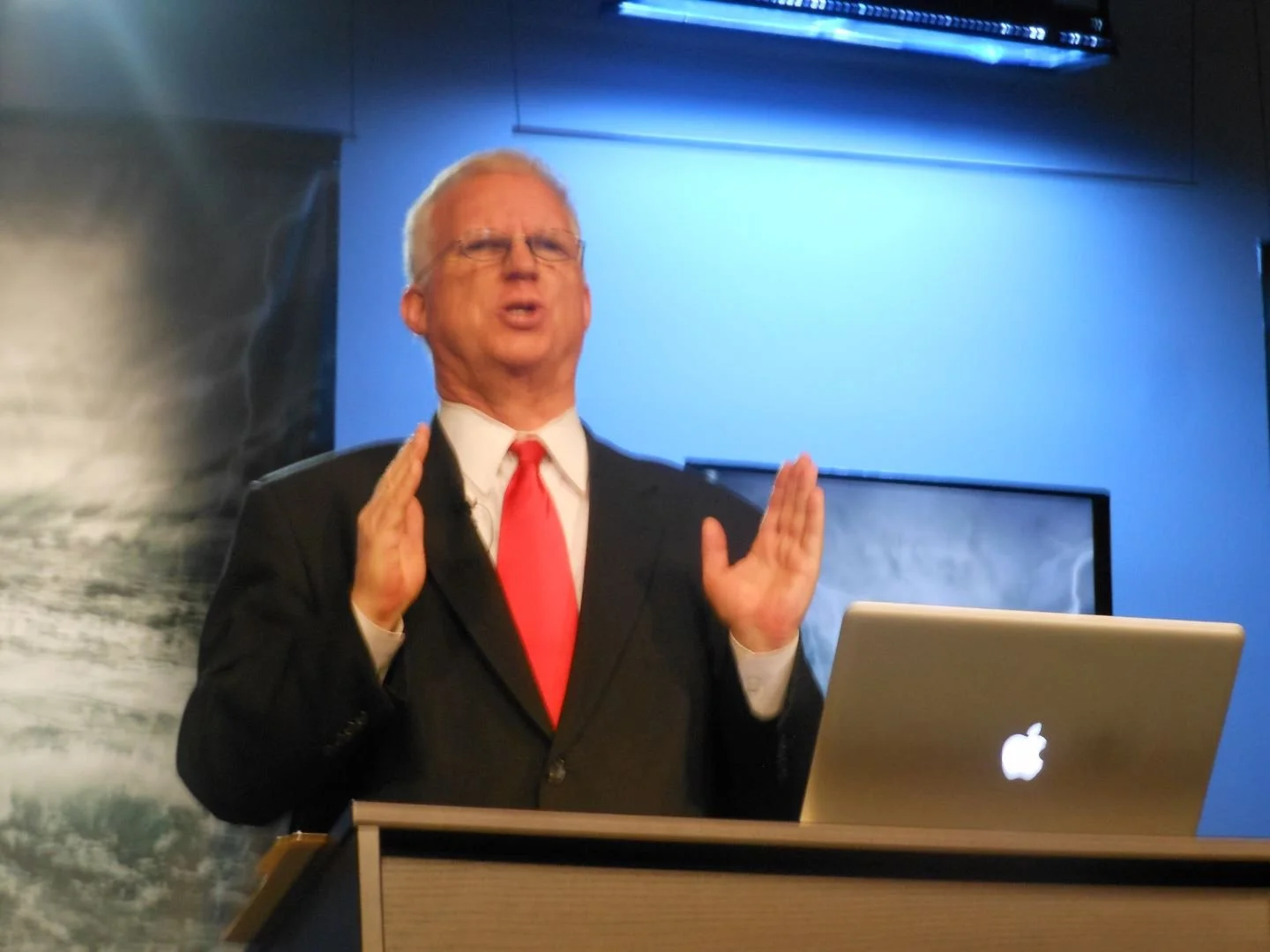
Pastor Kevin Paulson holds a Bachelor’s degree in theology from Pacific Union College, a Master of Arts in systematic theology from Loma Linda University, and a Master of Divinity from the SDA Theological Seminary at Andrews University. He served the Greater New York Conference of Seventh-day Adventists for ten years as a Bible instructor, evangelist, and local pastor. He writes regularly for Liberty magazine and does script writing for various evangelistic ministries within the denomination. He continues to hold evangelistic and revival meetings throughout the North American Division and beyond, and is a sought-after seminar speaker relative to current issues in the Seventh-day Adventist Church. He presently resides in Berrien Springs, Michigan