• About
  • Submit Article
  • Style Guide
  • Writing Agreement
  • Podcast
  • Subscribe
  • Donate
  • Archive
  • Comment Policy
  • Contact
Menu

ADvindicate

11256 Benton Street
Loma Linda, CA, 92354
Phone Number
Reasoning from Scripture

Reasoning from Scripture

ADvindicate

  • About
  • Writers
    • Submit Article
    • Style Guide
    • Writing Agreement
  • Podcast
  • Subscribe
  • Donate
  • Archive
  • Comment Policy
  • Contact

La Sierra constituency approves bylaw revisions 69-10

May 23, 2013 Shane Hilde
la-sierra-university.jpeg

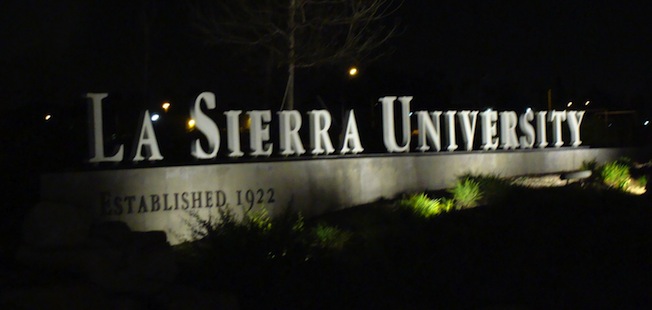
la sierra universityConstituency delegates approved a series of changes to La Sierra University’s bylaws during a special meeting held on the campus on May 23. The revised bylaws document passed by a vote of 69-10, or 87 percent, well beyond the two-thirds vote required for passage. The bylaws revisions provide refinement to La Sierra University’s governance, while addressing some concerns about the university’s bylaws expressed since 1996 by the Western Association of Schools and Colleges, La Sierra’s regional accrediting agency. This follows an information session held on February 21 in which constituents offered feedback and suggestions on the proposed bylaws revisions.

“We all need to appreciate the difficult task that our Articles and Bylaws Committee members have had to complete,” said Ricardo Graham, Pacific Union president and current La Sierra University board chair. “During their nearly two years of study and review, committee members have listened to constituency delegate feedback, and have used care to ensure the revised bylaws meet current governance needs while reinforcing La Sierra University’s clear and unequivocal connection to the Seventh-day Adventist Church and its mission and philosophy.”

The significant bylaws changes fall into two main areas:

  • Changing the way in which the board chair is selected.
  • Making clear the specific roles of the Board of Trustees and the university President.

Delegates approved bylaws changes that require, in consultation with Pacific Union Conference officers, La Sierra University’s Board chair to be elected by the board itself from one of the four ex officio member Union officers, rather than automatically being the Union president. This change allows the trustees to select their own chair, while simultaneously ensuring that the chair will always be an officer of the Pacific Union. An additional key limitation would be that neither the chair or vice chair of La Sierra’s board can serve concurrently as chair or vice chair of another university or college board. This resolves Pacific Union Conference’s unique issue in its operation of two institutions. La Sierra University and Pacific Union College both faced questions from the accrediting agency on this issue that are not faced by institutions in the rest of the North American Division.

Since 1990, La Sierra’s board membership has included nine ex officio members (the Pacific Union Conference president, secretary, treasurer, vice president; the Pacific Union Conference education director; the presidents of the Arizona, Southeastern California, and Southern California Conferences; and the university president); and 14 members elected by the constituency. No change in that composition was considered during this process. Additionally, the revised bylaws require all 14 elected trustees be members of the Seventh-day Adventist Church. Previously one elected trustee could be from outside the Church.

The approved bylaws charge the Board of Trustees with ensuring that the mission and major policies of the university reflect the goals and objectives of the Adventist Church. Other changes recognize the limitations of expecting a board to manage day-to-day details of a complex institution.

The board will continue to appoint the president, provost, and vice president for financial administration, and grant tenure to members of the faculty. This allows the board to have direct interaction with the administrative, academic, and financial leaders of the university. It allows trustees to maintain financial oversight of the university, and to establish the policies necessary to university governance. The president is identified as the university officer accountable for implementing the board’s broad policies into daily operations.

Trustees will also focus on providing strategic vision for the university, establishing governing policies, and protecting the university’s assets. The full bylaws document identifies 18 specific governance functions retained by the trustees under the revised bylaws. The full document will be posted on the university website after the bylaws committee completes editorial changes voted by the delegates

“God’s spirit was evident throughout the session,” Graham said. “I appreciated how delegates cared so much about these issues, as demonstrated through the robust discussion and their insightful questions.

“I am optimistic about La Sierra University’s future,” Graham concluded. “The board, administration, and faculty are committed to building this outstanding institution of higher education and developing the Christian commitment of every student.”

For Immediate Release May 23, 2013 Larry Becker lbecker@lasierra.edu

In News Tags bylaws, feature, lsu, spotlight

Response to La Sierra's bylaw propaganda

May 20, 2013 David Read
report.jpg

reportSince my “Open Letter to Ted Wilson” regarding the proposed changes to La Sierra University's bylaws, the university has released four press releases that appear to respond to the issue. On March 5 LSU noted that the vote on the bylaw changes, which was to have been held on February 21, had been postponed until May 23, 2013, at 1 p.m. The meeting had been scheduled at the Pacific Union Conference headquarters in Westlake Village, but that violated the bylaws, which required that constituency meetings be held at the La Sierra campus.

According to the story, 72 delegates attending what became an “informational meeting,” examined the proposed changes, “asked probing questions, and shared suggestions about a number of items in the proposed Bylaws document. Members of the Articles and Bylaws Committee attended the February 21 meeting to hear the constituents’ comments. They will meet to consider the feedback, and adjust the proposed changes where advisable.” But if the bylaw changes have been modified at all, no new version has been posted online.

Next, on March 15, LSU posted a press release titled "Is La Sierra University Leaving the Adventist Church? No!"

This raises the question: How many other Seventh-day Adventist colleges have to answer questions about whether they are leaving the church? What is it about La Sierra that leads people wonder whether it is leaving the church? The article states:

Several groups and individuals are using postings on independent websites to allege proposed changes in La Sierra University’s bylaws are an attempt to weaken or break the school’s historic ties with the Seventh-day Adventist Church.

Then LSU tries to argue that this is not true. But according to LSU, these changes to the board structure have been demanded by Western Association of Schools and Colleges (WASC), and WASC has indeed stated that “an educational institution’s board and administration should preserve their independence from . . . external parties, such as related entities,” the term “related entities” including sponsoring denominations. The stated purpose of the bylaw changes is to satisfy WASC that the university is sufficiently autonomous from the Seventh-day Adventist Church. LSU can hardly argue both that the bylaw changes are necessary to satisfy secular accreditation, and that they do not weaken the church's control over the University. That's trying to have it both ways. If the bylaw changes address WASC's concerns, then obviously they are intended to weaken the university's ties to the church.

The March 15 posting has several numbered statements. The first states:

1. Throughout the university’s accreditation conversations and bylaws revision process, La Sierra University’s Articles and Bylaws Committee maintained the position that the university would remain distinctively Adventist. Governance concerns expressed by the Western Association of Schools and Colleges (WASC), our regional accrediting body, prompted the bylaws discussion. But WASC’s concerns were focused on the University’s governance practices, not on its mission. During their two years of careful work to resolve WASC issues, committee members also ensured the bylaws remained in alignment with the University’s mission and values, developed and voted by the faculty, staff, and trustees.

 The real question is why does WASC have governance concerns about La Sierra? La Sierra's Board of Trustees is structured exactly like every other union-affiliated Seventh-day Adventist college in North America. Why has no other secular accrediting body in North America expressed concerns about the board structure of an Adventist college?

WASC has taken the remarkable stance that, “Concerns can arise when the board chair is responsible to a related entity, such as a religious institution, . . .” But all SDA tertiary educational institutions have a union president or other church official as their ex officio board chair, who obviously is “responsible to a related . . .religious institution.” All union-affiliated colleges have the union president as their board chair. So WASC has just fired a shot across the bow of the entire tertiary educational apparatus of the Seventh-day Adventist Church. WASC is casting aspersion on all of our colleges’ governing boards. WASC is, in effect, demanding that the church cut loose its entire higher educational structure. If the LSU constituency caves in to this pressure from a secular accrediting authority, it jeopardizes the entire SDA tertiary educational establishment in North America.

The author of LSU's press release makes a distinction between governance and mission, but if the mission of La Sierra is to be governed by the SDA Church, then changes to its governance will impair its mission. This board structure, used throughout North America, has been developed in order to ensure that the SDA Church retains control of its schools. Without structures in place to ensure church control, the church has no way of making certain that its schools continue to support and promote the mission of the church. To change the board structure is to undermine the ability of the church to ensure that La Sierra is faithful to its mission.

2. The proposed bylaws require the Board of Trustees to ensure the mission and major policies of the university are well aligned with the goals and objectives of the Adventist Church. The board oversees the strategic plan and its progress. Adventist mission is central to the function of the board.

The proposed bylaw changes transfer almost all governing power away from the Board of Trustees and vest it in the president of the university, so the board will no longer have the power to ensure anything. For example, all power to hire and fire is removed from the board and given to the president; the board will not even retain oversight in this area. So how can the board ensure that faculty hires are aligned with the goals and objectives of the church? If the mission and major policies of the university are not aligned with the goals and objectives of the Adventist Church, the board will have no power to do anything except fire the president and hope for better luck next time.

3. The revised bylaws make no change in the number or offices of the church leaders who serve the board on an ex officio basis. The board will continue to have among its members the Pacific Union Conference president, secretary, treasurer, vice president, director of education, and the presidents of the Southern and Southeastern California conferences and the Arizona Conference.

But the quorum rule is changed so that there is no quorum unless lay members outnumber ex officio members. And the Pacific Union Conference president can no longer serve as the president of La Sierra's board of trustees as long as he continues to chair PUC's board of trustees. Moreover, the chair changes from an ex officio to an elected position, which obviously weakens the power of the board chair relative to all other board members and the university president. Again, remember that these changes are designed to satisfy WASC that La Sierra has sufficient independence from the Seventh-day Adventist Church. That is the stated purpose of the changes to the structure of the Board of Trustees, so it is disingenuous, to say the least, to argue that they do not loosen the SDA Church's control over the university.

4. La Sierra University’s comprehensive Spiritual Master Plan (entire document available at: http://www.lasierra.edu/index.php?id=8122) makes the following clear statements about the university’s commitment to the church:

  • La Sierra University is committed to the Seventh-day Adventist faith and life.
  • La Sierra University embraces the biblical Sabbath as a gift of sacred time.
  • La Sierra looks to the future with eagerness, anticipating the fulfillment of the Advent hope.

La Sierra University remains deeply committed to the Adventist philosophy of education. Our mission of seeking truth, knowing God, and serving others is daily experienced by our students and those privileged to accompany them on their educational journey. The university’s Spiritual Master Plan guides our work in providing invigorating classroom conversations, meaningful worship experiences, and transformative service opportunities,” says Randal Wisbey, president.

La Sierra claims to embrace the biblical Sabbath “as a gift of sacred time,” but the Sabbath is sacred because God hallowed it at the creation; it is more than just a gift of time, it is a memorial to God's work of creation in a literal week. Adventism came into existence largely to call people back to worship on the day that God set aside at the creation. (Gen. 2:2-3; Ex. 20:11; Rev. 14:7) If mainstream science is correct in its theories about origins—life spontaneously self-assembled and self-vivified, and evolved from single-celled forms over the course of some six hundred million years, and humans evolved from an apelike ancestor some two million years ago—then the Adventist faith is utter nonsense. Yet La Sierra has been teaching this view of origins as truth for many years, and has resisted all efforts to reform this aspect of its curriculum. This casts grave doubt on the university's commitment to the Adventist faith.

La Sierra points us to a “Spiritual Master Plan,” but having a plan for the future is no substitute for upholding plain Bible truth right now. Moreover, the plan raises more questions than it answers. It discusses a science-faith seminar, but previous efforts in this area were probably more corrosive to Adventist faith than the biology classes.

According to the “Spiritual Master Plan,” subjects that will be featured at campus-wide assemblies include “earth care, women’s issues, service, mission, social justice, Christian responsibility,” a litany of liberal enthusiasms.

The problem with any “Spiritual Master Plan” that La Sierra might devise is that it will be implemented by the extremely liberal religion faculty. That faculty was formed by Fritz Guy, who recently co-wrote a book arguing that the writer of Genesis intended to convey that the raqia [Heb. = expanse, firmament, sky] is actually an inverted metal dome:

Then there's John Webster, who told the students in the seminar class that the literal (Historical-Grammatical) method, which is the approved method of Biblical interpretation is “not particularly helpful,” and it might be more helpful to view the opening chapters of Genesis not as how the world came into being, but how it was inaugurated to be God’s dwelling place. Then there's Tricia Famisaran, who urges us to repent of our sins of heterosexism and patriarchy, and suggests that since Lady Gaga has determined that homosexuals were “born that way,” the rest of us should act accordingly:

In sum, a “spiritual plan” is only as good as the people who implement it. A fine-sounding plan cannot take the place of a dedicated and committed Board of Trustees having real governing power, who will put in place a dedicated and committed president and faculty.

Much of LSU's official response to the bylaw change issue is aimed at trying to get the LSU constituency—which has an ethical obligation to inform itself, from any and all sources, regarding the nature, details, and effects of the bylaw changes it is being asked to vote for—to pay no attention to anyone other than the current LSU administration:

While the theories these critics present appear to be objective, they omit important information about the bylaws, the revision process, and recent actions by the university’s board, administration, and faculty. . . . Critical voices are often loud, and their accusatory tone attracts attention. Their self-assured manner suggests that they are speaking with authority. But be assured, there are other more credible voices to be heard.”

But the constituents can judge for themselves what is truth while considering several points of view. “In a multitude of counselors there is safety.” Prov. 11:14. It is always better to consider both sides of the story. “He that speaks first in his own cause seems just; until his neighbor comes and examines him.” Prov. 18:17. It should be clear that when Wisbey advocates these bylaw changes, he speaks in his own cause.

Moreover, LSU Constituent Members do not represent the current administration, nor do they exist to rubber-stamp the existing administration's agenda. The constituency represents the entire Adventist community in Southern California and the Pacific Union, and its commission is to ensure that the University remains faithful to its mission and founding purpose. For LSU to discourage its constituent members from hearing all points of view is like the president discouraging your congressman from listening to your point of view on pending legislation.

Next, on April 5, LSU treated us to a brief history of its accreditation.

The point of this press release seems to be to claim that WASC first raised board structure/governance concerns in 1996, long before Wisbey became president (and, in fact, early in Larry Geraty's tenure as president). We are told that the two main items WASC wanted addressed way back in 1996 were:

1. The number of trustees not employed by any entity of the SDA Church (deemed insufficient at the time), and

2. That the president of the Pacific Union Conference also served as chair of the Pacific Union College board. WASC recommended four steps to take in beginning to address this issue.

We are expected to infer from this information that WASC's intrusion cannot have been solicited by Randal Wisbey, because WASC had these same concerns 11 years before Wisbey became president of La Sierra.

Now, let me see if I have this straight: WASC raises concerns about La Sierra's board structure back in 1996, does nothing for fourteen (14) years, grants LSU accreditation for a full 8-year term in 2010, then says, “oh, by the way, fix your board structure like we said back in 1996.”

To whatever extent WASC raised a concern about board structure in 1996, it was obviously answered back then. The notion that WASC allowed a concern to fester, unaddressed, for 14 years is a non-starter. The concerns were addressed, and WASC was satisfied, back in 1996. Moreover, if the board structure were such a grave concern to WASC, would WASC have extended full accreditation to La Sierra in 2010—fourteen years after the concerns were first raised without them ever having been addressed? Bear in mind that LSU's accreditation is valid until 2018, a full 22 years after the concerns were first raised.

The idea that there is continuity of concern between 1996 and 2010 is surreal. Obviously, the governance issue somehow got put back on the front burner after 14 years of being a non-issue. Why? Because (one strongly suspects) Randal Wisbey wants bylaw changes that he knows he cannot push through without a threat from the accreditors.

But is WASC being consistent in making these demands? There are three separate Brigham Young Universities, the main one in Provo, Utah, another in Idaho, and a third in Hawaii. All three are separate institutions; the Idaho and Hawaii schools are not branch campuses of the BYU in Utah. These three schools share one (1) board of trustees headed up by one (1) man, Thomas S. Monson, the current president and prophet of the Church of Jesus Christ of Latter-day Saints. All of the board members are high officers in the Mormon Church, and most if not all are paid by the Mormon Church. There are no elected lay members on the board; all board members are there by virtue of their offices in the Mormon Church. In other words, they are all ex officios.

The Brigham Young University in Hawaii is within WASC's territorial jurisdiction. Is WASC demanding that BYUH have a separate board? Is WASC demanding that Thomas Monson step down as board chair of BYUH because he also chairs the board for the Utah and Idaho schools? Is WASC demanding that the Mormon Church pack its unitary board with lay members who hold no high offices in the church? The answer to all these questions is, of course, no. Why? Because WASC understands that it exists to ensure basic academic standards, not to dictate to religious denominations how they shall govern their educational establishments. In fact, in 2008, WASC reaffirmed BYUH's accreditation for 10 years.

Finally, on April 12, LSU posted an article explaining the importance of accreditation.

But no one disputes the value of accreditation, and accreditation is not the issue here. La Sierra could retain its current board structure throughout the ceaseless ages of eternity without ever jeopardizing its secular accreditation. The problem is that Randal Wisbey wants to be his own boss, with no real possibility of any meaningful interference from the larger Seventh-day Adventist community. These bylaw changes are a huge step in that direction. WASC doesn't really care about these changes; in the case of BYUH, WASC has not challenged a single, unitary board and board chair governing three separate Mormon institutions, consisting only of church ex officios, with no elected lay members.

The constituency of LSU must not allow itself to be stampeded by an empty, solicited accreditation threat into approving bylaw changes that should never be approved, and that place at risk the entire tertiary educational structure of the Seventh-day Adventist Church.

In Opinion Tags bylaws, feature, lsu, propaganda, spotlight

Analysis of La Sierra bylaw changes

February 15, 2013 David Read

Part I: A Summary and Evaluation of the Bylaw Changes, Taken as a Whole.

These bylaw changes have three main goals: 1) to dilute the vote of the church officials on the Board of Trustees, and ensure that they are outnumbered by lay Trustees; 2) to weaken the office of Chairman of the Board of Trustees; and 3) to greatly diminish the governing power of the Board of Trustees, and, pari passu, to concentrate power in the hands of the University's president.

The changes aimed at diluting official church influence include making the Pacific Union Conference president ineligible to be chairman of the Board, changing the rules on constituent-elected Trustees so that only two can be church employees, changing the quorum rule so that a quorum is achieved only if lay members outnumber church officers, and expanding the powers of the (lay) vice-chair. These changes are clearly intended to dilute and weaken the Seventh-day Adventist Church's influence over the Board of Trustees and hence over La Sierra University.

The changes designed to weaken the office of chairman of the Board of Trustees include changing the position from an automatic ex-officio position to an elected position, providing that the chairman may be removed from office, with or without cause, by a two-thirds vote of the Trustees present, strengthening the office of vice-chair, and strengthening the power of the president relative the power of the Board Chairman. These changes are designed to make it difficult for the Chairman of the Board to exercise real authority over the Board, the University, and the president, and constitute a counter-balancing power to the president.

The changes designed to weaken the Board of Trustees include stripping the Board of the power to set policy, stripping the Board of the power to write policy manuals, stripping the Board of the power to hire and fire the vice presidents, deans, provosts, department chairs and faculty, stripping the Board of any real financial oversight, stripping the Board of the power to oversee fund raising, and stripping the Board of its power to “control all affairs and business, and to be informed of the work of the various schools, departments, committees, and programs.” All these powers that the Board currently exercises are given to the president, concentrating an extraordinary amount of power in the president's hands. The obvious intent of these bylaw changes is to prevent the Board of Trustees from exercising control over the operation of La Sierra University, and to render the Board a rubber-stamp to the president.

Part II: A Detailed Description and Analysis of the Major Proposed Changes

A. Changes to the Structure and Composition of the Board of Trustees:

Change: Section 6.2 is amended to lower the number of non-ex-officio Trustees (i.e., constituent-elected Trustees) who may be church employees from 5 to 2.

Analysis: This change ensures that lay Board members will be a majority of the Board of Trustees. Currently there are 8 church officers automatically on the Board. There are fourteen other Board members appointed by the constituents, of who five can be church employees. If all five were church employees, the church officers and employees would outnumber the lay Trustees 13 to 9 not counting the president. With this change, church officers and employees will be a maximum of 10, and can never outnumber the lay members, who will be a minimum of 12, not counting the president. This change clearly dilutes and weakens official Seventh-day Adventist Church control over the University and can only be intended to do exactly that.

Change: Currently, the president of the Pacific Union is automatically the chairman of the Board of Trustees. Section 6.5 is amended to provide that the chairman shall be elected from among the union officers serving on the Board (Vice President, Secretary, or Treasurer) Also, “neither the chair or vice-chair shall be the chair or vice-chair of any other accredited institution.” The president of the University serves as acting Board chairman until the chairman is elected.

Analysis: The president of the Pacific Union may never again be elected chair of La Sierra's Board of Trustees, assuming that Pacific Union College does not change its bylaws and hence that the president of the Pacific Union continues to serve automatically as chair of the Board of Trustees of Pacific Union College. The chairmanship is effectively taken away from the Pacific Union president and given to one of three lower union officers, to be determined by majority vote. The president of the University is acting chairman, pending the election of the chairman (which is a conflict of interest, because the Board of Trustees supervises the president). This change clearly weakens official Seventh-day Adventist church control over La Sierra University. An ex-officio chair that need not run for office, and cannot be voted out of office, is obviously in a much stronger position than one who must electioneer and seek approval of a majority of the Trustees. These changes make the chairmanship a popularity contest to be determined by a Board vote.

Change: The current section 6.6, specifying the duties and term of office of the vice-chair, is removed and replaced with an expanded section 6.5. The changes specify that the vice-chair must be elected from among those Trustees elected by the constituents; currently the vice-chair could be any member of the Board, including an ex-officio Trustee. Under the current bylaws, the vice-chair merely fills in for the chairman when he is absent, but under the proposed bylaws, the vice-chair can be tasked with “such other duties as the Board may delegate.”

Analysis: Under the proposed changes, the vice-chair may not be an ex-officio Trustee (and, under the proposed changes to § 6.2, the odds are 12 to 2 that the vice chair will be a layman, not a church officer or employee). Absent a PUC bylaw change, the president of the Pacific Union cannot serve as vice-chair of the La Sierra Board, because he will still be the chair of the PUC Board of Trustees. So the Pacific Union president is effectively shut out of the offices of both chairman and vice-chair of La Sierra's Board of Trustees. Moreover, the vice-chair's authority and responsibilities may be expanded in an open-ended manner by a vote of the Board of Trustees. This strengthens the position of vice-chair (now almost certainly a lay position) weakens the chairman (an elected union officer) and potentially weakens official church control over the Board of Trustees and hence over the University.

Change: Section 6.5 a is changed to alter the description of the chairman's duties. The chairman is to plan Board meetings “in consultation with the president.” He is to preside over the Board's self-assessment; (2) ensure that the Board is “well informed about and engaged with the university's needs and issues; and (3) “have ongoing consultation with the president” between meetings “regarding goals and directives established by the Board.”

Analysis: These changes decrease the chairman's responsibility, and increase the president's responsibility, to plan Board meetings. They seem to turn the chairman (a union official) into a sort of special confidant and assistant to the president. They also enshrine in the bylaws a navel-gazing process of Board self-assessment, which seems intended to distract from the Board's legal and fiduciary obligation to govern the University. Proposed changes to the Board's powers, discussed below, will make it difficult for the Board to be “well informed” about anything having to do with La Sierra University. The language about “the university's needs and issues” is not legal language and seems like psychobabble, as though the university were a neglected wife.

Change: Section 6.7 (new 6.6) is changed to reflect that the chairman may be removed from office, with or without cause, upon a vote of two-thirds of the Trustees present at the meeting.

Analysis: This change underscores how weak the chairman will be under the proposed bylaws changes. Under the current bylaws, the chairman is the union president, he does not have to be elected, and he cannot be removed from his position as chairman. It is a strong position, reflecting the University's strong ties to the Seventh-day Adventist Church at the level of the union conference. Under these bylaw changes, the chairman is no longer ex officio, he must be elected by the Board of Trustees, and he can be removed, with or without cause, by a two-thirds vote of the Trustees present.

B. Changes to the Powers of the Board of Trustees:

Change: Section 6.9 (proposed 6.8) is changed to add language about efficiency and transparency, and also to again mention a duty of self-assessment.

Analysis: Any lack of transparency is due to the overuse of executive sessions (closed sessions) when they are not appropriate. The second mention of a duty of self-assessment seems intended to tie up the Board of Trustees with navel-gazing, self-criticism, and self-analysis, crowding out the Board's statutory duty to control and govern the University, and its duty to provide effective oversight and supervision to the president.

Change: Sub-section 6.9a is revised to spell out a more specific oversight goal for the Board of Trustees, including to ensure that the University's mission and polices are aligned with the goals, philosophy, and objectives of the Seventh-day Adventist Church.

Analysis: This change is a very positive change, a change for the better. Unfortunately, however, the Board is stripped of the power to carry out that oversight in subsequent sub-sections of § 6.9.

Change: Where the bylaws state that “The functions of the Board shall include, but not be limited to, the following:” the phrase but not be limited to is proposed to be struck out.

Analysis: The Board's powers will thus be limited to its enumerated powers. This is a subtle but very important diminution in the Board's powers.

Change: In sub-section 6.9b, the Board is stripped of its power to “control all affairs and business, and to be informed of the work of the various schools, departments, committees, and programs.”

Analysis: How is the Board supposed to perform its duty of oversight and governance if it is not allowed to be informed of the work of the various schools, departments, committees and programs? This is obviously aimed at foreclosing any efforts by Trustees to directly inform themselves about what is being taught in the biology department, or other departments that may become controversial, such as the theology department.

Change: In sub-section 6.9c, the Board is stripped of its power to formulate, revise, and maintain official policies.

Analysis: Formulating policy should be a core concern of the Board of Trustees. This is a major step toward taking practical control of the University away from the Board of Trustees and giving it to the president.

Change: In sub-section 6.9d, the Board is stripped of its power to approve major policy handbooks.

Analysis: Again, this a remarkably bold step toward removing any meaningful control of the University from the hands of the Board of Trustees and giving it to the president.

Change: In sub-section 6.9e, the Board of Trustees is stripped of its power to remove a Trustee from the Board for cause and declare vacant the seat of any Trustees upon a two-thirds vote of the Board.

Analysis: Section 6.9e is surplusage, because § 6.7 already gives the Board the power to remove any Trustee, with or without cause, on a two-thirds vote of the Trustees present at the meeting. Section 6.7 is problematical, because it does not provide enough protection to outspoken Trustees who are a nuisance to the president. We saw this provision abused when President Wisbey had Dr. Lidner-Baum, Dr. Tooma, and Ambassador Proffitt thrown off the Board in the autumn of 2011.

Change: In sub-section 6.9b, the Board is stripped of its power to promote, discipline, reassign, or discontinue the president, the provost, the vice presidents, deans, administrative department directors, academic department chairs and faculty. The Board had the power to delegate the “appointment, promotion, demotion, or removal” all of these personnel, with the sole exception of the president, but this power is also removed. The Board is empowered to “recruit, appoint and support the president as the chief executive officer charged with the leadership of the institution: to evaluate the effectiveness of the president: and to make changes in the office of the president in harmony with the goals, philosophy, and objectives of the University.”

Analysis: The Board is stripped of the power to fire anyone other than the president (which power is explicitly granted to the Board in § 7.1). Stripping the Board of its powers to fire vice presidents and deans is a substantial step toward emasculation and neutering of the Board of Trustees.

Change: In sub-section 6.9c, the Board is empowered to charge “the president with the task of leading a strategic planning process, participate in that process, approve the strategic plan, and monitor its progress.”

Analysis: The president, not the Board of Trustees, leads the strategic planing process. It appears from the language (although it is vague) that the Board is allowed to “participate in that progress,” “monitor” that progress, and possibly approve the final plan. Strategic planning should be a Board prerogative. That these bylaw changes make it a presidential prerogative show how radically these changes would empower the president and dis-empower the Board of Trustees.

Change: In sub-section 6.9m, the Board is stripped of the power to review the articles of incorporation and the bylaws, and to recommend changes to them.

Analysis: Apparently this is the last time the Board of Trustees will ever have to vote to recommend changes to the bylaws, because its power to review them and recommend changes is stripped by this bylaw change. If the Board finds that these bylaw changes render it unable to perform its statutory duty of oversight and governance (as it certainly will) it has no power to recommend changes that would restore some reasonable power to the Board.

The annotation says that bylaw changes are governed by the bylaw committee, which is established in § 5.7, but that committee is a sub-committee of the Board of Trustees, and makes recommendations for action by the full Board. Stripping the full Board of the power to recommend bylaw changes leaves the sub-committee without any lawful purpose, and effectively dissolves it.

Change: In sub-section 6.9(l), the Board is stripped of its power to approve salary scales and compensation packages, to receive the annual report of the auditor, and to approve the annual audited financial statements. The Board is empowered to approve major capital expenditures.

Analysis: This change strips the Board of Trustees of financial oversight of the University, with the exception of major capital expenditures. This is a substantial diminution of the Board's power and ability to govern the University. Under article 8, the Board of Trustees will still have the power to receive the annual report of the auditor, but without the powers enumerated under § 6.9l, it isn't clear that the Board will be able to do anything with the auditor's report other than “receive” it.

The annotation says that salaries and compensation are covered in the approval of the budget, but the power to approve or reject a budget does not necessarily entail the power to set salary scales and compensation packages, so the annotation is misleading.

Change: In sub-sections 6.9s and t, the Board is stripped of the power (or obligation) to cultivate, facilitate, and personally support the fund raising efforts of the University, and to approve and provide finances, including voluntary support for the long range development of the University.

Analysis: This provision strips the Board of an important aspect of financial oversight, namely, the power to oversee and regulate fund raising efforts. The secularizing bond covenants are a perfect illustration of why the Board of Trustees needs to continue to be involved with oversight of fund raising. Secularizing the University's physical plant with inappropriate financing does not serve the long term mission of the Seventh-day Adventist Church. Raising funds by naming things after the donor is another area that needs careful Board oversight, as per the recent naming of a “Center for Financial Literacy and Entrepreneurship” after a notorious abortionist.

Change: In sub-section 6.9o, the Board is given the power “to engage regularly, in concert with the president, with the University's major constituencies.”

Analysis: It is not clear what this means. The University's constituencies are the Pacific Union Conference and the larger Seventh-day Adventist Church, but it is not clear how the Board is supposed to “engage” these groups. This seems to be an effort to reverse the role of the Board of Trustees from ensuring that the University furthers the mission of the SDA Church to forcing the Board to plead the University's case to the larger SDA Church. This is backward. The Board should ensure that the University serves the Church, not that the Church serves the University.

Change: In sub-section 6.9p, the Board is empowered “to adopt a Board policy manual providing effective policies to guide the Board and its committees, as well as Board relationships with University staff, and to facilitate assignment of responsibilities among them.”

Analysis: The implication here is that the Trustees need a manual to tell them how to exercise oversight and governance of the University. If this is true, new Trustees are necessary, not a manual. The bylaws themselves are a sufficient manual to the Board of Trustees. Again, the purpose of the Board of Trustees is to govern the University, not vice versa.

C. Changes to the Power of the President, and Miscellaneous Changes

Change: In section 6.15, regarding quorums, language has been added to ensure that, in order to have a quorum legally necessary to conduct business, a majority of Trustees present must be elected Trustees, as opposed to ex-officio Trustees.

Analysis: In essence, this means that the Board of Trustees can never conduct business unless lay members outnumber church officers. Obviously, this change substantially weakens the Seventh-day Adventist Church's control over the University. This change can have no other conceivable purpose.

Change: Section 7.1 is changed to indicate that the secretary, chief financial officer and vice presidents are no longer to be appointed by the Board of Trustees.

Analysis: The Board now has real power to hire and fire only the president. All other positions are appointed by the president, and only he has authority to fire them.

Change: In section 7.2, the president's title is changed from chief administrative officer to Chief Executive Officer.

Analysis: This would be inappropriate under the current bylaws, but under the changed bylaws it fits. These changes really do give the University president the kind of broad ranging power that a corporate CEO has, if not more.

Change: Sections 7.2 a and b are amended to relieve the president of his obligation to present a comprehensive annual report including a financial report. He is instead required to give “regular” reports, whatever that means. The president is empowered to “appoint promote, direct, discipline, reassign. and discontinue the provost, vice presidents, deans, administrative department directors, academic department chairs, and faculty members, in accordance with established university policies and procedures.”

Analysis: Here the president is formally given powers that were previously given to the Board of Trustees. This change represents a substantial concentration of power in the hands of the president, and an equal diminution in the power of the Board of Trustees.

Change: Section 7.2h is amended so that the president can “exercise such additional powers as are assigned by the Board of Trustees.”

Analysis: This is potentially an open-ended grant of power to a position that already wields enormous specified power.
In News Tags bylaws, change, church, la sierra, lsu, sda

La Sierra releases statement on Diaz and bylaw changes

January 25, 2013 Shane Hilde
la-sierra-university.jpeg

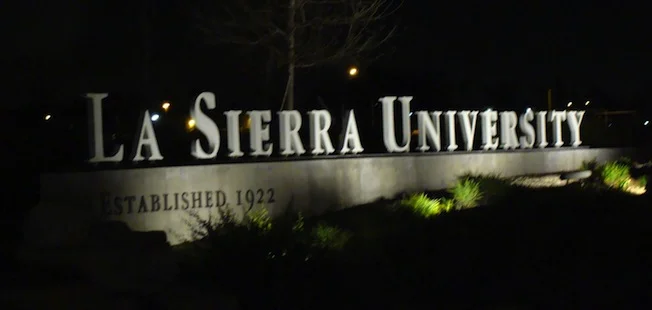
La Sierra University was contacted the day ADvindicate published "La Sierra University hires new evolutionary biologist," but was unavailable for comment until today. Their full statement is posted below:

For Immediate Release Larry Becker Executive Director, University Relations lbecker@lasierra.edu 1-­‐1-­‐1

La Sierra University Responds to False Charges on Independent Websites

Educatetruth.com and ADvindicate.com have focused their efforts on damaging the reputation of Dr. Raul Diaz, who joined the La Sierra University biology faculty at the beginning of January.

Initially one of these sites used an unnamed source to accuse Dr. Diaz of being an atheist. When that was proven false, the site changed its conjecture to Dr. Diaz being agnostic. In fact, Dr. Diaz is a baptized member of the Seventh­‐day Adventist Church. He has attended various Adventist churches throughout the span of his academic career.

Dr. Diaz is also quoted by these sites as saying he is an “evolutionary biologist.” Using this as an attack shows a lack of understanding of contemporary biology. An “evolutionary biologist” does focused analysis of the diversity of life, the genetic variations of living organisms, and how organisms interact with their environment. Through this important work, these scientists make possible advances in human health and medicine, agriculture, and the environment.

Dr. Diaz is a dedicated and talented young scientist who is seeking to discover what causes human facial and hand malformations through his research. His passion for his subject has already shone through to students in the three weeks he has been on campus. He looks forward to using his bio-­‐medical research to develop classes for students with a pre­‐professional health focus. His field and laboratory research efforts will also benefit those students planning to seek graduate biology education.

EducateTruth.com has also been attempting to short­‐circuit the board’s efforts to revise the university’s bylaws in response to WASC’s and AAA’s concerns regarding governance issues. The Bylaws Committee members have worked many hours educating themselves so that they fully understand the issues. Their efforts have resulted in a set of recommended bylaws changes for the university constituents to act on during a special constituency meeting on February 21.

These recommendations are not designed to remove the university from Church control, as claimed by some. The proposals leave that defining relationship strong and unchanged, while addressing WASC’s stated concern about potential conflict of interest at the board leadership level. This is a unique situation, because the Pacific Union Conference is the only union in the North America Division where the union president chairs two college boards—Pacific Union College and La Sierra University.

A key recommendation from the Bylaws Committee is that the board chair be elected and be one of the four Pacific Union officers who serve as ex officio board members, rather than automatically being the union president. This allows the board to select its own chair, while ensuring that the chair will always be a union officer. The only limitation imposed through the proposal is that neither the board chair or vice chair of La Sierra University’s board may concurrently serve as chair or vice chair of another university or college board.

There is no change to the ex officio membership of the board, which will continue to have among its members the Pacific Union Conference president, secretary, treasurer, vice president, director of education, and the presidents of the Arizona, Southeastern California, and Southern California Conferences. The revised bylaws make no change to the constituent membership, and the constituency retains all existing control over lay appointments to the board and any amendments to the bylaws.

The board, according to the proposed bylaws, will continue to focus on setting policies that keep the university closely aligned with the mission, goals, and objectives of the Adventist Church.

#-­‐#-­‐#

In News Tags bylaws, diaz, feature, la sierra, larry becker, lsu, news, raul

Recent
IS BELIEF IN ELLEN WHITE’S PROPHETIC GIFT MERELY OPTIONAL FOR SEVENTH-DAY ADVENTISTS?
Nov 28, 2025
Kevin Paulson
IS BELIEF IN ELLEN WHITE’S PROPHETIC GIFT MERELY OPTIONAL FOR SEVENTH-DAY ADVENTISTS?
Nov 28, 2025
Kevin Paulson
Nov 28, 2025
Kevin Paulson
WHY LAST GENERATION THEOLOGY IS BIBLICAL
Nov 20, 2025
Mark Finley
WHY LAST GENERATION THEOLOGY IS BIBLICAL
Nov 20, 2025
Mark Finley
Nov 20, 2025
Mark Finley
OF CREEDS, CANCEL CULTURE, AND THE U.S. SENATE FILIBUSTER
Nov 14, 2025
Kevin Paulson
OF CREEDS, CANCEL CULTURE, AND THE U.S. SENATE FILIBUSTER
Nov 14, 2025
Kevin Paulson
Nov 14, 2025
Kevin Paulson
THE CONTEXTUALIZATION TRAP
Nov 7, 2025
Kevin Paulson
THE CONTEXTUALIZATION TRAP
Nov 7, 2025
Kevin Paulson
Nov 7, 2025
Kevin Paulson
PROTECTING WHAT IS MOST IMPORTANT
Nov 7, 2025
Ted N.C. Wilson
PROTECTING WHAT IS MOST IMPORTANT
Nov 7, 2025
Ted N.C. Wilson
Nov 7, 2025
Ted N.C. Wilson

ADvindicate Inc. Copyright © 2012-2022. All Rights Reserved. TERMS & CONDITIONS | PRIVACY POLICY