
In discussions regarding controversial issues in the church, in particular the construct many call Last Generation Theology, it is common to hear participants speak of what they hold to be the “mainstream” or “majority” perspective within the denomination, whether in a positive or a negative tone. But it’s often difficult to get such persons to define exactly why a certain perspective is characterized in this way, or some other way.
When I preached at a church in Maryland a number of years ago, not far from the General Conference offices, some of the members referred to the position opposing Last Generation Theology as the “GC position.” I asked one such person why he characterized the theology of which he spoke as the stance of the General Conference. As it turned out, it was because he had heard more individuals who worked at church headquarters who appeared to hold the position opposite that of what most call Last Generation Theology. Why or how that qualified such a theological position as “General Conference” was not explained.
Since the publication of the controversial book Seventh-day Adventists Answer Questions on Doctrine in 1957 [##1|Seventh-day Adventists Answer Questions on Doctrine (Washington, D.C: Review and Herald Publishing Assn, 1957).##], it has often been stated—on both sides of the disputed issues in the book, such as the atonement, the nature of sin, and the humanity of Christ—that this book represented (and allegedly still represents) the official mind of the Seventh-day Adventist Church. Those disagreeing with certain doctrinal positions taken in the book have been described by certain ones as “dissidents,” “fringe dwellers,” even the “lunatic fringe.”
But on what basis, may we ask, can any theological position in the church be identified as “mainstream,” “extreme,” “dissident,” or whatever? Who in the denomination has the authority, or the right, to make such characterizations?
Labels: Appropriate and Otherwise
Labels are unavoidable in human discourse, inadequate though most inevitably are. Whether for good or ill, such markers are nearly always used for convenience only. But in the Seventh-day Adventist Church, only those doctrinal positions which have been voted by a duly called global session of the General Conference can rightly qualify as official, and presumably as “mainstream.” Whatever opinion one holds regarding the controversial positions taken in the book Questions on Doctrine, the fact remains that neither this book nor the controversial stances it took regarding such issues as the nature of the atonement, the nature of sin, and the human nature of Christ, were ever debated or voted upon at a duly called General Conference session.
Sometime ago, an author in a leading denominational magazine insisted that the position taken by the late Desmond Ford regarding the scope of Biblical righteousness by faith—namely, that righteousness by faith as described in the Bible includes justification only—is now supposedly held by a majority of Seventh-day Adventist pastors and scholars. Yet this author gave no hard evidence (e.g. official church pronouncements, survey data) in support of this statement. More recently, in a public discussion of Last Generation Theology, it was claimed that this particular theological construct is held only by a minority within the church, and that the “mainstream” of the denomination supposedly stands on the other side.
Again, no tangible evidence was cited in support of this claim.
The Voice of the World Church
If one wishes to speak of the official stance of the General Conference regarding the issues connected with Last Generation Theology, a compelling case can be made that the General Conference stands on record in support of at least certain key features of this construct. For example, in contrast with those in contemporary Adventism who insist that the Biblical atonement process was finished at the cross, Number 24 of our SDA Fundamental Beliefs declares as follows:
In 1844, at the end of the prophetic period of 2300 days, [Christ] entered the second and last phase of His atoning ministry, which was typified by the work of the high priest in the most holy place of the earthly sanctuary [2].
In other words, atonement (according to official Adventism) is a work in progress, continuing even now in the heavenly sanctuary in what Seventh-day Adventists have often described as the antitypical Day of Atonement.
Fundamental Belief No. 22, titled “Christian Behavior,” states as follows:
We are called to be a godly people who think, feel, and act in harmony with biblical principles in all aspects of personal and social life. For the Spirit to recreate in us the character of our Lord we involve ourselves only in those things that will produce Christlike purity, health, and joy in our lives [3].
How, may we ask, is “Christlike purity” something other than sinlessness? If Biblical principles are to be reflected “in all aspects of personal and social life,” if we are to “involve ourselves only in those things that will produce Christlike purity, health, and joy in our lives,” where is there room for occasional or impulsive sin, however infrequent? Nothing in the above statement says anything about believers simply “doing their frail best” to achieve these goals.
Fundamental Belief, No. 13, titled “The Remnant and Its Mission,” lies at the heart of what has lately come to be known as Last Generation Theology:
The universal church is composed of all who truly believe in Christ, but in the last days, a time of widespread apostasy, a remnant has been called out to keep the commandments of God and the faith of Jesus. This remnant announces the arrival of the judgment hour, proclaims salvation through Christ, and heralds the approach of His second advent. This proclamation is symbolized by the three angels of Revelation 14; it coincides with the work of judgment in heaven and results in a work of repentance and reform on earth. Every believer is called to have a personal part in this worldwide witness (Dan. 7:9-14; Isa. 1:9; 11:11; Jer. 23:3; Micah 2:12; 2 Cor. 5:10; 1 Peter 1:16-19; 4:17; 2 Peter 3:10-14; Jude 3,14; Rev. 12:17; 14:6-12; 18:1-4) [4].
And it helps to remember that according to the Bible, keeping the commandments of God is non-existent unless it is perfect. The apostle James writes, “For whosoever shall keep the whole law, and yet offend in one point, he is guilty of all” (James 2:10).
Simply stated, Last Generation Theology is really just the remnant church theology under a different name. It is no surprise that many opponents of Last Generation Theology in contemporary Adventism find themselves notably uncomfortable with identifying the Seventh-day Adventist Church as the remnant church of Bible prophecy (Zeph. 3:13; Rev. 12:17; 14:12).
At the Annual Councils of 1973 and 1974, prominent features of Last Generation Theology were endorsed by the world leaders of the Seventh-day Adventist Church [5]. (While this is not the same as a vote taken by a worldwide GC session, it goes far toward debunking the notion that Last Generation Theology is somehow outside the church’s mainstream.) Among other things, these Annual Council statements affirmed such tenets of Last Generation Theology as the belief that the return of Jesus has been delayed [6], that this delay is the result of God’s people failing to perfect Christian character in harmony with the commands of inspired counsel [7], that the perfection thus required refers to sinless obedience [8], and that this perfection in the lives of God’s saints will result in the vindication of God’s character “and the final work of settling the great controversy [9].
In perhaps its best summation of what many today call Last Generation Theology, the 1973 statement declared:
God is waiting for a generation of Adventists who will demonstrate that His way of life can truly be lived on earth, that Jesus did not set an example beyond the reach of His followers, that His grace “is able to keep you from falling and to present you without blemish” (Jude 24, RSV) [10].
Some may protest that this statement is more than five decades old. Indeed. But no official denominational statement in the decades since, either at the Annual Council or the General Conference session level, has cast any doubt whatsoever on the above affirmations, nor indicated any official movement by the world body of Seventh-day Adventists away from these sentiments.
Were these statements to be circulated among our people presently, they would likely elicit overwhelming approval from the worldwide church membership, in particular those in non-Western countries where the vast majority of our membership is found.
Conclusion
Why, in the absence of hard evidence, certain ones prefer to describe themselves or their views as “mainstream,” may possibly reflect personal insecurities or the desire to marginalize opposing views as opposed to actual reality. At the bottom line, beliefs which represent the consensus of both the Bible and the writings of Ellen G. White, whether endorsed by a General Conference vote or not, constitute the best description of “mainstream” Adventist thought, even if the general membership of the church doesn’t always affirm or adhere to the counsels there contained.
But when claims as to what is “mainstream” or “extreme” are identified without any objective supporting data—without any backing from official church action or public opinion surveys—such claims can rightly be discounted. When such claims are made in public, they should be challenged in public, and supporting evidence should be demanded. Loud and ubiquitous voices, books from our publishing houses, or the opinions of leading scholars in one setting or another, do not necessarily represent the official voice of the Seventh-day Adventist Church.
REFERENCES
1. Seventh-day Adventists Answer Questions on Doctrine (Washington, D.C: Review and Herald Publishing Assn, 1957).
2. https://adventist.org/beliefs
3. Ibid.
4. Ibid.
6. Ibid.
7. Ibid.
8. Ibid.
9. Ibid.
10. Ibid.
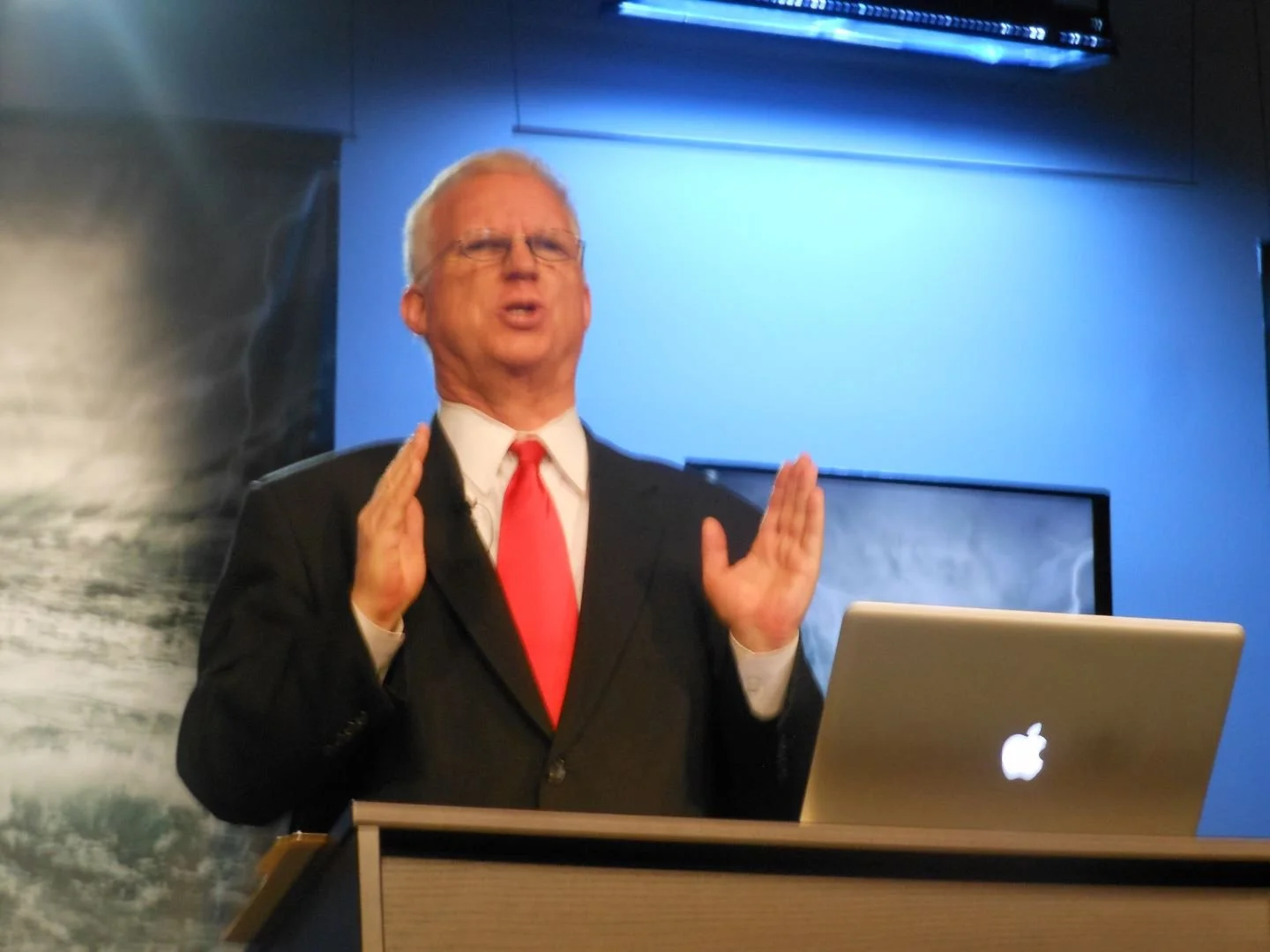
Pastor Kevin Paulson holds a Bachelor’s degree in theology from Pacific Union College, a Master of Arts in systematic theology from Loma Linda University, and a Master of Divinity from the SDA Theological Seminary at Andrews University. He served the Greater New York Conference of Seventh-day Adventists for ten years as a Bible instructor, evangelist, and local pastor. He writes regularly for Liberty magazine and does script writing for various evangelistic ministries within the denomination. He continues to hold evangelistic and revival meetings throughout the North American Division and beyond, and is a sought-after seminar speaker relative to current issues in the Seventh-day Adventist Church. He presently resides in Berrien Springs, Michigan