
Yet another open letter to the new General Conference president appeared this week on a liberal Adventist website [1]. (An earlier one, with similar urgings, appeared on another such site immediately following the GC session of 2025 [2].) What is remarkable about these appeals is the extent to which they eschew subtlety and make demands not only outrageous from a Biblical standpoint, but with what seems to be little awareness of their meager clout on the denomination’s global stage.
Let us again clarify, of course, that the terms conservative and liberal as used in this context are strictly theological in nature, and do not reflect biases as witnessed in the realms of culture and politics. The labels may be the same, but the fact still holds that many who wear either of these labels in the respective realms of religion and morality do not wear the same labels in other societal settings.
Still Chasing Illusory Relevance
The most recent of these letters focuses early and conspicuously on the church’s alleged need to give identical and interchangeable roles to men and women in the gospel ministry [3]. Though objectionable from a strictly Biblical standpoint, this is perhaps the least extreme of the suggestions made in these letters, and the one with likely the most sympathy in the larger Adventist public, though judging from the last several General Conference decisions on this topic, an opinion still decidedly in the minority.
The author of this appeal didn’t help his cause by citing as an alleged “embarrassment” to Adventists the recent elevation of a female bishop to the post of Archbishop of Canterbury in the global Anglican communion [4]. The author’s claim of an Anglican community as 85-million strong [5], makes one wonder exactly where, and on what basis, he is getting his figures. Some of our readers may remember an article several years ago on this site [6], which referenced the following observation regarding Anglicanism in a prominent Australian newspaper:
The wider U.S. Episcopal Church is facing extinction; just 500,000 attend its services on a Sunday, which an internal report calls a “profound and shocking decline.” Its sister church in England isn't doing much better.
The latest figures suggest that Church of England affiliation has halved since 2002 and that only 2 per cent of young people call themselves Anglican. This is despite the Church of England spending decades chasing cultural relevance. At the weekend, there was a discussion in this newspaper about whether or not God has a gender. "I don't want young girls or young boys to hear us constantly refer to God as he," said Rt Rev Rachel Treweek, the Bishop of Gloucester, because that might alienate people.
The Rev doesn't need to worry because no one is listening [7].
The first of these letters urged the denomination’s new chief executive to “make room” for same-sex couples in church fellowship, implying strongly that the unqualified condemnation of this practice in Scripture is “controversial” and that those Bible verses addressing this issue could mean something different in our day [8]. But the author of this appeal neither cited hard evidence of a growing sentiment in the church in favor of a “posture shift” on this issue, nor—if one wishes to speak of relevance—did he cite evidence that those segments of the Christian world that have made room in their ranks for these behaviors have grown either in numerical membership or societal influence.
The Role of Ellen White
The writings of the little lady who died in 1915 continue to be a running sore with liberal Adventists, and for reasons easily understood by anyone who remembers how prophetic messages were received by the faith community in Bible times. Prophets, whether later canonized by the church or not, were almost never popular in their day, simply because they denounced fashionable sins and urged strict compliance with both current and previous inspired revelation.
The most recent of the open letters in question gives credibility to such iconoclastic critics of Ellen White as Dudley Canright, Ronald Numbers, and Walter Rea, implying that their attacks on the modern prophet’s work are as factual as Newtonian physics [9]. The level of exaggeration in these claims, particularly the so-called plagiarism charge, is truly breathtaking when objectively considered. After all, Ellen White wrote a total of 25 million words of instruction for the church, and the volume of material alleged to have been borrowed from other authors is minuscule when compared to the overall quantity of what has been published under her name. What is more, these critics offer no explanation as to why Ellen White’s authority merits reduction on this basis when any number of the Bible writers also used uninspired sources without giving credit.
These Ellen White revisionists seem to have no end of trouble grasping how the Biblically saturated, Christ-focused content of books like The Desire of Ages and Steps to Christ is far more attractive to the average church member than the bitter invective of books like Walter Rea’s The White Lie [##10|Walter T. Rea, The White Lie (Turlock, CA: M&R Publications, 1982).##]. When Rea’s book was published back in 1982, one traveling revivalist observed that when all was said and done, it came down to whether one found Ellen White or Walter Rea more credible. For most Seventh-day Adventists familiar with both authors’ writings, that hasn’t been a hard decision.
The author in question asks the GC president to convene a body similar to the Theology of Ordination Study Committee (TOSC) to consider issues relative to Ellen White’s authority and role in the church [11]. Speaking as one who served on TOSC, I am quite confident that were such a committee to be constituted, and if the relevant evidence were truly laid before them, the claims of Ellen White’s critics would be unable to stand objective scrutiny.
The Second Coming of Christ
Here is where the author of this appeal veers radically off the charts. Such liberal extremism has not been absent from the minds of so-called intellectuals among us, but rarely has it reared its head in open conversation.
The author in question laments that the doctrine of Jesus’ soon second coming “is rarely critiqued in any meaningful way within the church,” and that in his view, “this type of negligence is shortsighted because failure to meaningfully reevaluate our Second Coming posture is self-defeating” {12].
Exactly why this is so, he doesn’t say, except to allege that “the global north no longer believes in or is impressed by what the Second Coming promises” [13], that “Europe and North America were once what Africa is today” [14], and proceeds to ask that “as hard times recede in the future, will the Second Coming charm fade in Africa as it has in the West?” [15].
Thoughtful readers may be led to inquire as to exactly how hard times are presently receding in Europe and North America, where social disruption, political polarization, and economic adversity continue to bedevil so many. A number of months ago on this site, the following statement from The New Republic magazine was referenced, indicating yet again which religious groups are thriving even in the developed world (the “global north”), and why:
In the decades since the Vietnam War, Americans’ faith in all kinds of big institutions has collapsed. But recent data has brought a twist: Churches are enjoying a small but significant rebound, especially among young people. Maybe these millennials and Zooners have hit peak exhaustion with the meaninglessness of TikTok scrolling. Maybe the young men among them are seeking an alternative to the secular media’s message that they are guilty of “toxic masculinity” until proven innocent. . .
Southern Baptist membership is still down from its 2006 peak of 16.3 million, but the denomination’s church attendance and baptisms have grown over the last two years. The number of Americans who reject religious affiliation no longer seems to be rising. One survey showed that 69 percent of college-educated men age 40 and under claim a religious affiliation—up 10 points since 2022, and 7 points higher than women in the same demographic. . . .
It’s too early to speak of full-fledged revival, but this upswing in religious engagement offers lessons for universities. The churches that seem to be rebounding are the ones that embrace countercultural aspects of Christianity. These Roman Catholic, Eastern Orthodox, Anglican, and Holy Spirit-minded Protestants are not the Christians who spent the last century trying to update “premodern” beliefs to fit the demands of Western progressivism and scientism. They don’t shy away from outrageous supernatural claims, or rituals that puzzle outsiders, or traditional teachings on sexuality and gender [16].
The good news is that in our present global context, very few Adventists in any part of the world are likely to find meaning in a faith that spiritualizes away the Second Coming of Christ. (One doubts seriously that the new General Conference president will find this appeal attractive, for which we can praise the Lord.) If theological liberals in the church cultivate this mindset, if their writings, public pronouncements, and classroom instruction begin to assume this flavor, their influence in the denomination will be quickly marginalized if not deliberately removed.
A far stronger case can be made that the lack of evangelistic growth in many Global North countries within the Seventh-day Adventist world is due less to a hostile outside culture than to doctrinal and moral vacillation in our own ranks caused by the errors of both mainstream evangelical and liberal theology. The record of the past century is clear: remove a faith community’s distinctives, and decline in membership as well as influence becomes inevitable. For Seventh-day Adventists, few teachings are more distinctive than the hope of Christ’s literal, visible, imminent return. In our present context, neither science, technology, nor intellectual thought are demonstrating any notable capacity to tame human savagery and make gentle the life of this world. No wonder theological conservatism remains considerably more attractive to contemporary minds than the liberal alternative.
Conclusion
I found myself betwixt mirth and outrage when reading in the most recent of these appeals that “we should shift our emphasis from attaining an afterlife with streets of gold, to one that focuses on this life as reflected in our experiences” [17]. Without question our focus belongs on the counsel of Matthew 25 in addressing the needs of the downtrodden, but neither this nor any other Biblical injunction can be followed without the imparted grace of a supernatural God and the hope of a future world free of sin and pain (Rev. 21:4).
The Bible is clear, as is Ellen White [##18|Ellen G. White, Christ’s Object Lessons, p. 69.##], that the character of Christ must be perfectly reproduced in His people before Jesus can come (e.g. Zeph. 3:13; I Thess. 5:23; I Tim. 6:13-14; II Peter 3:10-14; I John 3:2-3; Rev. 3:21; 12:17; 14:5,12). There need be no tension between practical service for others and the church’s classic eschatological hope. Such philosophical musings as found in these recent appeals must be rejected by the church and its leaders at every level, without ambiguity or qualification. Wherever such thinking has surfaced in the Christian world, the consequences have been ruinous to spirituality and to the faith community’s impact on its surroundings.
The Seventh-day Adventist Church cannot for a moment contemplate going in that direction.
REFERENCES
1. Matthew Quartey, “Dear Erton Kohler: An Open Letter to the General Conference President,” Spectrum, May 5, 2026 https://spectrummagazine.org/views/opinion/dear-erton-kohler-an-open-letter-to-the-general-conference-president/
2. Reinder Bruinsma, “Dear Elder Kohler: Will you make room for people like me in the church?” Adventist Today, July 18, 2025 https://atoday.org/dear-elder-kohler/
3. Quartey, “Dear Erton Kohler: An Open Letter to the General Conference President,” Spectrum, May 5, 2026 https://spectrummagazine.org/views/opinion/dear-erton-kohler-an-open-letter-to-the-general-conference-president/
4. Ibid.
5. Ibid.
6. Kevin Paulson, “The Trend Continues,” ADvindicate, July 26, 2019 https://advindicate.com/articles/2019/7/17/paulson-draft-1-atack-kn4n4-n82ly
7. Tim Stanley, “Why Western Christianity has a death wish,” Sydney Morning Herald, Sept. 18, 2018 https://www.smh.com.au/world/europe/why-western-christianity-has-a-death-wish-20180918-p504df.html
8. Bruinsma, “Dear Elder Kohler: Will you make room for people like me in the church?” Adventist Today, July 18, 2025 https://atoday.org/dear-elder-kohler/
9. Quartey, “Dear Erton Kohler: An Open Letter to the General Conference President,” Spectrum, May 5, 2026 https://spectrummagazine.org/views/opinion/dear-erton-kohler-an-open-letter-to-the-general-conference-president/
10. Walter T. Rea, The White Lie (Turlock, CA: M&R Publications, 1982).
11. Quartey, “Dear Erton Kohler: An Open Letter to the General Conference President,” Spectrum, May 5, 2026 https://spectrummagazine.org/views/opinion/dear-erton-kohler-an-open-letter-to-the-general-conference-president/
12. Ibid.
13. Ibid.
14. Ibid.
15. Ibid.
16. Molly Worthen, “What Besieged Universities Can Learn from the Christian Resurgence,” The New Republic, Aug. 11, 2025 https://newrepublic.com/article/198386/besieged-universities-can-learn-christian-resurgence
17. Quartey, “Dear Erton Kohler: An Open Letter to the General Conference President,” Spectrum, May 5, 2026 https://spectrummagazine.org/views/opinion/dear-erton-kohler-an-open-letter-to-the-general-conference-president/
18. Ellen G. White, Christ’s Object Lessons, p. 69.
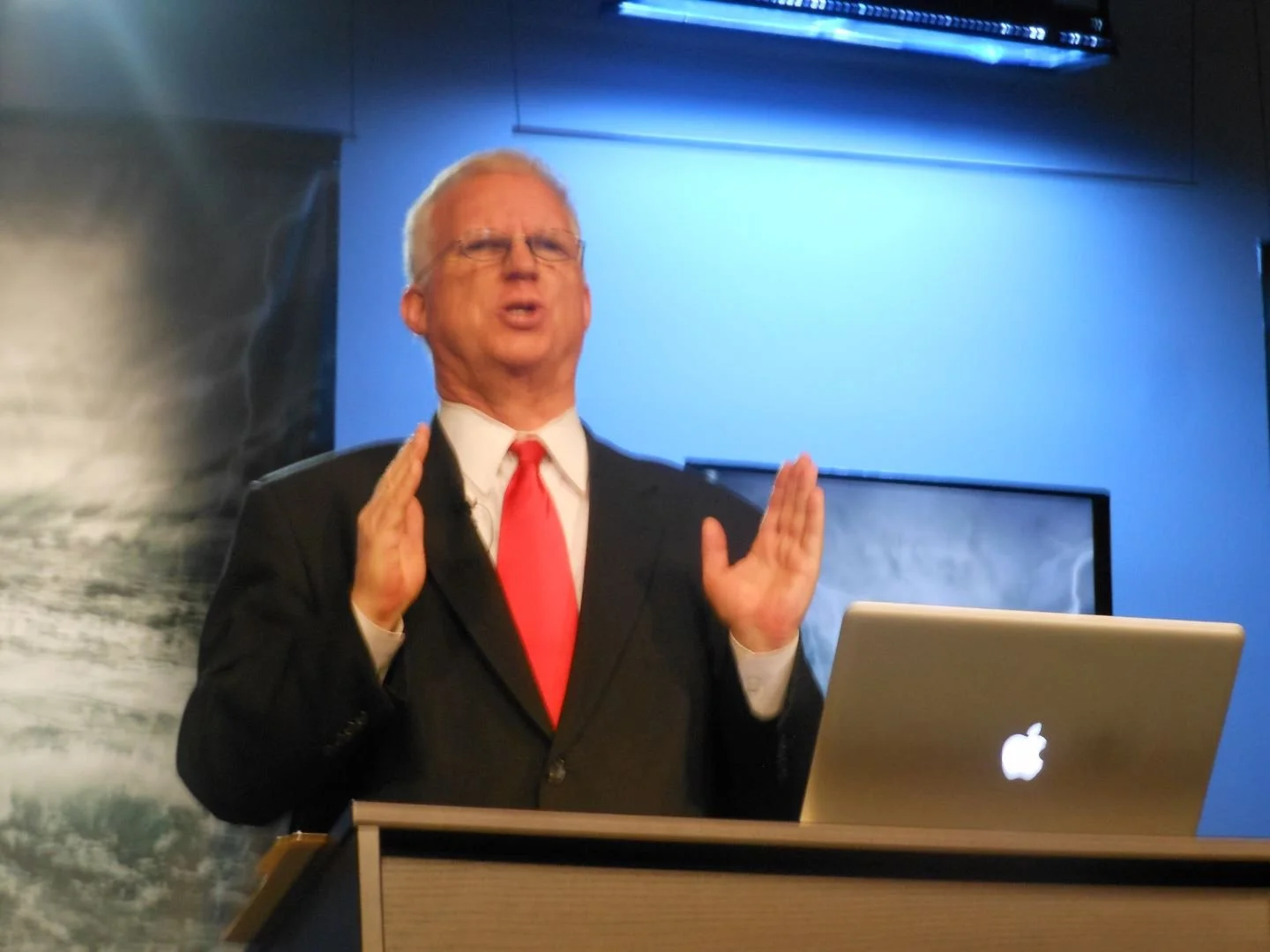
Pastor Kevin Paulson holds a Bachelor’s degree in theology from Pacific Union College, a Master of Arts in systematic theology from Loma Linda University, and a Master of Divinity from the SDA Theological Seminary at Andrews University. He served the Greater New York Conference of Seventh-day Adventists for ten years as a Bible instructor, evangelist, and local pastor. He writes regularly for Liberty magazine and does script writing for various evangelistic ministries within the denomination. He continues to hold evangelistic and revival meetings throughout the North American Division and beyond, and is a sought-after seminar speaker relative to current issues in the Seventh-day Adventist Church. He presently resides in Berrien Springs, Michigan