Recent public spats between Pope Leo XIV and the current President of the United States have understandably aroused interest among Seventh-day Adventists, in particular those who study the connection between Bible prophecy and current world events. Because the prophetic portions of Scripture give prominent end-time roles to both the Roman Catholic Church and the United States of America, any notable conflict between these powers will invariably draw attention from students of these Bible passages.
The Historical Record
Even during the centuries of papal supremacy, certain rulers occasionally dared to challenge papal authority. Who can forget the quarrel between the German emperor Henry IV and Pope Gregory VII, which led to the former seeking reconciliation with the latter by standing barefoot in the snow for three days before the pope agreed to see him [1]? Not to mention the various conflicts between Pope Innocent III, the most powerful of the medieval popes, and certain European monarchs, some of whom were actually deposed from power because of their clashes with the pontiff [2]. Many other examples could be cited from the historical record.
Even in the United States, politicians have often learned the folly of publicly differing from papal hierarchs. Many will recall the public disagreements between such political figures as the late New York Governor Mario Cuomo and 1984 Democratic vice-presidential nominee Geraldine Ferraro with leaders of the Catholic Church in America. It was during this time that the late columnist Mary McGrory wrote that “it is the conventional wisdom that no politician wins in a fight with the Catholic Church” [##3|Stephen D. Mumford, American Democracy and the Vatican: Population Growth and National Security (Amherst, NY: The Humanist Press, 1984), p. 170.##].
Those in high places who lack a careful knowledge of history can’t perhaps be expected to remember these examples.
The Great Powers of Revelation 13
The thirteenth chapter of Revelation speaks of two beasts—the first representing the medieval papacy, the second representing the United States of America [##4|Ellen G. White, The Great Controversy, pp. 433-447.##]. The latter beast appears like a docile lamb, but in reality it speaks like a dragon (Rev. 13:11). In the end these two powers unite against God’s people, and compel the entire world—except for a faithful remnant—to follow them in their resistance to the divine law (verses 12-17). This will be accomplished both through legislative decrees and the working of miracles, the latter playing the most decisive role in bringing the world into harmony with this church-state conglomerate (verses 13-14).
Political and other leaders for whom power rather than conviction is their principal agenda will lash out at anyone or anything perceived to be standing in their way, regardless of the wisdom or lack thereof in the course they take. At times such leaders might even forge alliances with powers whose vilification lies at the heart of their ideological propaganda (the Nazi-Soviet Pact of 1939 comes to mind in this regard).
The current pope doesn’t likely take seriously the raging flourishes of the current U.S. president, understanding as he does the papacy’s historical and institutional strength. After all, the Roman Church has outlasted countless political leaders and ideologies. But at the bottom line, students of Bible prophecy understand that papal Rome and republican America will join forces in the final drama of the last days, a narrative the inspired text says will be driven by natural and human disasters, economic chaos, and above all the working of miracles. We haven’t yet seen the latter phenomenon, but when it occurs, it will be at the height of national and international crisis such as neither America nor the world has yet witnessed.
And when these forces coalesce, the end-time narrative will approach its ultimate climax. The current clash of Revelation 13’s two beasts is but a temporary episode in this narrative. When we keep our eyes on the sweep of prophetic history, we can be confident as to what will come next.
REFERENCES
1. “Road to Canossa” https://en.wikipedia.org/wiki/Road_to_Canossa
2. “Pope Innocent III” https://en.wikipedia.org/wiki/Pope_Innocent_III
3. Stephen D. Mumford, American Democracy and the Vatican: Population Growth and National Security (Amherst, NY: The Humanist Press, 1984), p. 170.
4. Ellen G. White, The Great Controversy, pp. 433-447.
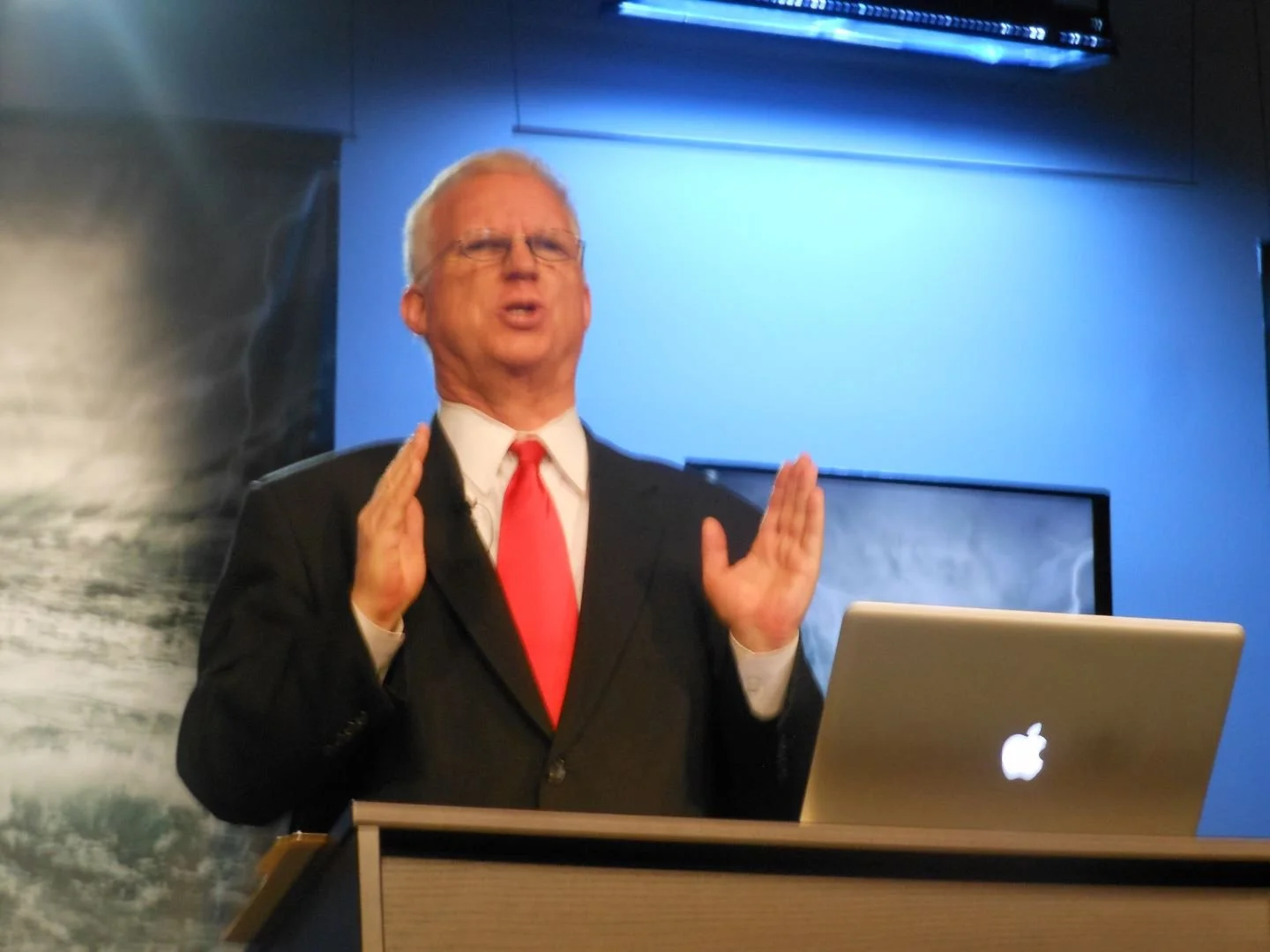
Pastor Kevin Paulson holds a Bachelor’s degree in theology from Pacific Union College, a Master of Arts in systematic theology from Loma Linda University, and a Master of Divinity from the SDA Theological Seminary at Andrews University. He served the Greater New York Conference of Seventh-day Adventists for ten years as a Bible instructor, evangelist, and local pastor. He writes regularly for Liberty magazine and does script writing for various evangelistic ministries within the denomination. He continues to hold evangelistic and revival meetings throughout the North American Division and beyond, and is a sought-after seminar speaker relative to current issues in the Seventh-day Adventist Church. He presently resides in Berrien Springs, Michigan