
In theology, as in politics, there are those who believe that if something—whether true or false—is repeated often enough, people will believe it. Critics of the classic Adventist sanctuary doctrine certainly seem to think their attacks will acquire increased credibility through repetition. What sociologists call “urban legend” frequently develops in this manner.
Readers of this website know how often we have published articles in defense of the Bible-based sanctuary theology of classic Seventh-day Adventism. One of these, not so long ago, included responses to a cluster of challenges to this theology [1]. More recently, our site published a critique of the oft-repeated “Antiochus Epiphanes” explanation of Daniel’s little horn prophecy [2].
One advantage of these repetitive challenges is the opportunity to hone and simplify the Biblical and historical defense of this core doctrine of the Seventh-day Adventist Church. Long ago, Ellen White predicted the intrusion within our ranks of false theories, “such as the doctrine that there is no sanctuary,” declaring that “this is one of the points on which there will be a departing from the faith” [##3|Ellen G. White, Counsels to Writers and Editors, p. 53.##]. This prophecy has certainly been fulfilled in the years since it was made, and that fulfillment continues.
A new article appeared this week on a liberal Adventist website, written by a retired professor from Avondale College who was once a colleague of Desmond Ford [4]. Like Ford and others of like mind, this professor insists that the book of Hebrews “applies the text of the day of atonement to Jesus right after His ascension in the first century,” and not to 1844 [5].
But like his fellow critics, this professor considers the Biblical evidence selectively, leaving out those passages that disprove his case.
Daniel 8:14
The professor writes as follows:
Daniel 8 provides no data at all indicating that it is drawing on the day of atonement—certainly not prophetically, nor for the 19th century [6].
But when Daniel 8 is placed alongside Daniel 7 and Daniel 9, it becomes clear that the sweep of centuries is in focus, with the rise and fall of ancient and medieval powers culminating in a judgment scene in chapter 7 (verses 9-14) and the cleansing of a sanctuary in chapter 8 (verse 14). Because of the centuries of time involved here, with empires rising and falling (Dan. 7:2-8; 8:2-12) and the time extending from the decree to restore Jerusalem to the Messiah’s first advent (Dan. 9:24-27), the year-day principle (Num. 14:34; Eze. 4:6) is the only credible explanation for the time periods here depicted (Dan. 7:25; 8:14; 9:24-27). The only part of the vision left unexplained to Daniel at the close of chapter 8 was the 2,300 days (verses 26-27), which is why this is the only part of the previous chapter’s vision Gabriel came to share with Daniel in chapter 9 (verses 23-27).
The conclusion of the 2,300-day prophecy in A.D. 1844—in the 19th century, no less—is thus fully consistent with the theme of these chapters and the time frame they establish.
How does the Day of Atonement enter this picture? Daniel 7:9-14 describes a judgment scene in which books of record are opened. The fact that God’s people are being judged at the tribunal here portrayed becomes clear in chapter 12, when Gabriel introduces the close of human probation with the standing up of Michael and the subsequent, unprecedented time of trouble (verse 1), following which the prophet is assured that “thy people shall be delivered, every one that shall be found written in the book” (verse 1).
At no other time in Daniel’s prophecy are heavenly books mentioned except in chapters 7 (verses 9-14) and 12 (verse 1). Those delivered in chapter 12 are thus the ones vindicated in the judgment of chapter 7. Other Bible passages also speak of heavenly books in the context of judgment and the vindication of the righteous (e.g. Ex. 32:32-33; Mal. 3:16-18; Luke 10:20; Rev. 3:5). Like the succeeding empires foretold in Daniel 7 and 8 through parallel symbols (Dan. 7:2-8; 8:3-12), the judgment of Daniel 7:9-14 parallels the cleansing of the sanctuary in Daniel 8:14. The only sanctuary in existence at the close of the time periods depicted in these chapters is the one in heaven, whose cleansing with “better sacrifices” than those of the Old Testament is anticipated in Hebrews 9:23.
The case for Daniel 7-9 foretelling the investigative judgment affirmed in classic Adventist sanctuary theology is thus a decisive one.
The Book of Hebrews and the Day of Atonement
The professor in question misses the point in those chapters he cites from the book of Hebrews. The point in these chapters is not that Jesus is involved in a Day of Atonement ministry, but rather, that believers since His ascension need no human priest or man-made temple to bring them into the presence of God. The point in the book of Hebrews is that in the Old Testament there were many sacrifices, many priests, and an earthly sanctuary made with human hands. But in the New Testament there is but one Sacrifice, one Priest, and a heavenly sanctuary not made with hands.
The professor writes as follows:
Hebrews ignores the relatively minor burnt offering sacrifice of the two rams, one for the priests and the other for the people; his focus is on the sin offerings of the day of atonement, that is, the young bull and the goat (Heb. 9:12–13, 19; 10:4) [7].
But his passing reference to Hebrews 9:19 is profoundly misleading, as the passage from whence this verse is taken is not discussing the Day of Atonement ritual at all, but rather, the dedication of the wilderness tabernacle by Moses and Aaron (compare Numbers 7):
Whereupon neither the first testament was dedicated without blood.
For when Moses had spoken every precept to all the people according to the law, he took the blood of calves and of goats, with water, and scarlet wool, and hyssop, and sprinkled both the book, and all the people.
Saying, This is the blood of the testament which God hath enjoined unto you.
Moreover he sprinkled with blood both the tabernacle, and all the vessels of the ministry (Heb. 9:18-21).
When we drop back to verse 12, it becomes clear that the dedicatory service described above is being paralleled with Christ’s entrance into the heavenly sanctuary at His ascension:
Neither by the blood of goats and calves, but by His own blood He entered in once into the holy place, having obtained eternal redemption for us.
Jesus, in other words, didn’t dedicate the heavenly sanctuary with the blood of calves and goats, like Moses and Aaron did with the earthly sanctuary. Rather, He dedicated the heavenly sanctuary with His own blood, thus opening the way to His Father for all seeking access to His throne of grace (Heb. 4:16). The book of Hebrews is clear that the sum total of blood sacrifices in the Old Testament were fulfilled by Jesus on the cross, and that the work of the Old Testament high priest has now been replaced by the high priestly ministry of Jesus in heaven. But the primary parallel being drawn in Hebrews 9 is between the dedication of the original Israelite sanctuary in the wilderness with the blood of calves and goats (verses 18-21) and the dedication of the heavenly sanctuary with the blood of Jesus (verse 12).
Conclusion
Once the above point is understood, the insistence of the professor in question—along with other critics of the Adventist sanctuary doctrine—that the phrase “within the veil” in Hebrews 6:19 must refer to the ancient high priest’s entrance into the most holy place on the typical Day of Atonement [8], is unsustainable. The principal argument in this epistle is not the distinction between the first and second apartments of the sanctuary, though this distinction is certainly affirmed (Heb. 9:6-7). Rather, the principal argument is that Jesus now stands for His people in His Father’s presence, to which all are now promised access (Heb. 9:24). Whether He ministers in the holy place prior to 1844, or in the most holy place thereafter, this access is assured.
REFERENCES
1. Kevin Paulson, “Other Challenges to the Sanctuary Doctrine—And the Bible’s Response,” ADvindicate, April 7, 2023 https://advindicate.com/articles/2021/9/2/justification-and-perfection-aembc-l9bng-h3pls-8wb32-te4k3-6epdj-ms96e-kzs7l-w2tdn-tz53d-yklz7
2. ----“A Petty, Pathetic Tyrant Fails Again to Disrupt the Adventist Prophetic Narrative,” ADvindicate, Feb. 26, 2026 https://advindicate.com/articles/2025/6/26/the-unerring-lodestar-xrycl-k57yw-4ekg8-pyls4-2x2w6-xx7nm-bknde-gygjs-harg3-gt9r7-p75a9-37srg-2zc2g
3. Ellen G. White, Counsels to Writers and Editors, p. 53.
4. Norm Young, “Hebrews Proves That Daniel 8:14 Really Isn’t About the Day of Atonement,” Adventist Today, May 12, 2026 https://atoday.org/hebrews-proves-that-daniel-814-really-isnt-about-the-day-of-atonement/
5. Ibid.
6. Ibid.
7. Ibid.
8. Ibid.
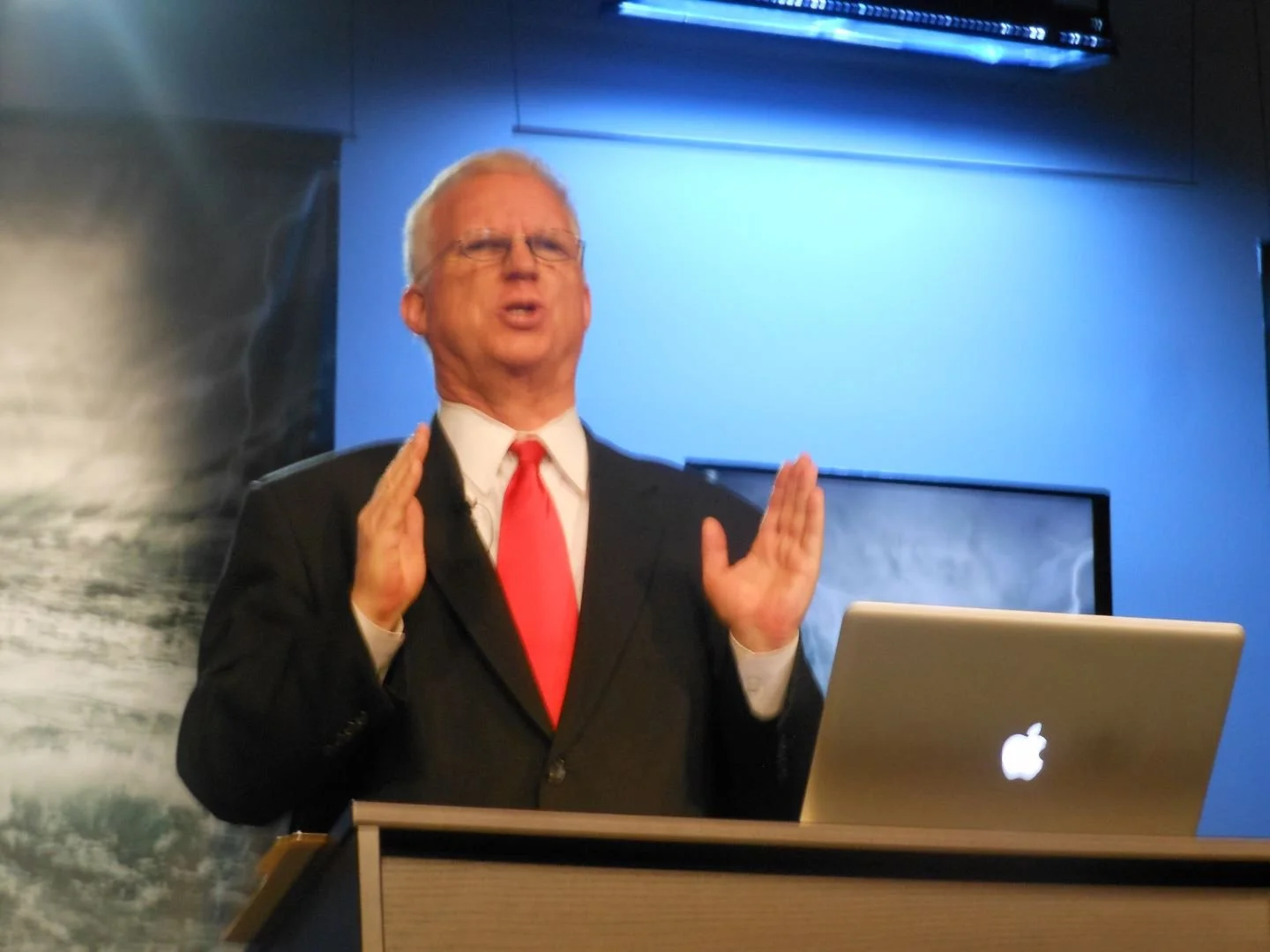
Pastor Kevin Paulson holds a Bachelor’s degree in theology from Pacific Union College, a Master of Arts in systematic theology from Loma Linda University, and a Master of Divinity from the SDA Theological Seminary at Andrews University. He served the Greater New York Conference of Seventh-day Adventists for ten years as a Bible instructor, evangelist, and local pastor. He writes regularly for Liberty magazine and does script writing for various evangelistic ministries within the denomination. He continues to hold evangelistic and revival meetings throughout the North American Division and beyond, and is a sought-after seminar speaker relative to current issues in the Seventh-day Adventist Church. He presently resides in Berrien Springs, Michigan