
Controversy over the gospel, its scope and meaning, continues to rage in certain quarters of contemporary Adventism. Much of the controversy is fueled, not by a careful study of the inspired writings, but rather, by the uninspired assumptions of scholars and theologians and an experience-driven desire for assurance and peace of mind. In the present article we’re going to take a few moments to look, first and foremost, at what the Bible teaches about the substance of what it calls the gospel, and then consider similar statements from the writings of Ellen G. White, often called the Spirit of Prophecy.
The Biblical Foundation
Many in modern and contemporary Adventism, when speaking of the gospel, define it exclusively in terms of God’s initiative in the saving process, whether at Calvary or here and now, as distinct from the believer’s response through surrender and obedience. But both Scripture and Ellen White are clear that the gospel includes both the divine initiative in salvation and humanity’s response thereto.
At the start of His ministry Jesus declared His purpose to “preach the gospel to the poor,” to “heal the brokenhearted, to preach deliverance to the captives, and recovering of sight to the blind, to set at liberty them that are bruised” (Luke 4:18). The apostle Paul writes, “For I am not ashamed of the gospel of Christ, for it is the power of God unto salvation to every one that believeth” (Rom. 1:16).
Notice how the gospel isn’t defined as some legal deliverance already accomplished, or as the power of God in already having saved humanity by a single, objective act on the cross of Calvary, whether humanity likes it or not. Those in the Seventh-day Adventist Church who embrace the above theories cannot support them from the collective witness of either Scripture or the writings of Ellen White. Rather, the gospel according to the inspired witness is the power of God unto salvation, power to forgive and deliver and transform the lives of those who believe and submit to divine grace.
When we see how Biblical salvation is defined as being saved from sin (Matt. 1:21), and how this process includes both justifying and sanctifying righteousness (Eph. 1:7; II Thess. 2:13), the scope of the gospel according to Scripture becomes clearer still.
The message of the first angel in Revelation 14 underscores this point further, as it defines the content of the “everlasting gospel” (verse 6) as the summons to “fear God, and give glory to Him, for the hour of His judgment is come, and worship Him that made heaven, and earth, and the sea, and the fountains of waters” (verse 7). Without question, these and the above verses identify the gospel as not merely an announcement of something God has already done, but also what humanity is summoned to do through heaven’s power in cooperating with the divine purpose.
Root and Fruit
Ellen White is clear that “the very essence of the gospel is restoration” [##1|Ellen G. White, The Desire of Ages, p. 824.##], which certainly involves more than an objective act on God’s part. The Bible is clear that the divine law must disclose the reality of sin to the human agent before conversion and justification can be experienced (Rom. 3:20; Gal. 3:24). Hence we have the following Ellen White statements which describe the law as the root of the gospel:
Perfection of character is attainable by every one who strives for it. This is made the very foundation of the new covenant of the gospel. The law of Jehovah is the tree; the gospel is the fragrant blossoms and fruit which it bears [##2|——Selected Messages, vol. 1, p. 212.##].
The law is the gospel embodied, and the gospel is the law unfolded. The law is the root, the gospel is the fragrant blossom and fruit which it bears [##3|——Christ’s Object Lessons, p. 128.##].
Other statements are equally clear that Spirit-empowered transformation and obedience represent an actual part of the gospel, not merely its result:
Said the apostle, speaking of the gospel, “To whom God would make known what is the riches of the glory of this mystery among the Gentiles, which is Christ in you, the hope of glory” [##4|——Review and Herald, June 11, 1889.##].
Teach them the first principle of the gospel, which is Christ formed within, the hope of glory [##5|——Sermons and Talks, vol. 2, p. 73.##].
The gospel of Christ is the law exemplified in character [##6|——Maranatha, p. 18.##].
When temperance is presented as a part of the gospel, many will see their need of reform [##7|——Testimonies, vol. 7, p. 75.##].
The Lord has given instruction that the gospel is to be carried forward, and the gospel includes health reform in all its phases [##8|——Medical Ministry, p. 159.##].
The use of the terms “root” and “fruit” relative to salvation have often created more confusion than clarity, because many employ these terms in a manner not consistent with the inspired text. When we read Hebrews chapter 11, for example, it becomes clear that obedience is most assuredly the fruit of faith. Ellen White echoes this Biblical teaching in such statements as the following:
We do not earn salvation by our obedience, for salvation is the free gift of God, to be received by faith. But obedience is the fruit of faith [##9|——Steps to Christ, p. 61.##].
Speaking of the experience of John Wesley following his conversion, Ellen White observes:
He continued his strict and self-denying life, not now as the ground, but the result of faith; not the root, but the fruit of holiness. The grace of God in Christ is the foundation of the Christian’s hope, and that grace will be manifested in obedience. Wesley’s life was devoted to the preaching of the great truths which he had received—justification through faith in the atoning blood of Christ, and the renewing power of the Holy Spirit upon the heart, bringing forth fruit in a life conformed to the example of Christ [##10|——The Great Controversy, p. 256 (italics supplied).##].
What is clear from these inspired statements, from Ellen White as well as Scripture, is that faith must come before obedience, the latter being the fruit of the former. But we note with interest that what we don’t find in these statements, or any others from the inspired writings, is the idea that obedience is the fruit of a finished salvation. If, of course, salvation is defined as both forgiveness and inward holiness, with outward acts of obedience as the result thereof, then it is Biblically correct to say, as do our SDA Fundamental Beliefs, that “salvation is all of grace and not of works, and its fruit is obedience to the Commandments” [11].
But it is not Biblically correct to say one is exclusively saved by God’s forgiveness (justification), and that obedience (sanctification) is the fruit of a salvation done and completed. Sanctification is certainly the fruit of justification, but Scripture as well as Ellen White are clear that both of these phases of Jesus’ righteousness constitute the ground of our salvation (Eph. 1:7; Col. 1:14; II Thess. 2:13; Titus 3:5) [##12|White, Steps to Christ, p. 63.##]. Faith and divine power are the means of both, but surrender and obedience on our part must attend the entire process.
Conclusion: Recovering the Everlasting Gospel
Ellen White declares in one statement, “Hanging upon the cross, Christ was the gospel” [##13|——Manuscript Releases, vol. 21, p. 37.##]. But too many forget that the cross isn’t solely about forgiveness, though forgiveness is certainly a principal feature of Calvary’s saving provisions (Eph. 1:7; Col. 1:14). But according to the Bible, the blood of Jesus shed on Calvary is also the means whereby practical perfection of character is accomplished:
Now the God of peace, that brought again from the dead our Lord Jesus, that great Shepherd of the sheep, through the blood of the everlasting covenant make you perfect in every good work to do His will, working in you that which is well pleasing in His sight, through Jesus Christ: to whom be glory for ever and ever. Amen (Heb. 13:20-21).
But if we walk in the light, as He is in the light, we have fellowship one with another, and the blood of Jesus Christ His Son cleanseth us from all sin. . . .
If we confess our sins, He is faithful and just to forgive us our sins, and to cleanse us from all unrighteousness (I John 1:7,9).
Ellen White echoes this Bible truth when she writes:
Christ “gave Himself for us, that He might redeem us from all iniquity, and purify unto Himself a peculiar people, zealous of good works” (Titus 2:14). He made an offering so complete that through His grace every one may reach the standard of perfection. Of those who receive His grace and follow His example it will be written in the book of life, “Complete in Him—without spot or stain” [##14|——In Heavenly Places, p. 7.##].
Returning to the first angel’s message, identified explicitly as the “everlasting gospel” (Rev. 16:6)—the only time this phrase ever occurs in the Bible—we see how it encompasses the totality of the Biblical salvation message, not just a part of it.
The angel’s command to “fear God” includes the conviction of sin that the divine law brings to the human heart (Rom. 3:20; Gal. 3:24), thus leading to confession and the forsaking of sin which God’s forgiveness requires as prerequisites (II Chron. 7:14; Prov. 28:13; Isa. 55:7; I John 1:9). Thus the converted are enabled to “cleanse [themselves] from all filthiness of the flesh and spirit, perfecting holiness in the fear of God” (II Cor. 7:1), to “have grace, whereby we may serve God acceptably with reverence and godly fear” (Heb. 12:28).
Such practical holiness perfects the character and brings God’s glory—His character (Ex. 33:18; 34:6-7; Rom. 3:23; Eph. 3:16-21; Phil. 1:11)—into the human life and witness. Thus the apostle Paul exhorts his readers: “Unto Him be glory in the church by Christ Jesus throughout all ages, world without end, Amen” (Eph. 3:21). Thus the Christian is prepared for the hour of God’s judgment (Dan. 7:9-14; 8:14; 12:1), in which the life is compared to the eternal standard of righteousness (James 2:10-12), to decide who among a fallen world’s inhabitants is fit for the courts of glory (Eccl. 12:13-14; Matt. 12:36-37; 25:31-46; II Cor. 5:10). In the words of our Lord, from the book of Revelation:
He that overcometh, the same shall be clothed in white raiment, and I will not blot out his name out of the book of life, but I will confess his name before My Father, and before His angels (Rev. 3:5).
The final command of the first angel of Revelation 14 calls the world to “worship Him that made heaven, and earth, and the sea, and the fountains of waters” (verse 7). A few verses later, the third angel closes his message with the declaration, “Here are they that keep the commandments of God, and the faith of Jesus” (verse 12). Only one of God’s Ten Commandments—which comprise the ultimate standard of judgment (James 2:10-12)—identifies God as the Creator of heaven and earth, and that is the Fourth (Ex. 20:8-11). To observe the seventh-day Sabbath as a sign both of creation (Gen. 2:1-3; Ex. 8:11) and of redemption (Eze. 20:12,20) fittingly represents the final spiritual test to be faced by the human family.
This is the everlasting gospel of Holy Scripture, the supreme divine appeal to the hearts of men and women. It is time the Seventh-day Adventist Church recovered this gospel—without embarrassment, without qualification, and without shame.
REFERENCES
1. Ellen G. White, The Desire of Ages, p. 824.
2. -----Selected Messages, vol. 1, p. 212.
3. ----Christ’s Object Lessons, p. 128.
4. ----Review and Herald, June 11, 1889.
5. ----Sermons and Talks, vol. 2, p. 73.
6. ----Maranatha, p. 18.
7. ----Testimonies, vol. 7, p. 75.
8. ----Medical Ministry, p. 159.
9. ----Steps to Christ, p. 61.
10. ----The Great Controversy, p. 256 (italics supplied).
11. https://adventist.org/beliefs.
12. White, Steps to Christ, p. 63.
13. ----Manuscript Releases, vol. 21, p. 37.
14. ----In Heavenly Places, p. 7.
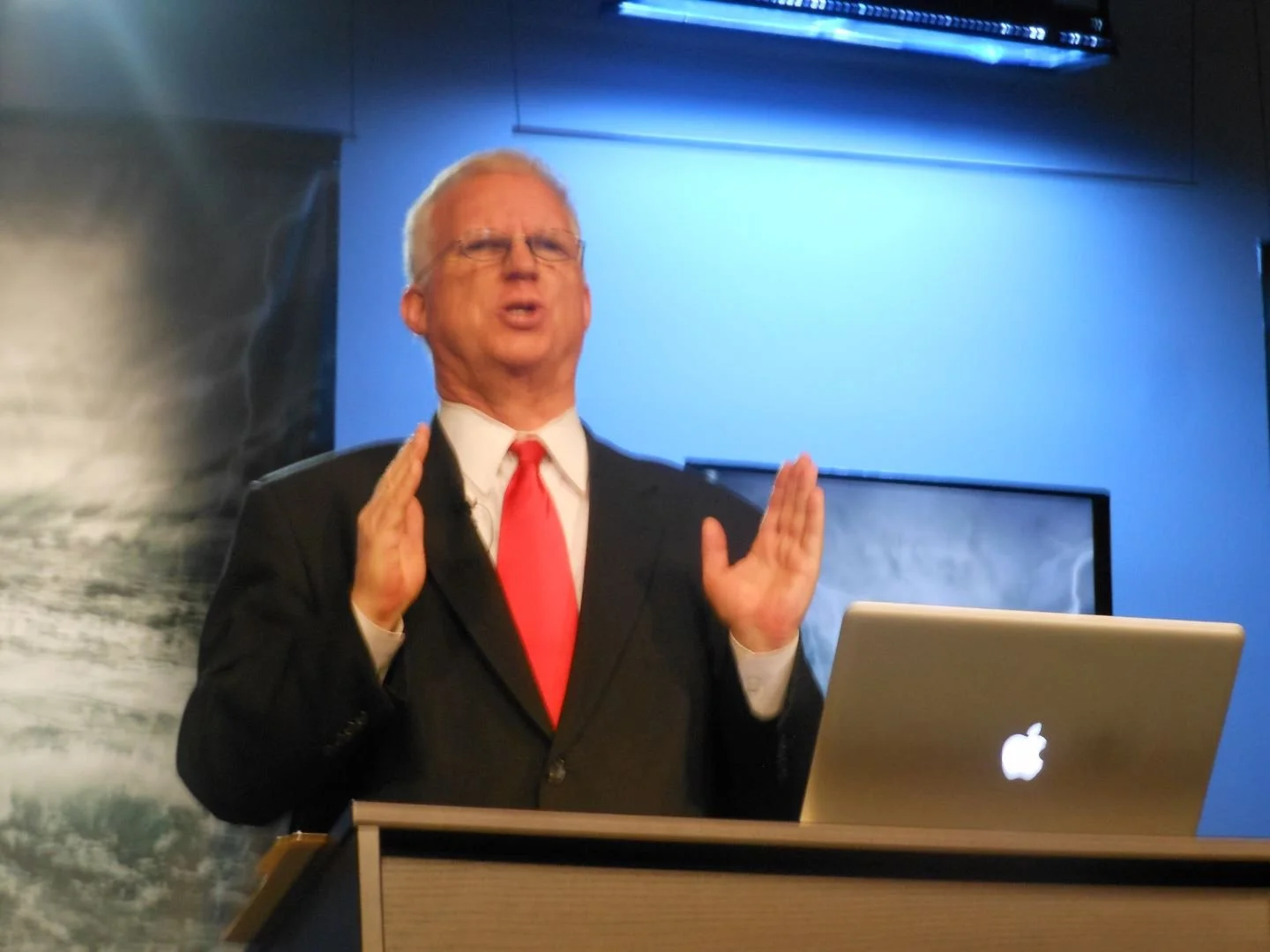
Pastor Kevin Paulson holds a Bachelor’s degree in theology from Pacific Union College, a Master of Arts in systematic theology from Loma Linda University, and a Master of Divinity from the SDA Theological Seminary at Andrews University. He served the Greater New York Conference of Seventh-day Adventists for ten years as a Bible instructor, evangelist, and local pastor. He writes regularly for Liberty magazine and does script writing for various evangelistic ministries within the denomination. He continues to hold evangelistic and revival meetings throughout the North American Division and beyond, and is a sought-after seminar speaker relative to current issues in the Seventh-day Adventist Church. He presently resides in Berrien Springs, Michigan