
The “siren call” is a phrase originating with Greek mythology, where Sirens—creatures with the bodies of birds and the heads of women—used their beautiful, enchanting voices to bewitch sailors, causing them to crash their ships into rocky shores. Thus the phrase “siren call” or “siren song” refers to a powerful, seductive temptation that lures people to danger or destruction [1].
Unfortunately, a similar but more fearful peril is attending certain ones just now in the Seventh-day Adventist Church. We speak here of the false assurance of salvation, a security supposedly invulnerable to sinful choices. A recent article in a prominent church publication promotes this delusion [2], in a conspicuous veering away from the clarity of God’s Word on this pivotal subject.
The article begins with faulty premises and arrives at outrageous conclusions. It contains very little of the Bible, and absolutely nothing from the writings of the Spirit of Prophecy. Instead it relies significantly on the reasoning of uninspired scholars (e.g. C.S. Lewis) and the contours of pop psychology, with the latter’s notions of captivity to addictions and similar assumptions. It is tragic that such an article could ever find its way into a Seventh-day Adventist magazine, let alone one designed for ministers.
The Unsettled Issue
The article begins with the following:
After centuries of the Protestant Reformation, countless sermons declaring salvation is by grace alone, and theological battles that have split churches and birthed denominations, you would think we would have finally buried legalism for good. . . .
Yes, we have conquered Legalism 1.0. By and large, that battle has been won; only minorities still believe we are saved by works. The doctrine is clear; the theology settled. But the enemy, ever adaptive, has crafted a more insidious weapon [3].
But in fact, the theology isn’t settled at all. And the enemy in this case is deploying the very theology taught in this article, to persuade Seventh-day Adventists in positions of trust that the chains of sin are unbreakable in this present life, but that—good news!—salvation can’t be lost through the presumably unavoidable choice to transgress the divine law.
One of the few Bible verses quoted in the article is Ephesians 2:8-9: “For it is by grace you have been saved, through faith—and this is not from yourselves, it is the gift of God—not by works, so that no one can boast” (NIV) [4]. But like so many others with a limited view of the Biblical conditions of salvation, the author fails to compare this verse with other passages which clarify what kind of works Paul is talking about.
What kind of works, according to Paul, produce boasting? In the book of Romans he answers this question:
Behold, thou art called a Jew, and restest in the law, and makest thy boast of God.
And knowest His will, and approvest the things that are more excellent, being instructed out of the law;
And art confident that thou art thyself a guide of the blind, a light of them which are in darkness,
An instructor of the foolish, a teacher of babes, which has the form of knowledge and of the truth in the law.
Thou therefore that teachest another, teachest thou not thyself? thou that preachest a man should not steal, dost thou steal?
Thou that sayest a man should not commit adultery, dost thou commit adultery? thou that abhorest idols, dost thou commit sacrilege?
Thou that makest thy boast of the law, through breaking the law dishonorest thou God? (Rom. 2:17-23).
In other words, the kind of works that produce boasting are those that constitute surface piety, the self-generated religious activity of which Paul speaks in the above verses. Sanctified obedience is not at all in focus here. Sanctified obedience is what the fruits of the Holy Spirit are all about, one of which is meekness (Gal. 5:23)—the opposite of boasting.
Despite what so many persist in believing, the apostle Paul doesn’t teach salvation by forensic righteousness alone. The following verses make this plain:
God hath from the beginning chosen you to salvation through sanctification of the Spirit and belief of the truth (II Thess. 2:13).
Not by works of righteousness which we have done, but according to His mercy He saved us, by the washing of regeneration, and renewing of the Holy Ghost (Titus 3:5).
Note carefully the contrast the apostle draws between “works of righteousness which we have done,” which save no one, and “the washing of regeneration, and renewing of the Holy Ghost”—the latter clearly identified in this verse as part of the means of our salvation.
The article in question makes no distinction between the two kinds of works depicted in the above verse. The author simply assumes that no human activity of any kind, sanctified or otherwise, plays a role in the saving process. Until and unless it becomes clear what sort of conduct is being described when it is stated that “works” are non-salvational, the issue the author presumes to be settled isn’t settled at all.
The Inspired Definition of Legalism
Rather than confusing people with talk of “Legalism 1.0” and “Legalism 2.0” [5], we had best permit the inspired text to define what legalism is. While the term legalism isn’t found in the Bible, we have seen how it is boastful, self-generated piety that the New Testament is describing when it excludes works from the means of salvation (Rom. 2:17-23; Eph. 2:8-9). Ellen White agrees, in such statements as the following:
God has given us the rule of conduct which every one of His servants must follow. It is obedience to His law, not merely a legal obedience, but an obedience which enters into the life and is exemplified in the character [##6|Ellen G. White, The Desire of Ages, p. 523.##].
He who is trying to reach heaven by his own works in keeping the law, is attempting an impossibility. There is no safety for one who has merely a legal religion, a form of godliness [##7|——The Desire of Ages, p. 172.##]
The spirit of bondage is engendered by seeking to live in accordance with legal religion, through striving to fulfill the claims of the law in our own strength [##8|——SDA Bible Commentary, vol. 6, p. 1077.##].
High pretensions, forms, and ceremonies, however imposing, do not make the heart good and the character pure. True love for God is an active principle, a purifying agency. The scribes and the Pharisees appeared to be very punctilious in living out the letter of the law, but Christ said to His disciples, “Except your righteousness shall exceed the righteousness of the scribes and Pharisees, ye shall in no case enter into the kingdom of heaven.” What a startling declaration was this! It made manifest the insufficiency of legal or natural religion, and showed the need of moral renovation and the necessity of divine enlightenment…. They (the Jews) were very particular to practice circumcision, but they did not teach the necessity of having a pure heart. They exalted the commandments of God in words, but refused to exalt them in practice; and their religion was only a stumbling-block to men [##9|——Review and Herald, April 30, 1895.##].
Ministers preaching present truth will assent to the necessity of the influence of the Spirit of God in the conviction of sin and the conversion of souls, and this influence must attend the preaching of the Word, but they do not feel its importance sufficiently to have a deep and practical knowledge of the same. The scantiness of the grace and power of the divine influence of the truth upon their own hearts prevents them from discerning spiritual things and from presenting its positive necessity upon the church. So they go crippling along, dwarfed in religious growth, because they have in their ministry a legal religion. The power of the grace of God is not felt to be a living, effectual necessity, an abiding principle [##10|——Selected Messages, vol. 3, p. 189.##].
“As many as received Him, to them gave He power to become the sons of God, even to them that believe on His name.” These have not a mere nominal faith, a theory of truth, a legal religion, but they believe to a purpose, appropriating to themselves the richest gifts of God [##11|——Testimonies to Ministers, p. 94.##].
Notice how “legal obedience” and “legal religion” in these passages is identified with superficial, self-originating piety, as distinct from a religion that is rooted in a divinely-transformed heart and empowered by the Holy Spirit. In contrast with many modern and contemporary “righteousness by faith” promoters, neither Scripture nor Ellen White equate legalism or salvation by works with trusting the Spirit’s internal transformation and empowerment for acceptance with God. Nor do the inspired writings ever equate legalism or works-righteousness with a faith that requires active, cooperative human effort as a part of the saving process. The only kind of performance that the inspired text defines as non-salvational is the kind crafted in humanity’s unaided strength, apart from the power of conversion and sanctification.
Misreading the Reformation
Because the article makes no reference to the sole inspired commentator on Reformation history—Ellen G. White—it lacks needful clarity regarding what the issues of the Protestant Reformation were about so far as the Sacred Record is concerned. In the following statement Ellen White describes how the true gospel held by the early church was corrupted by Catholicism during the centuries that followed:
The hope which had been so precious to them lost its attractions; for the specious delusions of Satan almost wholly extinguished the light of salvation through the merits of a crucified and risen Saviour, and men were led to seek to make an atonement through works of their own,—by fasts and penances, and through the payment of money to the church. It was more agreeable to the natural heart thus to seek justification than to seek it through repentance and faith, through belief in, and obedience to, the truth [##12|——Review and Herald, Nov. 22, 1892.##].
Notice the contrast the modern prophet draws between, on the one hand, trust in the merits of Christ, repentance, faith, and obedience to the truth, and on the other, fasts, penances, and the payment of money to the church. No contrast is drawn here between imputed and imparted righteousness, nor between the grace that forgives and the grace that transforms, as though one carried greater value with God than the other.
Here is a similar description of the issue between Martin Luther and the papacy:
Many of his (Luther’s) own congregation had purchased certificates of pardon, and they soon began to come to their pastor, confessing their various sins, and expecting absolution, not because they were penitent and wished to reform, but on the ground of the indulgence. Luther refused them absolution, and warned them that unless they should repent and reform their lives, they must perish in their sins….
Luther now entered boldly upon his work as a champion of the truth. His voice was heard from the pulpit in earnest, solemn warning. He set before the people the offensive character of sin, and taught them that it is impossible for man, by his own works, to lessen its guilt or evade its punishment. Nothing but repentance toward God and faith in Christ can save the sinner [##13|——The Great Controversy, pp. 128-129.##].
Let us remember that elsewhere in the writings of Ellen White, “Repentance includes sorrow for sin, and a turning away from it” [##14|——Steps to Christ, p. 23.##]. Notice how, according to the inspired pen, the problem with Catholic teachings is not that repentance and reformation of life are necessary in order to receive God’s forgiveness, but rather, that compliance with human rituals and stipulations (e.g., confession to priests, the purchase of indulgences, penances, pilgrimages) make one eligible for forgiveness. Ellen White draws this contrast even more sharply in the context of her statement regarding Luther and his congregation:
A salvation that could be bought with money was more easily obtained than that which requires repentance, faith, and diligent effort to resist and overcome sin [##15|——The Great Controversy, p. 128.##].
Ellen White draws a similar contrast when recounting a sermon of Ulrich Zwingli to Catholic pilgrims visiting a shrine to the Virgin Mary, who thought such a pilgrimage could bring them acceptance with God:
To many listeners these (Zwingli’s) teachings were unwelcome. It was a bitter disappointment to them to be told that their toilsome journey had been made in vain. The pardon freely offered to them through Christ they could not comprehend. They were satisfied with the old way to heaven which Rome had marked out for them. They shrank from the perplexity of searching for anything better. It was easier to trust their salvation to the priests and the pope than to seek for purity of heart [##16|——The Great Controversy, p. 175.##].
According to Ellen White’s inspired commentary, this was the issue that split Christendom in the sixteenth century. No tug-of-war between forensic righteousness and the work of the Holy Spirit, no struggle between a believe-only gospel and the necessity of obedience as a condition of salvation, is cited by the inspired pen as the cause of this pivotal event in Christian history. Rather, divine versus human mediation—the requirements of the written Word and the change of heart and striving for holiness thereby demanded, versus a mere outward compliance with stipulations devised by human clerics and institutions—this was the great issue that birthed the Protestant Reformation.
Until we are prepared to permit the inspired definition of the Reformation issues to hold veto power over the opinions of historians and theologians, yet another feature of this discussion will remain unsettled.
Sin and the Loss of Salvation
The author of the article in question recalls as follows a conversation he had with a professor-friend of his, on the subject of sin and the possible loss of salvation:
My students know there is nothing they can do to earn salvation. But this is what they ask me: “Pastor, I understand I am saved by grace, not by works, but can my sins unsave me? I know my works can’t get me in, but can my failures kick me out?” [17].
Here we see a classic case of starting with a false premise and thus making likely a false conclusion. If one assumes that no human act of any kind can gain eternal life for the Christian—in contrast with the clear teaching of Scripture that obedience through heaven’s power is the condition of salvation (e.g. Matt. 7:21; 19:16-26; Luke 10:25-28; Rom. 2:6-10,13; 8:13; Heb. 5:9)—it is easy to conclude that no human act can annul salvation either. But is this in fact what the inspired pen teaches?
In the first place, it must be remembered that Biblical salvation is about being saved from sin (Matt. 1:21). Both divine forgiveness, often called justification (Eph. 1:7; Col. 1:14), and sanctification (II Thess. 2:13), are identified as part of this saving process, as are both the work of Christ for us (II Cor. 5:21) and His work in us (Titus 3:5). To speak of being “saved” while sin persists in the life is thus directly at odds with the Biblical definition of salvation. All it took was one sin to remove our first parents from Eden, and all it will take is one sin, unconfessed and unforsaken, to prevent us from returning there. In the words of the apostle James:
For whosoever shall keep the whole law, and yet offend in one point, he is guilty of all. . . . So speak ye, and so do, as they that shall be judged by the law of liberty (James 2:10,12).
Romans 7 and Similar Passages
The article in question affirms an old heresy regarding the man depicted in Romans 7:14-25, assuming this individual to be Paul during his post-conversion spiritual journey [18]. But a careful look at the apostle’s collective testimony rules out this conclusion.
In Romans 7:23, Paul complains of having been brought “into captivity to the law of sin which is in my members.” Yet in another passage he writes of the Christian imperative of “bringing into captivity every thought to the obedience of Christ” (II Cor. 10:5). Obviously, two very different experiences.
In Romans 7:24, Paul cries out, “O wretched man that I am! who shall deliver me from the body of this death?” Yet in another passage he writes, “I keep under my body, and bring it into subjection” (I Cor. 9:27). Again, two very different experiences.
In Galatians 5:17 we find the language of Romans 7 once again, where Paul writes, “For the flesh lusteth against the Spirit, and the Spirit against the flesh; and these are contrary the one to the other, so that ye cannot do the things that ye would” (see Rom. 7:15,19). But when we let Paul finish his thought in Galatians 5, the picture becomes clearer. He goes on to describe the works of the flesh in verses 19-21, then the fruits of the Spirit in verses 22-23. Then he declares, in the following verse:
And they that are Christ’s have crucified the flesh with the affections and lusts (verse 24).
The flesh is definitely not crucified in Romans 7. But in Romans 8:1-13 (which we will consider in a moment) it is most assuredly crucified, as it is in Galatians 5:24.
The article wants us to believe that in Ephesians 2:3, which speaks of how we are “by nature the children of wrath”—“by nature deserving of wrath” in the NIV, which the article cites [19]—that this proves sin to be an involuntary condition in the human family, presumably received at birth. The article insists at one point:
Your congregation needs to understand that their sinful acts (the addictions they battle, the tempers they lose, the forgiveness they struggle to extend) are all symptoms, not the disease. Think of sin’s nature as lung cancer and sinful acts as the resulting cough [20].
Yet when we read the context of Ephesians 2:3, it becomes clear that chosen conduct, not birth or any other involuntary condition, is the culprit so far as human sin is concerned. In the apostle’s words:
Wherein in time past ye walked according to the course of this world, according to the prince of the power of the air, the spirit that now worketh in the children of disobedience.
Among whom also we all had our conversation in times past in the lusts of our flesh, fulfilling the desires of the flesh and of the mind, and were by nature the children of wrath, even as others (Eph. 2:2-3).
Such words as “walked,” “conversation,” and “fulfilling” are action words, involving behavior—or that dreaded word “performance,” which the article in question so thoroughly despises [21]. Paul is not describing an involuntary state in these verses, certainly not one into which humans are allegedly born. (Birth is never mentioned in any of Paul’s writings as the time people become sinners.) For the apostle Paul, as with the rest of Scripture, sin is a choice, a condition with which all humans are afflicted because “all have sinned” (Rom. 3:23; 5:12).
Paul is not teaching inevitable or unavoidable sin in any of these passages. His message is consistent: Apart from the converting power of Christ we are helpless against our fallen natures. But Jesus came to give us a way out, by condemning sin in the same nature we inherit (Rom. 8:3), so “that the righteousness of the law might be fulfilled in us, who walk not after the flesh, but after the Spirit” (verse 4). Thus he declares elsewhere:
Having therefore these promises, dearly beloved, let us cleanse ourselves from all filthiness of the flesh and spirit, perfecting holiness in the fear of God (II Cor. 7:1).
No Condemnation—But Why?
The article in question claims:
[Paul] erupts in Romans 8:1 with thunderous assurance: “Therefore, there is now no condemnation for those who are in Christ Jesus.” How much condemnation? None. Not a whisper, not a shadow, not a lingering doubt. The verdict has been rendered; the gavel has fallen; the case is closed [22].
The author obviously prefers a translation of this text which leaves out the conditional clause so far as the “no condemnation” verdict is concerned. The King James Version, of course, goes on to say of those who are not condemned and in Christ Jesus: “who walk not after the flesh, but after the Spirit” (Rom. 8:1). But even if one uses a translation that leaves out the last part of this verse as found in the KJV, the context of this verse is clear enough as to who in Paul’s theology are no longer condemned:
That the righteousness of the law might be fulfilled in us, who walk not after the flesh, but after the Spirit. . . .
For if ye live after the flesh, ye shall die; but if ye through the Spirit do mortify the deeds of the body, ye shall live (verses 4,13).
The New Testament is clear elsewhere as to the conditions for being “in Christ,” and thus no longer under condemnation. Paul writes in another epistle:
Therefore if any man be in Christ, he is a new creature: old things are passed away; behold all things are become new (II Cor. 5:17).
The man of Romans 7:14-25 is definitely not in focus here, for most assuredly that man is not a “new creature,” and thus not “in Christ.” The apostle John agrees with Paul:
And he that keepeth His commandments dwelleth in Him, and he in Him (I John 3:24).
In other words, the one not condemned according to the New Testament is the one who has become a new creature in Christ (II Cor. 5:17), and is thus obedient to the commandments of God (I John 3:24). To be “in Christ” in apostolic theology has nothing whatsoever to do with being covered by a canopy of forensic righteousness while occasional sin persists in the life.
No Assurance in Sin
The article in question makes the following statement regarding how salvation may be lost:
The only way to lose freely given salvation is to reject the Holy Spirit’s ongoing work. Not through failure, not through struggle, and not through the persistence of sinful patterns either. Only through the deliberate, conscious rejection of the Spirit’s transforming presence [23].
But how is failure or the persistence of sinful patterns in one’s life something apart from rejecting the Holy Spirit’s transforming work? How does the author harmonize the above statement with the following inspired statement?
Let none deceive themselves with the belief that God will pardon and bless them while they are trampling upon one of His requirements. The willful commission of a known sin silences the witnessing voice of the Spirit, and separates the soul from God [##24|White, Messages to Young People, p. 114.##].
Recounting Moses’ sin in striking the rock at Kadesh, Ellen White observes:
However great the pressure brought to bear upon the soul, transgression is our own act [##25|——Patriarchs and Prophets, p. 421.##].
There is no “I can’t help but sin” excuse available for the sanctified Christian in the inspired text. Ellen White’s inspired theology inseparably connects the Christian’s assurance of salvation with Spirit-empowered obedience to God’s commandments. She writes in one statement that “in order for man to retain justification, there must be continual obedience, through active, living faith that works by love and purifies the soul” [##26|——Selected Messages, vol. 1, p. 366.##]. In the same volume she writes, “It is by the continual surrender of the will, by continual obedience, that the blessing of justification is retained” [##27|——Selected Messages, vol. 1, p. 397.##].
Other statements are likewise clear that assurance and obedience go together, and that disobedience cancels any assurance the believer may possess at the moment the choice to sin is made:
We cannot have the assurance and perfect confiding trust in Christ as our Saviour until we acknowledge Him as our King and are obedient to His commandments [##28|——Faith and Works, p. 16.##].
His (the believer’s) life, cleansed from vanity and selfishness, is filled with the love of God. His daily obedience to the law of God obtains for him a character that assures him eternal life in the kingdom of God [##29|——Sons and Daughters of God, p. 42.##].
If we neglect the cases of the needy and the unfortunate that are brought under our notice, no matter who they may be, we have no assurance of eternal life, for we do not answer the claims that God has upon us [##30|——Testimonies, vol. 3, p. 524.##].
Every impurity of thought, every lustful passion, separates the soul from God; for Christ can never put His robe of righteousness upon a sinner, to hide his deformity [##31|——Our High Calling, p. 214.##].
Every transgression brings the soul into condemnation, and provokes the divine displeasure [##32|——Testimonies, vol. 4, p. 628.##].
When man transgresses he is under the condemnation of the law, and it becomes to him a yoke of bondage. Whatever his profession may be he is not justified [##33|——My Life Today, p. 250 (italics supplied).##].
For those who fear that defining salvation as a work in progress will deprive them of assurance and peace of mind, let them be reminded that the God we serve is “not willing that any should perish, but that all should come to repentance” (II Peter 3:9). In another statement, the modern prophet assures the Christian:
The angels never leave the tempted one a prey to the enemy who would destroy the souls of men if permitted to do so. As long as there is hope, until they resist the Holy Spirit to their eternal ruin, men are guarded by heavenly intelligences [##34|——Our High Calling, p. 23.##].
Elsewhere she writes:
No soul is ever finally deserted of God, given up to his own ways, so long as there is any hope of his salvation. “Man turns from God, not God from him.” Our heavenly Father follows us with appeals and warnings and assurances of compassion, until further opportunities and privileges would be wholly in vain. The responsibility rests with the sinner. By resisting the Spirit of God today, he prepares the way for a second resistance of light when it comes with mightier power. Thus he passes on from one stage of resistance to another, until at last the light will fail to impress, and he will cease to respond in any measure to the Spirit of God [##35|——Thoughts from the Mount of Blessing, p. 93.##].
Toward the article’s close the author assures his readers that “transformation is guaranteed for all who remain in Christ. ‘He who began a good work in you will carry it on to completion’ (Phil. 1:6)” [36]. But the author fails to finish the verse, which goes on to say, “until the day of Jesus Christ.” Does the author therefore believe that the transformation of character continues till Jesus appears at His second coming? If so, he is in conflict with other New Testament passages, which speak of how the saints at Jesus’ coming are to be “found of Him in peace, without spot, and blameless” (II Peter 3:14), and how they become pure “even as He is pure” while they still have the hope of His coming (I John 3:3).
Philippians 1:6 is simply telling us that the work Jesus performs in us will conclude at His coming with the eradication of our fallen natures, which the Bible is clear do not constitute sin (James 1:14-15). No one will experience transformation of character at the second coming of Christ. In full agreement with Scripture, Ellen White affirms the fact that all such change must occur before the return of Jesus:
When He comes, He is not to cleanse us of our sins, to remove from us the defects in our characters, or to cure us of the infirmities of our tempers and dispositions. If wrought for us at all, this work is to be accomplished before that time. When the Lord comes, those who are holy will be holy still. . . . The Refiner does not then sit to pursue His refining process and remove their sins and their corruption. This is all to be done in these hours of probation [##37|White, Testimonies, vol. 2, p. 355.##].
When Christ shall come, our vile bodies are to be changed, and made like His glorious body, but the vile character will not be made holy then. The transformation of character must take place before His coming [##38|——Our High Calling, p. 278.##].
Conclusion: The Siren Summons of False Assurance
The theology taught by the article in question is not “once saved, always saved.” It’s worse. Rather than assuring people that no wrongful deed, even the overt rejection of Christ or the Holy Spirit, can cost the believer salvation, the article assures the reader that they can have both Christ and occasional sin. This is a far more beguiling deception than the mainstream evangelical heresy of “once saved, always saved.” This evangelical Adventist version of this heresy tells people that while the overt rejection of Jesus and His Holy Spirit will cost the Christian salvation, acts of sin presumably will not.
Those with this mindset may protest that they aren’t trying to encourage sin, but it is difficult if not impossible to see how this isn’t happening. What is perhaps most outrageous about this article is that it makes no distinction between premeditated and impulsive sin. According to this author, even the “persistence of sinful patterns” can’t cost believers their salvation. How does this not encourage the chronic abuser, the quick-tempered parent, or the serial adulterer to simply continue in their wicked ways, all with the presumptuous confidence that God will fix it later? To believe one or another sin is unconquerable in this life will invariably cause numerous struggling Christians to make peace with their more persistent shortcomings, with all the perverse and ruinous consequences this means for Christian witness.
If this isn’t a siren call to destruction, I can’t imagine what is.
REFERENCES
2. Sam Neves, “Legalism 2.0: The rise of a new heresy,” Ministry, May 2026 https://www.ministrymagazine.org/audio-api/audio-v1?contentid=25393
3. Ibid.
4. Ibid.
5. Ibid.
6. Ellen G. White, The Desire of Ages, p. 523.
7. Ibid, p. 172.
8. ----SDA Bible Commentary, vol. 6, p. 1077.
9. ----Review and Herald, April 30, 1895.
10. White, Selected Messages, vol. 3, p. 189.
11. ----Testimonies to Ministers, p. 94.
12. ----Review and Herald, Nov. 22, 1892.
13. ----The Great Controversy, pp. 128-129.
14. ----Steps to Christ, p. 23.
15. ----The Great Controversy, p. 128.
16. Ibid, p. 175.
17. Neves, “Legalism 2.0: The rise of a new heresy,” Ministry, May 2026 https://www.ministrymagazine.org/audio-api/audio-v1?contentid=25393
18. Ibid.
19. Ibid.
20. Ibid.
21. Ibid.
22. Ibid.
23. Ibid.
24. White, Messages to Young People, p. 114.
25. ----Patriarchs and Prophets, p. 421.
26. ----Selected Messages, vol. 1, p. 366.
27. Ibid, p. 397.
28. ----Faith and Works, p. 16.
29. ----Sons and Daughters of God, p. 42.
30. ----Testimonies, vol. 3, p. 524.
31. ----Our High Calling, p. 214.
32. ----Testimonies, vol. 4, p. 628.
33. ----My Life Today, p. 250 (italics supplied).
34. ----Our High Calling, p. 23.
35. ----Thoughts from the Mount of Blessing, p. 93.
36. ----Testimonies, vol. 2, p. 355.
37. ----Our High Calling, p. 278.
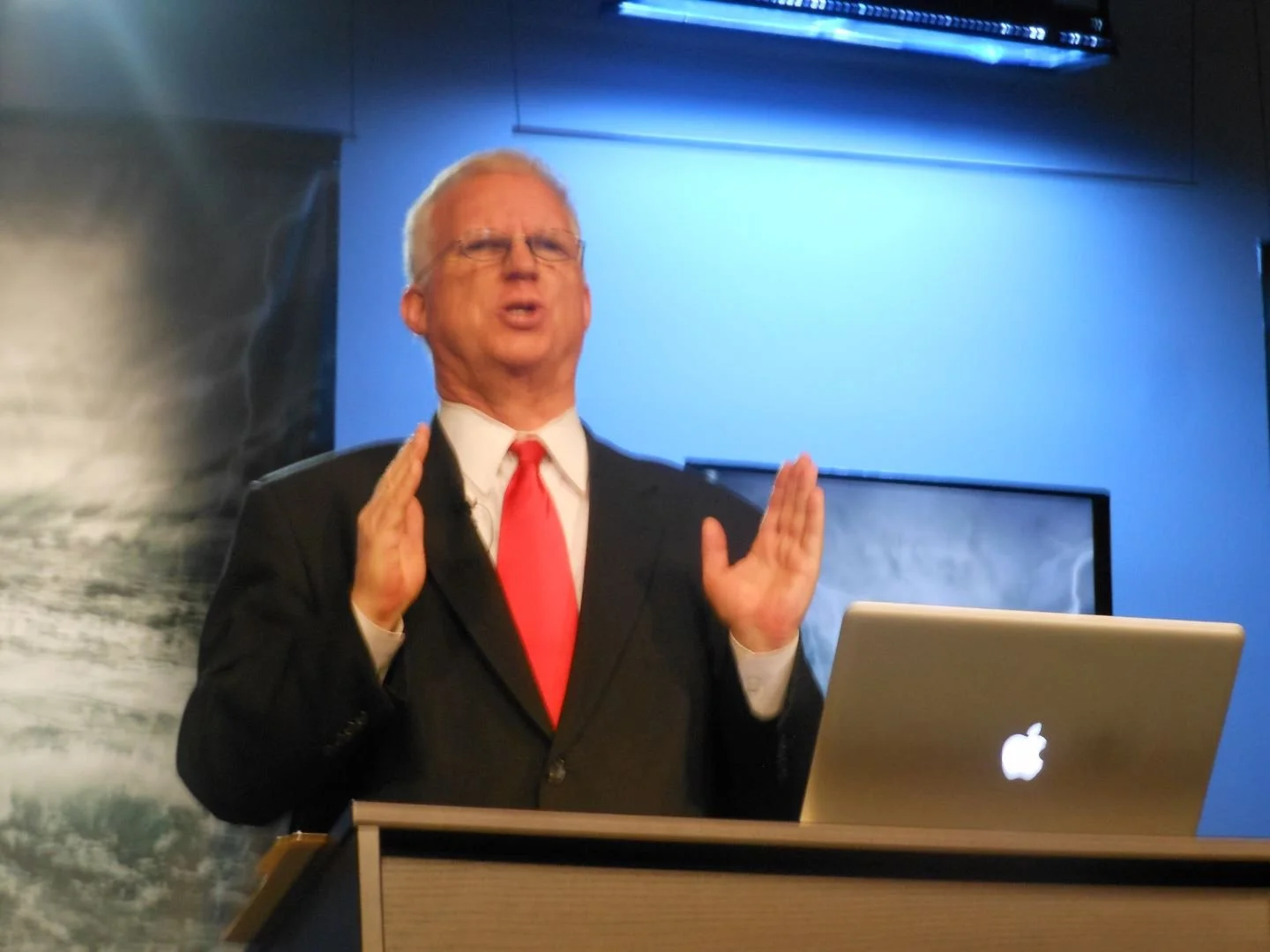
Pastor Kevin Paulson holds a Bachelor’s degree in theology from Pacific Union College, a Master of Arts in systematic theology from Loma Linda University, and a Master of Divinity from the SDA Theological Seminary at Andrews University. He served the Greater New York Conference of Seventh-day Adventists for ten years as a Bible instructor, evangelist, and local pastor. He writes regularly for Liberty magazine and does script writing for various evangelistic ministries within the denomination. He continues to hold evangelistic and revival meetings throughout the North American Division and beyond, and is a sought-after seminar speaker relative to current issues in the Seventh-day Adventist Church. He presently resides in Berrien Springs, Michigan