
Last Generation Theology is getting more and more attention in online and other discussions in contemporary Adventism. Much of this attention is negative. And that’s fine. Ellen White, under divine inspiration, makes the following comment about truth:
God means that truth shall be brought to the front and become the subject of examination and discussion, even through the contempt placed upon it [##1|Ellen G. White, Thoughts from the Mount of Blessing, p. 33.##].
A very recent column in one of our church publications introduced the subject of Last Generation Theology with a tone of mingled sarcasm and contempt [2]. Much could be said about a number of the points the author makes. But the core of his argument is the column’s gravest error—the author’s insistence that no one, at the end of time or otherwise, is saved by anything more than imputed (or justifying) righteousness. In the author’s words:
Whoever these saints are, whatever experiences they have, and whatever character they possess, they are saved only by what saved the thief on the cross: the righteousness of Jesus for them, outside of them, imputed to them, “the righteousness of God, through faith in Jesus Christ, to all and on all who believe” (Rom. 3:22) [3].
A Half-Gospel
No matter how fond this author may be of this particular understanding of the gospel, no matter how often he repeats it in writing or otherwise, it is contrary to both Scripture and the writings of the Spirit of Prophecy. While the Bible is clear that only the righteousness of Christ can save anyone, it is equally clear that this saving righteousness consists of both justification and sanctification—both God’s work for us and His work in us, both forgiveness and victory.
The apostle Paul is especially clear on this point, in such verses as the following:
In whom we have redemption through His blood, the forgiveness of sins, according to the riches of His grace (Eph. 1:7; see also Col. 1:14).
God hath from the beginning chosen you to salvation through sanctification of the Spirit and belief of the truth (II Thess. 2:13).
Not by works of righteousness which we have done, but according to His mercy He saved us, by the washing of regeneration, and renewing of the Holy Ghost (Titus 3:5).
The gospel according to Scripture is never restricted to justifying righteousness. Indeed, the apostle Paul writes: “For I am not ashamed of the gospel of Christ, for it is the power of God unto salvation to every one that believeth” (Rom. 1:16). In the first reference to salvation in the New Testament, we learn what salvation is all about: “Thou shalt call His name Jesus, for He shall save His people from their sins” (Matt. 1:21). As we see in the verses cited above, this process includes both forgiveness and empowerment, both justification and sanctification.
In His sermon in the synagogue at Nazareth early in His ministry, Jesus defined the gospel as healing and deliverance:
The Spirit of the Lord is upon Me, because He hath anointed Me to preach the gospel to the poor; he hath sent Me to heal the brokenhearted, to preach deliverance to the captives, and recovering of sight to the blind, to set at liberty them that are bruised (Luke 4:18).
No hint, here or elsewhere, can be found of a gospel focused exclusively on forgiveness. Any such teaching is a half-gospel, not the full gospel of Holy Scripture. Ellen White echoes the teachings of the Bible when she writes, regarding the ground of our salvation:
So we have nothing in ourselves of which to boast. We have no ground for self-exaltation. Our only ground of hope is in the righteousness of Christ imputed to us, and in that wrought by His Spirit working in and through us [##4|White, Steps to Christ, p. 63.##].
The Thief on the Cross
A popular theory among promoters of too-easy salvation, whether inside or outside of Adventism, is the notion that the penitent thief on the cross at Calvary was saved solely by forgiveness. Some have even claimed that this thief “didn’t have time for sanctification.” Such persons should read their Bibles a bit more carefully.
Some have noted that in one of the Gospel accounts it is stated that both thieves who died with Jesus reviled Him with scorn. This is true (Matt. 27:44). But this hardly means the one who chose to repent didn’t have the time, in those final moments, to see the folly of his ways and experience transformation. The account we find in the Gospel of Luke makes this clear:
And one of the malefactors which were hanged railed on Him, saying, If Thou be Christ, save Thyself and us.
But the other answering rebuked him, saying, Dost not thou fear God, seeing thou art in the same condemnation?
And we indeed justly; for we receive the due reward of our deeds: but this Man hath done nothing amiss (Luke 23:39-41).
In other words, the penitent thief was very much a changed man at the moment he asked Jesus to “remember [him] when Thou comest into Thy kingdom” (verse 42). Ellen White, as she often does, fills in some of the blanks relative to this man’s story, and tells us how this wasn’t his first encounter with Jesus and His message:
This man was not a hardened criminal; he had been led astray by evil associates, but he was less guilty than many of those who stood beside the cross reviling the Saviour. He had seen and heard Jesus, and had been convicted by His teaching, but he had been turned away from Him by the priests and rulers. Seeking to stifle conviction, he had plunged deeper and deeper into sin, until he was arrested, tried as a criminal, and condemned to die on the cross [##5|——The Desire of Ages, p. 749.##].
She goes on to describe the thief’s presence in Pilate’s judgment hall and on the road to Calvary, and how he was further convicted of the Savior’s innocence, purity, and Messiahship as the two faced final agony together [##6|——The Desire of Ages, pp. 749-750.##].
Without question, if we take the inspired record as it reads, this erstwhile sinner became a sanctified saint in the closing moments of his life. And like all God’s saints throughout history, he was saved both by the forgiveness of his sinful past (Eph. 1:7) and the purification of his present life through the grace Christ bequeathed to him (II Thess. 2:13; Titus 3:5). No one—not the penitent thief, not the Last Generation—are saved by justifying righteousness alone.
Perfection and Salvation
The author of the column under review closes his thoughts with the following:
Yes, we can have victory (1 Cor. 15:57). Yes, we can overcome (1 John 5:4). Yes, we can reflect the character of Jesus (Gal. 4:19). Victory, overcoming, reflecting Jesus—these are undeniable manifestations of what it means to be saved. But to make these manifestations the means of salvation itself? What a stunning denial of the gospel—for any generation, last or otherwise [7].
But again, salvation in the Bible is about being saved from sin (Matt. 1:21), which is what both justifying and sanctifying righteousness are designed to accomplish (Eph. 1:7; II Thess. 2:13). And in Paul’s writings it is equally clear that the sanctification which saves the Christian is to be perfect in this life:
And the very God of peace sanctify you wholly; and I pray God your whole spirit and soul and body be preserved blameless unto the coming of our Lord Jesus Christ (1 Thess. 5:23).
Of course, we must be clear that according to the same Bible, humans are held accountable only for the light and truth God has revealed to them (Acts 17:30; James 4:17). Many of the saved will have gone to their graves sinning ignorantly. And Ellen White is clear, under divine inspiration, that the intercession of Christ covers these sins of ignorance:
The minds of all who embrace this message are directed to the most holy place, where Jesus stands before the ark, making His final intercession for all those for whom mercy still lingers and for those who have ignorantly broken the law of God. This atonement is made for the righteous dead as well as for the righteous living. It includes all who died trusting in Christ, but who, not having received the light upon God’s commandments, had sinned ignorantly in transgressing its precepts [##8|White, Early Writings, p. 254.##].
What is different about the Last Generation is that they must stand without a Mediator, which means all sins of ignorance will have been exposed and overcome in their lives before probation ceases. Ellen White is clear about this in another statement:
When our earthly labors are ended, and Christ shall come for His faithful children, we shall then shine forth as the sun in the kingdom of our Father. But before that time shall come, everything that is imperfect in us will have been seen and put away. All envy and jealousy and evil surmising and every selfish plan will have been banished from the life [##9|——Selected Messages, vol. 3, p. 427 (italics supplied).##].
The Biblical teaching that sanctification is both part of the means of our salvation (II Thess. 2:13) and intended by God to be perfect in this life (I Thess. 5:23), must be kept in view when we consider the following Ellen White statements, which confirm this Biblical teaching:
What is sanctification? It is to give one’s self wholly and without reserve—soul, body, and spirit—to God; to deal justly, to love mercy, and to walk humbly with God; to know and to do the will of God without regard to self or self-interest; to be heavenly minded, pure, unselfish, holy, and without spot or stain [##10|——Our High Calling, p. 212 (italics supplied).##].
True sanctification is nothing more or less than to love God with all the heart, to walk in His commandments and ordinances blameless. Sanctification is not an emotion, but a heaven-born principle that brings all the passions and desires under the control of the Spirit of God; and this work is done through our Lord and Savior [##11|——From the Heart, p. 298.##].
True sanctification . . . consists in the cheerful performance of daily duties in perfect obedience to the will of God [##12|——Christ’s Object Lessons, p. 360 (italics supplied).##].
And like the Bible (II Thess. 2:13), Ellen White is clear, despite the claim of the columnist noted in the present article [13], that this sanctification is part of the means of our salvation, not the result thereof:
The work of gaining salvation is one of copartnership, a joint operation. . . . Human effort of itself is not sufficient. Without the aid of divine power it avails nothing. God works and man works [##14|White, Acts of the Apostles, p. 482.##].
We are saved by climbing round after round of the ladder, looking to Christ, clinging to Christ, mounting step by step to the height of Christ, so that He is made unto us wisdom and righteousness and sanctification and redemption. Faith, virtue, knowledge, temperance, patience, godliness, brotherly-kindness, and charity are the rounds of this ladder [##15|——Testimonies, vol. 6, p. 147.##].
Thank God, He attends us every step of the way through, if we are willing to be saved in Christ’s appointed way, through obedience to His requirements [##16|——This Day With God, p. 72.##].
Notice how these statements don’t say that the work of responding to salvation is one of co-partnership, or that first we get saved and afterward attain the practical virtues described. Rather, these statements are clear that the sanctified obedience thus depicted is in fact the means whereby Christians are saved.
In another statement Ellen White identifies imputed righteousness with justification and imparted righteousness with sanctification:
The righteousness by which we are justified is imputed; the righteousness by which we are sanctified is imparted. The first is our title to heaven, the second is our fitness for heaven [##17|——Messages to Young People, p. 35.##].
In light of this, the following statements are significant in that they identify imparted righteousness (sanctification) as part of the means whereby salvation is achieved:
The world is seeking for those things that perish with the using; its diligence and activity are not exerted to obtain the salvation gained through the imparted righteousness of Christ [##18|——Letters and Manuscripts, vol. 22, MS. 31, 1907.##].
The gospel that is to be preached to all nations, kindreds, tongues, and peoples presents the truth in clear lines, showing that obedience is the condition of gaining eternal life. Christ imparts His righteousness to those who consent to let Him take away their sins [##19|——SDA Bible Commentary, vol. 7, p. 972.##].
The following statements clarify just how perfect this obedience must be as a condition of salvation:
Before the believer is held out the wonderful possibility of being like Christ, obedient to all the principles of the law. But of himself man is utterly unable to reach this condition. The holiness that God’s word declares he must have before he can be saved is the result of the working of divine grace as he bows in submission to the discipline and restraining influences of the Spirit of truth [##20|——Acts of the Apostles, p. 532.##].
So perfect is the character represented which men must have in order to be Christ’s disciples that the infidel has said that it is not possible for any human being to attain unto it. But no less a standard must be presented by all who claim to be children of God. Infidels know not that celestial aid is provided for all who seek for it by faith [##21|——In Heavenly Places, p. 201.##].
God has plainly stated that He expects us to be perfect, and because He expects this, He has made provision for us to be partakers of the divine nature. Only thus can we gain success in striving for eternal life. The power is given by Christ [##22|——Our High Calling, p. 213.##].
He [God] sent His Son to this world to bear the death penalty of man’s transgression, and to show man how to live a sinless life. There is no other way in which he can be saved. “Without Me,” Christ says, “ye can do nothing.” Through Him, and Him alone, can the natural heart be changed, the affections transformed, the affections set flowing heavenward ##[2|——Youth’s Instructor, April 16, 1903 (italics supplied).##].
In the day of judgment the course of the man who has retained the frailty and imperfection of humanity will not be vindicated. For him there will be no place in heaven. He could not enjoy the perfection of the saints in light. He who has not sufficient faith in Christ to believe that He can keep him from sinning, has not the faith that will give him an entrance into the kingdom of God [##24|——Selected Messages, vol. 3, p. 360.##].
And in perhaps her strongest statement on the relation of perfect obedience to salvation, the modern prophet writes:
Christ came to this earth and lived a life of perfect obedience, that men and women, through His grace, might also live lives of perfect obedience. This is necessary to their salvation [##25|——Review and Herald, March 15, 1906 (italics supplied).##].
Conclusion: Last Generation Theology and the Thief on the Cross
There is something very wrong with the thinking of any Seventh-day Adventist who speaks of Last Generation Theology as “a topic that I could not care less about” [26]. In the Spirit of Prophecy writings, the Last Generation saints are identified with the 144,000 of Revelation (Rev. 7:14:3-5), those who will be translated to heaven at Jesus’ coming without having tasted death [##27|White, Early Writings, p. 16; The Great Controversy, pp. 648-649.##]. And regarding this group, Ellen White admonishes the church:
Let us strive with all the power that God has given us to be among the 144,000 [##28|——SDA Bible Commentary, vol. 7, p. 970.##].
That hardly sounds like a subject regarding which any Seventh-day Adventist, let alone a prominent editor and writer, should “not care less about” [29].
But at the bottom line, all who are saved at last—whether the thief on the cross or those who stand without a Mediator at the close of time—will be saved exclusively through the justifying and sanctifying righteousness of Christ (Eph. 1:7; II Thess. 2:13), both through Christ’s work for us (II Cor. 5:21) and His work in us (Titus 3:5). The only difference with the Last Generation saints is that all sins of ignorance will have been revealed and eliminated from their lives before probation closes.
However, regardless of one’s level of sanctified achievement, it is all achieved through heaven’s power combined with diligent human effort (Phil. 2:12-13; Col. 1:26-29). And even the latter accrues no credit with God, for it is all His to start with (I Chron. 29:14).
REFERENCES
1. Ellen G. White, Thoughts from the Mount of Blessing, p. 33.
2. Clifford Goldstein, “Last Generation Theology: A topic that I could not care less about,” Adventist Review, June 12, 2026 https://adventistreview.org/church-life/our-voice/columnists-our-voice/last-generation-theology/
3. Ibid.
4. White, Steps to Christ, p. 63.
5. ----The Desire of Ages, p. 749.
6. Ibid, pp. 749-750.
7. Goldstein, “Last Generation Theology: A topic that I could not care less about,” Adventist Review, June 12, 2026 https://adventistreview.org/church-life/our-voice/columnists-our-voice/last-generation-theology/
8. White, Early Writings, p. 254.
9. ----Selected Messages, vol. 3, p. 427 (italics supplied).
10. ----Our High Calling, p. 212 (italics supplied).
11. ----From the Heart, p. 298.
12. ----Christ’s Object Lessons, p. 360 (italics supplied).
13. Goldstein, “Last Generation Theology: A topic that I could not care less about,” Adventist Review, June 12, 2026 https://adventistreview.org/church-life/our-voice/columnists-our-voice/last-generation-theology/
14. White, Acts of the Apostles, p. 482.
15. ----Testimonies, vol. 6, p. 147.
16. ----This Day With God, p. 72.
17. ----Messages to Young People, p. 35.
18. ---- Letters and Manuscripts — Volume 22, Manuscript 31, 1907.
19. ----SDA Bible Commentary, vol. 7, p. 972.
20. ----Acts of the Apostles, p. 532 (italics supplied).
21. ----In Heavenly Places, p. 201 (italics supplied).
22. ----Our High Calling, p. 213.
23. ----Youth’s Instructor, April 16, 1903 (italics supplied).
24. ----Selected Messages, vol. 3, p. 360.
25. ----Review and Herald, March 15, 1906 (italics supplied).
26. Goldstein, “Last Generation Theology: A topic that I could not care less about,” Adventist Review, June 12, 2026 https://adventistreview.org/church-life/our-voice/columnists-our-voice/last-generation-theology/
27. White, Early Writings, p. 16; The Great Controversy, pp. 648-649.
28. ----SDA Bible Commentary, vol. 7, p. 970.
29. Goldstein, “Last Generation Theology: A topic that I could not care less about,” Adventist Review, June 12, 2026 https://adventistreview.org/church-life/our-voice/columnists-our-voice/last-generation-theology/
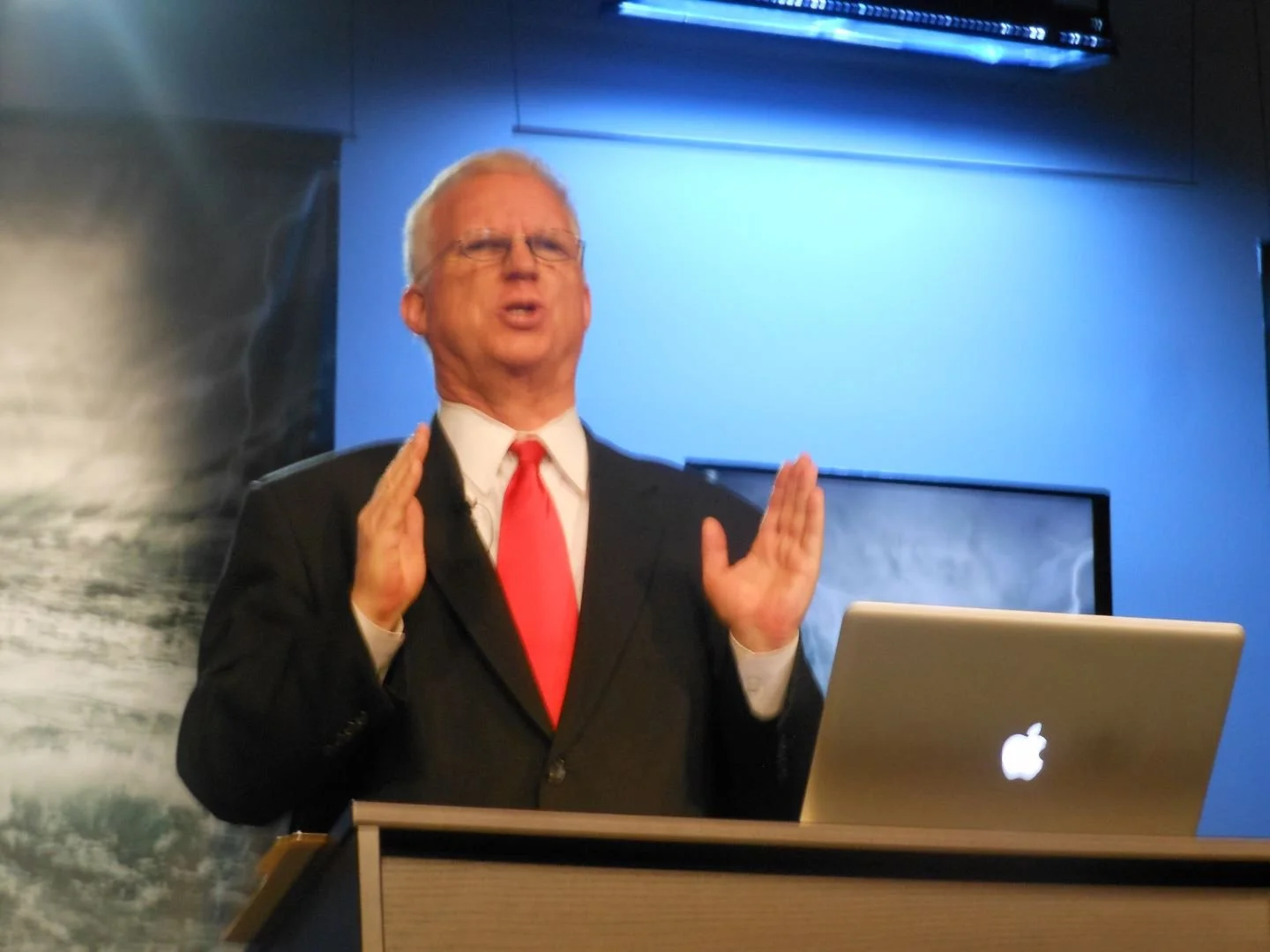
Pastor Kevin Paulson holds a Bachelor’s degree in theology from Pacific Union College, a Master of Arts in systematic theology from Loma Linda University, and a Master of Divinity from the SDA Theological Seminary at Andrews University. He served the Greater New York Conference of Seventh-day Adventists for ten years as a Bible instructor, evangelist, and local pastor. He writes regularly for Liberty magazine and does script writing for various evangelistic ministries within the denomination. He continues to hold evangelistic and revival meetings throughout the North American Division and beyond, and is a sought-after seminar speaker relative to current issues in the Seventh-day Adventist Church. He presently resides in Berrien Springs, Michigan