
If you tell a big lie enough and keep repeating it, people will eventually come to believe it [1].
While the above statement has often been attributed to Joseph Goebbels, propaganda minister of Nazi Germany [2], no primary source has been found by which to prove Goebbels actually said it, consistent though it surely is with his public record. But regardless of who originated this dictum, it has been a perverse and ubiquitous reality since Lucifer’s rebellion first started in the courts of heaven.
Whether knowingly or not, critics of what has come to be known as Last Generation Theology in the Seventh-day Adventist Church seem to be making an art of practicing this principle. A recent statement by an anonymous columnist on a liberal Adventist website offers yet another example of this pattern. Yet again, it is being claimed that Last Generation Theology is based primarily if not exclusively on a single Ellen White statement:
Last Generation Theology is an Adventist perfectionist theology based mostly on a quote from Christ’s Object Lessons, page 69:
“When the character of Christ shall be perfectly reproduced in His people, then He will come to claim them as His own. It is the privilege of every Christian, not only to look for, but to hasten the coming of our Lord Jesus Christ.” [3].
This lady, whoever she is, writes elsewhere that in her view, “perfectionism” is “living without sinning in any word, deed, or thought” [4]—which in fact, as our website has repeatedly noted, is precisely what Scripture and the Spirit of Prophecy writings teach regarding God’s expectation of His earthly people. By contrast, the writings of Ellen White define the “perfectionist” label as denoting a theology which claims that all one must do to be saved is believe, that one can become so pure that feelings and emotions can be trusted, that one can rightfully claim to be sinless here on earth, and that obedience to the divine law isn’t necessary if one is saved [##5|Ellen G. White, Early Writings, p. 101; Life Sketches, pp. 83-84.##]. To the present writer’s knowledge, no one who upholds Last Generation Theology in contemporary Adventism believes anything close to this.
This anonymous columnist repeats a major distortion of Scripture when she writes:
In the above passage Ellen White references 2 Peter 3:12 to suggest that we can “hasten” his return. But the Greek word in that passage, speudontas, means eagerly anticipating Jesus’ return, as expressed in Romans 8:22-23:
“We know that the whole creation has been groaning as in the pains of childbirth right up to the present time. Not only so, but we ourselves, who have the firstfruits of the Spirit, groan inwardly as we wait eagerly for our adoption to sonship, the redemption of our bodies” [6].
But the above author seems quite unaware that the word speudontas, translated “hastening” (NKJV) in Second Peter 3:12 (“hasting” in the KJV) is not found at all in the passage she cites from Romans 8:22-23. The word translated in the above rendering as “wait eagerly” is apekdechomenoi (sometimes translated "eagerly expecting”), an entirely different word from what we find in Second Peter 3:12.
The claim that “hasting” or “hastening” in Second Peter 3:12 really means to look eagerly for Christ’s return rather than to make it happen sooner, is not a new claim in modern Adventism [##7|See Kendra Jo Haloviak, “Can We Hasten the Advent?” Adventist Review, Jan. 2, 1991, pp. 13-15.##]. But when we consider the rendering of this word in a host of major modern Bible translations, it doesn’t appear to be a credible claim at all. The word speudontas (“hasting”) in Second Peter 3:12 is the same word (in various forms) found in a number of New Testament passages—in Luke 19:5,6, for example, where Jesus invites Zacchaeus to “make haste” and come down from the tree; in Acts 20:16, where the apostle Paul “hasted” so as to be in Jerusalem for the day of Pentecost; and in Acts 22:18, where Paul recounted the Lord’s warning early in his ministry to “make haste” and get out of Jerusalem due to the opposition Paul was facing. Without question, this word means to “hurry it up,” not merely to look eagerly or desire earnestly for something.
This explains why at least nine major modern translations of the Bible show a rendering of Second Peter 3:12 identical to—and in some cases stronger than—what we find in the King James Version. The phrase “hasting unto the coming” (KJV) is rendered “hastening the coming” by the New King James Version (NKJV), the Revised Standard Version (RSV), the New Revised Standard Version (NRSV) the English Standard Version (ESV), and the New American Standard Bible (NASB). The New International Version (NIV) uses the phrase “speed its coming,” the New English Bible (NEB) says, “work to hasten it on,” the New Living Translation (NLT), says, “hurry it along,” and Today’s English Version (TEV, sometimes called the Good News Bible), says, “do your best to make it come soon.”
So Ellen White’s use of this verse to prove that the spiritual preparedness of God’s people, or lack thereof, can in fact hasten or delay the return of Jesus, is based on an indisputably factual understanding of the wording used by Peter in this passage.
The Biblical Foundation
The anonymous columnist claims as follows:
As popular as Last Generation Theology is among some Adventists, it seems problematic to base such a significant doctrine on a passage from Ellen White, while ignoring what the Bible teaches about human perfection and the timing of the second coming [8].
This doctrine is indeed significant. But as we will see, in no way is it based—either primarily or exclusively—on a single passage from Ellen White, nor does it ignore what the Bible teaches about the possibility of character perfection in this life and the timing of our Lord’s return.
First, the Bible. The vision of a faithful, obedient, and victorious remnant among God’s professed people is first articulated in the prophetic writings of the Old Testament (e.g., Isa. 4:3-4; 11:11; Joel 2:32; Micah 2:12; 4:7; 5:3,7-8; Zeph. 3:13). A number of these verses explicitly foresee this remnant within the context of the Messiah’s first and second advents. This is especially clear in the words of Zephaniah:
The remnant of Israel shall not do iniquity, nor speak lies, neither shall a deceitful tongue be found in their mouth; for they shall feed and lie down, and none shall make them afraid (Zeph. 3:13).
The following passages from Revelation are an echo of the above passage from Zephaniah:
And the dragon was wroth with the woman, and went to make war with the remnant of her seed, which keep the commandments of God, and have the testimony of Jesus Christ (Rev. 12:17).
Here is the patience of the saints. Here are they that keep the commandments of God, and the faith of Jesus (Rev. 14:12).
Like the remnant described in Zephaniah, the remnant depicted in Revelation are portrayed as faithful commandment-keepers, faultless through the power of God’s transforming grace (Rev. 12:17; 14:5,12). Indeed, it is through the faith of Jesus, as described in Revelation 14:12, that this faultless commandment-keeping is produced (see Rom. 8:3-4; I Peter 2:21-22).
The New Testament repeatedly emphasizes total sanctification on the part of Christians as a prerequisite for the return of our Lord:
And the very God of peace sanctify you wholly; and I pray God your whole spirit and soul and body be preserved blameless unto the coming of our Lord Jesus Christ (I Thess. 5:23).
But thou, O man of God, flee these things, and follow after righteousness, godliness, faith, love, patience, meekness.
Fight the good fight of faith, lay hold on eternal life, whereunto thou art also called, and hast professed a good profession before many witnesses.
I give thee charge in the sight of God, who quickeneth all things, and before Christ Jesus, who before Pontius Pilate witnessed a good confession;
That thou keep this commandment without spot, unrebukeable, until the appearing of our Lord Jesus Christ (I Tim. 6:11-14).
Seeing then that all these things shall be dissolved, what manner of persons ought ye to be in all holy conversation and godliness,
Looking for and hasting unto the coming of the day of God, wherein the heavens being on fire shall be dissolved, and the elements shall melt with fervent heat? ...
Wherefore, beloved, seeing that ye look for such things, be diligent that ye may be found of Him in peace, without spot, and blameless (II Peter 3:11-12,14).
The phrase “without spot,” used in two of the above passages, is especially noteworthy, as this phrase is used elsewhere in the New Testament to describe the sinless character of Jesus (1 Peter 1:19). Without question, according to these verses, God is summoning His people to duplicate in their practical lives the sinless obedience found in our Savior’s earthly life.
The first epistle of John is likewise clear on this point:
Beloved, now are we the sons of God, and it doth not yet appear what we shall be; but we know that, when He shall appear, we shall be like Him, for we shall see Him as He is.
And every man that hath this hope in Him purifieth himself, even as He is pure (1 John 3:2-3).
God, of course, has always wished for His people to be pure, obedient, and fully victorious over sin. The Last Generation of earth’s history is not the first to be summoned by God’s grace to this experience. It is, however, the first generation to actually live this experience, through the grace and power of the Lord Jesus Christ. Such Bible characters as Enoch, Job, Joseph, Daniel, and others throughout the ages have individually lived this experience. But before Jesus comes, a worldwide body of believers—not merely a few scattered persons—will do so.
All the promises to the seven churches of Revelation are given to the overcomers (Rev. 2:7, 11, 17, 26; 3:5, 12, 21). But only to the church of Laodicea, the last of the seven, is the promised victory compared to that of Jesus:
To him that overcometh will I grant to sit with Me in My throne, even as I also overcame, and am set down with My Father in His throne (Rev. 3:21).
In other words, the imperative of reflecting the image of Jesus fully on the part of the Last Generation saints is affirmed in both the Old and the New Testaments. It is not something invented either by Ellen White, the Adventist pioneers, or certain overzealous conservative (“fundamentalist”) Adventists of the twentieth century.
Ellen White on the Delayed Advent
Far from being “based mostly” on Ellen White’s statement in Christ’s Object Lessons, p. 69 [9], the principle of the delayed advent relative to character preparation is articulated in a significant number of Ellen White statements, such as the following:
There is nothing that the Saviour desires so much as agents who will represent to the world His Spirit and His character. There is nothing that the world needs so much as the manifestation through humanity of the Saviour’s love. All heaven is waiting for men and women through whom God can reveal the power of Christianity…. It is the privilege of every Christian, not only to look for, but to hasten the coming of the Saviour.
If the church will put on the robe of Christ’s righteousness, withdrawing from all allegiance with the world, there is before her the dawn of a bright and glorious day. God’s promise to her will stand fast forever [##10|White, Acts of the Apostles, pp. 600-601.##].
God had committed to His people a work to be accomplished on earth. The third angel’s message was to be given, the minds of believers were to be directed to the heavenly sanctuary, where Christ had entered to make atonement for His people. The Sabbath reform was to be carried forward. The breach in the law of God must be made up. The message must be proclaimed with a loud voice, that all the inhabitants of earth might receive the warning. The people of God must purify their souls through obedience to the truth, and be prepared to stand without fault before Him at His coming….
For forty years did unbelief, murmuring, and rebellion shut out ancient Israel from the land of Canaan. The same sins have delayed the entrance of modern Israel into the heavenly Canaan. In neither case were the promises of God at fault. It is the unbelief, the worldliness, unconsecration, and strife among the Lord’s professed people that have kept us in this world of sin and sorrow so many years [##11|——Selected Messages, vol. 1, pp. 67-69.##].
Dear brethren and sisters, Christ is soon to come. Will He find you ready and waiting? The bridal lamps must be kept trimmed and burning. His chariot wheels have been delayed because of His long-suffering to usward, not willing that any should perish, but that all should come to repentance and have eternal life [##12|——Manuscript Releases, vol. 10, p. 266.##].
Had the people of God believed Him and been doers of His word, had they kept His commandments, the angel would not have come flying through heaven with the message to the four angels that were to let loose the winds that they should blow upon the earth crying, Hold, hold the four winds that they blow not upon the earth until I have sealed the servants of God in their foreheads. But because the people are disobedient, unthankful, unholy, as were ancient Israel, time is prolonged that all may hear the last message of mercy proclaimed with a loud voice. The Lord’s work has been hindered, the sealing time delayed. Many have not heard the truth. But the Lord will give them a chance to hear and be converted, and the great work of God will go forward [##13|——Manuscript Releases, vol. 15, pp. 292-293.##].
The long night of gloom is trying, but the morning is deferred in mercy, because if the Master should come, so many would be found unready. God’s unwillingness to have His people perish, has been the reason for so long delay [##14|——Testimonies, vol. 2, p. 194.##].
I know that if the people of God had preserved a living connection with Him, if they had obeyed His Word, they would today be in the heavenly Canaan [##15|——Evangelism, p. 694.##].
We may have to remain here in this world because of insubordination many more years, as did the children of Israel; but for Christ’s sake, His people should not add sin to sin by charging God with the consequence of their own wrong course of action [##16|——Evangelism, p. 696.##].
In light of the above, we find ourselves both shocked and saddened by such statements as the following from leading thinkers in contemporary Adventism:
The last generation of believers has no power to determine the time of probation’s close by their performance. To finalize the big cosmic issues and close the drama of the great controversy is God’s prerogative alone [##17|Jiri Moskala and John C. Peckham (eds.), God’s Character and the Last Generation (Nampa, ID: Pacific Press Publishing Assn, 2018), p. 202.##].
While we wait, we must not fall into another mistaken notion: thinking that the timing of the second coming is dependent on us reaching some standard of perfection [##18|——God’s Character and the Last Generation, p. 260.##].
Such statements force us to the choice of deciding who we will believe: Uninspired scholars, dedicated and sincere though they may be? Or the written counsel of God (Isa. 8:20; Acts 17:11)?
More Ellen White Statements on End-Time Perfection
Far from being “based mostly” on Christ’s Object Lessons, p. 69 [19], or—in the words of one contemporary scholar—“two assertions made by Ellen White” [20], the imperative of end-time sinless conduct affirmed by Last Generation Theology is not only based on the substantial Biblical evidence we have considered, but also on numerous other Ellen White statements. The following are but a few of the strongest in this regard:
Those who are living upon the earth when the intercession of Christ shall cease in the sanctuary above, are to stand in the sight of a holy God without a mediator. Their robes must be spotless, their characters must be purified from sin by the blood of sprinkling. Through the grace of God and their own diligent effort they must be conquerors in the battle with evil. While the investigative judgment is going forward in heaven, while the sins of penitent believers are being removed from the sanctuary, there is to be a special work of purification, of putting away of sin, among God’s people upon earth….
When this work shall have been accomplished, the followers of Christ will be ready for His appearing [##21|White, The Great Controversy, p. 425.##].
Now, while our great High Priest is making the atonement for us, we should seek to become perfect in Christ. Not even by a thought could our Saviour be brought to yield to the power of temptation…. He had kept His Father’s commandments, and there was no sin in Him that Satan could use to His advantage. This is the condition in which those must be found who shall stand in the time of trouble [##22|——The Great Controversy, p. 623.##].
I also saw that many do not realize what they must be in order to live in the sight of the Lord without a high priest in the sanctuary through the time of trouble. Those who receive the seal of the living God and are protected in the time of trouble must reflect the image of Jesus fully…. I saw that none could share the ‘refreshing’ (latter rain) unless they obtain the victory over every besetment, over pride, selfishness, love of the world, and over every wrong word and action [##23|——Early Writings, p. 71.##].
Those who come up to every point and stand every test, and overcome, be the price what it may, have heeded the counsel of the True Witness, and they will receive the latter rain, and thus be fitted for translation [##24|——Testimonies, vol. 1, p. 187.##].
The truth is designed to elevate the receiver, to refine his taste and sanctify his judgment. There should be a continual effort to imitate the society we expect soon to join; namely, angels of God who have never fallen by sin. The character should be holy, the manners comely, the words without guile, and thus should we follow on step by step until we are fitted for translation [##25|——Testimonies, vol. 1, p. 216.##].
[From a chapter titled, “Pray for the Latter Rain”] By the power of the Holy Spirit the moral image of God is to be perfected in the character. We are to be wholly transformed into the likeness of Christ…Every individual must realize his own necessity. The heart must be emptied of every defilement, and cleansed for the indwelling of the Spirit [##26|——Testimonies to Ministers, pp. 506-507.##].
Not one of us will ever receive the seal of God while our characters have one spot or stain upon them. It is left with us to remedy the defects in our characters, to cleanse the soul temple of every defilement. Then the latter rain will fall upon us, as the early rain fell upon the disciples on the day of Pentecost [##27|——Testimonies, vol. 5, p. 214.##].
What are you doing, brethren, in the great work of preparation? Those who are uniting with the world, are receiving the worldly mold, and preparing for the mark of the beast. Those who are distrustful of self, who are humbling themselves before God and purifying their souls by obeying the truth—these are receiving the heavenly mold, and preparing for the seal of God in their foreheads. When the decree goes forth, and the stamp is impressed, their character will remain pure and spotless for eternity.
Now is the time to prepare. The seal of God will never be placed upon the forehead of an impure man or woman. It will never be placed upon the forehead of the ambitious, world-loving man or woman. It will never be placed upon the forehead of men or women of false tongues or deceitful hearts. All who receive the seal must be without spot before God—candidates for heaven [##28|——Testimonies, vol. 5, p. 216.##].
The latter rain will come, and the blessing of God will fill every soul that is purified from every defilement. It is our work today to yield our souls to Christ, that we may be fitted for the time of refreshing from the presence of the Lord—fitted for the baptism of the Holy Spirit [##29|——Evangelism, p. 702.##].
May the Lord help His people to cleanse the soul temple from every defilement, and to maintain such a close connection with Him that they may be partakers of the latter rain when it shall be poured out [##30|——SDA Bible Commentary, vol. 6, p. 1055.##].
The refreshing or power of God comes only on those who have prepared themselves for it by doing the work which God bids them, namely, cleansing themselves from all filthiness of the flesh and spirit, perfecting holiness in the fear of God [##31|——Testimonies, vol. 1, p. 619.##].
Are we seeking for His fullness, ever pressing toward the mark set before us—the perfection of His character? When the Lord’s people reach this mark, they will be sealed in their foreheads. Filled with His Spirit, they will be complete in Christ, and the recording angel will declare, “It is finished” [##32|——SDA Bible Commentary, vol. 6, p. 1118.##].
Jesus sits as a refiner and purifier of His people; and when His image is perfectly reflected in them, they are perfect and holy, and prepared for translation. A great work is required of the Christian. We are exhorted to cleanse ourselves from all filthiness of the flesh and spirit, perfecting holiness in the fear of God [##33|——Testimonies, vol. 1, p. 340.##].
When our earthly labors are ended, and Christ shall come for His faithful children, we shall then shine forth as the sun in the kingdom of our Father. But before that time shall come, everything that is imperfect in us will have been seen and put away. All envy and jealousy and evil surmising and every selfish plan will have been banished from the life [##34|——Selected Messages, vol. 3, p. 427.##].
When He comes, He is not to cleanse us of our sins, to remove from us the defects in our characters, or to cure us of the infirmities of our tempers and dispositions. If wrought for us at all, this work will all be accomplished before that time. When the Lord comes, those who are holy will be holy still…. The Refiner does not then sit to pursue His refining process and remove their sins and their corruption. This is all to be done in these hours of probation [##35|——Testimonies, vol. 2, p. 355.##].
When Christ comes, there is to be no change of character; this mortal shall put on immortality, and this corruption shall put on incorruption; and those who are alive and remain upon the earth will be caught up to meet the Lord in the air, if their characters are blameless and pure. Transformation of character must take place during the precious hours of probation [##36|——Signs of the Times, Aug. 29, 1892.##].
Conclusion
The evidence is substantial, from both Scripture and Ellen White, that Last Generation Theology commands support from throughout the inspired writings. It is not based merely (or “mostly”) on any one passage, or even a few passages. Those who preach and teach this theology do so on the basis of overwhelming clarity from throughout the Bible and the writings of the Spirit of Prophecy.
For this reason, SDA Fundamental Belief No. 13 declares as follows:
The universal church is composed of all who truly believe in Christ, but in the last days, a time of widespread apostasy, a remnant has been called out to keep the commandments of God and the faith of Jesus. This remnant announces the arrival of the judgment hour, proclaims salvation through Christ, and heralds the approach of His second advent. This proclamation is symbolized by the three angels of Revelation 14; it coincides with the work of judgment in heaven and results in a work of repentance and reform on earth. Every believer is called to have a personal part in this worldwide witness (Dan. 7:9-14; Isa. 1:9; 11:11; Jer. 23:3; Micah 2:12; 2 Cor. 5:10; 1 Peter 1:16-19; 4:17; 2 Peter 3:10-14; Jude 3,14; Rev. 12:17; 14:6-12; 18:1-4) [37].
Simply stated, Last Generation Theology is really the remnant church theology under a different name. According to the Bible, if we don’t keep God’s commandments perfectly, we don’t keep them at all, as the apostle James writes: “For whosoever shall keep the whole law, and yet offend in one point, he is guilty of all” (James 2:10).
Fundamental Belief No. 22 affirms the imperative of total adherence to divine counsel, leaving no room for sin of any kind:
We are called to be a godly people who think, feel, and act in harmony with biblical principles in all aspects of personal and social life. For the Spirit to recreate in us the character of our Lord we involve ourselves only in those things that will produce Christlike purity, health, and joy in our lives [38].
If “we involve ourselves only in those things that will produce Christlike purity, health, and joy in our lives” [39], that is definitional sinlessness.
REFERENCES
1. “Big lie” https://en.wikipedia.org/wiki/Big_lie#:~:text=people%20will%20believe%20a%20big,A%20somewhat
2. Ibid.
3. “Aunty, what’s Last Generation Theology?” Adventist Today, June 8, 2026 https://atoday.org/aunty-whats-last-generation-theology/
4. Dear Aunt Sevvy, “Aunty, is Jesus waiting to return until Adventists become sinless?” Adventist Today, Sept. 19, 2022 https://atoday.org/aunty-is-jesus-waiting-to-return-until-adventists-become-sinless/
5. Ellen G. White, Early Writings, p. 101; Life Sketches, pp. 83-84.
6. “Aunty, what’s Last Generation Theology?” Adventist Today, June 8, 2026 https://atoday.org/aunty-whats-last-generation-theology/
7. See Kendra Jo Haloviak, “Can We Hasten the Advent?” Adventist Review, Jan. 2, 1991, pp. 13-15.
8. “Aunty, what’s Last Generation Theology?” Adventist Today, June 8, 2026 https://atoday.org/aunty-whats-last-generation-theology/
9. Ibid.
10. White, Acts of the Apostles, pp. 600-601.
11. ----Selected Messages, vol. 1, pp. 67-69.
12. ----Manuscript Releases, vol. 10, p. 266.
13. Ibid, vol. 15, pp. 292-293.
14. ----Testimonies, vol. 2, p. 194.
15. ----Evangelism, p. 694.
16. Ibid, p. 696.
17. Jiri Moskala and John C. Peckham (eds.), God’s Character and the Last Generation (Nampa, ID: Pacific Press Publishing Assn, 2018), p. 202.
18. Ibid, p. 260.
19. “Aunty, what’s Last Generation Theology?” Adventist Today, June 8, 2026 https://atoday.org/aunty-whats-last-generation-theology/
20. Adelina Alexe, “Last Generation Theology, Part 2: Historical Development,” March 28, 2019 https://web.archive.org/web/20220117043527/https://thecompassmagazine.com/blog/lgt-part-2-historical-development
21. White, The Great Controversy, p. 425.
22. Ibid, p. 623.
23. ----Early Writings, p. 71.
24. ----Testimonies, vol. 1, p. 187.
25. Ibid, p. 216.
26. ----Testimonies to Ministers, pp. 506-507
27. ----Testimonies, vol. 5, p. 214.
28. Ibid, p. 216.
29. ----Evangelism, p. 702.
30. ----SDA Bible Commentary, vol. 6, p. 1055.
31. ----Testimonies, vol. 1, p. 619.
32. ----SDA Bible Commentary, vol. 6, p. 1118.
33. ----Testimonies, vol. 1, p. 340.
34. ----Selected Messages, vol. 3, p. 427.
35. ----Testimonies, vol. 2, p. 355.
36. ----Signs of the Times, Aug. 29, 1892.
37. https://adventist.org/beliefs.
38. Ibid.
39. Ibid.
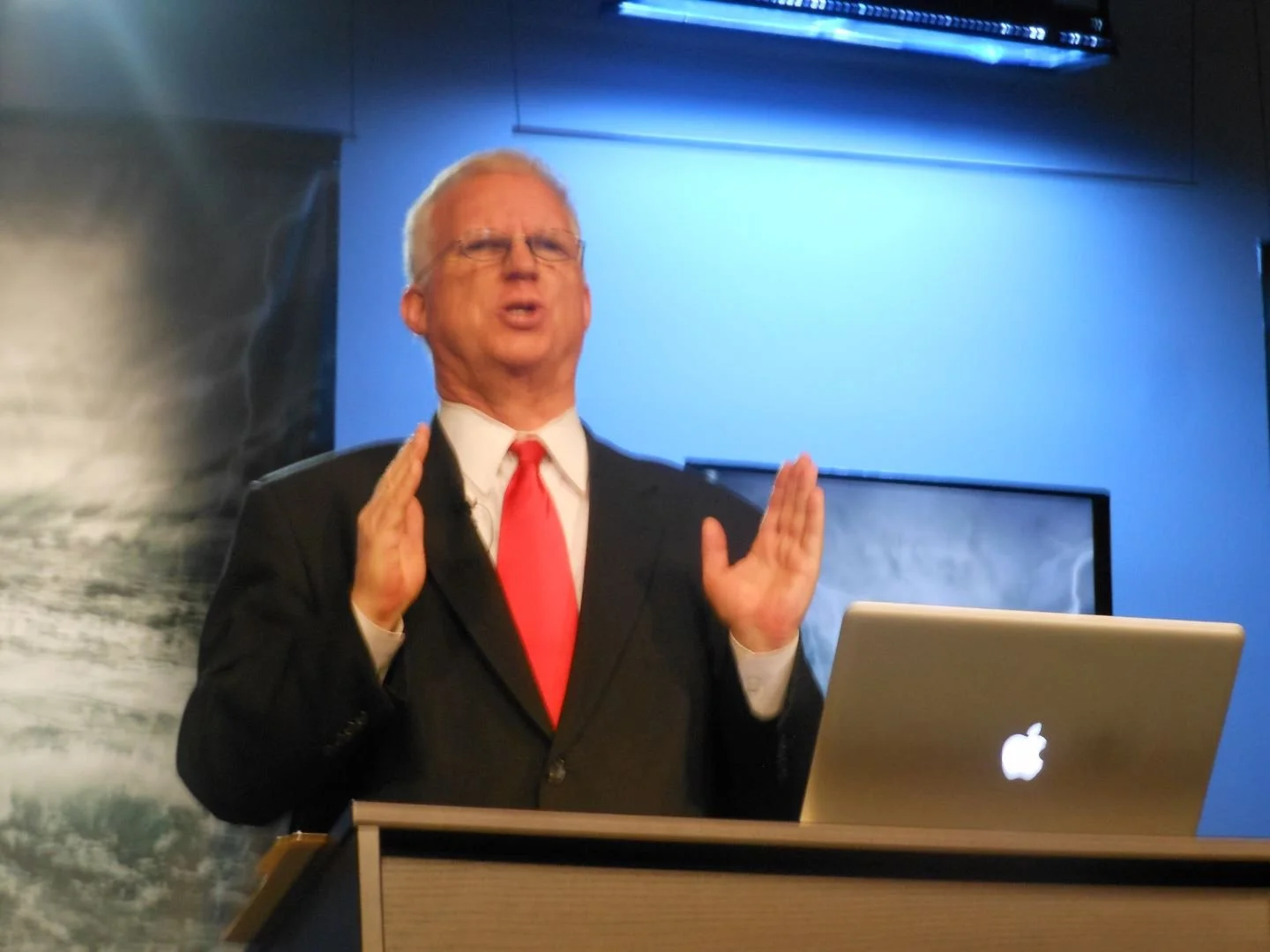
Pastor Kevin Paulson holds a Bachelor’s degree in theology from Pacific Union College, a Master of Arts in systematic theology from Loma Linda University, and a Master of Divinity from the SDA Theological Seminary at Andrews University. He served the Greater New York Conference of Seventh-day Adventists for ten years as a Bible instructor, evangelist, and local pastor. He writes regularly for Liberty magazine and does script writing for various evangelistic ministries within the denomination. He continues to hold evangelistic and revival meetings throughout the North American Division and beyond, and is a sought-after seminar speaker relative to current issues in the Seventh-day Adventist Church. He presently resides in Berrien Springs, Michigan