
Controversy over the nature of Biblical justification has made considerable waves in recent months, online and elsewhere. Like the Sabbath and other Biblical issues, it’s an old debate, but one remarkably easy to settle once the inspired text is given the last word
The question is really quite simple, as expressed in the title of this article: Does Biblical justification mean to declare righteous? To make righteous? Or does it mean both?
The reader should understand from the outset that the sole authority in matters spiritual so far as the teachings of this website are concerned, is the written counsel of God (Isa. 8:20; Acts 17:11), both Scripture and the writings of Ellen G. White, the latter often called the Spirit of Prophecy. Neither the opinions of scholars nor comparisons with the teachings of others—whether positive or negative—can establish credibility so far as doctrinal conclusions are concerned.
The Meaning of Justification
Recent critics of what has come to be known as Last Generation Theology—really the remnant church theology under a different name—insist that what the Bible calls justification “does not include the process of ethical transformation. Justification is accounting or reckoning a person righteous (Genesis 15:6; Romans 4:3-6), not making a person righteous” [##1|Jiri Moskala and John C. Peckham (eds.), God’s Character and the Last Generation (Nampa, ID: Pacific Press Publishing Assn, 2018), p. 83 (italics original).##]. In another statement the same author writes: “Justification is a judicial declaration of acquittal, the opposite of condemnation (Genesis 3:15; Romans 5:16), and not an ethical condition” [##2|Moskala and Peckham (eds.), God’s Character and the Last Generation, p. 69.##].
A more recent author, citing some Old Testament verses that utilize the word “justify” in the context of judicial proceedings (Ex. 23:7; Prov. 17:15; Isa. 5:23), claims that “the meaning (of justification) in these examples is strictly legal or forensic” [##3|Leonard Philps Tolhurst, The Gospel in the Setting of End-Time Events (Madrid, Spain: Safeliz, 2022), p. 23.##]. He goes on to cite New Testament references where sinners are told to justify God (Luke 7:29; Rom. 3:4), then states: “They can declare that God is just, but they cannot make God just” [##4|Tolhurst, The Gospel in the Setting of End-Time Events, p. 23.##].
But the above verses are describing human prnouncements, not divine ones. The Bible is clear that when God declares something to be so, it in fact becomes so. When God said, “Let there be light” at the creation, the Bible says, “And there was light” (Gen. 1:3). When Jesus said to a leper who came to Him for healing, “Be thou clean,” the Bible says, “And immediately his leprosy was cleansed” (Matt. 8:3). Ellen White reflects this Biblical reality when commenting on Paul’s justification theology in the book of Romans:
In the creation, “He spake, and it was done; He commanded, and it stood fast.” He “calleth those things which be not as though they were” (Psalm 33:9; Rom. 4:17); for when He calls them, they are [##5|Ellen G. White, Education, p. 254.##].
According to the Bible, God’s forgiveness—which Ellen White identifies with justification when she writes that “pardon and justification are one and the same thing” [##6|——SDA Bible Commentary, vol. 6, p. 1070.##]—is by no means unconditional. The following verses are clear beyond misunderstanding on this point:
If My people, which are called by My name, shall humble themselves, and pray, and seek My face, and turn from their wicked ways, then will I hear from heaven, and will forgive their sin, and will heal their land (II Chron. 7:14).
He that covereth his sins shall not prosper, but whoso confesseth, and forsaketh them shall have mercy (Prov. 28:13).
Let the wicked forsake his way, and the unrighteous man his thoughts, and let him return unto the Lord, and He will have mercy upon him; and to our God, for He will abundantly pardon (Isa. 55:7).
Jesus also made it clear there were conditions for receiving His Father’s forgiveness:
For if ye forgive men their trespasses, your heavenly Father will also forgive you.
But if ye forgive not men their trespasses, neither will your Father forgive your trespasses (Matt. 6:14-15).
In Romans chapter 4 Paul makes the following reference to one of David’s psalms, which especially enables us to understand a key point in the current Adventist salvation controversy—what in fact Paul means when he says human beings are not saved by works (Rom. 3:20,28; Gal. 2:16; Eph. 2:8-9):
Even as David also describeth the blessedness of the man, unto whom God imputeth righteousness without works,
Saying, Blessed are they whose iniquities are forgiven, and whose sins are covered.
Blessed is the man to whom the Lord will not impute sin (Rom. 4:6-8).
This passage, of course, is taken from Psalm 32:1-2:
Blessed is he whose transgression is forgiven, whose sin is covered.
Blessed is the man unto whom the Lord imputeth not iniquity, and in whose spirit there is no guile.
This last portion of Psalm 32:2 is especially significant, as it calls our minds to those Old and New Testament passages noted in the present context, which speak of the conditions which require fulfilling in order for one to receive divine forgiveness. Putting the above two passages together, it becomes clear that not only does God impute righteousness “without works” on the part of the believer; He does this only for those “in whose spirit there is no guile” (Psalm 32:2).
And then we have the following statements from the apostle Paul:
For not the hearers of the law are just before God, but the doers of the law shall be justified (Rom. 2:13).
But if, while we seek to be justified by Christ, we ourselves also are found sinners, is therefore Christ the minister of sin? God forbid (Gal. 2:17).
Likewise, from the apostle John:
If we confess our sins, He is faithful and just to forgive us our sins, and to cleanse us from all unrighteousness (I John 1:9).
Putting all these verses together, it becomes clear that humility, confessing and forsaking sin, a guileless spirit, a willingness to forgive others, and harmony with divine truth thus far revealed in one’s life, are necessary in order to receive forgiveness, or justification, from God. When, by contrast, the Bible says we are not saved by works (Rom. 3:20,28; Gal. 2:16; Eph. 2:8-9), it is speaking of self-produced, surface piety unrelated to conversion and God’s transforming grace (Rom. 2:17-23). Thus the phrase “not of yourselves” in Ephesians 2:8 is parallel to the phrase “not of works” in the verse that follows (verse 9).
Such conditions as humility, the forsaking of sin, and a willingness to forgive others require a guileless, transformed heart. The above author who refers to Romans 4:3-6 [##7|Moskala and Peckham (eds.), God’s Character and the Last Generation, p. 83.##] should read the next two verses and go back to their source in Psalm 32, in which the one to whom the Lord imputes no iniquity is the one “in whose spirit there is no guile” (verse 2).
In other words, both the prerequisites and the process of Biblical justification involve divinely-empowered inward change. Thus Paul, contrasting self-generated works with the regenerating work of the Spirit, writes:
Not by works of righteousness which we have done, but according to His mercy He saved us, by the washing of regeneration, and renewing of the Holy Ghost.
Which He shed on us abundantly through Jesus Christ our Saviour,
That being justified by His grace, we should be made heirs according to the hope of eternal life (Titus 3:5-7).
Ellen White, commenting on the meaning of divine forgiveness, makes the following observations regarding the experience of justification:
To be pardoned in the way that Christ pardons, is not only to be forgiven, but to be renewed in the spirit of our mind. The Lord says, “A new heart will I give unto thee.” The image of Christ is to be stamped upon the very mind, heart, and soul [##8|White, Review and Herald, Aug. 19, 1890.##].
Justification means pardon. It means that the heart, purged from dead works, is prepared to receive the blessing of sanctification [##9|——Ye Shall Receive Power, p. 96.##].
God’s forgiveness is not merely a judicial act by which He sets us free from condemnation. It is not only forgiveness for sin, but reclaiming from sin. It is the outflow of redeeming love that transforms the heart. David had the true conception of forgiveness when he prayed, “Create in me a clean heart, O God; and renew a right spirit within me.” Psalm 51:10 [##10|——Thoughts from the Mount of Blessing, p. 114 (italics original).##].
By receiving [Christ’s] imputed righteousness, through the transforming power of the Holy Spirit, we become like Him [##11|——SDA Bible Commentary, vol. 6, p. 1098.##].
The resolutions you may make in your own finite strength, will be only as ropes of sand; but if you pray in sincerity, surrendering yourself, soul, body, and spirit, unto God, you put on the whole armor of God, and open the soul to the righteousness of Christ; and this alone—Christ’s imputed righteousness—makes you able to stand against the wiles of the devil [##12|——Sons and Daughters of God, p. 346.##].
Through His imputed righteousness, they are accepted of God as those who are manifesting to the world that they acknowledge allegiance to God, keeping all His commandments [##13|——Testimonies to Ministers, p. 37.##].
Through the imputed righteousness of Christ, all who receive Him by faith can show their loyalty by keeping the law. As the repenting sinner lays hold of Christ as his personal Saviour, he is made a partaker of the divine nature [##14|——Signs of the Times, April 7, 1898.##].
The grace of Christ purifies while it pardons, and fits men for a holy heaven [##15|——That I May Know Him, p. 336.##].
Notice how each of the above statements identifies the Spirit’s inward transformation of the believer as part of the pardoning (justifying) process, not merely the result thereof. And let us keep in mind that for Ellen White, imputed righteousness—defined in the above statements as practical rather than merely forensic, or legal—is in fact the righteousness of justification. Ellen White defines both imputed and imparted righteousness in the following statement:
The righteousness by which we are justified is imputed; the righteousness by which we are sanctified is imparted. The first is our title to heaven, the second is our fitness for heaven [##16|——Messages to Young People, p. 35.##].
One must defy the simplest rules of grammar and syntax to read the above statements as teaching anything other than a definition of justifying righteousness as both declarative and transformative.
In another statement, Ellen White draws a clear distinction between man-made requirements for receiving God’s forgiveness (which can fairly be called legalism), and the divine requirement of confessing and forsaking sin:
The Lord does not require us to do some grievous thing in order to gain forgiveness. We need not make long and wearisome pilgrimages, or perform painful penances, to commend our souls to the God of heaven or to expiate our transgression. He that “confesseth and forsaketh” his sin “shall have mercy.” Proverbs 28:13 [##17|——Acts of the Apostles, p. 552.##].
The transformative nature of justification helps us understand why such verses as the above from Proverbs speak of both confession and the forsaking of sin as conditions for being justified (II Chron. 7:14; Prov. 28:13; Isa. 55:7; Rom. 2:13; Gal. 2:17). Because God’s forgiveness changes us while it forgives us, we must be willing to change, because—in the words of Ellen White—God “can save no one against his will” [##18|——Sons and Daughters of God, p. 182.##]. God won’t take from us what we choose to keep, because He honors our liberty (Rev. 22:17).
Getting Married and Staying Married
It is not correct to say, as one contemporary Adventist author does, that according to Last Generation Theology “justification includes sanctification” [19]. But it is correct to say that the transformative phase of justification begins the sanctifying process. When all of the inspired evidence is taken into account, the best description of the difference between justification and sanctification is the difference between getting married and staying married—between the commencement of a relationship and the deepening and strengthening thereof. The wedding and subsequent honeymoon are not synonymous with the married life to follow, but the former are very much the beginning of the latter.
The same critics of Last Generation Theology who deny the transformative aspect of justification insist that justifying righteousness doesn’t cover past sins only. One such critic speaks disapprovingly of the fact that “some Adventists understand justification to mean ‘only the forgiveness of past sins when one first comes to Christ’ and that ‘after one’s initial justification, acceptance by God is based on Christ’s infused righteousness which makes one righteous and thereby acceptable in God’s sight’” [20]. Another author writes as follows of his past, now-repudiated experience:
I viewed justification as forgiving my past sins, but after conversion, I felt I needed to depend upon my sanctification as the basis of my continued acceptance by God [##21|Moskala and Peckham (eds.), God’s Character and the Last Generation, p. 86.##].
Another contemporary Adventist author writes as follows, without citing supportive evidence, regarding alleged harmony between the Protestant Reformers, Ellen White, and the Seventh-day Adventist Church on the meaning of justification:
[The Protestant] Reformers separated justification and sanctification and stressed the legal aspects of justification, claiming that it was an act of God’s free grace, in which He pardons our sins and accepts us as righteous, before any inward changes (or sanctification) has taken place…. They denied the concept of progressive justification. They taught that [justification] was instantaneous and complete, not depending on any sanctification for its completion. With this position, the Reformers, Ellen G. White, and the Seventh-day Adventist church unequivocally stand together [##22|Tolhurst, The Gospel in the Setting of End-Time Events, pp. 24-25.##].
But according to Ellen White, “in order for man to retain justification, there must be continual obedience, through active, living faith that works by love and purifies the soul” [##23|White, Selected Messages, vol. 1, p. 366.##]. Just prior to the above statement she writes, “God requires the entire surrender of the heart, before justification can take place” [##24|——Selected Messages, vol. 1, p. 366.##]. (How can we be accepted as righteous “before any inward changes” [##25|Tolhurst, The Gospel in the Setting of End-Time Events, pp. 24-25.##] if this Ellen White statement—not to mention the many Bible verses we have considered [II Chron. 7:14; Prov. 28:13; Isa. 55:7; Matt. 6:14-15; Rom. 2:13]—are correct?) In the same book Ellen White states elsewhere: “It is by continual surrender of the will, by continual obedience, that the blessing of justification is retained” [##26|White, Selected Messages, vol. 1, p. 397.##].
The “Umbrella” Theory
Recent decades in Adventism have witnessed the popularity in certain circles of a definition of justification as “a continuing umbrella” [##27|J. Robert Spangler, “As the Editor,” Ministry, October 1978, p. 11.##], “overarching forgiveness” [##28|Colin Cook, “Which Door to Heaven?” These Times, September 1979, p. 14.##], or the “umbrella of eternal grace” [##29|Keavin Hayden, Lifestyles of the Remnant (Hagerstown, MD: Review and Herald Publishing Assn, 2001), p. 24; see also J. David Newman, “Can I Know I’m Saved?” Adventist Review, Aug. 24, 2006, p. 26. On the cover of his book What’s the Difference? (Arroyo Grande, CA: Concerned Communications, 1979), on the relation of justification to sanctification, author Steve Marshall is pictured wearing a black suit with a white umbrella over his head.##]. But neither Scripture nor the writings of Ellen White teach such a concept. No inspired statement assures the Christian that tomorrow’s sins are forgiven today. Since the Bible stipulates that sins must be both confessed and forsaken in order to be forgiven (II Chron. 7:14; Prov. 28:13; Isa. 55:7; Rom. 2:13; Gal. 2:17), how can future sins be forgiven before they have yet been committed, much less forsaken?
Despite protests to the contrary, the writings of Ellen White are clear that the forensic (legal) covering offered by Biblical justification applies only to past sins and sins of ignorance. Consider the following statement:
If you give yourself to [Christ], and accept Him as your Saviour, then, sinful as your life may have been, for His sake you are accounted righteous. Christ’s character stands in place of your character, and you are accepted before God just as if you had not sinned [##30|White, Steps to Christ, p. 62 (italics supplied).##].
Notice the supplied italics above: “sinful as your life may have been” and “had not sinned.” This is obviously referring to the past. The statement doesn’t say, “sinful as your life is and will always be on earth.” Nor does it say that “you are accepted before God just as if you won’t ever sin again.” Past sins alone are the statement’s focus. The same holds true in the following Ellen White statements:
Christ bears the penalty of man’s past transgressions; and by imparting to man his righteousness, makes it possible for man to keep God’s holy law [##31|——SDA Bible Commentary, vol. 6, p. 1092 (italics supplied).##].
The law requires righteousness—a righteous life, a perfect character; and this man has not to give. He cannot meet the claims of God’s holy law. But Christ, coming to the earth as man, lived a holy life, and developed a perfect character. These He offers as a free gift to all who will receive them. His life stands for the life of men. Thus they have remission of sins that are past, through the forbearance of God. More than this, Christ imbues men with the attributes of God. He builds up the human character after the similitude of the divine character, a goodly fabric of spiritual strength and beauty. Thus the very righteousness of the law is fulfilled in the believer in Christ [##32|——The Desire of Ages, p. 762 (italics supplied).##].
There is no way back to innocence and life except through repentance for having transgressed God’s law, and faith in the merits of the divine sacrifice, who has suffered for your transgressions of the past; and you are accepted in the Beloved on condition of obedience to the commandments of your Creator [##33|——Signs of the Times, Dec. 15, 1887.##].
By faith he (the sinner) can bring to God the merits of Christ, and the Lord places the obedience of His Son to the sinner’s account. Christ’s righteousness is accepted in place of man’s failure [##34|——Selected Messages, vol. 1, p. 367.##].
We must remember, of course, that the Bible says God winks at the times of our ignorance (Acts 17:30), and states elsewhere that “to him that knoweth to do good, and doeth it not, to him it is sin” (James 4:17). Thus Ellen White states the following regarding the intercession of Christ in heaven relative to sins of ignorance:
The minds of all who embrace this message are directed to the most holy place, where Jesus stands before the ark, making His final intercession for all those for whom mercy still lingers and for those who have ignorantly broken the law of God. This atonement is made for the righteous dead as well as for the righteous living. It includes all who died trusting in Christ, but who, not having received the light upon God’s commandments, had sinned ignorantly in transgressing its precepts [##35|——Early Writings, p. 254.##].
It can’t be said often enough. The righteousness which transforms and empowers the Christian is as much the spotless righteousness of Christ as that which covers past and ignorant sins. Whether forensic or transformative, it is all Jesus’ righteousness, never ours.
Some will remind us of the apostle Paul’s statement that God “justifieth the ungodly” (Rom. 4:5). Indeed He does—in the same way Jesus healed the sick. Once He healed them, they weren’t sick anymore! In the same manner, those who experience Biblical justification exchange their ungodliness for Jesus’ righteousness—not only as a cover for their past sins and sins of ignorance, but as an internal power to transform their lives into the image of their Savior.
Roman Catholic Theology?
Those who have lately insisted that justification is solely declarative and not at all transformative [##36|Moskala and Peckham (eds.), God’s Character and the Last Generation, pp. 59-61,66-69,80-83.##] believe their position to be that of the Protestant Reformers [##37|——God’s Character and the Last Generation, pp. 59-62.##], and hold that those Adventists who differ with them on this point are taking the position of the Roman Catholic Church against the Reformation [##38|——God’s Character and the Last Generation, pp. 64-65.##]. The distinction drawn by recent critics of Last Generation Theology between Catholic and Protestant salvation theology is described, in the words of one quoted scholar, as “a focus on ‘the distinction between infused (transformative) righteousness and imputed righteousness’” [##39|——God’s Character and the Last Generation, p. 61.##].
Though this allegation regarding the transformative view of justification has been heard a number of times in certain segments of modern Adventism [##40|See Raoul Dederen, “Sanctification and the Final Judgment,” Ministry, May 1978, p. 11; Martin Weber, “More Adventist Hot Potatoes (Boise, ID: Pacific Press Publishing Assn, 1992), pp. 39-52; Woodrow W. Whidden II, “The Antichrist: Is the Adventist Interpretation Still Viable?” Adventist Review, May 25, 2000, p. 11.##], it is both theologically and historically unsound. Only one inspired commentator on the issues of the Reformation exists, and her name is Ellen G. White. Here is her description of the issue between Martin Luther and the papacy:
Many of his (Luther’s) own congregation had purchased certificates of pardon, and they soon began to come to their pastor, confessing their various sins, and expecting absolution, not because they were penitent and wished to reform, but on the ground of the indulgence. Luther refused them absolution, and warned them that unless they should repent and reform their lives, they must perish in their sins….
Luther now entered boldly upon his work as a champion of the truth. His voice was heard from the pulpit in earnest, solemn warning. He set before the people the offensive character of sin, and taught them that it is impossible for man, by his own works, to lessen its guilt or evade its punishment. Nothing but repentance toward God and faith in Christ can save the sinner [##41|White, The Great Controversy, pp. 128-129.##].
Let us remember that elsewhere in the writings of Ellen White, “Repentance includes sorrow for sin, and a turning away from it” [##42|——Steps to Christ, p. 23.##]. Notice how, according to the inspired pen, the problem with Catholic teachings on salvation is not that repentance and reformation of life are considered necessary in order to receive God’s forgiveness, but rather, that compliance with human rituals and stipulations (e.g., confession to priests, the purchase of indulgences, penances, pilgrimages) make one eligible for God’s forgiveness. Ellen White draws this contrast even more sharply in the context of her statement regarding Luther and his congregation:
A salvation that could be bought with money was more easily obtained than that which requires repentance, faith, and diligent effort to resist and overcome sin [##43|——The Great Controversy, p. 128.##].
Ellen White draws a similar contrast when recounting a sermon of Ulrich Zwingli to Catholic pilgrims visiting a shrine to the Virgin Mary, who thought such a pilgrimage could bring them acceptance with God:
To many listeners these (Zwingli’s) teachings were unwelcome. It was a bitter disappointment to them to be told that their toilsome journey had been made in vain. The pardon freely offered to them through Christ they could not comprehend. They were satisfied with the old way to heaven which Rome had marked out for them. They shrank from the perplexity of searching for anything better. It was easier to trust their salvation to the priests and the pope than to seek for purity of heart [##44|——The Great Controversy, p. 175.##].
According to Ellen White’s inspired commentary, this was the issue that split Christendom in the sixteenth century. No tug-of-war between forensic righteousness and the work of the Holy Spirit, no struggle between a believe-only gospel and the necessity of obedience as a condition of salvation, is cited by the inspired pen as the cause of this pivotal event in Christian history. Rather, divine versus human mediation—the requirements of the written Word and the change of heart and striving for holiness thereby demanded, versus a mere outward compliance with stipulations devised by human clerics and institutions—this was the great issue that birthed the Protestant Reformation.
The church’s control over the saving process in Catholic theology was demonstrated a few years ago when Cardinal Joseph Ratzinger, the future Pope Benedict XVI, publicly declared Roman Catholicism to be the “sole path to salvation” [##45|”Vatican Declares Catholicism Sole Path to Salvation,” Los Angeles Times, Sept. 6, 2000, p. A1 (cover headline).##].
Conclusion
The witness of the inspired text is clear beyond misunderstanding: the righteousness which the Bible calls justification both declares and makes the believer righteous. As at the creation, when God declares something to be so, it in fact becomes so (Gen. 1:3). The problem with Roman Catholic salvation theology is not its focus on inward transformation as a feature of saving righteousness, but rather, on its insistence that the man-made sacraments of the papal church are essential for the transmission of this righteousness to the believer.
REFERENCES
1. Jiri Moskala and John C. Peckham (eds), God’s Character and the Last Generation (Nampa, ID: Pacific Press Publishing Assn, 2018), p. 83 (italics original).
2. Ibid, p. 69.
3. Leonard Philps Tolhurst, The Gospel in the Setting of End-Time Events (Madrid, Spain: Safeliz, 2022), p. 23.
4. Ibid.
5. Ellen G. White, Education, p. 254.
6. ----SDA Bible Commentary, vol. 6, p. 1070.
7. Moskala and Peckham (eds.), God’s Character and the Last Generation, p. 83.
8. White, Review and Herald, Aug. 19, 1890.
9. ----Ye Shall Receive Power, p. 96.
10. ----Thoughts from the Mount of Blessing, p. 114 (italics original).
11. ----SDA Bible Commentary, vol. 6, p. 1098.
12. ----Sons and Daughters of God, p. 346.
13. ----Testimonies to Ministers, p. 37.
14. ----Signs of the Times, April 7, 1898.
15. ----That I May Know Him, p. 336.
16. ----Messages to Young People, p. 35.
17. ----Acts of the Apostles, p. 552.
18. ----Sons and Daughters of God, p. 182.
19. Adelina Alexe, “Last Generation Theology, Part 13: Biblical Perspectives: Final Thoughts,” July 19, 2019 https://web.archive.org/web/20220521211517/https://thecompassmagazine.com/blog/last-generation-theology-part-13-final-thoughts
20. “Last Generation Theology, Part 7: Biblical Perspectives: Justification,” June 7, 2019 https://web.archive.org/web/20220517233109/https://thecompassmagazine.com/blog/last-generation-theology-part-7-biblical-perspectives-justification
21. Moskala and Peckham (eds.), God’s Character and the Last Generation, p. 86.
22. Tolhurst, The Gospel in the Setting of End-Time Events, pp. 24-25.
23. White, Selected Messages, vol. 1, p. 366.
24. Ibid.
25. Tolhurst, The Gospel in the Setting of End-Time Events, pp. 24-25.
26. White, Selected Messages, vol. 1, p. 397.
27. J. Robert Spangler, “Ask the Editor,” Ministry, October 1978, p. 11.
28. Colin Cook, “Which Door to Heaven?” These Times, September 1979, p. 14.
29. Keavin Hayden, Lifestyles of the Remnant (Hagerstown, MD: Review and Herald Publishing Assn, 2001), p. 24; see also J. David Newman, “Can I Know I’m Saved?” Adventist Review, Aug. 24, 2006, p. 26. On the cover of his book, What’s the Difference? (Arroyo Grande, CA: Concerned Communications, 1979), on the relation of justification to sanctification, author Steve Marshall is pictured wearing a black suit with a white umbrella over his head.
30. White, Steps to Christ, p. 62 (italics supplied).
31. ----SDA Bible Commentary, vol. 6, p. 1092 (italics supplied).
32. ----The Desire of Ages, p. 762 (italics supplied).
33. ----Signs of the Times, Dec. 15, 1887 (italics supplied).
34. ----Selected Messages, vol. 1, p. 367 (italics supplied).
35. ----Early Writings, p. 254.
36. Moskala and Peckham (eds.), God’s Character and the Last Generation, pp. 59-61,66-69,80-83.
37. Ibid, pp. 59-62.
38. Ibid, pp. 64-65.
39. Ibid, p. 61.
40. See Raoul Dederen, “Sanctification and the Final Judgment,” Ministry, May 1978, p. 11; Martin Weber, More Adventist Hot Potatoes (Boise, ID: Pacific Press Publishing Assn, 1992), pp. 39-52; Woodrow W. Whidden II, “The Antichrist: Is the Adventist Interpretation Still Viable?” Adventist Review, May 25, 2000, p. 11.
41. White, The Great Controversy, pp. 128-129.
42. ----Steps to Christ, p. 23.
43. ----The Great Controversy, p. 128.
44. Ibid, p. 175.
45. “Vatican Declares Catholicism Sole Path to Salvation,” Los Angeles Times, Sept. 6, 2000, p. A1 (cover headline).
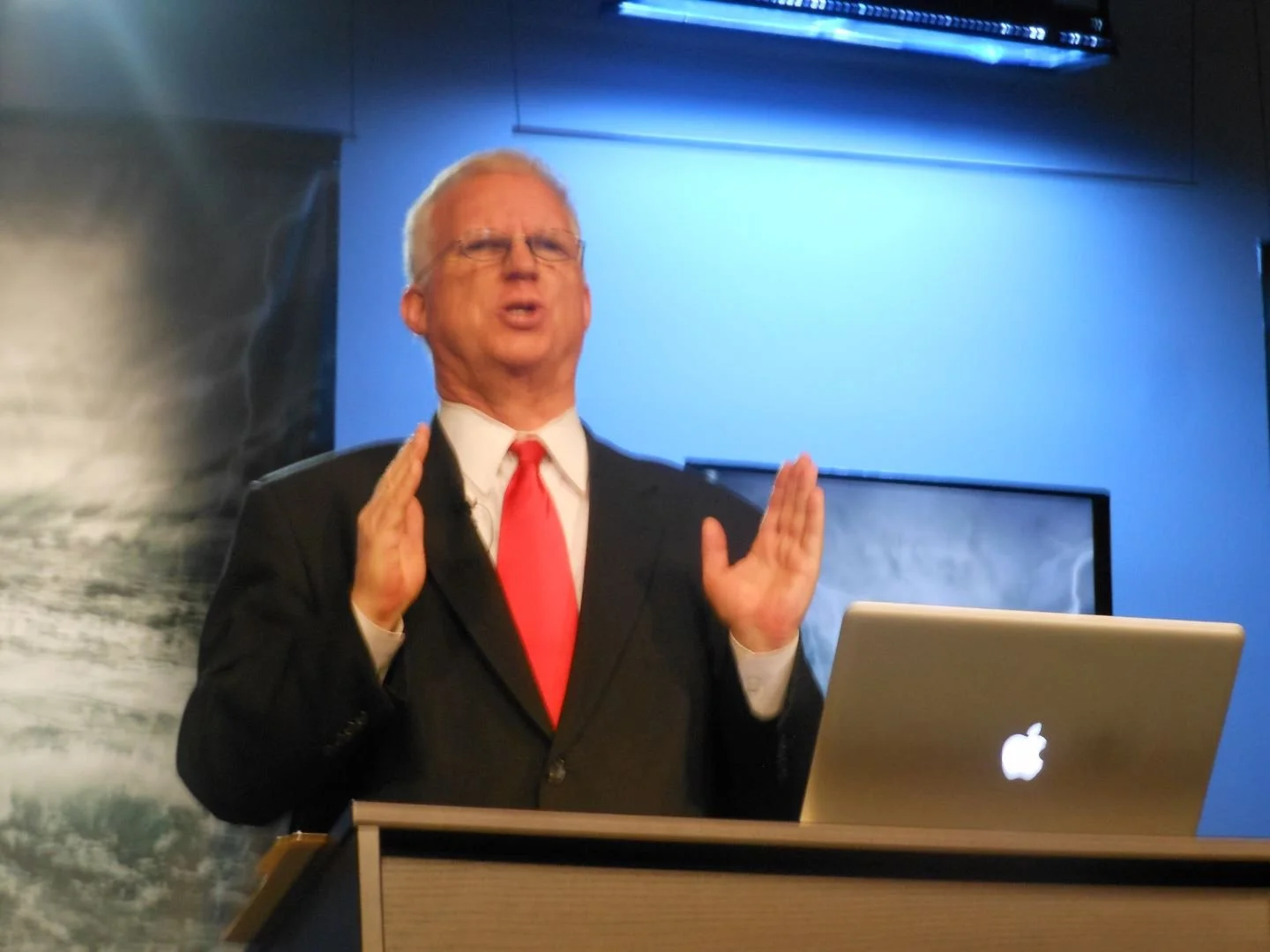
Pastor Kevin Paulson holds a Bachelor’s degree in theology from Pacific Union College, a Master of Arts in systematic theology from Loma Linda University, and a Master of Divinity from the SDA Theological Seminary at Andrews University. He served the Greater New York Conference of Seventh-day Adventists for ten years as a Bible instructor, evangelist, and local pastor. He writes regularly for Liberty magazine and does script writing for various evangelistic ministries within the denomination. He continues to hold evangelistic and revival meetings throughout the North American Division and beyond, and is a sought-after seminar speaker relative to current issues in the Seventh-day Adventist Church. He presently resides in Berrien Springs, Michigan