
July 12, 2026
SUBJECT: PUBLIC COMMENT – RELIGIOUS LIBERTY, FREEDOM OF CONSCIENCE, AND PEACEFUL PLURALISM – LEMUEL V. SAPIAN
Presidential Religious Liberty Commission
U.S. Department of Justice
950 Pennsylvania Avenue, NW
Washington, DC 20530
Dear Chairman Patrick, Vice Chairman Carson, and Members of the Commission:
I respectfully submit this comment regarding the Presidential Religious Liberty Commission’s draft report. I commend the Commission for recognizing that religious liberty is not adequately protected when religious citizens are told that they must conceal their faith as the price of participating in public life. The First Amendment does not require a secularized public square, nor does it treat religious conviction as a disability from which citizens must distance themselves before speaking, serving, teaching, voting, or holding public office.
I write as a Seventh-day Adventist Christian, a ministerial student, and a commissioned officer serving as a chaplain candidate in the United States Air Force Reserve. I do so entirely in my personal capacity. The views expressed here are my own and do not represent the Department of Defense, the Department of the Air Force, the Air Force Reserve, or any other agency of the United States Government.
My concern is not that the Commission has defended religion too strongly. My concern is that, in correcting genuine abuses committed in the name of “separation of church and state,” the report may weaken the constitutional distinction that has protected religious liberty from both governmental hostility and governmental control.
A proper distinction between religion and government does not mean freedom from the presence of religion. It means freedom of conscience: the right to believe, worship, speak, witness, assemble, abstain, convert, or decline religious belief without governmental compulsion. It protects religion from the state and the individual conscience from both religious and secular establishments.
The answer to the attempted exclusion of religion is therefore not the governmental elevation of Christianity, or of any other religious tradition. The answer is the equal liberty of all.
The constitutional framework
The Constitution begins with an aspiration rather than a declaration of national perfection. “We the People” established the Constitution in order to form “a more perfect Union.” The wording acknowledges that the American project is unfinished. Our constitutional order is a continuing effort to bring people of different regions, backgrounds, convictions, and religious traditions into one political community without requiring them to surrender their deepest beliefs.
Article VI prohibits religious tests for federal office. The First Amendment then commands that Congress shall make no law “respecting an establishment of religion, or prohibiting the free exercise thereof.” These are not opposing instructions. They are mutually reinforcing limits upon governmental power. Government must neither establish religious orthodoxy nor suppress religious exercise. It may not compel a creed, and it may not impose irreligion as a creed of its own.
This constitutional arrangement should not be understood as indifference toward religion. It reflects humility about the jurisdiction and competence of civil government. Government possesses legitimate authority to preserve order, protect rights, punish crime, and secure the conditions of civil peace. It does not possess the competence to determine which theology is true, which denomination most faithfully represents Christianity, which mode of worship God accepts, or which citizen has correctly ordered his or her conscience before the Creator.
Religious truth is not rendered unimportant because government lacks jurisdiction over it. On the contrary, matters of faith are placed beyond ordinary political control precisely because they are too important to be settled by elections, executive orders, administrative agencies, or temporary majorities.
Democracy answers the question of who may govern. Constitutional liberty answers the equally important question of what even a majority may not rightfully govern. Conscience belongs within that protected sphere.
The lesson of the Pilgrims
The American religious-liberty tradition arose partly from the experience of men and women who knew what it meant to live under an established religious order. The Pilgrims fled England after suffering under laws that did not merely encourage religion but enforced conformity to a government-favored church. Their flight first to the Netherlands and then across the Atlantic stands as an enduring testimony to the human longing to worship according to conscience. Many other colonists similarly came to America seeking escape from laws compelling participation in officially favored churches.
Yet the history of colonial America also provides a warning. Communities that fled persecution did not always extend equal liberty to those who dissented from them. Some who sought freedom for their own faith later reproduced forms of religious establishment and exclusion in the societies they controlled.
That contradiction does not diminish the importance of their search for freedom. It reveals that religious liberty remains incomplete when it is claimed only for ourselves.
The American achievement was not accomplished in a single voyage, colony, statute, or generation. It emerged gradually as the principle of refuge for one persecuted community matured into a principle of freedom for every conscience. Our history is therefore not simply a story of religious people seeking liberty. It is the continuing struggle to transform the liberty sought by particular groups into a liberty secured equally for all.
That is part of what it means to form a more perfect Union.
Christian influence without Christian establishment
Christianity has unquestionably influenced American history, moral language, public institutions, and conceptions of human dignity. Acknowledging this influence should not be controversial. Nor should religious citizens be prohibited from bringing Christian moral reasoning—or Jewish, Muslim, Hindu, Buddhist, or other moral reasoning—into public debate.
But influence is not establishment.
Christians may persuade their fellow citizens. They may advocate legislation on the basis of moral convictions formed by faith. They may serve in government, speak openly about God, establish religious institutions, provide charitable services, and contribute to the common good. What they may not rightfully demand is that the machinery of the state confer upon Christianity an authority that must be accepted by citizens who do not share it.
The difference is the difference between witness and compulsion.
Christianity itself supplies a governing principle for this distinction in the Golden Rule: “Whatsoever ye would that men should do to you, do ye even so to them.” A Christian who would object to being governed by the doctrines of another denomination, another religion, or an officially atheistic state should not employ political power to impose his own religious orthodoxy upon his neighbor.
The liberty I claim for myself before God must be the liberty I am prepared to defend for another.
That does not require me to believe that all religious claims are equally true. Religious pluralism is not theological relativism. It does not demand that Christians cease proclaiming Christ, that Jews cease practicing Judaism, that Muslims cease following Islam, or that nonbelievers adopt religious language they do not accept. It requires only that civil government not decide ultimate religious truth for the people.
In a free society, competing truth claims may be preached, debated, criticized, accepted, or rejected. What converts may not be produced by civil penalties. Political power can compel outward conformity, but it cannot create faith.
Chaplaincy as constitutional pluralism in practice
My experience as an Air Force Reserve chaplain candidate has strengthened rather than weakened my commitment to this principle.
Military chaplaincy provides a practical example of how a government institution can respect religion without establishing a government religion. Chaplains do not enter military service after abandoning their ecclesiastical identities. Each remains accountable to a particular faith tradition and ministers according to the convictions and requirements of that tradition.
At the same time, the Chaplain Corps exists to help protect the free exercise rights of all service members. A chaplain may personally perform ministry consistent with his or her own faith while helping provide access to appropriate religious support for those belonging to other traditions. Air Force policy describes the Chaplain Corps as providing worship, pastoral care, religious accommodation, spiritual care, and leadership advisement while helping ensure opportunities for the free exercise of religion.
This is not religious relativism. Nor is it institutional atheism. It is principled pluralism.
I do not compromise my Christian faith by defending the ability of a Jewish Airman to observe the Sabbath, a Muslim Airman to pray, a Catholic Airman to receive the sacraments, another Christian to worship according to his or her own denomination, or a nonreligious Airman to decline religious observance. I honor my vocation by recognizing that coercion would violate both their conscience and the character of genuine faith.
The military does not maintain chaplaincy in order to establish a national theology. It does so because military service may place members in circumstances where ordinary access to religious communities is limited. The government therefore facilitates free exercise without dictating the content of belief.
This offers a model for the broader republic: conviction without coercion, religious presence without religious establishment, and cooperation without governmental control of doctrine.
Neither religious establishment nor institutional secularism
The Commission is correct to warn that secularism can cease to function as a limited principle of governmental nonestablishment and become a comprehensive ideology hostile to religious expression. A government that permits secular philosophical convictions in public life while treating religious convictions as constitutionally suspect is not neutral.
But the response to an attempted establishment of secular ideology cannot be an establishment of Christianity.
Replacing one favored orthodoxy with another does not vindicate freedom of conscience. It merely changes which citizens possess governmental advantage and which citizens must appeal for tolerance.
A constitutionally neutral government is not an atheistic government. It is a nonconfessional government composed of citizens who remain fully free to be religious, irreligious, Christian, Jewish, Muslim, Hindu, Buddhist, agnostic, atheist, or something else. Its neutrality concerns governmental authority, not the private convictions of the people serving within it.
Religious people must therefore remain free to bring their beliefs into the public square. They must receive equal access to public programs, institutions, employment, education, and speech. At the same time, the government must not identify citizenship with adherence to a preferred religion or transform a demographic majority into an ecclesiastical ruling class.
Majority rule is necessary for ordinary democratic decision-making. It is not a license for the majority to govern the conscience of the minority.
A Christian majority may be tempted to assume that state support of Christianity would be benevolent because Christianity is true or morally beneficial. History counsels caution. Once government acquires power to define and support “Christianity,” government must determine which Christianity qualifies. It must choose among denominations, doctrines, moral teachings, institutions, and religious authorities. What begins as governmental protection of religion can become governmental supervision of religion.
The church may believe it has gained a powerful ally, only to discover that the state has become its regulator.
E pluribus unum
The enduring American ideal is expressed in the words E pluribus unum—out of many, one. The phrase does not mean that the many must become identical before they may belong to the one. It means that people who remain genuinely different may nevertheless share citizenship, constitutional loyalty, and responsibility for the common good.
Religious pluralism is therefore not a weakness to be reluctantly tolerated. Properly ordered, it is a bulwark against tyranny.
A nation containing many independent religious communities is less vulnerable to domination by a single ecclesiastical authority. A public square open to religious and nonreligious citizens alike is less vulnerable to domination by institutional secularism. A constitutional order that protects minority conscience restrains the majority today while protecting that same majority should it become a minority tomorrow.
The Golden Rule, constitutional restraint, and historical experience all point toward the same principle: we secure our own liberty most faithfully when we secure equal liberty for our neighbor.
I respectfully urge the Commission to make this principle unmistakable in its final report. The Commission should continue opposing efforts to exile religious expression from public life. It should affirm the right of religious citizens and institutions to participate openly and equally in American society. But it should also reaffirm that civil government must not establish, prescribe, or privilege a religious orthodoxy.
A bridge should indeed exist between religious citizens and participation in public life. But the constitutional boundary between ecclesiastical authority and governmental power must remain secure.
The answer to hostility toward religion is not religious establishment. The answer is freedom of conscience.
The answer to coercive secularism is not coercive Christianity. The answer is peaceful religious plurality.
The answer to the temptation of majority domination is the promise of equal liberty under law—a liberty strong enough for the Christian, the Jew, the Muslim, the Hindu, the atheist, and every other citizen to live together as many, yet remain one.
That is not freedom from religion.
It is religious liberty in its fullest and most American sense.
Respectfully submitted,
Lemuel V. Sapian
Second Lieutenant, U.S. Air Force Reserve
Chaplain Candidate
Submitted solely in a personal capacity. The views expressed herein do not represent the Department of Defense (War), the Department of the Air Force, the Air Force Reserve, or any other agency of the United States Government.
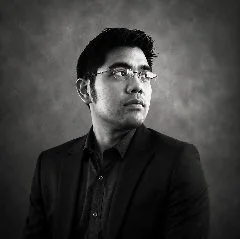
Lemuel V. Sapian is a commissioned officer and chaplain candidate in the United States Air Force Reserve, a ministerial student at the Seventh-day Adventist Theological Seminary at Andrews University, and a public-safety professional. A third-generation Seventh-day Adventist, he is committed to the Christian ministry of service, the constitutional protection of religious liberty, and the defense of freedom of conscience for people of every faith and for those of no faith. His views are expressed solely in his personal capacity and do not represent the Department of War, the Department of the Air Force, the Air Force Reserve, Andrews University, or any other institution with which he is affiliated.