
Last week the New York Times reported:
Nearly five centuries after King Henry VIII of England broke with the Roman Catholic Church so he could have his marriage dissolved in order to marry again (and again and again), a divorced and remarried English king prayed with the pope on Thursday in an ecumenical service at the Sistine Chapel [1].
Cardinal James Harvey noted during the service that the king’s visit “could not be overestimated” [2], and that it represented a “soul-stirring new chapter in the long history of relations” between the two churches [3].
Martin Browne, who works with the Vatican department that promotes Christian unity, said before the visit: “That is clearly an important sign for the world, not just in terms of the ecumenical project but for humanity in general” [4].
Outstanding Differences
The Times report noted, of course, the major theological differences that persist between the Anglican and Roman Catholic Churches, particularly—among other things—the ordination of women as clergy, the acceptance of practicing homosexuals in the ministry, and the tolerance of divorce [5]. (The Catholic Church is negative regarding all three practices, while the Anglican Church is accepting of the same. The newly appointed Archbishop of Canterbury, the Anglicans’ top leader, is now a female.) Martin Browne spoke of the recent meeting between the pope and the king as indicative of “of our closeness and willingness to see one another as brothers and sisters despite differences” [6].
The article went on to say, notably:
Leo’s praying with King Charles does not represent a meeting of the minds on other issues that may divide the churches, theological experts said [7].
Prophetic Fulfillment
Superficial togetherness among the churches despite outstanding doctrinal differences represents a significant fulfillment of inspired prophecy relative to last-day events. Ellen White speaks as follows regarding this phenomenon:
The wide diversity of belief in the Protestant churches is regarded by many as decisive proof that no effort to secure a forced uniformity can ever be made. But there has been for years, in churches of the Protestant faith, a strong and growing sentiment in favor of a union based on common points of doctrine. To secure such a union, the discussion of subjects upon which all were not agreed—however important they might be from a Bible standard—must necessarily be waived [##8|Ellen G. White, The Great Controversy, p. 444.##].
The Times article offered evidence of this spirit in the rapprochement now in progress between Catholics and Anglicans:
Experts said it was unlikely that the pope or the king would bring up divisive issues. “There’s certain topics you don’t bring up at Thanksgiving dinner,” said Rev. Thomas J. Reese, a senior analyst at Religion News Service and a longtime Vatican analyst. “You know where everybody stands, and so the effort is to see where we can work together” [9].
Many are familiar with the following Ellen White statement regarding the two key points on which Christian unity will be achieved in the last days:
Through the two great errors, the immortality of the soul and Sunday-sacredness, Satan will bring the people under his deceptions. While the former lays the foundation of spiritualism, the latter creates a bond of sympathy with Rome [##10|White, The Great Controversy, p. 588.##].
The modern prophet might well have observed that the above doctrinal tenets are, to a significant degree, the only ones on which the apostate Christian community can in fact unite upon. When the final crisis bursts on the world, with natural and man-made disasters multiplying and miracles abounding on both sides of the conflict [##11|——The Great Controversy, pp. 588-589,612.##], the immortality of the soul and Sunday-sacredness will become the principal lines of division between the two camps. No other issues will likely cement so obviously the confederacy between the various factions of Christendom which will then be established.
Conclusion: True and False Unity
The Times report also noted a Latin phrase inscribed on the chair assigned to King Charles at the Vatican: “’Ut unum sint’ ‘That they may be one’ — recognizing a shared Christian faith” [12]. This phrase, taken from the Gospel of John, chapter 17, verse 21, is often quoted by acolytes of the ecumenical movement. Unfortunately, what such persons often omit are the verses just preceding this one, which declare the basis and the means of the unity for which Jesus prayed:
Sanctify them through Thy truth; Thy word is truth. . . .
And for their sakes I sanctify Myself, that they also might be sanctified through the truth (John 17:17,19).
Without the truth of God’s Word as the definer and guardrail of unity, genuine Christian unity is impossible. Only a façade of unity can exist under any other circumstances. God’s true people, by contrast, will experience genuine and complete unity at this time, once the shaking has purified their ranks of pretenders [##13|White, Testimonies, vol. 6, p. 400.##]. Once this has occurred, the servant of the Lord declares, “The people of God will draw together, and present to the enemy a united front” [##14|——Testimonies, vol. 6, p. 401.##].
Ecumenism is indeed on the march. But thanks to the Word of God, His people can discern the contrast between counterfeit togetherness and true Christian oneness.
REFERENCES
1. Motoko Rich and Elisabetta Povoledo, “King Charles and Pope Leo Pray Together in Groundbreaking Moment,” New York Times, Oct. 25, 2025 https://www.nytimes.com/2025/10/23/world/europe/king-charles-pope-leo-praying.html
2. Ibid.
3. Ibid.
4. Ibid.
5. Ibid.
6. Ibid.
7. Ibid.
8. Ellen G. White, The Great Controversy, p. 444.
9. Rich and Povoledo, “King Charles and Pope Leo Pray Together in Groundbreaking Moment,” New York Times, Oct. 25, 2025 https://www.nytimes.com/2025/10/23/world/europe/king-charles-pope-leo-praying.html
10. White, The Great Controversy, p. 588.
11. Ibid, pp. 588-589,612.
12. Rich and Povoledo, “King Charles and Pope Leo Pray Together in Groundbreaking Moment,” New York Times, Oct. 25, 2025 https://www.nytimes.com/2025/10/23/world/europe/king-charles-pope-leo-praying.html
13. White, Testimonies, vol. 6, p. 400.
14. Ibid, p. 401.
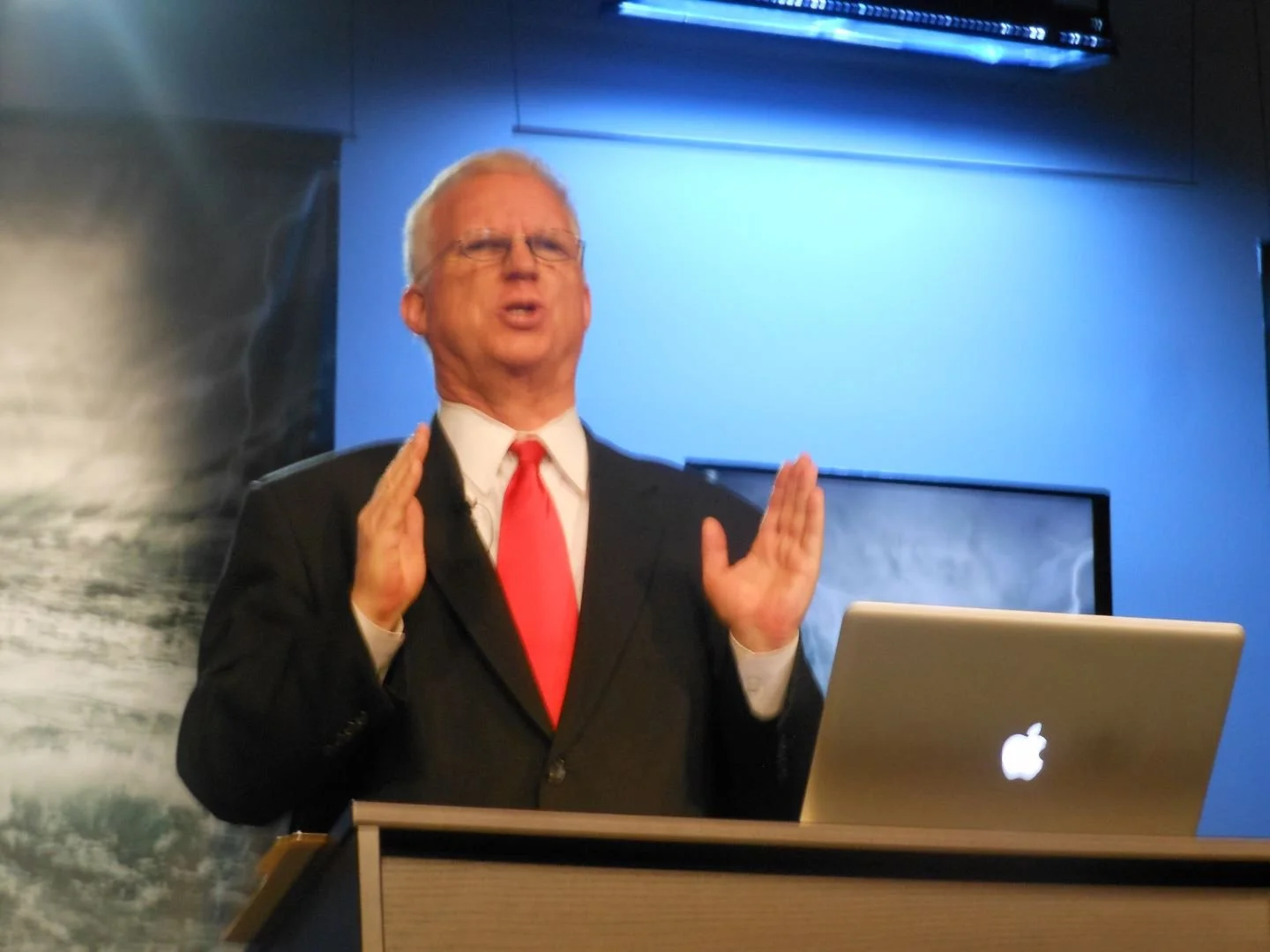
Pastor Kevin Paulson holds a Bachelor’s degree in theology from Pacific Union College, a Master of Arts in systematic theology from Loma Linda University, and a Master of Divinity from the SDA Theological Seminary at Andrews University. He served the Greater New York Conference of Seventh-day Adventists for ten years as a Bible instructor, evangelist, and local pastor. He writes regularly for Liberty magazine and does script writing for various evangelistic ministries within the denomination. He continues to hold evangelistic and revival meetings throughout the North American Division and beyond, and is a sought-after seminar speaker relative to current issues in the Seventh-day Adventist Church. He presently resides in Berrien Springs, Michigan