
Since the public endorsement by Elder Mark Finley of what has come to be known in contemporary Adventism as Last Generation Theology [1], the battle lines between apologists and critics of this construct have been highlighted like never before. A recent article on a liberal Adventist website—one of three on their site in several weeks addressing the Finley sermon—features an author whose radical departures from classic Adventism, even basic Christianity, bode ill for the case against a theology he denounces as “nothing short of heresy” [2].
Nuance and subtlety are rapidly vanishing in this debate, as well they should. Let all bear in mind that this author’s recent book against Last Generation Theology declares both Scripture and the writings of Ellen White to be internally contradictory [##3|Reinder Bruinsma, In All Humility: Saying No to Last Generation Theology (Westlake Village, CA: Oak & Acorn Publishing, 2018), pp. 10,11,73,74,104,112,115,168.##], speaks favorably of another’s sarcastic reference to his “year of living biblically” [##4|Bruinsma, In All Humility, p. 110.##], and openly questions whether Satan is a personal being [##5|Bruinsma, In All Humility, p. 41.##]. Elsewhere he has publicly rejected the historic Reformation stance regarding the papal Antichrist [##6|Bruinsma, “Adventists and Catholics: Prophetic Preview or Prejudice?” Spectrum, Summer 1999, pp. 31-52; see also Bruinsma, Adventists and Catholics: The History of a Turbulent Relationship (Lausanne, Switzerland: Peter Lang International Academic Publishers, 2024).##], and has called—in disagreement with both the Bible (e.g. John 4:18; 1 Cor. 7:2; Heb. 13:4) and the Seventh-day Adventist Church Manual [##7|Seventh-day Adventist Church Manual, 2022 edition, p. 68.##]—for the church to consider making room in its ranks for unmarried couples who live together out of wedlock [##8|Bruinsma, “Is Cohabitation Always Wrong?” Church and Society: Missiological Challenges for the Seventh-day Adventist Church (Rudi Maier, ed.) Berrien Springs, MI: Andrews University: Department of World Mission, 2015), pp. 575-586.##].
More recently, this same author has publicly asked Elder Erton Kohler, following the latter’s election to the General Conference presidency, if he would “take inclusion a step further: to ensure that people who—through no choice of their own—have a non-heterosexual orientation feel truly welcome in our Seventh-day Adventist Church. Can we explore together what the controversial texts may mean in 2025 for same-sex couples who love Christ and want to be full members of our church?” [9].
And then he has the audacity to call Last Generation Theology a heresy!
But the extremism this author represents should in fact surprise no one. If perfection is deemed impossible this side of heaven, neither doctrinal nor moral integrity becomes a viable standard within the faith community. Dividing professed Christians over faithfulness to Scripture makes no sense if perfection is viewed as unreachable, and such moral infractions as sexual intimacy outside of marriage can hardly merit condemnation if even God’s power can’t enable Christians to cease from sin.
Many who oppose Last Generation Theology will hasten to tell us that such positions as the above do not represent their convictions. And without question this is so. But the ruinous consequences of a too-easy doctrine of salvation will become increasingly difficult to deny as critics with such egregious shortcomings in their doctrinal and moral perspectives join the fray against the Last Generation message.
Fringe or Consensus?
More than one author in recent times has sought to relegate Last Generation Theology to the fringes of the church. The author noted above notes conspicuously in his article that this theology is “especially popular among independent ministry organizations” [10]. Nearly a decade ago, one contemporary Adventist historian—in a book addressing key denominational issues—introduced the subject of Last Generation Theology in one of his final chapters as a teaching “promoted by some of these independent Adventist groups” [##11|Nicholas P. Miller, The Reformation and the Remnant: The Reformers Speak to Today’s Church (Nampa, ID: Pacific Press Publishing Assn, 2016), p. 126.##]. The author in question refrained from any specificity as to who these “independent Adventist groups” were, or the precise nature of their relationship to the church. The basic impression conveyed by the author’s language was that the convictions held by Last Generation Theology are essentially marginal so far as their adherents within the denomination are concerned.
Perhaps the biggest problem with this notion is the wording of our own Seventh-day Adventist Fundamental Beliefs. Fundamental Belief No. 13, “The Remnant and Its Mission,” spells out the heart of Last Generation Theology:
The universal church is composed of all who truly believe in Christ, but in the last days, a time of widespread apostasy, a remnant has been called out to keep the commandments of God and the faith of Jesus. This remnant announces the arrival of the judgment hour, proclaims salvation through Christ, and heralds the approach of His second advent. This proclamation is symbolized by the three angels of Revelation 14; it coincides with the work of judgment in heaven and results in a work of repentance and reform on earth. Every believer is called to have a personal part in this worldwide witness (Dan. 7:9-14; Isa. 1:9; 11:11; Jer. 23:3; Micah 2:12; 2 Cor. 5:10; 1 Peter 1:16-19; 4:17; 2 Peter 3:10-14; Jude 3,14; Rev. 12:17; 14:6-12; 18:1-4) [12].
As I say so often, Last Generation Theology is really just the remnant church theology under a different name. God in these last days is calling for a remnant to keep His commandments through the faith and grace of their Lord Jesus. And the Bible is clear that “whosoever shall keep the whole law, and yet offend in one point, he is guilty of all” (James 2:10), thus affirming that less-than-perfect obedience to God’s commandments is unacceptable. The same principle is articulated in Fundamental Belief No. 22, “Christian Behavior”:
We are called to be a godly people who think, feel, and act in harmony with biblical principles in all aspects of personal and social life. For the Spirit to recreate in us the character of our Lord we involve ourselves only in those things that will produce Christlike purity, health, and joy in our lives [13].
Notice the statement doesn’t admonish Christians to “do their best” to think, feel, and act in harmony with Biblical principles. The command to do this is unqualified and comprehensive, leaving no room for sin of any kind in the life of the believer here portrayed.
Regarding the atonement, we again see how the position of Last Generation Theology is upheld by our SDA Fundamental Beliefs. Fundamental Belief No. 9, “The Life, Death, and Resurrection of Christ,” reads as follows regarding the atonement:
In Christ’s life of perfect obedience to God’s will, His suffering, death, and resurrection, God provided the only means of atonement for human sin, so that those who by faith accept this atonement may have eternal life, and the whole creation may better understand the infinite and holy love of the Creator. This perfect atonement vindicates the righteousness of God’s law and the graciousness of His character; for it both condemns our sin and provides for our forgiveness. The death of Christ is substitutionary and expiatory, reconciling and transforming [14].
Notice how the “means of atonement” here described include Christ’s resurrection as well as His earthly life and death, leading directly into the next phase of atonement articulated in a later Fundamental Belief which we will cite in a moment. Thus the “perfect atonement” described in this statement does not end with the cross. Moreover, the death of Christ is depicted in this statement as “substitutionary and expiatory, reconciling and transforming.” Obviously this process goes beyond Calvary, as the transforming of lives made possible by the cross has been happening both before and since. Like Scripture (Eph. 1:7; Col. 1:14; Heb. 10:14,29; 13:12,20-21), our official belief statement as a church affirms that the cross makes possible not only forgiveness, or justification, but the sanctification of believers as well.
Fundamental Belief No. 24, “Christ’s Ministry in the Heavenly Sanctuary,” takes up where No. 9 leaves off, affirming Christ’s continuing atonement in the heavenly sanctuary:
In 1844, at the end of the prophetic period of 2300 days, [Christ] entered the second and last phase of His atoning ministry, which was typified by the work of the high priest in the most holy place of the earthly sanctuary [15].
Notice how our Fundamental Beliefs, in contrast with the claims of leading Last Generation Theology opponents [##16|Jiri Moskala and John C. Peckham (eds.), God’s Character and the Last Generation (Nampa, ID: Pacific Press Publishing Assn, 2018), pp. 194,277.##], describe the atoning ministry of Jesus as continuing beyond the cross.
But the illusion of certain ones that Last Generation Theology is primarily the province of so-called “fringe” groups in the church, has now sustained another damaging blow. A new Global Church Member Survey conducted by Andrews University, completed in February 2024, reports that 67 percent of the Seventh-day Adventist worldwide membership either agrees or strongly agrees that “heaven requires perfect obedience” [17], while 71 percent either agree or strongly agree that in the last days, sinless perfection is possible for the earthly believer [18].
These overwhelming majorities hardly comport with the claim that the teachings of Last Generation Theology represent some fanatical, marginal fringe of the worldwide body of Seventh-day Adventists.
Conclusion
Make no mistake about it. Neither Last Generation Theology nor any other doctrinal belief is true or false based on majority opinion. Only the written counsel of God can determine truth or error in the spiritual realm (Isa. 8:20; Acts 17:11). And as a lifelong political observer I am inclined to be distrustful of polling data, as former U.S. presidents Thomas Dewey and Michael Dukakis would readily attest! But when we consider the wording of our SDA Fundamental Beliefs, as well as the recent and decisive survey data noted above, the attempt to relegate the teachings of Last Generation Theology to the fringes of the church can rightly be dismissed as untenable.
REFERENCES
1. Mark Finley, “Why Last Generation Theology is Biblical,” ADvindicate, Nov. 20, 2025 https://advindicate.com/articles/2025/11/20/why-last-generation-theology-is-biblical
2. Reinder Bruinsma, “Finley’s Last Generation Theology: Turn Off LGT Light,” Spectrum, Dec. 9, 2025 https://spectrummagazine.org/views/analysis/finleys-last-generation-theology-turn-off-lgt-light/
3. ----In All Humility: Saying No to Last Generation Theology (Westlake Village, CA: Oak & Acorn Publishing, 2018), pp. 10,11,73,74,104,112,115,168.
4. Ibid, p. 110.
5. Ibid, p. 41.
6. ----“Adventists and Catholics: Prophetic Preview or Prejudice? Spectrum, Summer 1999 https://atoday.org/wp-content/uploads/2021/08/Bruinsma.pdf; see also Adventists and Catholics: The History of a Turbulent Relationship (Lausanne, Switzerland: Peter Lang International Academic Publishers, 2024).
7. Seventh-day Adventist Church Manual, 2022 edition, p. 68.
8. Bruinsma, “Is Cohabitation Always Wrong?” Church and Society: Missiological Challenges for the Seventh-day Adventist Church (Rudi Maier, ed.) (Berrien Springs, MI: Andrews University: Department of World Mission, 2015), pp. 575-586.
9. ----“Dear Elder Kohler: Will you make room for people like me in the church?” Adventist Today, July 18, 2025 https://atoday.org/dear-elder-kohler/
10. ----“Finley’s Last Generation Theology: Turn Off LGT Light,” Spectrum, Dec. 9, 2025 https://spectrummagazine.org/views/analysis/finleys-last-generation-theology-turn-off-lgt-light/
11. Nicholas P. Miller, The Reformation and the Remnant: The Reformers Speak to Today’s Church (Nampa, ID: Pacific Press Publishing Assn, 2016), p. 126.
12. https://adventist.org/beliefs.
13. Ibid.
14. Ibid.
15. Ibid.
16. Jiri Moskala and John C. Peckham (eds.), God’s Character and the Last Generation (Nampa, ID: Pacific Press Publishing Assn, 2018), pp. 194,277.
17. 2022-2023 Global Church Member Survey Concerning the General Conference of Seventh-day Adventists Reach the World 2020-2025 Strategic Focus (Meta-Analysis Report, February 2024), p. 96. https://www.adventistresearch.info/wp-content/uploads/GCMS-III-meta-analysis-report-FINAL-February-2024-Cover-Page-Adjustment.pdf?fbclid=IwY2xjawOirFpleHRuA2FlbQIxMABicmlkETFhNHc3eUJ5T3ZKTzB0NXVvc3J0YwZhcHBfaWQQMjIyMDM5MTc4ODIwMDg5MgABHroi2aAdDcaut15qOMvKE-OuFnePjFbEQ88XzzV4KlmzXnWqSdBI2Rmn_4X8_aem_MtRGzVKY4taUbe4JQ42lyQ
18. Ibid.
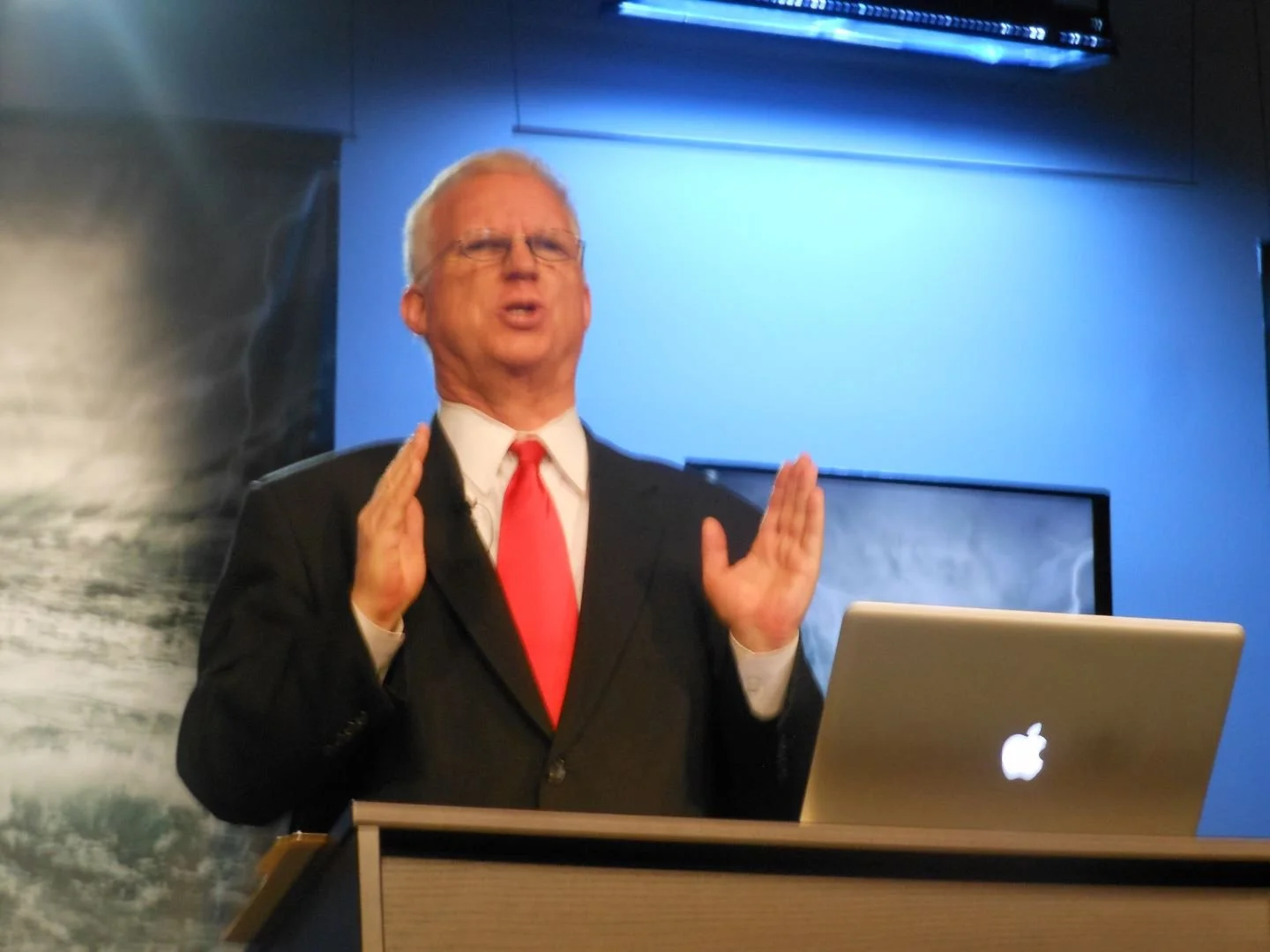
Pastor Kevin Paulson holds a Bachelor’s degree in theology from Pacific Union College, a Master of Arts in systematic theology from Loma Linda University, and a Master of Divinity from the SDA Theological Seminary at Andrews University. He served the Greater New York Conference of Seventh-day Adventists for ten years as a Bible instructor, evangelist, and local pastor. He writes regularly for Liberty magazine and does script writing for various evangelistic ministries within the denomination. He continues to hold evangelistic and revival meetings throughout the North American Division and beyond, and is a sought-after seminar speaker relative to current issues in the Seventh-day Adventist Church. He presently resides in Berrien Springs, Michigan