
Considerable discussion has arisen in the Seventh-day Adventist Church, online and elsewhere, since Elder Mark Finley preached his recent sermon, “Why Last Generation Theology is Biblical” [1]. Various issues raised by the cluster of doctrines which comprise Last Generation Theology have thus become the focus of vigorous conversation.
One of these issues is the compatibility, or lack thereof, between the doctrine of original sin (the idea that all humans are involuntary sinners because of their inborn sinful nature) and the doctrine that through heaven’s power here on earth, all sin may be overcome and expelled from the Christian life.
Some believe these doctrines are compatible—that one can hold the theory that all men and women are automatic sinners because of their inherited fallen natures, while at the same time believing that sin can be overcome while one still possesses such a nature. Others hold that these two beliefs are fundamentally incompatible.
Which position is correct?
What is Original Sin?
The label “original sin” carries a fair amount of baggage, even with many who accept its basic premise—namely, that all human beings are born sinners because of Adam’s fall. Some are uncomfortable with the label because they resist the idea of inherited guilt (often associated with original sin), while at the same time believing all are condemned and in need of forgiveness from the moment they enter this world. How one can be involuntarily condemned and not at the same time guilty is difficult for many to understand, the present writer included.
But the notion of involuntary sin, whether inherited from Adam or otherwise received, contradicts some very clear Biblical teachings. The book of Ezekiel declares, “The soul that sinneth, it shall die. The son shall not bear the iniquity of the father, neither shall the father bear the iniquity of the son” (Eze. 18:20). If all humanity stands condemned before God because of the sin of our father Adam, the above verse would be mistaken.
The apostle James writes: “Every man is tempted when he is drawn away of his own lust, and enticed. Then lust, when it hath conceived, it bringeth forth sin” (James 1:14-15). Ellen White agrees:
There are thoughts and feelings suggested and aroused by Satan that annoy even the best of men; but if they are not cherished, if they are repulsed as hateful, the soul is not contaminated with guilt and no other is defiled by their influence [##2|Ellen G. White, That I May Know Him, p. 140.##].
Despite the claim of some that Romans 5:12-19 teaches involuntary sin (and involuntary justification) for the whole human family because of the respective deeds of Adam and Christ, verse 12 in fact states that “death (eternal) passed upon all men, for that all have sinned.” Eternal death has not, in other words, passed on all humanity because Adam sinned, but rather, because “all have sinned.” Using the language of this chapter, Ellen White observes as follows:
Human beings have degenerated. One after another they fall under the curse, because sin has entered the world, and death by sin…. We may choose God’s way and live; we may choose our own way, and know that sin has entered into the world, and death by sin [##3|——Signs of the Times, June 27, 1900.##].
In Romans 5:18, it is important to note that the phrases “judgment came” and “the free gift came” are supplied, which is why the King James Version has them in italics. A straightforward reading of this verse, without the supplied words, simply states that the offense of one man (Adam) has brought condemnation—which has become universal because “all have sinned” (verse 12)—and that the righteousness of Christ has made justification available to all. The following verse is especially clear that this righteousness was not involuntarily applied to everyone at the cross, when it states that “by the obedience of one shall many be made righteous” (verse 19). This making righteous is obviously in the future, dependent on individual choice, which is what verse 17 states when it speaks of how those “which receive abundance of grace and of the gift of righteousness shall reign in life by one, Jesus Christ.”
In other words, just as the eternal death initiated by Adam applies to everyone because “all have sinned” (verse 12), so the salvation offered by Jesus applies only to those who “receive abundance of grace and of the gift of righteousness” (verse 17). Choice is the decisive factor in both cases. What Paul is saying in Romans is really quite simple: Adam led the world into sin, but Christ has come with the offer to lead us out of it. But whether we follow Adam or follow Christ remains our decision.
We note with interest that neither Romans 5 nor any other passage in Paul’s writings speaks of sin as the involuntary result of birth. Birth is mentioned nowhere in these passages in connection with the origin of sin in the lives of human beings. Some have tried to use David’s statement in Psalm 51:5 as proof that people are born sinners. Here David declares, “Behold, I was shapen in iniquity, and in sin did my mother conceive me.” But notice carefully that David doesn’t say, “As a sinner did my mother conceive me.” In no way is David trying to pass the blame for his transgression to his mother, to Adam, or anyone else. He is simply saying, from the depth of his contrition, that he was brought into a sinful world—that his mother was a sinner, and so was he.
Neither Scripture nor Ellen White teach involuntary sin, at birth or any other time. Ellen White is especially clear as to the direct link between sin and the individual will:
No man can be forced to transgress. His own consent must be first gained, the soul must purpose the sinful act, before passion can dominate over reason, or iniquity triumph over conscience [##4|——Testimonies, vol. 5, p. 177.##].
It is not in the power of Satan to force anyone to sin. Sin is the sinner’s individual act. Before sin exists in the heart, the consent of the will must be given, and as soon as it is given, sin is triumphant, and hell rejoices [##5|——Signs of the Times, Dec. 18, 1893.##].
Satan knows that he cannot overcome man unless he can control his will. He can do this by deceiving man so that he will cooperate with him in transgressing the laws of nature in eating and drinking, which is transgression of the law of God [##6|——Temperance, p. 16.##].
Although sin was the awful thing that had opened the floodgates of woe upon the world, He (Christ) would become the propitiation of a race that had willed to sin [##7|——From the Heart, p. 253.##].
Notice how she writes that the human race had willed to sin. They weren’t forced to sin because of Adam. Notice also how she says that before sin can exist in the heart, the will must choose. How then can it be said that sin exists in every heart from the moment of birth? And how could it be said that none are forced to transgress if all become transgressors simply by being born? If in fact Satan cannot overcome human beings unless he controls their will, which according to the above statement occurs through being deceived into transgression, how then can it be said that all are under Satan’s control by virtue of birth, before any are deceived into cooperating with his suggestions?
In one of the clearest of all her statements on this subject, the modern prophet writes:
The light of life is freely proffered to all. Every one who will may be guided by the bright beams of the Sun of Righteousness. Christ is the great remedy for sin. None can plead their circumstances, their education, or their temperament as an excuse for living in rebellion against God. Sinners are such by their own deliberate choice [##8|——From the Heart, p. 151.##].
Without a Mediator
The big problem with the original sin doctrine is that it requires that humans be divinely forgiven merely because they possess an inborn fallen nature. Some have used the following Ellen White statement to support this theory:
The religious services, the prayers, the praise, the penitent confession of sin ascend from true believers as incense to the heavenly sanctuary, but passing through the corrupt channels of humanity, they are so defiled that unless purified by blood, they can never be of value with God. They ascend not in spotless purity, and unless the Intercessor, who is at God’s right hand, presents and purifies all by His righteousness, it is not acceptable to God. All incense from earthly tabernacles must be moist with the cleansing drops of the blood of Christ. He holds before the Father the censer of His own merits, in which there is no taint of earthly corruption. He gathers into this censer the prayers, the praise, and the confessions of His people, and with these He puts His own spotless righteousness. Then, perfumed with the merits of Christ’s propitiation, the incense comes up before God wholly and entirely acceptable. Then gracious answers are returned [##9|——Selected Messages, vol. 1, p. 344.##].
It is assumed by opponents of Last Generation Theology that the blood-purification described in this passage is forensic, making legally pure what in a practical, spiritual sense remains faulty and impure, presumably on account of the continuing presence of an inherited fallen nature. But as with our understanding of any inspired statement, context and consensus—the statement’s immediate setting and the larger message of the inspired writings—hold the key to the above statement’s meaning. The “corrupt channels” described by the above statement are explained two paragraphs earlier:
A daily and yearly typical atonement is no longer to be made, but the atoning sacrifice through a mediator is essential because of the constant commission of sin. Jesus is officiating in the presence of God, offering up His shed blood, as it had been a lamb slain. Jesus presents the oblation offered for every offense and every shortcoming of the sinner [##10|——Selected Messages, vol. 1, p. 344.##].
It is significant that nowhere in this context—or elsewhere, to the present writer’s knowledge—is the corruption necessitating purification identified with humanity’s inherited fallen nature. Rather, the purification by Jesus’ blood that is needful here is due to the “constant commission of sin.” This is not humanity’s birth-nature that is in focus in this passage. The pollution here described results from the human choice to transgress God’s law.
But what then happens to those alive when the Mediator’s work ceases at the close of probation? Ellen White is clear that the mediation described in the above statement will not be available when Jesus leaves the Most Holy Place in heaven:
Jesus is in His holy temple and will now accept our sacrifices, our prayers, and our confessions of faults and sins and will pardon all the transgressions of Israel, that they may be blotted out before He leaves the sanctuary. When Jesus leaves the sanctuary, then they who are holy and righteous will be holy and righteous still; for all their sins will then be blotted out, and they will be sealed with the seal of the living God. But those that are unjust and filthy will be unjust and filthy still; for then there will be no Priest in the sanctuary to offer their sacrifices, their confessions, and their prayers before the Father’s throne [##11|——Early Writings, p. 48.##].
Let’s keep in mind Ellen White’s clear statements that our fallen natures remain with us till Jesus comes. Such statements as the following are quite plain on this point:
So long as Satan reigns, we shall have self to subdue, besetting sins to overcome; so long as life shall last, there will be no stopping place, no point which we can reach and say, I have fully attained [##12|——Acts of the Apostles, pp. 560-561.##].
So long as life shall last, there will be need of guarding the affections and the passions with a firm purpose. Not one moment can we be secure except as we rely upon God, the life hidden with Christ. Watchfulness and prayer are the safeguards of purity [##13|——Prophets and Kings, p. 84.##].
Appetite and passion must be brought under the control of the Holy Spirit. There is no end to the warfare this side of eternity [##14|——Counsels to Teachers, p. 20.##].
Just as long as Satan urges his temptations upon us, the battle for self-conquest will have to be fought over and over again; but by obedience, the truth will sanctify the soul [##15|——From the Heart, p. 297.##].
In light of the above, it becomes clear that the corrupt channels requiring heavenly mediation cannot refer to our fallen nature, as the latter remains with the Christian after mediation ceases. We noted earlier that it is the “constant commission of sin” which makes necessary the cleansing by Jesus’ blood described in the oft-quoted “corrupt channels” statement [##16|——Selected Messages, vol. 1, p. 344.##]. When probation closes, the commission of any and all sin will have ceased in the lives of the living saints:
Those who are living upon the earth when the intercession of Christ shall cease in the sanctuary above, are to stand in the sight of a holy God without a mediator. Their robes must be spotless, their characters must be purified from sin by the blood of sprinkling. Through the grace of God and their own diligent effort they must be conquerors in the battle with evil. While the investigative judgment is going forward in heaven, while the sins of penitent believers are being removed from the sanctuary, there is to be a special work of purification, of putting away of sin, among God’s people upon earth….
When this work shall have been accomplished, the followers of Christ will be ready for His appearing [##17|——The Great Controversy, p. 425.##].
What are you doing, brethren, in the great work of preparation? Those who are uniting with the world, are receiving the worldly mold, and preparing for the mark of the beast. Those who are distrustful of self, who are humbling themselves before God and purifying their souls by obeying the truth—these are receiving the heavenly mold, and preparing for the seal of God in their foreheads. When the decree goes forth, and the stamp is impressed, their character will remain pure and spotless for eternity [##18|——Testimonies, vol. 5, p. 216.##].
When He comes, He is not to cleanse us of our sins, to remove from us the defects in our characters, or to cure us of the infirmities of our tempers and dispositions. If wrought for us at all, this work will all be accomplished before that time. When the Lord comes, those who are holy will be holy still…. The Refiner does not then sit to pursue His refining process and remove their sins and their corruption. This is all to be done in these hours of probation [##19|——Testimonies, vol. 2, p. 355.##].
Conclusion
So according to Ellen White, the saints who live till Jesus comes will still have their fallen natures [##20|——Acts of the Apostles, pp. 560-561; Prophets and Kings, p. 84; Counsels to Teachers, p. 20; From the Heart, p. 297.##], yet will have all their sins and corruption removed “in these hours of probation” [##21|——Testimonies, vol. 2, p. 355.##]. This clearly rules out any notion that one’s sinful nature is corrupting in and of itself, apart from the choice to yield thereto, presumably requiring forgiveness by its mere presence within the believer.
If one’s fallen nature does in fact require forgiveness, the saints after probation’s close would stand condemned before God, because nowhere do either Scripture or the writings of the Spirit of Prophecy teach the concept of “overarching forgiveness.” No one is ever forgiven “in advance” in the Biblical plan of salvation. When Christ’s mediation closes, forgiveness of any kind ceases to be available (Rev. 8:5; 15:8; 22:11), even though God’s power to keep from falling remains with His struggling saints (Rev. 3:10) [##22|——The Great Controversy, p. 619.##].
So is the doctrine of original sin compatible with the promise of complete victory over sin in this life? In a word, no. If one’s fallen nature imparts condemnation by its mere presence, victory over sin would not only require an end to sinful choices, but the removal of the fallen nature as well. And the evidence we have seen from the inspired text does not allow for the co-existence of these two concepts. The Savior we worship “pleased not Himself” (Rom. 15:3), yet is declared to be a “Lamb without blemish and without spot” (I Peter 1:19). The same will be true of His victorious saints who meet Him at His return (II Peter 3:10-14; I John 3:2-3).
REFERENCES
1. Mark Finley, “Why Last Generation Theology is Biblical,” ADvindicate, Nov. 20, 2025 https://advindicate.com/articles/2025/11/20/why-last-generation-theology-is-biblical
2. Ellen G. White, That I May Know Him, p. 140.
3. ----Signs of the Times, June 27, 1900.
4. ----Testimonies, vol. 5, p. 177.
5. ----Signs of the Times, Dec. 18, 1893.
6. ----Temperance, p. 16.
7. ----From the Heart, p. 253.
8. Ibid, p. 151.
9. ----Selected Messages, vol. 1, p. 344.
10. Ibid.
11. ----Early Writings, p. 48.
12. ----Acts of the Apostles, pp. 560-561.
13. ----Prophets and Kings, p. 84.
14. ----Counsels to Teachers, p. 20.
15. ----From the Heart, p. 297.
16. ----Selected Messages, vol. 1, p. 344.
17. ----The Great Controversy, p. 425.
18. ----Testimonies, vol. 5, p. 216.
19. Ibid, vol. 2, p. 355.
20. ----Acts of the Apostles, pp. 560-561; Prophets and Kings, p. 84; Counsels to Teachers, p. 20; From the Heart, p. 297.
21. ----Testimonies, vol. 2, p. 355.
22. ----The Great Controversy, p. 619.
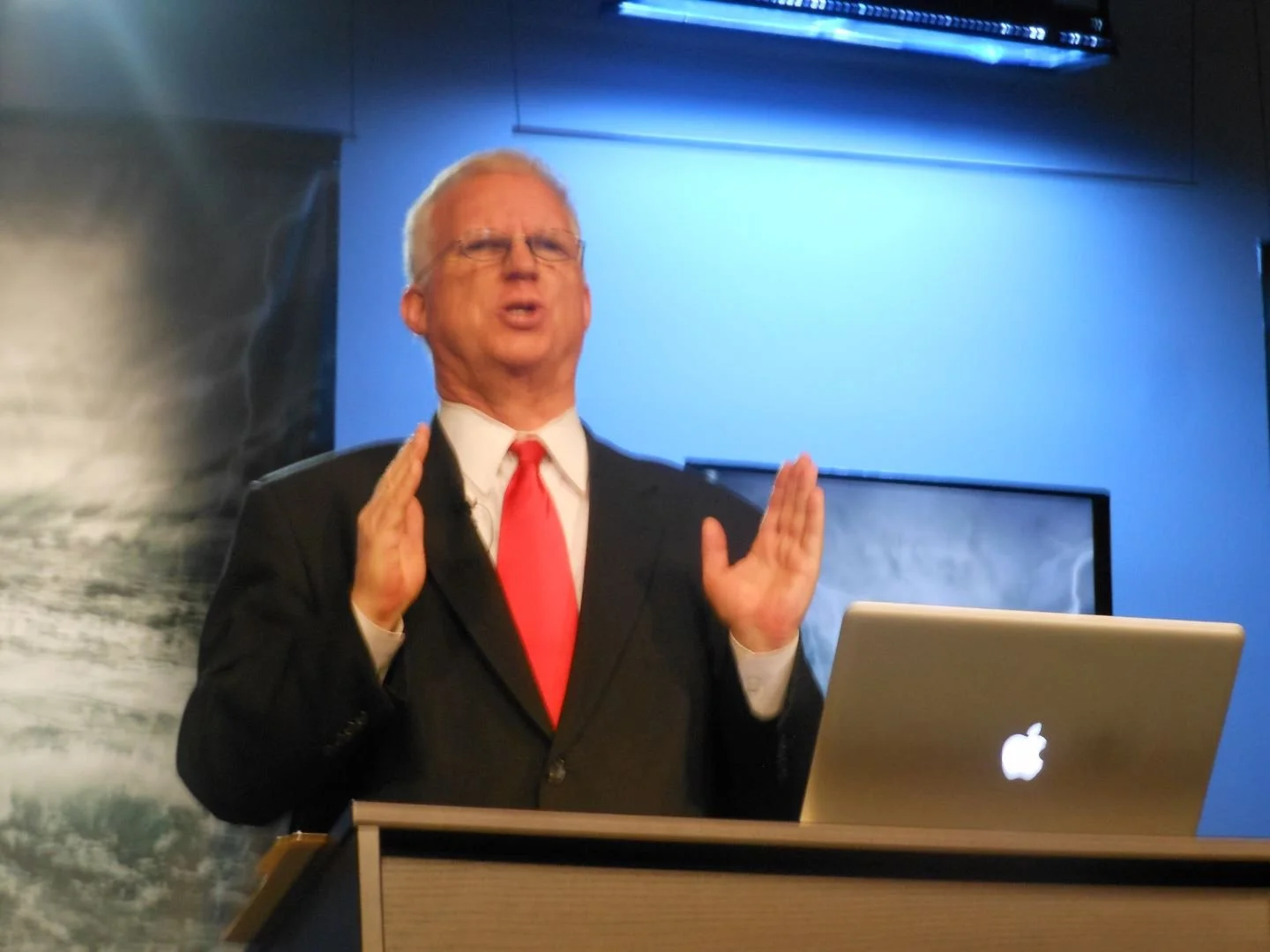
Pastor Kevin Paulson holds a Bachelor’s degree in theology from Pacific Union College, a Master of Arts in systematic theology from Loma Linda University, and a Master of Divinity from the SDA Theological Seminary at Andrews University. He served the Greater New York Conference of Seventh-day Adventists for ten years as a Bible instructor, evangelist, and local pastor. He writes regularly for Liberty magazine and does script writing for various evangelistic ministries within the denomination. He continues to hold evangelistic and revival meetings throughout the North American Division and beyond, and is a sought-after seminar speaker relative to current issues in the Seventh-day Adventist Church. He presently resides in Berrien Springs, Michigan