

 A review of the deep questions students, teachers, and many others face in the origins conflict. Icons will include: the origin of life; age of the universe, the earth, and life; as well as the sequence of the fossils. This presentation will serve as an introduction of the 1,268 slide presentation prepared especially for the students and teachers in Adventist schools.
Eternal power vs blind chance

On November 5, 2011, Dr. Robert L. Piccioni gave the lecture “Can Life Be Merely an Accident?” at Loma Linda University. While many able scientists and philosophers have formulated arguments for God’s existence based on the fine tuning of the universe and the complexity of life, Dr. Piccioni’s work has added an invaluable perspective to the discussion.
Read MoreSoutheastern Calif. Conference removes 'ordained-commissioned' from ministerial credentials

 FOR IMMEDIATE RELEASE
CONTACT:
Enno Mueller, Interim Communication Director
Southeastern California Conference
951.509.2258
enno.mueller@seccsda.org
FOR IMMEDIATE RELEASE
CONTACT:
Enno Mueller, Interim Communication Director
Southeastern California Conference
951.509.2258
enno.mueller@seccsda.org
March 22, 2012 (Riverside, CA) – The Executive Committee of the Southeastern California Conference voted today “to remove the term ‘Ordained-Commissioned’ and replace it with the term ‘Ordained’ on all ministerial credentials, regardless of the gender of the credential holder.” This is effective immediately.
Since 2000 the conference had issued “Ordained-Commissioned” ministerial credentials to men and women.
The committee believes this step will enable all pastors to better fulfill the conference’s mission statement, which is the expansion of God’s kingdom through preaching, teaching, publishing and living of the everlasting gospel throughout the cross-cultural communities of its territory.
Southeastern California Conference is the administrative headquarters for the more than 70,596 members of 156 churches and companies. The conference employs 177 pastors that hold ministerial credentials, of which 10 are female. The conference territory encompasses the Imperial, Orange, Riverside, San Bernardino and San Diego counties. Southeastern California Conference is one of seven conferences that make up the Pacific Union Conference, which has approximately 222,000 members and is one of nine union conferences that form the North American Division. The North American Division has more than 1 million members.
The fine-tuned universe

 The incredible precision of the universe is often overlooked in discussion about science and God. The topic is also too often neglected in the Adventist conversation. This topic will be introduced by a video prepared for the general viewer and will also serve as an introduction to the 14 video series titled "Where Is Truth?: In the Bible, in Science, or Both?" by Ariel Roth.
Futility

 I learned a valuable lesson yesterday from my shop radio. I had moved the radio over to another area of the shop where I was working and plugged it into the outlet. At least I tried to. The dumb plug was wrong, or the way I was holding it was wrong, or maybe the outlet was wrong. At any rate, I had to turn the plug over so the finicky wide plug went into the dumb wide slot. Then it worked. Now I have had this experience before; in fact I have had it many times. So I began thinking… “Why is it that the majority of times I attempt to plug in an electrical appliance, I do it wrong? Couldn’t it just as easily be right a majority of the time? How about 50/50? Why is it usually wrong?”
I think I finally found the answer in an obscure text in the Bible: “For the creation was subjected to futility, not of its own will but by the will of the one who subjected it, in hope that the creation itself will be set free from its bondage to decay and will obtain the freedom of the glory of the children of God” (Romans 8:20-21). DID YOU HEAR THAT? Futility. That’s what we have had ever since Adam and Eve ate that futile fruit.
I learned a valuable lesson yesterday from my shop radio. I had moved the radio over to another area of the shop where I was working and plugged it into the outlet. At least I tried to. The dumb plug was wrong, or the way I was holding it was wrong, or maybe the outlet was wrong. At any rate, I had to turn the plug over so the finicky wide plug went into the dumb wide slot. Then it worked. Now I have had this experience before; in fact I have had it many times. So I began thinking… “Why is it that the majority of times I attempt to plug in an electrical appliance, I do it wrong? Couldn’t it just as easily be right a majority of the time? How about 50/50? Why is it usually wrong?”
I think I finally found the answer in an obscure text in the Bible: “For the creation was subjected to futility, not of its own will but by the will of the one who subjected it, in hope that the creation itself will be set free from its bondage to decay and will obtain the freedom of the glory of the children of God” (Romans 8:20-21). DID YOU HEAR THAT? Futility. That’s what we have had ever since Adam and Eve ate that futile fruit.
So what does futility mean to us? It means that we are subjected to futility & frustration (“Yeah, I read that, Gerry”). But, what does it mean to us today? It means that things don’t always work out the way that we wish they would. In fact, very many times they do not.
For instance: If you are changing the oil in your truck out in the driveway, it can be a perfectly calm day until you bend over and crawl under the truck, leaving your vulnerable backside as a target. The formerly nonexistent wind will choose that moment to inflate your shirt like the sail on a British schooner, and at the same time turn the steady oil stream into a dribble of black mist that creates a large stain on the concrete (gravel if you are lucky). Futility is what we’re talking about here. Or, frustration. How can we cope with it as we wait for Jesus to return?
We are not alone
It should take some of the sting out of life to discover that the Apostle Paul was frustrated at times too. In his second letter to the Corinthians, he writes about a real tough time he was experiencing. “For we do not want you to be ignorant, brethren, of our trouble which came to us in Asia: that we were burdened beyond measure, above strength, so that we despaired even of life itself (2 Cor. 1:8). In other words “We didn’t think we were going to live...”
Now most of us have not feared for our lives, but we know what it means to be frustrated at times by jobs, children, marriages, neighbors and maybe even our faith. We don’t all struggle alike, but alike we all struggle. Can Anyone help us? Enter Jesus. When He spiraled down into a human cell, He subjected Himself to humanity with all of its frustrations. According to Hebrews, He did this so that He might have a behind-the-scenes bond with our condition and lift us above it (Hebrews 2:14-18). Paul understands what frustration is; an entire line of chosen witnesses in Hebrews 11 understood, and most importantly Jesus understands. We are not alone in this grand existential struggle.
Prayer makes a difference
In his letter to the believers at Corinth (2 Cor. 1:11) Paul reveals a special antidote to the shivers of futility that we experience. Prayer. How many people have prayed for you during some low time in your life? More than we know. How many times have we prayed for others? When we ask others to pray for us, two things happen. We humble ourselves (very important in my life–perhaps yours too) and we give others an opportunity to share in the rejoicing. As our trials pass, they often reveal that some good has come from the experience. This gives way to gratitude, and those who prayed for us can share in that rejoicing. As Paul wrote: “You helped us by your prayers” (v. 11a) and now many will give thanks for the gracious favor granted in this answered prayer” (v.11b). This is how the Church is designed to function. Are you concerned about someone? Pray for them. Do you love someone? Pray for them. Do you despise someone? Pray for them, and ask others to pray for you. Prayer messes up futility.
Look forward
The trials that we face have a purpose. God never wastes pain in our lives. He has promised to use it to bring good into our lives (2 Cor. 1:10; 4:17). In 2007, I spoke with a family in Idaho who had endured many frustrations. In tears, they shared some of the pain that life had brought them. After listening, I asked them, “What good has come out of this experience?” That one question turned the direction of the whole conversation toward God. They spoke of finding God through the trial and learning to love each other more deeply. The experience gave them something they hadn’t possessed before. Hope! As Jeremiah said, “God has a desire to give us hope and a future” (Jeremiah 29:11). God cares about your future enough to have already secured your place in it (John 14:3). There is hope. We may still have red traffic lights, property tax, cemeteries and hospitals to temporarily endure, but there is a better land coming if we remain faithful. So the next time you go to plug in your blender to make a smoothie, remember… you may try to plug it in the wrong way at first.
That’s okay. God, in His goodness, has plugged us into His family, into His future and into His heart, and the enemy is the only one frustrated with God's goodness.
Contraception: a memoir

 All told, while attending different schools, I have lived in a dormitory for a total of ten years. Dorm life breeds a certain familiarity with people far beyond one’s friend group. Little discretion is often used when sharing the facts of one’s life. One year, a girl that I lived near involved herself in a relationship with a certain young man. He had been an acquaintance and I did not know him well, but nonetheless I had the unfortunate privilege of coming to know some very intimate personal details about him via a former roommate of mine and girlfriend of his. This was on the heels of yet another previous friend of mine and another former girlfriend of his. (The dating game can be a very messy business indeed).
I’ll never forget the day when Jill came to me and said, “Jack* says we’re going to get married, so why does it matter if we wait?”
All told, while attending different schools, I have lived in a dormitory for a total of ten years. Dorm life breeds a certain familiarity with people far beyond one’s friend group. Little discretion is often used when sharing the facts of one’s life. One year, a girl that I lived near involved herself in a relationship with a certain young man. He had been an acquaintance and I did not know him well, but nonetheless I had the unfortunate privilege of coming to know some very intimate personal details about him via a former roommate of mine and girlfriend of his. This was on the heels of yet another previous friend of mine and another former girlfriend of his. (The dating game can be a very messy business indeed).
I’ll never forget the day when Jill came to me and said, “Jack* says we’re going to get married, so why does it matter if we wait?”
She was a budding, not-so-logical-at-times feminist as was Jack. But on this particular point, strange as it may seem, I found it difficult to argue with her reasoning. After all, if the two of them were truly on the fast track to marriage, who was I to disagree? Though I couldn’t adopt her stance for myself, her desire for marriage was infectious and I found it difficult at times to question her reasoning. Except for the fact that scripture teaches abstinence before marriage (Gen. 34; Deu. 22:13-28; 1 Cor. 6:9; 2 Cor. 12:21; Gal. 5:19-21; Heb. 13:4), she actually made some sense. Or at least, I tried to convince myself that she made sense and genuinely hoped the best for them both.
As their relationship “progressed” and had continued for some time, I would occasionally be on the unfortunate end of her tales of escapade while bumping into her on my way to the library or before a class began. The issue of contraception inevitably came up. One evening sitting in her dorm-room, I noticed that the look in her eyes was similar to the look I imagine Eve casting at Adam as she held up the forbidden fruit. Jill rummaged through her bag and triumphantly held up a cunning little white box, announcing, “I am now in FULL control of my body!” (emphasis hers.) “No more condoms!”
And, according to the newspaper I found in my mailbox just yesterday and the recent political skirmish, “most” of American Catholics might have joined her in cheers and slogan shouting in support of contraception: an irritating little secret celibate priests would rather no one know--including God. She, too, could have the joy of special knowledge and experience without consequence. Or so it seemed.
Somehow, Jill was not in “full” control because the issue of baby-prevention resurfaced later that year when she and Jack were careless and he forced her into frantically obtaining a “morning after” pill. After this traumatic experience which she relayed with some guilt and emotional turmoil, Jill explained that she wasn’t sure if Jack was right in his conclusion that abortion was just as viable a contraception option as all of the other choices. I was stunned that she would even be considering that he might be correct. She reasoned, or at least tried to, that barrier methods, the morning after pill and abortion, were all somehow on a level playing field. There was certainly some very creative, but not unheard of, rationalizing to escape responsibility.
“He said that it’s the same thing, if you really think about it.” Now this was something that I couldn’t wrap my mind around. Where was I to turn? When Jill and I were trudging through the college years, we had no church dogma by which to guide our sexual interest. This was unlike the archaic stereotyped chaste “Catholic girls.” There was no black and white theology for sexuality on the campus we lived on!
What made the difference between, say, my mom’s 1950s era framing of sexuality and sex and what Jill and I encountered? After all, if my mom encountered things like pre-marital sex, extramarital sex or homosexuality (as she certainly did since it has existed since shortly after the fall), then at the very least, her familiarity with it was probably orders of magnitude different. But what factors led to such a radical difference? If I had to implicate one major factor it would assuredly be the ‘C’ word: contraception.
If the Adventist church sometime around its origins had issued a statement of belief that contraception was the sin of Onan (Gen. 38:9,10; Deu. 25:7-10) and that anyone who used a contraceptive agent would have a similar fate, perhaps Jill would not have fallen prey to Jack's rationale, and Jack would have come to different conclusions while interpreting the word fornication when he read his Bible. But because Jill and Jack could participate in the gifts intended for marriage without the “dreaded and unfortunate side effects” of such intimacy, the line as to when and where their intimate act could or should be done was blurred and then finally obliterated.
Arguably, contraception allows more stewardship for the Christian in terms of planning for the physical, emotional and spiritual well-being of the children brought into this world. In addition to considering the quality of parenting, the mother and father are able to give and understanding the significance of the social and political circumstances they find themselves in. However, it is often used more for convenience and ease of sexual pleasure.
Some would argue that sexual activity is for one purpose only: procreation.***** This stance is frighteningly utilitarian and can take some, if not all of the joy out of the gift. It also ignores the many times that sex does not in fact lead to a child. While contraception may allow couples to exert more control over the number of children they have, there are also several natural methods of fertility awareness which also allow for the best of both worlds: sexual pleasure and procreation.
However, arguably the most alarming downstream consequence for a culture with the free use of contraception is that it ultimately provides the option of bypassing the context where sex should take place: marriage. And this has the potential to radically alter a person’s worldview. It allows for sex with a perception of minimal risk or commitment. This is clearly a misuse of contraception from a biblical perspective. It engenders an atmosphere of arrogance and a potential demeaning of something that God intended to be holy.
Years later, Jill and Jack are still not married despite their verbal and physical vows made to one another. Though the “safe-sex” they enjoyed courtesy of contraception in its multiple varieties did not produce children, neither did it produce devotion or the planned matrimony. It did, however, produce something else, something completely un-safe, and fraught with consequences. The once gentle, happy manner of Jill changed into the hardened attitude and practice of an addict: user and used. And Jack added another -ism to his academic list, that of Atheism, an arguably very natural end result to a created being yearning for moral autonomy while trampling on God’s laws. Of course there was more on the road to his becoming an atheist and her becoming an addict, but it would be grossly naive to assume that their ungrounded intimacy did not play a significant, if not the significant role. There are certainly more unintended consequences to “safe sex” than our society would have us believe. The potential wreckage of a body that is objectified, a mind that is perverted and a soul that is destroyed is absolutely horrific.
So then, is the use of contraception a potentially salvational issue? Definitely. Both Jill and Jack were active and thriving in the Christian faith prior to their involvement with each other. I believe that if they had not considered contraception an option for the Christian, they may have waited to unite themselves sexually until marriage, thereby leading healthy lives devoted to God and each other; a light in this dark world.
The use of contraception outside of the context of marriage is clearly a trap. But what about its use in the context of marriage? In my opinion, the question of whether or not contraception should be used outside or inside of marriage must be asked separately. In my mind, it would be similar to asking if, in considering the enjoyment of alcoholic beverages, one could justify driving while under the influence. One may argue wholesale against the use of contraception despite the context, but the reasons are vastly different and therefore must be addressed in its own right.
*Not their real names.
Carbon-14 and Egyptian history

 In an article in Science, Christopher Bronk Ramsey et al. documented a massive number of radiocarbon dates on material from various Egyptian dynasties. Some of the difficulties the data raise for the dating of the Santorini eruption, and for various theories of the Exodus, are considered.
References:
1. Bronk Ramsey C et al., 2010. Radiocarbon-based Chronology for Dynastic Egypt. Science 328:1554-7
2. Bruins HJ, 2010. Dating Pharaonic Egypt. Science 328:1489-90
3. http://www.sciencemag.org/content/suppl/2010/06/15/328.5985.1554.DC1.html
In an article in Science, Christopher Bronk Ramsey et al. documented a massive number of radiocarbon dates on material from various Egyptian dynasties. Some of the difficulties the data raise for the dating of the Santorini eruption, and for various theories of the Exodus, are considered.
References:
1. Bronk Ramsey C et al., 2010. Radiocarbon-based Chronology for Dynastic Egypt. Science 328:1554-7
2. Bruins HJ, 2010. Dating Pharaonic Egypt. Science 328:1489-90
3. http://www.sciencemag.org/content/suppl/2010/06/15/328.5985.1554.DC1.html
Source: It's About God
Danger ahead: personal agendas

 I could not believe what I had just heard. Momentarily stunned, I sat in the pew mulling over what had happened. How could an elder of the church say that during the welcome? While the words spoken may have been applauded by a select few and dismissed without thought by some, others in the congregation were offended. If I had been a visitor, I most likely would never return. Though only two sentences, what the elder implied that our local church was perpetuating racism because we had not corporately celebrated a secular event elevating one race over others. In no way did the statements glorify Christ nor promote the principles of equality found within the Bible (New King James, Galatians 3:28).
It deeply saddens me that this particular occurrence is not an isolated incident. Throughout the centuries and across the world, the pulpit has been misused to further personal agendas, as a platform for social or political ideologies, and to intentionally instigate disunity among God’s people. Sometimes those who are called to lead in the worship services place themselves above glorifying the Lord. “For we dare not class ourselves or compare ourselves with those who commend themselves. But they, measuring themselves by themselves, and comparing themselves among themselves, are not wise.” But “he who glories, let him glory in the Lord. For not he who commends himself is approved, but whom the Lord commends” (2 Corinthians 10:12,17-18).
I could not believe what I had just heard. Momentarily stunned, I sat in the pew mulling over what had happened. How could an elder of the church say that during the welcome? While the words spoken may have been applauded by a select few and dismissed without thought by some, others in the congregation were offended. If I had been a visitor, I most likely would never return. Though only two sentences, what the elder implied that our local church was perpetuating racism because we had not corporately celebrated a secular event elevating one race over others. In no way did the statements glorify Christ nor promote the principles of equality found within the Bible (New King James, Galatians 3:28).
It deeply saddens me that this particular occurrence is not an isolated incident. Throughout the centuries and across the world, the pulpit has been misused to further personal agendas, as a platform for social or political ideologies, and to intentionally instigate disunity among God’s people. Sometimes those who are called to lead in the worship services place themselves above glorifying the Lord. “For we dare not class ourselves or compare ourselves with those who commend themselves. But they, measuring themselves by themselves, and comparing themselves among themselves, are not wise.” But “he who glories, let him glory in the Lord. For not he who commends himself is approved, but whom the Lord commends” (2 Corinthians 10:12,17-18).
The offenses are not confined to the sermons preached, but everyone, from pastors, elders, deacons, deaconesses, lay people, to guest speakers who participate in the platform duties on Sabbath, could potentially be tempted to use the opportunity of standing before the congregation to slip in their own opinions and agendas. In Philippians 1:15-17, we are warned: “Some indeed preach Christ even from envy and strife, and some also from goodwill: The former preach Christ from selfish ambition, not sincerely, supposing to add affliction to my chains; but the latter out of love, knowing that I am appointed for the defense of the gospel.” (Emphasis added)
Acts chapter 4 recounts how Peter and John were taken before the religious leaders in Jerusalem for preaching about the resurrection of Christ; their accusers commanded them to never speak of nor teach in the name of Jesus. “But Peter and John answered and said to them, Whether it is right in the sight of God to listen to you more than to God, you judge. For we cannot but speak the things which we have seen and heard” (Acts 4:19-20). This example demonstrates to us that those called by the Lord to be leaders among His people have a grave responsibility to do so according to the principles laid out by the Lord. Our actions, deeds, and motivations will be judged more strictly than others (James 3:1). Therefore, we need to carefully guard all parts of the service: the welcome, the offering, the children’s story, the prayers, the sermon, the benediction, and even the transitions into the congregational songs.
During a worship service, the believers enter into consecrated time with the Almighty, our Creator and Redeemer. This holy time is dedicated to the praise of our Lord, to uplift Christ, and to edify His people. The Seventh-Day Adventist Church Manual, on page 112, states:
The purpose of all services and meetings is to worship God for His creative work and for the benefits of His salvation; to understand His Word, His teachings, and His purposes; to fellowship in faith and love; to witness about our personal faith in Christ’s atoning sacrifice at the cross; and to learn how to fulfill the gospel commission of making disciples in all the world (Matt. 28:19, 20).
One of the most fundamental purposes of such a gathering of God’s children is to learn from the Divine Word of God. “Take heed to yourself and to the doctrine. Continue in them, for in doing this you will save both yourself and those who hear you” (1 Timothy 4:16). The Church Manual clearly upholds the Biblical standard and condemns personal agendas. “[T]he pulpit must be reserved for the preaching of the truths of the Divine Word and the presentation of denominational plans and policies for the advancement of the work of God, not personal views and opinions” (116).
When positions that place individuals in leadership roles are misused for selfish motivations, disunity among God’s people is the result. Disunity is not from the Lord but is a deadly tactic of the enemy to prevent the local churches from being effective missionaries to our communities. Ultimately, disunity among God’s people prevents the life-saving Gospel message from reaching those seeking the Lord. We must not give in to the enemy’s sly schemes. The apostle Paul issued a grave warning: “Be sober, be vigilant; because your adversary the devil walks about like a roaring lion, seeking whom he may devour” (1 Peter 5:7).
In addition to being cautious of the snares laid by the enemy, we are to be a united witness for Christ to our families, friends, co-workers, neighbors, communities, and the world: “It is important that we maintain ‘the unity of the faith’ (Eph. 4:13), and just as important that we seek to “keep the unity of the Spirit in the bond of peace”(verse 3). Such unity requires caution and counsel with church leadership” (114-115).
Let us never forget that we are the children of God, called for a unique purpose. We have the responsibility to stand boldly for Christ and to teach the pure Word of God:
But you are a chosen generation, a royal priesthood, a holy nation, His own special people, that you may proclaim the praises of Him who called you out of darkness into His marvelous light; who once were not a people but are now the people of God, who had not obtained mercy but now have obtained mercy. (1 Peter 2:9-10)
If asked to participate in a worship service, no matter how large or small the part, we should always go to the Lord in humble prayer, asking for self to be purged from our hearts and minds and for the outpouring of the Holy Spirit, that the words we speak may not be our own, but His, in harmony with the Scriptures. Individual church members are also responsible for holding our local leaders accountable. If someone misuses the platform to further personal agendas or push errant doctrines or proclaim worldly ideology, we should take our concerns first to the Lord in prayer and then to the church leadership so that it may be reviewed and dealt with as needed.
If each of us consecrated ourselves wholly to the Lord and obeyed His Word in our lives, these types of issues would never even arise among our congregations. Let us first safeguard our hearts and minds in Christ, and then our services and meetings will also be protected from the wiles of the devil and the infiltration of personal agendas that obscure the love of God. Brothers and sisters, let us fix our eyes upon the atoning sacrifice of Christ, contemplate His triumph over sin and death through His resurrection, and share with our communities the blessed hope we have in His soon return.
Slavery and the Bible (Part III)
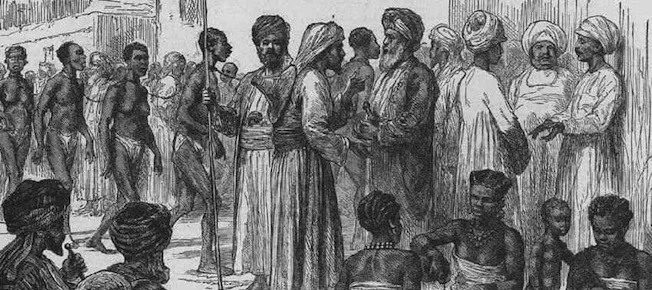
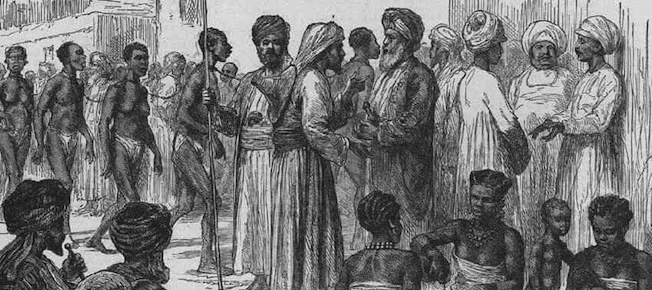 We've seen that the New Testament writers, most notably Paul, did not directly attack the institution of slavery. Paul advised slaves to obey their masters, to work conscientiously even when unsupervised (Eph. 6:5-8; Col. 3:22-23), to be trustworthy and not steal the master's property (Tit. 2:9), and to think of and emulate Christ when suffering unjustly (1 Pet. 2:18-23). Masters were admonished to treat their slaves justly and not to threaten them, but to recognize that in God's eyes the slave was as valuable as his master (Eph. 6:9; Col. 4:1; Col. 3:11; Gal. 3:28).
We've also seen how this advice was applied in the case of Onesimus, a slave in what is now Turkey, who stole money from his master, ran away to Rome, was converted to Christianity, and became a helper to Paul. Paul sent Onesimus back to his master, Philemon (who was also a Christian whom Paul had converted), bearing a letter telling Philemon to treat Onesimus just as he would treat a son of Paul. Philemon was to think of Onesimus not as having run away but as having gone on a Christian mission in Philemon’s stead, to treat him not as a slave but as a brother, and not even to mention the money he had stolen when he ran away. In effect, Paul had replaced Roman law and custom relating to slavery with a new standard of Christian behavior.
We've seen that the New Testament writers, most notably Paul, did not directly attack the institution of slavery. Paul advised slaves to obey their masters, to work conscientiously even when unsupervised (Eph. 6:5-8; Col. 3:22-23), to be trustworthy and not steal the master's property (Tit. 2:9), and to think of and emulate Christ when suffering unjustly (1 Pet. 2:18-23). Masters were admonished to treat their slaves justly and not to threaten them, but to recognize that in God's eyes the slave was as valuable as his master (Eph. 6:9; Col. 4:1; Col. 3:11; Gal. 3:28).
We've also seen how this advice was applied in the case of Onesimus, a slave in what is now Turkey, who stole money from his master, ran away to Rome, was converted to Christianity, and became a helper to Paul. Paul sent Onesimus back to his master, Philemon (who was also a Christian whom Paul had converted), bearing a letter telling Philemon to treat Onesimus just as he would treat a son of Paul. Philemon was to think of Onesimus not as having run away but as having gone on a Christian mission in Philemon’s stead, to treat him not as a slave but as a brother, and not even to mention the money he had stolen when he ran away. In effect, Paul had replaced Roman law and custom relating to slavery with a new standard of Christian behavior.
We have little extra-biblical, historical evidence for how Christians related to slavery, but what there is is interesting and instructive.
Paul tells free Christians that although they are Christ's slaves, they were bought with a price and are not to become slaves of other men. (1 Cor. 7:21-23) But Paul's advice was early ignored, albeit for good causes; Clement of Rome writes (c. 96 AD) that, “We know many among ourselves who have given themselves up to slavery, in order that they could ransom others. Many others have surrendered themselves to slavery, so that with the price that they received for themselves, they might provide food for others.” Some Christians were selling themselves into slavery in order to free others or provide for the needs of others.
We also have evidence that the church sometimes used its funds to purchase freedom for slaves. This is hinted at in an early Second Century letter from Ignatius, Bishop of Antioch, to Polycarp, Bishop of Smyrna. It is stated more clearly, some centuries later, in the Apostolic Constitutions (c. 390 AD) which provide that, “As for such sums of money as are collected from them in the aforesaid manner, designate them to be used for the redemption of the saints and the deliverance of slaves and captives.”
It had become common by the early 4th century for Christian masters to free their slaves. These religiously motivated manumissions were performed in church in the presence of a bishop. An early ruling of Constantine, made in response to petitions from bishops, refers to slave owners freeing their slaves because of their religious convictions (“religiose mente”). That this was an accepted practice in Constantine's time suggests that it probably began long before then. There was no requirement that Christian masters free their slaves---and certainly not all did---but it is significant that a custom developed pursuant to which (1) Christian masters (2) freed their slaves (3) in a church ceremony (4) before a bishop (5) ultimately with the bishop-requested authority of the emperor.
We also have reports that when extremely wealthy Romans were converted to Christianity, they freed their slaves en masse. When the prefect Hermas was converted by Bishop Alexander during the reign of Trajan (r. 98-117), he was baptized at an Easter festival along with wife, children, and twelve hundred and fifty slaves, to all of whom (the slaves, that is) he gave their freedom plus monetary compensation. In the time of Diocletian (r. 284-305) the prefect Chromatius was baptized with his fourteen hundred slaves whom he also emancipated at the same time, proclaiming that their sonship to God had put an end to their servitude to man. Church historian Phillip Schaff states that, “these legendary traditions may indeed be doubted as to the exact facts in the case, and probably are greatly exaggerated; but they are nevertheless conclusive as the exponents of the spirit which animated the church at that time concerning the duty of Christian masters."
Indeed, it is difficult to imagine why, if the early Christian Church endorsed slavery, it should have (1) used church funds to free slaves, (2) developed a bishop-led church ceremony in which slaves were freed, and (3) encouraged wealthy converts to manumit their slaves en masse. The logical conclusion is that slavery was a pagan institution that the Christian Church did not view as God's ideal form of social organization. But re-organizing society has never been the primary function of Christianity. Christianity changes hearts, and enough changed hearts will eventually lead to a changed society.
After the collapse of the Western Roman Empire, its legal forms and customs, including slavery, gradually fell into disuse and were replaced by what has become known as feudalism, a decentralized system of reciprocal legal and military obligations. By the late Middle Ages slavery had disappeared in Western Europe (although it persisted until much later in parts of Eastern Europe). The slave's feudal counterpart was the peasant who was bound to work specific land and could not move or change his occupation. The peasant's plight bore some similarities to slavery (especially in Russia, where serfs could be bought and sold) but was really a very different kind of institution.
Slavery was unambiguously legitimate in Islam; Muhammad owned slaves, and Muslims consider him the perfect example to emulate. Non-Muslims captured in raiding, piracy, and Jihad warfare were booty; and volumes of Islamic jurisprudence are devoted to regulating the distribution of booty. Although Muslims enslaved millions of black Africans—one common Arabic term for slave, abd or abeed, is also a slang term for a black person---they were equal opportunity slavers and frequently enslaved Europeans, especially from southeastern Europe. Slavery in Muslim lands was typically ended only when they were colonized by the Western powers.
Related articles 1. Slavery and the Bible (Part I) 2. Slavery and the Bible (Part II)
The genealogical mandate

 Few among us would put scripture genealogies at the top of our list of spiritually significant subjects. And yet as I have suggested in my previous article, the scripture genealogy holds within it the very antidote to numerous present day ills. It remains for us to delineate the exact way in which a genealogy meets contemporary needs. Our discussion will focus in this article on the place and role of the self, and in a subsequent article on the place and role of community. A final article will explore some specific implications of the "genealogical framework" for Adventism in particular.
The Self
Few among us would put scripture genealogies at the top of our list of spiritually significant subjects. And yet as I have suggested in my previous article, the scripture genealogy holds within it the very antidote to numerous present day ills. It remains for us to delineate the exact way in which a genealogy meets contemporary needs. Our discussion will focus in this article on the place and role of the self, and in a subsequent article on the place and role of community. A final article will explore some specific implications of the "genealogical framework" for Adventism in particular.
The Self
Within the post-modern universe the self is the center; the individual and his preferences and opinions the only sacred entity. Family, community, and the social order must all bow to the individual. It is not that these entities do not exist within society today. They do, and yet they do not hold priority. They either serve the perceived needs of the individual or they are dispensed with or challenged. They are for me, not me for them.
Central to this post-modern argument on the place and role of the self is the issue of authority. If the constraining patterns of a given society exists solely on the basis of tradition and if traditional conceptions represent nothing more than the opinions of other men and women like myself, then why should I allow their opinions to be imposed upon my own life? This is in essence the post-modern question and it undergirds and informs the post-modern condition.
Lippman believed that such a condition of things was caused by "the impact of science upon religious certainty and of technological progress upon the settled order of family, class, and community" (New York Herald Tribune, August 1964). And though there is some truth in this he is only telling part of the story. What lurks in the background as the deeper cause is the failure of Enlightenment rationalism, a failure that Lippman himself was probably unwilling to admit. That rationalism had set out to establish a set of truths arrived at by empirical reason alone which would provide an unbiased and non-arbitrary pattern for human life and experience. When that attempt begin to unravel and prove untenable a thoroughgoing relativism was the inevitable result and the isolation of the self the only possible defense for the protection of the self from conceptions "arbitrarily" imposed by others. What this inevitably means, quoting Lippman again, is that "the meaning of life and the social order," must be "invented and discovered and experimented with, each lonely individual for himself."
As biblically astute Christians, this state of things should bring great sadness to our hearts. For we, above all others, should realize that it is impossible for the self to begin from scratch and successfully write its own story. That capacity and prerogative belong to God alone and make up the essential divide between the creature and the Creator. God begets and only then are we able to beget. Individual selves may of course attempt an independent narrative, discarding the image in which their selves were originally formed. This has been the way of mankind ever since Adam and Eve bit the apple. But the tragedy of this attempt is that the bid for independence will always result in the eventual unraveling of the self. The proclamation of the Preacher echoes and re-echoes over such lives. "All is vanity, vanity of vanities." This tragedy is made all the more profound in postmodernism because of the brazenness of the return to the forbidden tree by which man believes that he can become the creator of his own reality.
That a return to this tree should be the end result of the Enlightenment project is not surprising, for the whole of Enlightenment humanism was based upon the assumption of the moral autonomy of man. In Enlightenment thinking the individual comes first and has priority apart from all considerations of place or role in metaphysical orders or social and political structures. Ironically, giving the individual priority alongside these objective entities did not lead to the elevation of the individual but rather to his increasing dissolution and trivialization.
Take for example, the doctrine of rights. At its inception it was intended to provide a defense for the individual against oppression, but in its present day form it has become a force for dissolution. When first developed it was still linked with a sense of obligation towards God and one's fellow man. In other words, rights were balanced by duties and those rights which were invoked were rooted, just like the duties, in the recognition of the Creator. With the increasing secularization of the West, however, subtle shifts in the use of this doctrine have occurred. It is now used to buttress the primacy of the individual and the sacredness of his or her quest for self-fulfillment. Given such primacy, the ongoing expansion of perceived rights can be expected to continue apace.
Over against these developments, the central conception within the genealogical framework of scripture is that of duty and not of rights. Though there is unarguably a service of the family and the community carried out on behalf of the individual, the purpose of this service is not self-fulfillment as defined by the whims of the self, but rather a subsequent service to the community as defined by the divine intent and purpose within human history. Within such a framework the self has significance in the service of divine ends far beyond what it could ever fabricate for itself and protection of its highest interests, not in the fallible human conception of its rights, but in the person of God himself.
As never before in the history of the human family, it is absolutely imperative that as Christians we follow our Lord in allowing our "selves" to be shaped and our commitments and interests formed, not by self-interest but by the duties and responsibilities involved in living out God's Creation intent. "He who loves his life [insisting on the primacy of the self] shall lose it" (John 12:25). "But whoever loses his life for my sake and the gospels shall save it" (Mark 8:35).
The strength of weakness

 We live in a society that promotes self-sufficiency. We are taught to pull ourselves up by our bootstraps. When we struggle to overcome bad habits, the world tells us that we can change ourselves if we simply incorporate certain actions into our lives. Tragically, this message of self-reliance has crept into the Gospel message, under the guise of “God helps those who help themselves.” If we look closely at the way Jesus describes the kingdom of Heaven, we will discover that it is Christ’s intent to turn our society’s views upside down and inside out.
There are priceless gems to be discovered in the analogies that Christ uses to describe the kingdom of Heaven. Jesus does not compare His kingdom to a palace that is constructed of the most precious stones and built to withstand the test of time and decay. He does not compare His kingdom to a majestic ship that glides effortlessly over the ocean waves, withstanding every storm it passes through. Incredibly, Jesus compares His kingdom to a tiny mustard seed, barely visible and easily swept away by the smallest gust of wind. “The kingdom of heaven is like a mustard seed, which a man took and sowed in his field, which indeed is the least of all the seeds; but when it is grown it is greater than the herbs and becomes a tree, so that the birds of the air come and nest in its branches” (New King James, Matthew 13:31-32). In this simple, yet profound, statement Christ directly challenges the self-sufficient mentality of society. Notice how the mustard tree begins as a tiny seed and grows into a tree. Also notice how God describes the righteous person in Psalm 1 verse 3 “He shall be like a tree planted by the rivers of water, that brings forth its fruit in its season, whose leaf also shall not whither; and whatever he does shall prosper.” There’s a specific reason why God uses these illustrations. When a tiny, fragile seed is planted, it is entirely dependent upon the nourishment that God provides for its growth, and when it grows into a strong, majestic tree, it is every bit as dependent upon God for its existence as when it was a seed. In like manner, when we accept Christ and experience the new birth, we are like a tiny seed, entirely dependent on God for spiritual growth. As we grow into mature Christians, reflecting God’s character more and more fully, we are every bit as dependent upon God for our spiritual growth as we were when we first accepted Christ. We can do nothing of ourselves, and when we finally realize this fact and surrender completely to God, spiritual growth will take place.
We live in a society that promotes self-sufficiency. We are taught to pull ourselves up by our bootstraps. When we struggle to overcome bad habits, the world tells us that we can change ourselves if we simply incorporate certain actions into our lives. Tragically, this message of self-reliance has crept into the Gospel message, under the guise of “God helps those who help themselves.” If we look closely at the way Jesus describes the kingdom of Heaven, we will discover that it is Christ’s intent to turn our society’s views upside down and inside out.
There are priceless gems to be discovered in the analogies that Christ uses to describe the kingdom of Heaven. Jesus does not compare His kingdom to a palace that is constructed of the most precious stones and built to withstand the test of time and decay. He does not compare His kingdom to a majestic ship that glides effortlessly over the ocean waves, withstanding every storm it passes through. Incredibly, Jesus compares His kingdom to a tiny mustard seed, barely visible and easily swept away by the smallest gust of wind. “The kingdom of heaven is like a mustard seed, which a man took and sowed in his field, which indeed is the least of all the seeds; but when it is grown it is greater than the herbs and becomes a tree, so that the birds of the air come and nest in its branches” (New King James, Matthew 13:31-32). In this simple, yet profound, statement Christ directly challenges the self-sufficient mentality of society. Notice how the mustard tree begins as a tiny seed and grows into a tree. Also notice how God describes the righteous person in Psalm 1 verse 3 “He shall be like a tree planted by the rivers of water, that brings forth its fruit in its season, whose leaf also shall not whither; and whatever he does shall prosper.” There’s a specific reason why God uses these illustrations. When a tiny, fragile seed is planted, it is entirely dependent upon the nourishment that God provides for its growth, and when it grows into a strong, majestic tree, it is every bit as dependent upon God for its existence as when it was a seed. In like manner, when we accept Christ and experience the new birth, we are like a tiny seed, entirely dependent on God for spiritual growth. As we grow into mature Christians, reflecting God’s character more and more fully, we are every bit as dependent upon God for our spiritual growth as we were when we first accepted Christ. We can do nothing of ourselves, and when we finally realize this fact and surrender completely to God, spiritual growth will take place.
Through this parable Jesus is also trying to teach us the necessity of patience and perseverance. We live in a very fast paced society that prides itself in finding ways to get things done more quickly and easily, but in our effort to make life more convenient, we’ve lost sight of the concept of delayed gratification. We can’t even handle it when our computers take two minutes to load a webpage! One of Satan’s master deceptions is to lead us to view our spiritual lives in this fast paced manner and to forget that the sanctification process is indeed a process. Satan is very aware of our faults; he is ever ready to bring them to the forefront of our minds. Satan would like nothing better than for us to try and exercise enough will power to correct our bad habits as quickly as possible, because he knows that this method is the surest way to defeat. When we fail, Satan attempts to lead us into discouragement by telling us that our situation is hopeless and that we will never grow spiritually. His goal is to make us feel so discouraged that we will give up on God entirely. But all the will power in the world will not change us. Even if we do succeed in resisting the temptation to do something wrong, or in forcing ourselves to do something right, these outward accomplishments will not change our hearts, because changing the heart is something only God can do. In our effort to correct our bad habits, we focus on the behavior, rather than the root of the behavior. Satan leads us to work from the outside in, while God, on the other hand, works from the inside out. God’s work of sanctification does not begin with external behavior; it begins in the heart. Just as the mustard seed is hidden in the earth, God begins His transforming work in the secret chambers of our hearts, unseen by the human eye. The mustard seed does not initially appear to be growing. No one can see the changes that the seed is undergoing in the heart of the earth. Likewise, it may initially seem to us that we are not growing spiritually. We are still keenly aware of our weaknesses, and we still find ourselves yielding to temptation from time to time. However, if we surrender our lives to Christ and choose to depend totally on Him rather than ourselves, we can trust ourselves to His care. Every gardener knows the necessity of patience and persistence. As the gardener continues caring for the seed, signs of growth become evident. The seed begins to sprout, and leaves begin to emerge. Jesus is the master gardener, and if we persevere in submitting our lives to Him and staying connected with Him, signs of spiritual growth will soon become evident to us, as well as to those around us. We will notice our thoughts, feelings, interests, and desires changing. We will find ourselves responding to people and situations differently. Just as the mustard seed grows into a great tree and becomes a place for birds to dwell, we will grow into strong, mature Christians, fully reflecting Christ’s character, and those who are hurting will come to us for love and support.
One of my favorite quotations goes like this: “Courage is not the towering oak that sees storms come and go; it is the fragile blossom that opens in the snow” (Alice Mackenzie Swaim). Many of us think that in order to be strong we have to be like that towering oak, but the mighty tree is much more likely to be uprooted during a tempest than is the delicate flower. We all experience trials in our lives, and many of us are told that these trials will make us stronger. God’s definition of strength is the opposite of the world’s definition of strength. “And He said to me, ‘My grace is sufficient for you, for My strength is made perfect in weakness.’ Therefore most gladly I will rather boast in my infirmities, that the power of Christ may rest upon me. Therefore I take pleasure in infirmities, in reproaches, in needs, in persecutions, in distresses, for Christ’s sake. For when I am weak, then I am strong.” (2 Corinthians 12:9-10). As the mustard seed grows from a plant into a tree, it is continually hammered by the blazing sun and the pouring rain, both of which are necessary for its growth. In like manner, God allows trials to come into our lives that He knows will bring about spiritual growth. God does not intend for these trials to make us spiritually self-sufficient or to make us strong according to the world’s standard. It is His desire that through these trials we will see our weakness and become totally dependent upon Him. When we see our helpless state and fall broken upon His grace, then, through Christ, we will become strong. True strength lies in this dependence.
It is absolutely crucial that we learn the lesson of the mustard seed and apply it to our lives, especially as the time of the end approaches. If we think that we have to change ourselves, or, even more dangerously, if we think we are capable of changing ourselves, we will not see our need of God, and when the end time crisis suddenly comes upon us, we will fall. Peter’s experience is both a warning and an encouragement to us. Even though Peter had walked with Jesus for three and a half years and listened to His teachings, he didn’t understand his own powerlessness or what it meant to be strong through Christ. Peter believed that he had to be strong, and he was certain that he was strong enough to remain loyal to Jesus even to death. In fact, Peter was so confident in his own strength that he thought he could outdo his fellow disciples. He emphatically told Jesus, “Even if all are made to stumble because of You, I will never be made to stumble” (Matthew 26:33). Ironically, of all the disciples who remained loyal to Jesus, the one who thought he could outdo them all fell the hardest. Not only did he curse and vehemently deny knowing Jesus three times in His presence, but also he completely forgot that Jesus had predicted this very event. Jesus’ prediction did not come to Peter’s mind until he denied Jesus the third time and heard the rooster crow. Peter’s failure was not the end of his story. The very same man who was afraid to acknowledge knowing Jesus in the presence of a group of servants became one of the boldest preachers of the Gospel—proclaiming the good news to thousands of people, defending the name of Jesus in the presence of the greatest religious leaders of his day, and even becoming a martyr for Christ.
What brought about this remarkable transformation? Peter discovered the strength that lies in weakness. Never in Peter’s wildest dreams did he imagine denying his Lord, and when he did the unthinkable, he was devastated. It was through his failure that Peter discovered his own weakness, and he came, broken and repentant, to his heavenly father. When he finally learned the necessity of depending entirely upon God, he was ready to receive the outpouring of the Holy Spirit that God had been waiting to bestow upon him, and God miraculously turned Peter’s devastating failure into an incredible blessing.
The work that God did in Peter’s heart is the work that He longs to do in every heart. In fact, God’s purpose in permitting a time of trouble to come upon the world is to accomplish this work in His last day people. In Daniel chapter 12 verse 10 we are told, “many shall be purified, made white, and refined.” The seventh verse of the same chapter tells us what the result of this refining process will be. We are told that “when the power of the holy people has been completely shattered, all these things shall be finished.” God will have an end time people who fully reflect His character, but this will be accomplished only when the power of God’s holy people has been completely shattered—that is, when they finally realize how utterly powerless they are and choose to rely on God’s power alone. When God’s people finally get out of His way, there is no limit to what God can do in their lives. Through their weakness, God’s people will become strong, and no storm will be too powerful for them to endure.
Do you feel as if your life is out of control? Have you repeatedly tried to overcome the destructive habits that enslave you, only to be met with failure? Do you feel as if you simply are not strong enough to make it on your own? Then take heart! You are in the perfect place for God to do a mighty work in your life. It is when we come to Him in our greatest weakness that He provides His greatest strength. Come to Him, wounded and broken as you are. Thank Him for sending His son to pay the price for your sin and to set you free. Accept the healing gift of God’s grace for yourself, and ask God to give you the mind of Christ through the power of the Holy Spirit. This is a request that God will never deny. God, in His infinite love and mercy, can never resist the wounded cry of a contrite soul in need of His grace. When the mind of Christ is imparted to you through the Holy Spirit, you will gain the victory over sin. “For it is God who works in you both to will and to do for His god pleasure” (Philippians 2:13).
Let God be the master gardener of your heart. He longs to turn you into a beautiful tree, deeply rooted in His love. Even when the process seems long and painful, do not give up hope. No matter how far you have come on your spiritual journey, you will continue to feel your need of Christ. Even those who will fully reflect Christ’s character at the time of the end will not feel as though they have attained perfection. In fact, as you draw closer to God and gain greater glimpses of His perfect character, the more clearly you will see your own imperfections. Every person has a unique conversion experience. Some people give their hearts to Christ in the privacy of their bedrooms, while other people take a stand for Christ in front of a large crowd. There are those who experience immediate deliverance from addictions, while others experience freedom over a period of time. No conversion experience leads to instant spiritual maturity. Every person must go through a garden-like experience. Keep your eyes upon Christ. Do not compare your experience with the experiences of other Christians around you. You are a unique and precious flower in God’s garden of life, and He will mold your character through the process that He knows is best for you. Through your weakness you will become strong in Christ, and “He who has begun a good work in you will complete it until the day of Jesus Christ” Philippians 1:6).
Mission impossible: perfection

 Perfection. It is a word that perhaps should not be in the human vocabulary. After all, nothing in this world is perfect. Perfection—it refers to flawlessness in its most used form--is something alien to fallible humans. Or is it?
Is it no wonder Christians quibble over this term and its implications for soteriology? What is possible for us? The aged Abram was approaching the centennial mark when God called him to be perfect: "When Abram was ninety-nine years old, the Lord appeared to Abram and said to him, ‘I am Almighty God; walk before Me and be blameless’" (Gen. 17:1).
Perfection. It is a word that perhaps should not be in the human vocabulary. After all, nothing in this world is perfect. Perfection—it refers to flawlessness in its most used form--is something alien to fallible humans. Or is it?
Is it no wonder Christians quibble over this term and its implications for soteriology? What is possible for us? The aged Abram was approaching the centennial mark when God called him to be perfect: "When Abram was ninety-nine years old, the Lord appeared to Abram and said to him, ‘I am Almighty God; walk before Me and be blameless’" (Gen. 17:1).
Suppose that one day God spoke to you and told you to be blameless. How would you feel? Pressured? Would you think that God was pulling a joke on you? Certainly the God who was present when Eve bit into that fruit would know what an impossibility it is to be righteous, much less perfect.
Almost a couple thousand years later Jesus would demand the same of those who claimed to be descendants of Abraham; "Therefore you shall be perfect, just as your Father in heaven is perfect" (Matt. 5:48).
So why all the fuss about perfection? Well, many Christians believe working towards perfection is antithetical to the gospel of salvation by grace. Since Martin Luther and the reformers preached "sola fide" in opposition to the works theology taught by the Catholic Church, a general vehemence exists in Protestant Christianity against those who preached it was possible to be perfect. In fact this caused John Wesley, the great Methodist leader, to wonder:
Why should any man of reason and religion be either afraid of, or averse to, salvation from all sin? Is not sin the greatest evil on this side of hell? And if so, does it not naturally follow that an entire deliverance from it is one of the greatest blessings on this side of heaven? How earnestly then should all the children of God pray it for! By sin I mean a voluntary transgression of a known law. Are you averse to being delivered from this? Are you afraid of such deliverance? Do you then love sin that you are so unwilling to part with it? (Wesley p. 176)
Also, the debate on whether perfection is possible has various implications in the debate on the role of the law versus grace in salvation. (After all, perfection is often perceived by many as perfect adherence to the law.) It is therefore easy to see the common objections and reasons why many abhor utilizing the word perfection when discussing theology. The only time perfection is used without any hesitancy is when people refer to Jesus Christ, the perfect Son of God who never committed a sin.
Many have quite an aversion to avoiding sin. One blogger remarks, "One question I often am asked perfectly illustrates this: ‘Is (insert questionable action here) a sin?’ Here’s my question — does it matter? Who really cares? Allow me to clarify. What difference is made in your life by knowing if a particular action is or isn’t a sin? How does that further your walk with Christ" (McDonald)?
Nothing could be more false. This assertion is not a principle found in the Scriptures. Consistently the Bible exhorts us to "sin not.” The words of Christ Himself contained the phrase "go and sin no more,” although in comparison to His other sayings this one is perhaps the least quoted, if at all, among those who revile perfection theology. You cannot "sin not" without knowing what sin is. However, to be fair, I need to note that our blogger continues with this quotation: “Love, and do what you will,” Saint Augustine (Ibid.). This is one of my favorite quotations of all time. He is saying that if we love first and foremost, and then everything comes afterward and out of that love, we can’t go wrong. Think about it — if you love your children, your spouse or your friends, why would you bring any harm to them?
No surprise there as Augustinian theology seems to be the impetus behind many an antinomian sentiment in the Christian church today. Augustine's statement is not outright wrong, but it is often quoted without other Biblical considerations. For example, what is "love"? Forget Augustine; scripture clearly outlines how true love works, “As many as I love, I rebuke and chasten. Therefore be zealous and repent” (Revelation 3:19).
You can't have true love without law, for love is the fulfillment of the law. Imagine the husband who sleeps around with other women arguing that it is okay because he loves his wife the most of all. This is the same logic people use when arguing that love abrogates the law. This flawed logic is not found in the scriptures and is actually antithetical to the concept of salvation. How? Because salvation is freedom not just from the consequences of sin, but freedom from sin itself. Therefore, identifying sin is crucial. Fortunately, the task is simple. Anything short of the standard God sets is sin. Sin is a choice. Yes, I realize Augustine and the Reformers like Luther and Calvin held firmly to their belief in in-born sin (original sin). But if we carried this thinking to its logical conclusion, it would hold God responsible for our sin and not us.
Once we give sin a definition other than the transgression of the law, we will quickly find excuses to break that law. "Ancestral sin" is one of those excuses. "I was born sinning; ergo I cannot stop sinning.” This argument is opposite of anything taught in scripture and has its base in fallible human reasoning and appeals to emotional experiences. We are to be sober minded individuals, not emotional, senseless beings.
Choice is behind sin. Paul wrote, “for whatever is not from faith is sin" (Romans 14:23). To apply faith is a choice. James states, "Therefore, to him who knows to do good and does not do it, to him it is sin" (James 4:17). Again, a choice is involved. In the end, we can only conclude that sin is our fault, not God's. Our sin is our fault, not Adam's. Now given that sin is a choice, there are still elements that we inherit by birth. The sinful nature is passed down from generation to generation and that is something we will battle everyday until glorification at the Second Advent. But having this nature is not sin per se because Christ came in the likeness of sinful flesh and never sinned (Romans 8:3, 4).
Now back to perfection. All too often the definition of perfection is convoluted not only by opponents but also by proponents. Perfection should not be seen as some goalpost that once achieved leaves no more room for improvement. The unfallen beings and angels that God created are not as absolutely perfect as is God. Perfection is an ever-upward climb to be like our Redeemer. This climb is what Paul meant when referring to something he had not yet attained yet he was constantly in pursuit of it (Philippians 3:12). Even when one is keeping the law in its entirety (i.e. He is not sinning as per our established definition of sin.) he should still be in pursuit of perfection. The rich young ruler walked away from eternal life because he refused to go above and beyond to attain perfection. Christ knew He didn’t keep the commandments fully. One can keep the law outwardly and yet violate its principles entirely. Christ asked, "If you want to be perfect, go, sell what you have and give to the poor, and you will have treasure in heaven; and come, follow Me" (Matthew 19:21). Getting theology right is not the only step to reflecting Christ; a more encompassing element is to apply Christ Himself in our lives and actions. Once we have accepted Christ’s definition of perfection, we can see the basis in scripture on how it can be attained.
Perfection is an attainable attribute and is asked of all those who profess Christ. But then, if it is attainable, how is it attained? Most certainly not by works, but by faith, as the Apostle Paul frequently points out. Paul's striving for perfection was not one aided only by his feeble strength. This made the apostle write: "And He said to me, ‘My grace is sufficient for you, for My strength is made perfect in weakness’" (2 Corinthians 12:9). For Paul, the key to the strength that overcomes sin is our weakness. That's right, the key to our perfection is imperfection. Doesn't sound too logical, right? It will make perfect Biblical sense in a minute.
In Bible terms "grace" is not only pardon from sin but also power to keep from sinning. This principle can be most simply demonstrated by Christ’s forgiving the woman caught in adultery and asking her to sin "no more” (John 8:11). Therefore in order for grace to abound one must be willing to admit their weaknesses and confess their sins. This results in a thorough cleansing (Wesley p. 176). Admitting we are imperfect allows us to put on the gift of the perfect Righteousness of Christ which allows us to "walk as He walked” (1 John 2:5, 6). The substitute and example of Christ are both given proper emphasis with this view. In the simplest way we can put it, God requires of us perfect obedience to His law, but what God has required He has also provided in the life and death of His Son, Jesus Christ. This provision allows “that the righteous requirement of the law might be fulfilled in us who do not walk according to the flesh but according to the Spirit" (Romans 8:4).
This wonderful biblical truth is what prompted Elliot J. Waggoner and Alonzo T. Jones, two young Adventist ministers, to forward the concept we know today as "Righteousness by Faith" during the 1888 Minneapolis General Conference. The Righteousness of Christ imputed (the Greek "logizomai") to us allows us to keep His law perfectly (Gane pp. 6-9). To us the Righteousness of Christ is not only a proxy legal declaration but is also the transformation of our lives. This is why John could write: "Whoever has been born of God does not sin, for His seed remains in him; and he cannot sin, because he has been born of God" (1 John 3:9). In the Gospel of John Nicodemus is told, "You must be born again" (John 3:7). To be born again is to have the gift of the indwelling Christ, His Righteousness upon us at all times.
Yes, we falter. We fail. But once we realize this and cling to our Savior, He will pardon us with open arms and give us strength in time of need (See Romans 5:20, 6:1-2 and 1 John 1:9). Our reliance upon Christ is not defined by a one-time gesture during conversion; it is resting upon His strength daily. Perfect love is revealed when we surrender our will and rest in the One who is love. Perfect love fulfills the perfect law. Christ is substitute and example combined, law and grace exemplified. In response to the assertion that those who think they are saved from sin say they have no need of the merits of Christ, John Wesley answered, "They say just the contrary. Their language is, 'Every moment, Lord, I want the merit of thy death’”(Wesley, pg 169)!
May this be our continual plea.
1. Wesley, John. The Works of the Reverend John Wesley, A. M. pg. 176. 2. McDonald, Stuart. "Why Understanding What Sin Is Does Not Matter" 3. See Romans 5:20, 6:1-2 and 1 John 1:9. 4. Gane, Erwin R. "An Examination of the Book: Right With God, Right Now by Dr. Desmond Ford" ppg. 6-9. 5. "For in that he himself hath suffered being tempted, he is able to succour them that are tempted" Hebrews 2:18 KJV. 6. Wesley, John. Christian Perfection pg. 169.
The One Project makes Jesus center of theology

 The annual gathering of The One Project has its roots in Japhet De Oliveira’s 2009 cancer diagnosis, which he says was a wake-up call.
With the threat of a worsening sickness looming over him, De Oliveira met with a support group for two days in a Denver hotel in 2010. He and four fellow pastors revealed and examined issues in their lives. Now, his cancer in remission, De Oliveira has seen that small group grow into an annual gathering of hundreds of Seventh-day Adventists seeking to reconnect with Jesus in their personal and corporate worship.
The annual gathering of The One Project has its roots in Japhet De Oliveira’s 2009 cancer diagnosis, which he says was a wake-up call.
With the threat of a worsening sickness looming over him, De Oliveira met with a support group for two days in a Denver hotel in 2010. He and four fellow pastors revealed and examined issues in their lives. Now, his cancer in remission, De Oliveira has seen that small group grow into an annual gathering of hundreds of Seventh-day Adventists seeking to reconnect with Jesus in their personal and corporate worship.
This year’s gathering of The One Project on February 13 and 14 brought more than 700 people to Seattle for conversations on practical applications of Jesus’ ministry in their own lives, churches and communities. De Oliveira hopes it’s an environment where people can honestly look at their own priorities, examine the core of Christianity, and promote Jesus in their theology as Seventh-day Adventists.
For some, it’s a place to challenge and even question one’s own beliefs.
“We’re trying to create a safe place to say Jesus is the center of our church and always has been,” said De Oliveira, chaplain for missions at Andrews University in Berrien Springs, Michigan. He's especially looking to support those who may become frustrated with the church.
“We love our church. I really do believe that God has called the Seventh-day Adventist Church and I’m tired of losing people when we work so hard to bring them in,” he said.
The One Project is short on programming and long on discussions. De Oliveira says the event format grew out of his wish to make a gathering similar to the best part of the numerous conferences he attends each year – talking with people individually. A small stage is set in the middle of a banquet room and speakers are allowed 20 minutes to present. The event is then geared toward the 40 minutes of discussion at each table following the speaker.
“I go to so many conferences and so many meetings and honestly the best part is meeting with someone over lunch,” De Oliveira said. “We didn’t want to have another event that’s packed with programming all day.”
The gathering is also short on exhibitors. The only ones allowed are publishers.
“By reading people will learn and change and transform their lives,” De Oliveira said.
Sam Leonor, senior chaplain at La Sierra University, highlighted the 1888 meeting of the Adventist world church body at General Conference Session in Minneapolis, Minnesota, when leaders discussed righteousness by faith. “From that meeting in 1888, Adventists emerged re-focused on Jesus: crucified, living, and coming again," Leonor said.
Dr. David Kim, a family practice physician from Atlanta, said The One Project gathering was long overdue. “I grew up in a legalistic Adventist culture where the three R's dominated – rules, regulations, and rituals. Missing was the biggest R of Christianity – a relationship with Jesus.”
The original meeting in Denver in July of 2010 brought the five pastors together for support and soul searching. De Oliveira admits he had “sort of lost [his] way," focusing on success as a pastor and not caring enough for his family or health. “I would only read the Bible to prepare sermons,” he said.
The original five were De Oliveira; Leonor; Alex Bryan, pastor of Walla Walla University Church; Tim Gillespie, young adult pastor at Loma Linda Church; and Terry Swenson, senior chaplain at Loma Linda University.
It was a real honest conversation,” De Oliveira said. “Some crying and a lot of praying. We said, ‘let’s do this at least once a year.’”
The group agreed to meet annually to focus on Jesus. Each invited friends for a similar meeting the following year in Atlanta. More than 170 people showed up.
For that 2011 gathering in Atlanta, participants may not have fully understood what they were coming to, De Oliveira said. They were each asked to read the four gospels and the book Desire of Ages, authored by Adventist Church co-founder Ellen G. White. The invitation then was simply, “Come have a two-day conversation about Jesus.”
The conversation continues later this year in Australia and Denmark, and next year in Chicago. For more information, visit: the1project.org.
By Ansel Oliver (additional reporting by Bernadine Delafield and Suzanne Ocsai) Source: Adventist News Network
A pile of preachers
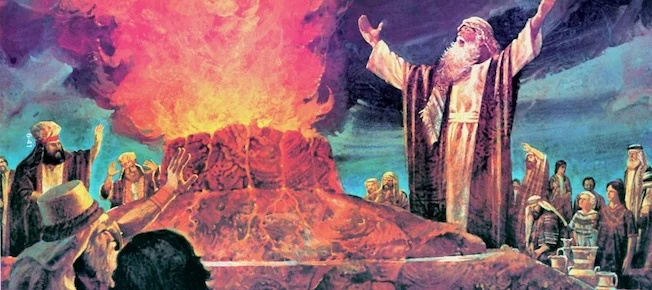
 You might think the title of this article refers to the annual Bellevue Baptist Ministerial football game. And although the thought does call up an interesting mental image, the biblical image is far more serious and much less muddy.
“For the time will come when men will not put up with sound doctrine. Instead, to suit their own desires, they will heap to themselves a great number of teachers to say what their itching ears want to hear. They will turn their ears away from the truth and turn aside to myths” (2 Timothy 4:1–4). There it is. A heap of teachers. Or a pile of preachers!
What is God saying here? He is saying change is in the wind. Once loved doctrine will become hated. Immovable pillars of faith will see a multitude moving away from them. He Who is Right will observe the madness of those who do that which is right in their own eyes. Desire is in--doctrine is out.
You might think the title of this article refers to the annual Bellevue Baptist Ministerial football game. And although the thought does call up an interesting mental image, the biblical image is far more serious and much less muddy.
“For the time will come when men will not put up with sound doctrine. Instead, to suit their own desires, they will heap to themselves a great number of teachers to say what their itching ears want to hear. They will turn their ears away from the truth and turn aside to myths” (2 Timothy 4:1–4). There it is. A heap of teachers. Or a pile of preachers!
What is God saying here? He is saying change is in the wind. Once loved doctrine will become hated. Immovable pillars of faith will see a multitude moving away from them. He Who is Right will observe the madness of those who do that which is right in their own eyes. Desire is in--doctrine is out.
So how do the ears get involved? Conviction! This little word can be a huge force of revelation. I don’t know about you, dear friend, but God has laid His spirit of conviction upon me many times. And with conviction comes a choice. In those dark moments when I have followed self, the Word of God becomes His floodlight of condemnation. It also outlines the path of repentance. Now I must choose. If I reject Him and His doctrine, I will look for some other source of affirmation. That’s how the ears got involved in our text above. They become a tool when people want a soothing voice to drown out the cry of conviction. Could this ever happen in our world? Could it happen in Christ’s church? According to Paul, “Yes and yes.”
Now, few things are more annoying than a troublesome itch. It’s almost as contagious as a yawn. The mere thought of an itch brings visions of a huge roll of pink fiberglass. “Oh wretched man that I am...” (Romans 7:4).
Back to the ears. According to 2 Timothy 4, a generation of people will refuse to be satisfied by truth. What could cause such resistance? Is it some new species of moral virus, made stronger by immunity to Biblical vaccination? Is it an allergic reaction to the good medicine of the Great Physician? Yes and yes. Have our own desires somehow become more important than the Desire of Ages? Will we gather around ourselves a pile of preachers who please the ear and kill the heart? Will we settle for a blind diagnosis of false prophecy in the midst of our terminal disease? How did our ears get in this condition? Well, it has happened before.
It happened in the Old Testament times too. God told Isaiah “Now go, write it before them in a table, and note it in a book, that it may be for the time to come for ever and ever: That this is a rebellious people, lying children, children that will not hear the law of the LORD: Which say to the seers, See not; and to the prophets, Prophesy not unto us right things, speak unto us smooth things, prophesy deceits: Get you out of the way, turn aside out of the path, cause the Holy One of Israel to cease from before us” (Isaiah 30:8-11). It’s those ears again!
The good news is that our heavenly Father knows our needs. Though some of His professed people demand smooth sayings, He sends the sword of truth to light their path. Here’s an example: the story lines are drought, rain, fire, Baal, and dancing.
You see, in the days of King Ahab, the majority of God’s professing people were really Baal’s people. But a remnant (7,001 to be exact) quietly resisted the apostasy around them, although it was hard to spot them in the army of idolatry. The ears of an entire nation needed a wakeup call. In his mercy, God caused them to remember His blessings by temporarily removing one of them (rain). He let the lesson sink home for almost four-years. He then brought them together to witness the power of true worship. Israel had a pile of preachers too.
It must have been quite a sight. I’ve never seen 450-men do the “Hallelujah Hop” or the “Praise Promenade.” It sounds exhausting, and it would have been – even to just watch it. They did this for about eight hours at high altitude.
Finally they gave up. God showed them Who was real! The false prophets were overthrown down at the Kishon Valley resulting in another “pile of preachers” (loosely translated). “For the time will come when men will not put up with sound doctrine. Instead, to suit their own desires, they will heap to themselves a great number of teachers to say what their itching ears want to hear. They will turn their ears away from the truth and turn aside to myths” II Tim. 4:3&4.
Here we are in the year 2012. These words frighten me as I read them. They predict a calm dispossession of God’s truths in the name of selfish desire. They predict a chorus of voices that please the ear and kill the heart. They predict new criteria for the qualification of preaching. They reveal an artificial success that is measured in numbers, steeped in unsanctified pride, and packaged with mysticism.
Lord forgive me, and restore unto me the joy of hearing Your Word.
Survey of Adventist ‘opinions, attitudes and spiritual life patterns’ coming to local churches

 More than 60 percent of Seventh-day Adventists worldwide are women. Less than 40 percent of American Adventists study their Bible once a week.
Regularly cited at Adventist board meetings and business sessions, these and other so-called church statistics are not actually known to be factual. Many familiar “facts” might better be classified as “anecdotes, hunches and instincts,” says Adventist researcher David Trim.
More than 60 percent of Seventh-day Adventists worldwide are women. Less than 40 percent of American Adventists study their Bible once a week.
Regularly cited at Adventist board meetings and business sessions, these and other so-called church statistics are not actually known to be factual. Many familiar “facts” might better be classified as “anecdotes, hunches and instincts,” says Adventist researcher David Trim.
Trim, who directs the world church’s Office of Archives, Statistics and Research, wants to see anecdotal evidence replaced by “actual data.” Beginning this year, his office will oversee a major research project to survey the opinions, attitudes and spiritual life patterns of Adventist pastors, church members, institutional employees and college and university professors worldwide.
“We need to know what is actually happening in the church, not just what we’d like to be happening,” Trim says. That knowledge can equip church leaders to use money and resources more judiciously and effectively, he says.
“We’re doing this because we want to do ministry and mission better. We want to be better stewards of what God has given to us, and we want to be more effective in discipling and winning souls,” Trim says.
It wasn’t until last year that top church officials first voted to establish an ongoing budget for Adventist research meant to inform the church’s strategic plan. Previously, Adventist research was conducted sporadically, with limited focus and funding, and almost exclusively in North America, Trim says.
This time around, the plan is for a “rigorous” survey carried out in each of the church’s 13 world divisions, Trim says. Using the new research budget, his office has contracted with research teams at Adventist universities in North America, Europe, Africa, Southeast Asia and Australia. Each team has demonstrated research “expertise and experience,” Trim says. While much of the anonymous polling will take place this year, some surveys may continue into early 2013, with full results due back at world church headquarters by June of 2013.
Survey questions will go beyond age, gender, ethnicity and other statistics-based research to ask about attitudes and opinions on spiritual life, fundamental beliefs and values, church leadership, Adventist institutions and fellow members, among other topics.
“The Adventist Church is committed to a strategic planning process that provides direction based on a body of evidence,” says Michael L. Ryan, a world church general vice president and vice-chair of the church’s Strategic Planning and Budgeting Committee.
“All strategic planning is really only for one reason: How do we better advance the mission?” Ryan says.
How beneficial the results are depends largely upon whether Adventists worldwide fully engage in the survey, Trim says. There’s no way to track survey results back to individual respondents, so researchers are hoping members will feel confident in giving honest answers -- “not what you think we’d like to hear,” he says.
“We understand that people will not always be doing what we wish they were doing. We understand that people are not necessarily believing what we want them to believe. And we understand that often they won’t be feeling very happy with us,” Trim says. “There’s going to be what will be perceived as bad news. But we want to know this so we can do a better job.”
In some cases, survey results might spur church leaders to launch programs that would “modify our behavior and practices,” Trim says. Other results may prompt better communication between leaders and members.
“If people are unhappy with an area that’s fundamental to our faith, then we can educate and explain to members why this is essential,” Trim says.
While he expects that much of the research will be published by Adventist scholars, Trim says some of it will remain confidential.
“My hope is that in fact we would not only get answers to really important questions, but -- as a side product -- we would also increase the research capacity of the church,” Trim says.
Many Adventist researchers have demonstrated that they can produce “good, rigorous research,” and Trim is keen to see them given “time and space” to benefit the church.
“I think at times we have made decisions based on who can give the best speech at a [church business meeting]. Somebody who gets up and has a burden on his heart and says, ‘Brethren, I feel we should do thus and so,’ and he’s eloquent, he’s impassioned, and he uses all the right Adventist buzzwords and everybody says, ‘Amen, vote the money.’ And often nobody asks, ‘Is this really reflecting a need wider than this one person’s perception?’” Trim says.
More and better Adventist research will equip leadership to use church money and resources in the best possible way rather than the most immediately appealing way, Trim says.
He also hopes the church’s growing commitment to research will help boost member confidence in Adventist leadership. They’ll know that research is steering leadership toward better informed decision-making and, ultimately, better methods of spreading the Adventist hope.
Church leaders expect the first wave of surveys to begin by the end of April.
By Elizabeth Lechleitner Source: Adventist News Network
Book review of Signature in the Cell by Stephen C. Meyer

 An unusual ability to explain complicated scientific theories and describe intricately designed and nearly inconceivably minuscule parts of cells and DNA and genomes in language which a non-scientist with perhaps a college course in biology can understand makes Stephen C. Meyer a unique author, one who has written a compellingly fascinating book titled Signature in the Cell.
Written to defend Intelligent Design [ID], the book begins with a brief description of Darwinism, DNA, and ID. After a chapter on the work of Watson and Crick and their unraveling of the double helix construction in DNA, Meyers writes brief histories of many theories propounded through the centuries to explain the origin of life on earth using successive theories to describe the fallacies in earlier ones and citations from modern scientists to point out problems in current theories.
An unusual ability to explain complicated scientific theories and describe intricately designed and nearly inconceivably minuscule parts of cells and DNA and genomes in language which a non-scientist with perhaps a college course in biology can understand makes Stephen C. Meyer a unique author, one who has written a compellingly fascinating book titled Signature in the Cell.
Written to defend Intelligent Design [ID], the book begins with a brief description of Darwinism, DNA, and ID. After a chapter on the work of Watson and Crick and their unraveling of the double helix construction in DNA, Meyers writes brief histories of many theories propounded through the centuries to explain the origin of life on earth using successive theories to describe the fallacies in earlier ones and citations from modern scientists to point out problems in current theories.
Adding information to matter and energy in order to produce life creates incomprehensible numbers such as “the probability of finding a functional protein by chance alone is a trillion, trillion, trillion, trillion trillion, trillion trillion times smaller than the odds of finding a single specified particle among all the particles in the universe” page 212.
Using over seven hundred notes and citations and listing nine hundred sources in his bibliography, Meyers documents his information meticulously. Yet he often uses simple illustrations such as passing around a padlock to students in his class and asking them to try in three steps to unlock it. When finally one boy succeeds, at first the students are incredulous over his luck but then gradually realize he has had information from the teacher that they lacked.
Because belief in God as the creator immediately marks any theory or information as unscientific in the minds of many scientists, Stevens carefully avoids using the word “God” until near the end of the book, and he never mentions the Biblical account of creation or his religious beliefs, although he does say he believes in God on page 440.
Readers may find the five hundred pages of the book rather daunting, but persistence will greatly increase their knowledge and understanding of current theories about how life appeared on earth including belief in Intelligent Design.
Stephen E. Meyers PhD directs the Center for Science and Culture at the Discovery Institute in Seattle.
Trademark or truth?

 I grew up in a world with parents that taught me that anything was possible. With that spirit I went through life ready to conquer the world. This year as I turned 30 I realized that life is not as easy as I once thought. Competition in the business world has increased, and the need to distinguish your brand is becoming more and more difficult.
As I study companies and look at new ventures and products, I always take note of their branding and their marks otherwise known as a Trademark. Looking through my Seventh-day Adventist filtered worldview, I started to wonder what God would think of trademarks and of owning the sole rights to a product. The more I thought about this the more I was curious.
I grew up in a world with parents that taught me that anything was possible. With that spirit I went through life ready to conquer the world. This year as I turned 30 I realized that life is not as easy as I once thought. Competition in the business world has increased, and the need to distinguish your brand is becoming more and more difficult.
As I study companies and look at new ventures and products, I always take note of their branding and their marks otherwise known as a Trademark. Looking through my Seventh-day Adventist filtered worldview, I started to wonder what God would think of trademarks and of owning the sole rights to a product. The more I thought about this the more I was curious.
I decided to think about what, if anything, God has trademarked in history. One of the key points of owning the mark of something is to get it to market first or to claim it first. Looking in history I came to the story of Johannes Gutenberg. He is the man credited with the invention of movable type and the printing revolution. What is so cool about his story is that he ventured into that industry solely for profit. Yet, as we all know, monetary profit is not what we credit him for. As Christians, we credit him for the bold endeavor of getting the Bible printed in a form many could have in their own libraries. This was in 1455. John Wycliffe’s translation of the Bible into English in the 1380’s had contributed to the 14th century decline of the Papacy. Now with the printed Bible Europe began to see the ‘morning’ with the Light coming off of the printing presses.
A turning point of history had arrived. The spreading of information by the new technology of movable type certainly effected Europe. Christopher Columbus discovers the New World in 1492. Martin Luther posts his 95 theses in 1517. As printed books and pamphlets became more and more affordable, knowledge began to filter down from the elite to the lower classes and something that had been nonexistent for over 1000 years began to arise in Europe---the Middle Class, freedom of press, and freedom of speech. For the first time God’s trademark--his written Word--could be seen everywhere.
Then I wondered why God chose that particular time in history to bring together His mark, ‘Truth’ as we know it in the Bible. Let’s be honest, God could have waited a few hundred more years and brought out the Bible as a major Hollywood production. He could have invented the technology for iPhones instead of printing presses.
The more I studied the more I realized why God did what He did. There is something about the printed page that has a life of its own. An iPhone needs a battery or it will not work. That means it has limited life. A page though can last for thousands of years. The reality is that God in essence ‘trademarked’ His Truth when he put the King James Bible together. For hundreds of years to come, people would see that the Bible that was promoted via Gutenberg’s printing press was the ultimate form of freedom of speech. Do you know whose freedom of speech it benefited most? I would say God’s. For over 1000 years God has been credited with beliefs that were not His. The Bible for the first time was not read by a selective few but by many. As a collective unit it would show that God was not a god of eternal hellfire. It would show that He did have a Sabbath day, that the Papacy that cloaked itself in Christian garb was in reality a wolf in sheep’s clothing. God made his Truth shine forth like the morning so that no one would misunderstand Him anymore. That ‘mark’ if you will, has made it’s impression on the minds of millions around the world. It contrasts very much with the ‘mark’ of the Papacy in claiming to have the authority to change God’s Holy Law without his permission. The Bible, God’s Trademark of Truth, would show once and for all the principles of the kingdom of heaven never to be questioned again.
I believe God did this in the form of the printed page because after the lights go out and batteries die and all oil on earth is burned up, the printed page lives on. What a blessing to have access to the Light.
The legacy of Cain: faith and technology in the 21st century
The early chapters of Genesis establish the essential way-points of the biblical worldview. Through the stories of the Fall and the ensuing struggle between the two races of men, we learn the rudiments of how to navigate a sinful world as loyal followers of God: temptation, sin, redemption, causality, the will, and lifestyle--these values get mapped out in Genesis through the medium of Hebrew narrative.
Read MoreThe method of Jesus Christ for interpreting scripture
 There are so many different books on biblical hermeneutics available, and so many ways in which various scholars have suggested for interpreting the Scriptures, that some ordinary believers may become confused and disillusioned by the apparent enormity of the task of “rightly dividing the word of truth” (2 Tim 2:15).
So, where then shall we find the best, mostly reliable method for interpreting this divinely-inspired document? The best method of interpretation is to examine the way in which Jesus Christ interpreted the Scriptures when He was on this earth. Perhaps the clearest, most concise illustration of the hermeneutical methodology of Jesus, can be elucidated from a meticulous analysis of one text in the New Testament, the one located in Luke 24:27: “And beginning at Moses and all the Prophets, He expounded to them in all the Scriptures the things concerning Himself.”
There are so many different books on biblical hermeneutics available, and so many ways in which various scholars have suggested for interpreting the Scriptures, that some ordinary believers may become confused and disillusioned by the apparent enormity of the task of “rightly dividing the word of truth” (2 Tim 2:15).
So, where then shall we find the best, mostly reliable method for interpreting this divinely-inspired document? The best method of interpretation is to examine the way in which Jesus Christ interpreted the Scriptures when He was on this earth. Perhaps the clearest, most concise illustration of the hermeneutical methodology of Jesus, can be elucidated from a meticulous analysis of one text in the New Testament, the one located in Luke 24:27: “And beginning at Moses and all the Prophets, He expounded to them in all the Scriptures the things concerning Himself.”
Short three-word phrases from Luke 24:27 have been selected from various Bible versions, so as to clearly illustrate the seven-part method used by the Savior in His interpretation of Scripture. A brief overview of the basic seven-part approach, including the Action Steps to be taken, is outlined below.
Phase 1: “Jesus quoted passages;” i.e., it is Christ-Dependent Interpretation Phase One recognizes that, on our own, we cannot understand the Bible. The words of Jesus to His disciples are as true today as when He originally spoke them: “With God all things are possible” (Matt 19:26). Later on, in His ministry, He repeated that universal truth, in another six-word sentence: “Without Me you can do nothing” (John 15:5). But really, this short clause is really the end of a passage of Scripture saturated with divine promise: “I am the vine, you are the branches. He who abides in Me, and I in him, bears much fruit” (John 15:5). It was only after that incredible assurance, that Jesus then added the vital postscript: “for without Me you can do nothing” (John 15:5).
Referring to the Scriptures, Peter noted that it “never came by the will of man, but holy men of God spoke as they were moved by the Holy Spirit” (2 Pet 1:21). When we acknowledge that it was the Holy Spirit who inspired the Scriptures, then we will similarly recognize that we need to be open to that same Spirit in order to appropriately understand the inspired Word. Hence, the first Action Step clearly states:
Ask Jesus, the Supreme interpreter of the sacred Scriptures, to guide in your study of His Word; then, willingly follow.
Phase 2: “Starting with Moses;” i.e., it is Chronological Interpretation The importance of this intentional chronological approach can perhaps be best explained by means of an illustration. Over the years various individuals have pointed to the experience of David, and have concluded that God must have condoned polygamy to some degree since it was practiced by one who was called “a man after His own heart” (1 Sam 13:14).
According to 1 Samuel 13, it was immediately after King Saul had presumptuously officiated as priest in offering up a burnt sacrifice at Gilgal that Samuel informed him that he would lose his kingdom. In this context Samuel stated: “The Lord has sought out for Himself a man after His own heart” (1 Sam 13:14).
This young shepherd David, selected by God to replace Saul, was handsome, healthy, and harmoniously living within the will of God (1 Sam 16:7, 12). Evidently, at this time David was a single man. The narrative indicates that it was while David was still an unmarried man, and before he becomes embroiled in polygamy, that God called him “a man after His own heart.”
Several years earlier God had personally selected Saul to lead His people (1 Sam 10:24). However, even though Saul had for a while been a devout follower, he eventually rejected God. Similarly David was chosen by God as the next king when he was living within God’s will. Chronologically, it was at this point in time that God classified David as a “man after His own heart.”
Phase Two, a Chronological Interpretation of the Bible, seeks to set out a scriptural manner of coherently addressing such issues. Its basic Action Step is as follows:
Start at the beginning, then examine the topic through time, observing any changes over time; finally, draw conclusions.
Phase 3: “Interpreted for them;” i.e., it is Careful Interpretation More than two decades ago an Adventist magazine published a pro-abortion article, in which Exodus 21:22-25 was mentioned as justification for the position taken. Even a cursory glance at Bible versions brought to light an interesting phenomenon: Many translations, such as the Revised Standard Version, interpreted this passage as a “miscarriage” in which a fine was to be paid for the dead fetus, while the death of the mother called for capital punishment. On the other hand, some versions translated this same passage as a “premature birth” in which the death penalty applied equally for either mother or fetus.
Since this is the only passage in Scripture that deals with the legal responsibility in relation to the early termination of a pregnancy, its interpretation is obviously of vital import. Literally hundreds of hours of careful research was needed in order to discover which versions were the most reliable on this controversial matter. The conclusions of the careful investigation of this passage have been validated, by the virtually unanimous manner in which modern versions have rendered this passage, as dealing with a premature birth, and not a miscarriage.
Phase three aims at a detailed investigation of words and phrases in context. Its essential Action Step is as follows:
Examine the biblical passage meticulously, considering the words in the full context, to determine the proper meaning.
Phase 4: “In every part;” i.e., it is Comprehensive Interpretation The kind of careful interpretation of the specific passages of Scripture as identified and illustrated in Phase Three, however, must not be done in isolation from the rest of the Bible. In fact, the importance of seeing passages within their larger spiritual contexts is emphasized by Jesus on His walk to Emmaus. here Jesus “explained to them what was said in all the Scriptures concerning himself” (Luke 24:27). Or, as other versions express this vital phrase: “In every part of the Scriptures” (NEB); i.e., “in the whole of Scripture” (REB).
Phase Four, a Comprehensive Interpretation, examines texts within their broader contexts so as to find coherence in Holy writ. The main Action Step is the following:
Consider the evidence from the broader context of the Bible, compare scripture with scripture; then see coherent themes.
Phase 5: “Of the scriptures;” i.e., it is Canonical Interpretation As is well-documented, Jesus referred to the Scriptures repeatedly in His life. Jesus believed in the authority of the Scriptures (e.g., Matt 4:4). He not only taught from them (e.g., Matt 12:7-8), but He also lived by them (e.g., Matt 4:8-10). In His communication He frequently quoted from or alluded to them (e.g., Matt 11:10, 21-24; 13:14-16; etc.). He responded to temptation by quoting from the Scriptures (see Matt 4). When He was talking to the Pharisees, He answered their concerns by quoting from the Scriptures (e.g., Matt 12:3-8). He went virtually nowhere without talking about the Word of God. He constantly pointed people to the true meaning of the Scriptures (e.g., Matt 23:23).
When Jesus met those two disciples on the way to Emmaus, what could he have done right away, if He had wanted to convince them of who He was? Could He not have held of his hands and said, “Gentlemen, it is I”? But what did He do?
According to the account in Luke 24, we see very clearly that Jesus did not provide any such physical evidence to begin with. He was more concerned about going to the Word of God. As Luke 24:27 puts it: “And beginning at Moses and all the Prophets, He expounded to them in all the Scriptures the things concerning Himself.” Or as another translation has phrased it: “He explained to them the passages throughout the Scriptures that were about himself” (NJB).
Thus, only after they were convinced from the clear canonical interpretation done of the written Word of God -- that the Messiah was indeed this Jesus who had died -- did the risen Christ then reveal His identity through the breaking of the bread.
Phase Five, a Canonical Interpretation, seeks to demonstrate the indispensability of the Word of God in the life of the believer. The Action Step, therefore declares:
Acknowledge and use the Old and New Testaments of the Bible as the fundamental basis for belief and practice in life.
Phase 6: “The passages which;” i.e., it is Contextual Interpretation When the risen Christ spoke with the two men on their way to Emmaus, “He expounded to them in all the Scriptures the things concerning Himself” (Luke 24:27), or as another version has it, “the passages which referred to himself in every part of the Scriptures” (NEB). Simply put, Jesus took the context into account.
For a practical example on the importance of context, consider the oft-quoted passage from Jesus’ famous Sermon on the Mount:
Do not think that I came to destroy the Law or the Prophets. I did not come to destroy but to fulfill. For assuredly, I say to you, till heaven and earth pass away, one jot or one tittle will by no means pass from the law till all is fulfilled (Matt 5:17, 18).
This passage is often used as strong evidence that Jesus Himself did not set aside or annul the law, that is, the Ten Commandments. This idea appears even clearer in some modern versions, such as the Revised Standard Version’s rendering: “‘Think not that I have come to abolish the law and the prophets; I have come not to abolish them but to fulfill them.”
In brief, a contextual study of the terms “law” and “prophets” in Matthew 5:17 indicates that these terms refer to the Scriptures as a whole during the time of Jesus. Since the word “law” in this couplet clearly means the five books of Moses, it naturally includes the Ten Commandments, located in Exodus 20 as well as in Deuteronomy 5. However, to refer to the word “law” in Matthew 5:17, as though it were simply a synonym for the moral law (i.e., the Decalogue), is a misuse of the Bible.
Phase six, a Contextual Interpretation of the sacred Scriptures, will explore the dynamics of such a hermeneutical methodology. Thus, the Action Step to take, is as follows:
Analyze every issue by taking into account both the broader and immediate contexts, to reach the best interpretation.
Phase 7: Referred to himself;” i.e., it is Christ-Centered Interpretation In 1981 an article appeared in Insight Magazine, titled “It’s a Sin to Tell a Lie.” While the author mentioned that “God is a God of truth,” and that Satan is called the “father of lies,” he basically presented his points from a consequentialist perspective, using humanistic logic. Amazingly, even though this essay was published in a Christian magazine for young people, less than four percent of the article dealt with biblical information. Essentially ignoring the relationship of truth-telling to Jesus Christ, it was not surprising therefore that the writer concluded that sometimes “a lie is fully justified.”
Sadly, this type of Christless, and atheistic rationalization, has been infiltrating the ranks of Bible-believers over the decades, especially since the rise of so-called “situation ethics.” While there have been several challenges to these types of relativistic and humanistic ideas that have been creeping into the church as a whole, some well-respected, powerful communicators continue to indirectly undermine the moral law of God, as found in the Ten Commandments.
Jesus is our example: “For to this you were called, because Christ also suffered for us, leaving us an example, that you should follow His steps: ‘Who committed no sin, Nor was deceit found in His mouth’” (1 Pet 2:21, 22). Thus, the Action Step simply declares:
Witness the way in which every biblical teaching relates to, and focuses on Jesus Christ, Savior and Lord of all humanity.
Like two attractive bookends, this seven-part system of biblical interpretation, begins and ends with a deliberate, intentional focus on Jesus Christ, the Savior of the world.
By way of reminder, Phase One emphasized the vital necessity of a Christ-Dependent Interpretation, in which the Bible student is to, “Ask Jesus, the Supreme interpreter of the sacred Scriptures, to guide in your study of His Word; then, willingly follow.” In a similar manner, Phase Seven, a Christ-Centered Interpretation, underlines a crucial and utterly indispensable aspect of proper biblical hermeneutics -- that of searching the Scriptures with the realization that every biblical teaching relates to and centers upon Jesus Christ.
What are the soul-satisfying results of such study of Scripture? “And they said to one another, ‘Did not our heart burn within us while He talked with us on the road, and while He opened the Scriptures to us?’” (Luke 24:32). Hearts will indeed feel “strangely warm” when we emulate the methods of the Messiah. We too will become excited when we see the true meaning of the Scriptures. _______________ Adapted from the book Warriors of the Word: Methods of the Messiah for Searching Scripture by Ron du Preez.
Collective neglect, individual indifference

 That particular Sabbath was a gorgeous day with golden sunlight falling through the large window above the baptistery. The congregation was electrified with shared joy as the mother and her three teenaged children proclaimed their commitment for Christ through the waters of baptism. After the service, a long line formed to shake the hands of the new members. When I reached the mother, I gave her a big hug, a warm smile, and said: “Welcome to the family!” What a joyful Sabbath indeed!
A few weeks later when up front with the praise team, I noticed that the new family was missing from the congregation. Perhaps someone was sick or maybe they were away visiting relatives. Whatever the reason for their absence, no doubt the pastor or the elder assigned to them would contact the family and make sure everything was all right.
That particular Sabbath was a gorgeous day with golden sunlight falling through the large window above the baptistery. The congregation was electrified with shared joy as the mother and her three teenaged children proclaimed their commitment for Christ through the waters of baptism. After the service, a long line formed to shake the hands of the new members. When I reached the mother, I gave her a big hug, a warm smile, and said: “Welcome to the family!” What a joyful Sabbath indeed!
A few weeks later when up front with the praise team, I noticed that the new family was missing from the congregation. Perhaps someone was sick or maybe they were away visiting relatives. Whatever the reason for their absence, no doubt the pastor or the elder assigned to them would contact the family and make sure everything was all right.
But they did not return the next Sabbath or the next. A couple of months passed, and it dawned on me that I could no longer recall their names. A year went by, and the family whose baptism had been an occasion of great joy had been completely forgotten. I felt a little concerned—or was it a pang of guilt? —But it was the pastor and elders’ job to check on church members. My own life was challenging enough without having to worry about a family to whom I never spoke more than a single sentence. Who am I? My brothers and sisters’ keeper? That is not my job…
Or is it?
Friends, perhaps you can relate to this true story. Maybe you have witnessed new members—whether new converts or new transfers—in your own local church be neglected, marginalized, and forgotten. Then they slip away almost completely unnoticed. Maybe the one who was left, for whatever reason, was you and no one from your local church even reached out.
In the ten years since my own baptism, I have attended a handful of churches across the continental United States, and I feel the need to raise a warning regarding a dangerous mindset that is aiding in our complacent attitudes and neglect of our brothers and sisters in Christ. I am guilty of this abysmal indifference, and this message is a personal reprimand to myself. Are you also guilty?
This perilous mindset, this spiritual trap, is the mistaken belief that nurturing the believers at the local church level is solely the responsibility of the pastor and/or elders. When the Holy Spirit pricks our hearts with the question: “Beloved, where is your brother? Where is your sister? Where is the one that I entrusted to you and this local body of my children?” then we, like Cain, feel the guilt of our actions (or in many cases, our inaction) and defensively respond with: “I know not: Am I my brother’s keeper?” (Genesis 4:9)
According to the Scriptures, we are our brother’s keeper. The teachings of Christ on how we are to relate to and treat one another are very clear: “You shall love your neighbor as yourself” (Matthew 22:39). The disciple John explains the importance of loving and caring for our brothers and sisters in 1 John 4:7-8. “Beloved, let us love one another, for love is of God; and everyone who loves is born of God and knows God. He who does not love does not know God, for God is love.”
So how do we demonstrate this love? The apostle Paul gives practical advice in Romans 15:2, “Let each of us please his neighbor for his good, leading to edification.” The word translated here as edification comes from the Greek word oikodome, which in this context means: “the act of one who promotes another's growth in Christian wisdom, piety, happiness, holiness.”
Beloved, it is not only the pastor and elders of a church who are responsible for encouraging the spiritual growth of the members, but each of us is likewise responsible. The Lord has placed us in a specific congregation at this exact time for a reason: not only to receive edification from others but to allow the Holy Spirit to work through us in the edification of those around us.
Growing in Christ is a life-long process; it does not end at baptism. The Lord has called you and me to promote the growth of our brothers and sisters in the church. That man or woman who was recently baptized in your church needs to be shown friendship and gentle guidance as they face an entirely new set of challenges now that they have pledged their allegiance to the Lord. The new family that recently moved to the area and is transferring their membership needs to be welcomed and included in church life—not a year or two down the road after suspicious church members feel that they have proven themselves--but today. The widow or widower needs companionship. The young mother-to-be needs encouragement as her military husband is stationed overseas and she, herself, is far away from loved ones.
It does not matter if you are not a pastor, elder, deacon, deaconess, or Sabbath schoolteacher. There are many ways that you can encourage the spiritual growth of others such as, inviting visitors and new members over to your home for a fellowship meal, sending a card or call a church member when you did not see them on Sabbath, sharing devotionals or inspiring Scripture verses through email or Facebook, and starting a small group Bible study. What are some of the ways that the Holy Spirit works through you to edify your fellow church members?
As Adventists, we place great emphasis on the preaching of the Gospel and the three angels’ messages, and rightly so. We often succeed in drawing the seeking children of God into the church by providing answers to their questions with sound Biblical doctrine; my family and I are living testimonies. However, once the people have committed or recommitted their lives to Christ and become one of us, our collective neglect and individual indifference results in too many not receiving the spiritual attention they need, and so they slip away, often unnoticed.
I challenge myself and everyone who reads this article to do more to encourage the growth of our brothers and sisters in Christian wisdom, piety, happiness, and holiness. If we did so now instead of falling into Satan’s trap of “it is not my job” and waiting for someone else to do what the Lord has called each of us to do, what a wonderful, happy, and healing place our local churches would be.
All Scripture is from the New King James Version.