
Certain individuals in contemporary Adventism appear to be laying the groundwork, theoretically and perhaps otherwise, for a pending break with the organized Seventh-day Adventist Church. A steady stream of online articles attempt to weaken the identification of God’s end-time remnant with the organized Seventh-day Adventist body, warning the denomination against the alleged complacency such identification supposedly facilitates.
Spiritual complacency is always perilous, but those presently using the aforementioned arguments—like others in former times, some quite recently—fail to consider two key issues relative to the future triumph of the church: (1) the distinction between the visible and invisible churches as articulated in the inspired writings, and (2) the ultimate corporate purification process at the end of time, identified by the Spirit of Prophecy writings as the shaking.
Readers of this website may remember a number of articles over the years, by the present writer and others, addressing this very subject. It seems we must address the subject again, since those now endeavoring to weaken confidence in the church organization and its future are again focusing on certain inspired statements while ignoring others.
The Church: Visible and Invisible
Inspired statements can be found which speak of the church as a visible structure, with defined channels of authority, administrative bodies, and membership qualifications. Other statements speak of the church as individual believers bound to the Lord and one another through faithfulness to Bible truth. When we study the inspired writings on the subject of who and what is the church, this distinction must be borne in mind.
In one statement Ellen White references the term “visible church” from the famous “protest of the princes,” in which German nobles supportive of the Protestant Reformation exalted “the power of conscience above the magistrate, and the authority of the word of God above the visible church” [##1|Ellen G. White, The Great Controversy, p. 204.##]. But Ellen White also uses this language with reference to God’s true church today, and speaks of the presence of both faithful and unfaithful members in this visible body:
The advancement of the church is retarded by the wrong course of its members. Uniting with the church, although an important and necessary act, does not make one a Christian nor insure salvation. We cannot secure a title to heaven by having our names enrolled upon the church book while our hearts are alienated from Christ. We should all feel our individual responsibility as members of the visible church and workers in the vineyard of the Lord [##2|——Testimonies, vol. 4, p. 16.##].
All must obtain a living experience for themselves; they must have Christ enshrined in the heart, His Spirit controlling the affections, or their profession of faith is of no value, and their condition will be even worse than if they had never heard the truth. . . . As members of the visible church and workers in the vineyard of the Lord, all professed Christians should do their utmost to preserve peace, harmony, and love in the church [##3|——Testimonies, vol. 5, pp. 619-620.##].
At least seven other statements use similar or identical language to the two cited above [##4|——The Upward Look, p. 63; Signs of the Times, Sept. 1, 1888; Review and Herald, Feb. 19, 1880; June 6, 1885; June 25, 1887; Manuscript Releases, vol. 12, p. 293; vol. 15, p. 143.##].
Particularly important about the first of the above statements is the declaration that “uniting with the church” is “an important and necessary act” [##5|——Testimonies, vol. 4, p. 16.##], even though it doesn’t by itself make one a Christian. The fact that she says joining the church is important and necessary, but that by itself it doesn’t assure us of salvation, makes it clear once again that the church being described here is not a body consisting of the true and faithful only. Rather, this is a community which can be “retarded by the wrong course of its members” [##6|——Testimonies, vol. 4, p. 16.##], meaning it includes both faithful and unfaithful members.
This statement raises troubling questions for those who see membership and participation in the organized church as merely optional, and who prefer independent worship as a presumed means of separating from apostasy.
But Ellen White doesn’t only use the term “visible church.” She also speaks of an invisible church, this one consisting of faithful members in contrast with the unfaithful:
There are two kinds of connection between the branches and the vine stock. One is visible, but superficial. The other is invisible and vital. So there is an apparent union, a membership with the church, and a profession of religion, which, though in itself good, is too often unaccompanied by saving faith in Jesus, or living obedience to the commandments of God. The branches that are connected with Christ, the living Vine, will make it manifest by bearing much fruit in good works to the glory of God. But the branches which have nothing but an apparent union, will be fruitless [##7|——Signs of the Times, July 27, 1888.##].
In another statement she speaks of the faithful who are hidden—another word for invisible:
Let us thank God that the Master has His hidden ones, who are not recognized by the world, but whose names are written in the Lamb’s book of life [##8|——Signs of the Times, Aug. 16, 1905.##].
Moreover, when in other statements she writes of how “from the beginning, faithful souls have constituted the church on earth” [##9|——Acts of the Apostles, p. 11.##], the term “invisible church” is quite appropriate, since only God knows who these faithful souls are. Because only He knows the heart (I Kings 8:39), only God knows who is truly faithful. The apostle Paul writes, “Nevertheless the foundation of God standeth sure, having this seal, The Lord knoweth them that are His. And, let every one that nameth the name of Christ depart from iniquity” (II Tim. 2:19).
The Final Shaking
The attempt to define the church as consisting of faithful members only, and thus concluding that a church full of apostasy can’t possibly be God’s true church, is nothing new in the Adventist historical narrative. At any number of points in the Adventist experience, faithful members have allowed discouragement to take possession of their hearts, and to thus relinquish hope that the church will ever be purified of its apostate majority.
But Ellen White’s teachings regarding the end-time shaking offer clarity on this point too plain to be misunderstood. In her chapter on “The Seal of God” in volume 5 of the Testimonies, she writes as follows of those who sigh and cry for the abominations taking place in both the world and the church:
At the time when the danger and depression of the church are greatest, the little company who are standing in the light will be sighing and crying for the abominations that are done in the land. But more especially will their prayers arise in behalf of the church, because its members are doing after the manner of the world. . . . They (the saints) lament and afflict their souls because pride, avarice, selfishness, and deception of almost every kind are in the church [##10|——Testimonies, vol. 5, pp. 209-210 (italics supplied).##].
Quite obviously, the “church” she is describing here does not consist of faithful persons only. She is talking about the organized, visible Seventh-day Adventist denomination, with all the apostasy and disobedience we see today. It is in this church where the sealed saints are found, and it is this church that the unfaithful majority will abandon through the process called the shaking.
The following statements make this clear:
The shaking of God blows away multitudes like dry leaves. Prosperity multiplies a mass of professors. Adversity purges them out of the church. As a class their spirits are not steadfast with God. They go out from us because they are not of us; for when tribulation or persecution arises because of the word, many are offended [##11|——Testimonies, vol. 4, p. 89 (italics supplied).##].
At the eleventh hour the Lord will gather a company out of the world to serve Him. There will be a converted ministry. Those who have had privileges and opportunities to become intelligent in regard to the truth, and yet who continue to counterwork the work God would have accomplished, will be purged out [##12|——Manuscript Releases, vol. 20, p. 320.##].
Some have entered the work with a human commission rather than the divine. . . . In short, they have a theory but not true conversion and sanctification through the truth. The great issue so near at hand will weed out those whom God has not appointed and He will have a pure, true, sanctified ministry, prepared for the latter rain [##13|——Manuscript Releases, vol. 12, p. 327.##].
As the storm approaches, a large class who have professed faith in the third angel's message, but have not been sanctified through obedience to the truth, abandon their position, and join the ranks of the opposition. By uniting with the world and partaking of its spirit, they have come to view matters in nearly the same light, and when the test is brought, they are prepared to choose the easy, popular side [##14|——The Great Controversy, p. 608.##].
And of course, many of us are familiar with the following assurance from the inspired pen:
The church may appear as about to fall, but it does not fall. It remains while the sinners in Zion will be sifted out, the chaff separated from the precious wheat. This is a terrible ordeal, but nevertheless it must take place [##15|——Selected Messages, vol. 2, p. 380.##].
None of these statements make sense if one believes that the church being described here is the true and faithful only. If the “church” described in these statements is the true and faithful only, why then does it have sinners who need to be sifted out of it? How can Ellen White speak of the church containing a “mass of professors” (in context, false believers) who are purged out by adversity, if the church she is talking about consists only of true believers?
She speaks in the above statements of unsanctified ministers, of people who “have not been sanctified through obedience to the truth,” abandoning their position and being “purged out.” What position do they abandon? These are not faithful people ceasing to be faithful here. These are professed believers giving up their profession, which exists by virtue of their membership in the Seventh-day Adventist Church.
Conclusion: The Making of an Offshoot Movement
The fear of certain ones that belief in the future triumph of the organized Seventh-day Adventist Church tends to encourage its leaders and members to make the Laodicean boast of being “rich, and increased with goods, and in need of nothing” (Rev. 3:17), is entirely misplaced when one understands the outcome of the final shaking. The inspired statements we have examined, along with others, leave no room for anyone to foolishly assume that “so long as the church is going through, and I’m still in it, I’m going through too.” Anyone who persists in clinging to sin and apostasy, to any degree, will—once the end-time shaking is finished—be found outside the church when in fact it does go through.
As I peruse the online articles noted at the beginning, watching them lay in place the logic that views organized Adventism as spiritually diseased beyond cure, justifying the diversion of tithes and offerings, thus making easier the ultimate conclusion that the organized church must be abandoned, it becomes increasingly clear that in certain minds—whether they admit it or not—an offshoot movement is in the making.
(Perhaps the most prominent prime mover in this movement has now adopted the appalling heresy—contrary to both the Bible and the writings of the Spirit of Prophecy—that tithing is not required for “new covenant” Christians [16]. How is this different from the popular evangelical notion that the Sabbath too is no longer binding on “new covenant” Christians?)
The striving faithful have been here before, though the issues may vary to a degree. Perhaps the circumstances seemed less compelling then than they do now in the age of the Internet, ubiquitous websites, and social media. But the logic and attendant emotions are the same—constant recounting of negative conditions in the church, constant reciting of the alleged failures of leadership, inevitably leading hearers and readers to perceive the organized Seventh-day Adventist body as headed for a corporate fall after the manner of ancient Israel, medieval Catholicism, and post-Reformation Protestantism.
It’s a fool’s errand. Those who leave organized Adventism have never prospered afterward. Offshoot movements have consistently led to bitterness, splintering, and isolation. Let us urge those on this pathway to oblivion to get off while they still can.
And let us all take comfort from the following inspired assurance, one of my favorites:
Not one cloud has fallen upon the church that God has not prepared for; not one opposing force has risen to counterwork the work of God but He has foreseen. All has taken place as He has predicted through His prophets [##17|White, Selected Messages, vol. 2, p. 108.##].
REFERENCES
1. Ellen G. White, The Great Controversy, p. 204.
2. ----Testimonies, vol. 4, p. 16.
3. Ibid, vol. 5, pp. 619-620.
4. ----The Upward Look, p. 63; Signs of the Times, Sept. 1, 1888; Review and Herald, Feb. 19, 1880; June 16, 1885; June 25, 1887; Manuscript Releases, vol. 12, p. 293; vol. 15, p. 143.
5. ----Testimonies, vol. 4, p. 16.
6. Ibid.
7. ----Signs of the Times, July 27, 1888.
8. Ibid, Aug. 16, 1905.
9. ----Acts of the Apostles, p. 11.
10. ----Testimonies, vol. 5, pp. 209-210 (italics supplied).
11. Ibid, vol. 4, p. 89.
12. ----Manuscript Releases, vol. 20, p. 320.
13. Ibid, vol. 12, p. 327.
14. ----The Great Controversy, p. 608.
15. ----Selected Messages, vol. 2, p. 380.
16. https://www.facebook.com/reel/2179053919634917
17. White, Selected Messages, vol. 2, p. 108.
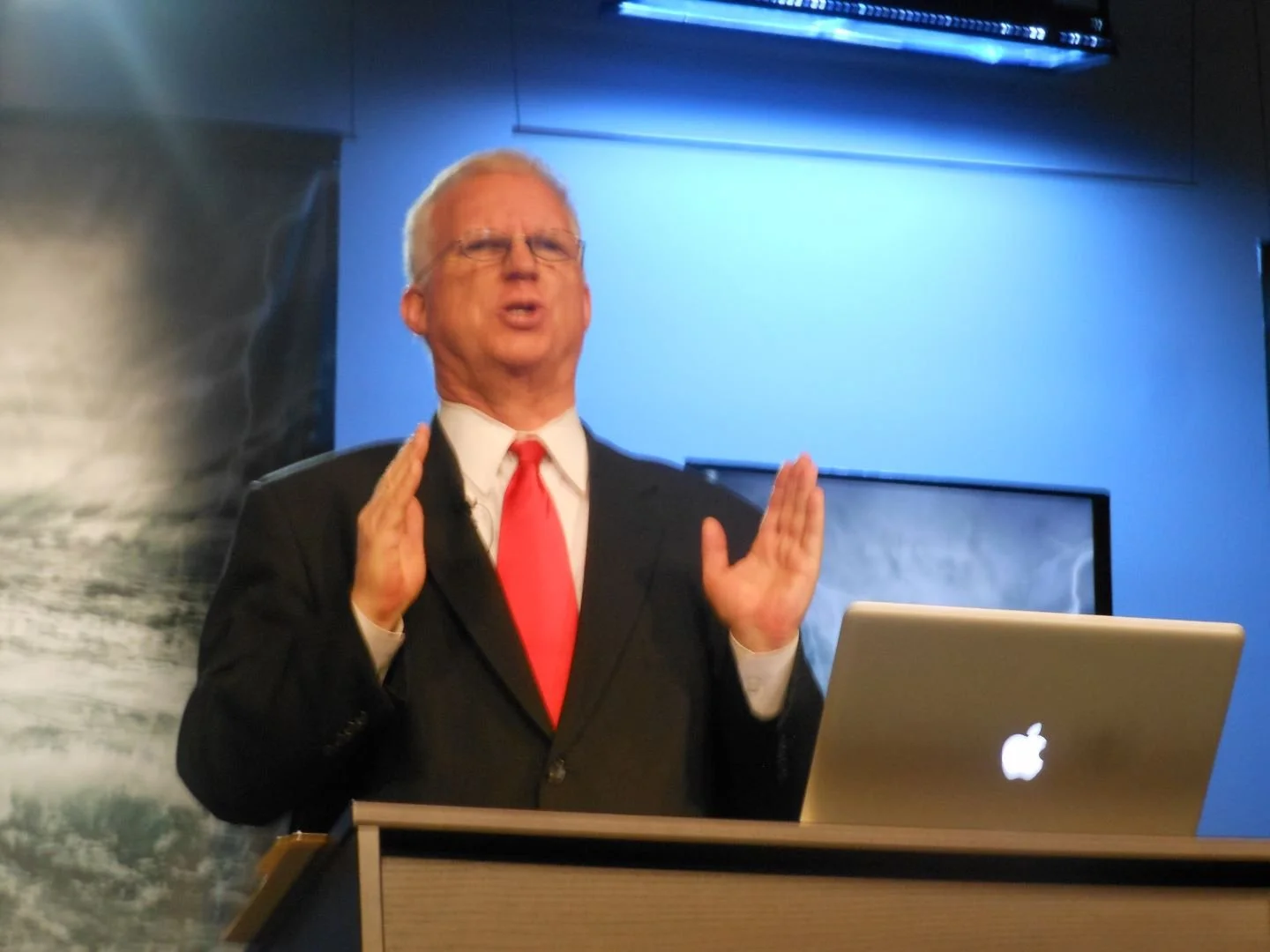
Pastor Kevin Paulson holds a Bachelor’s degree in theology from Pacific Union College, a Master of Arts in systematic theology from Loma Linda University, and a Master of Divinity from the SDA Theological Seminary at Andrews University. He served the Greater New York Conference of Seventh-day Adventists for ten years as a Bible instructor, evangelist, and local pastor. He writes regularly for Liberty magazine and does script writing for various evangelistic ministries within the denomination. He continues to hold evangelistic and revival meetings throughout the North American Division and beyond, and is a sought-after seminar speaker relative to current issues in the Seventh-day Adventist Church. He presently resides in Berrien Springs, Michigan