Ideology and partisanship aside, any number of lessons might be drawn from the 2026 U.S. midterm elections. But from a strictly spiritual standpoint, one of the most pointed of these lessons might be called the Naboth Principle.
Not for Sale
Most students of the Bible are familiar with the story, which is recounted in First Kings chapter 21. Close by the palace of Israel’s King Ahab in Jezreel lived a farmer by the name of Naboth, whose vineyard stood adjacent to the royal lands (I Kings 21:1). Wanting to obtain the land where the vineyard was located, for the purpose of planting a garden, Ahab approached Naboth and offered either to give Naboth a better vineyard in exchange for the one he now possessed, or provide him “the worth of it in money” (verse 2).
It was a fair enough offer, but Naboth wasn’t interested, not desiring to part with his family’s inheritance (verses 3-4). When one considers how dearly Ahab wanted the land, Naboth might have indulged in some serious price gouging. But in effect, Naboth told the king, “We’re not for sale.”
The subsequent betrayal and martyrdom of Naboth at the hands of the king and queen only highlights the noble character of this humble farmer, whose blood and that of his sons would later be avenged by the slaying of Ahab’s son and successor Jehoram on the very land Ahab had stolen (II Kings 10:24-26). We don’t read about Naboth again in the Sacred Scriptures, but his memory lingers as a sterling case of uncompromised integrity, of a man—in Ellen White’s words—who would “not be bought or sold” [##1|Ellen G. White, Education, p. 57.##].
In The Desire of Ages Ellen White speaks of the multitude of captives raised with Jesus at His resurrection, “who at the cost of their lives had borne testimony to the truth” [##2|——The Desire of Ages, p. 786.##]. One is led to wonder if Naboth the Jezreelite might have been one of them.
The Naboth Principle Writ Large
According to the nonpartisan watchdog group Open Secrets, the 2026 U.S. midterm elections are expected to have been the most expensive in history [3]. But what is perhaps most remarkable is that in many case, it was the losing candidates who spent the most money, particularly in the race for control of the U.S. Senate [4]. In one U.S. House race, amazingly, the winning candidate raised $60,000 for her campaign, while her losing opponent raised 2.2 million [5].
Whatever one’s political perspective, it is refreshing to see voters make choices not determined by who spends the most money. Cynics often allege that public officials are little more than “the best money can buy.” The recent midterm elections in the United States would seem to say otherwise. The Naboth Principle still stands. No vote can be purchased if it isn’t for sale.
Conclusion
And what about the Naboth Principle in our daily lives? How many of us maintain our integrity despite the pressures of the moment—whether financial, social, institutional, or professional? The inspired admonition briefly noted above should be posted on the walls—and in the hearts—of citizens as well as politicians:
The greatest want of the world is the want of men—men who will not be bought or sold, men who in their inmost souls are true and honest, men who do not fear to call sin by its right name, men whose conscience is as true to duty as the needle to the poll, men who will stand for the right though the heavens fall [##6|White, Education, p. 57.##].
The phrase “though the heavens fall” may well have originated in ancient Rome, where the lawmakers were reputed to have said, “Fiat justitia ruat coelum” (“Let justice be done, though the heavens fall” [##7|Theodore H. White, Breach of Faith: The Fall of Richard Nixon (New York: Atheneum Press, 1975), p. 5.##]). And even if, like Naboth of old, we are constrained to give our lives rather than surrender our principles, we can be sure the Lord will sustain and strengthen us to that end.
REFERENCES
1. Ellen G. White, Education, p. 57.
2. ----The Desire of Ages, p. 786.
3. https://www.reuters.com/graphics/US-ELECTIONS/GRAPHICS-BLOG/akpelkldzvr/
4. Ibid.
5. “LaKesha Womack” https://en.wikipedia.org/wiki/LaKesha_Womack
6. White, Education, p. 57.
7. Theodore H. White, Breach of Faith: The Fall of Richard Nixon (New York: Atheneum Press, 1975), p. 5.
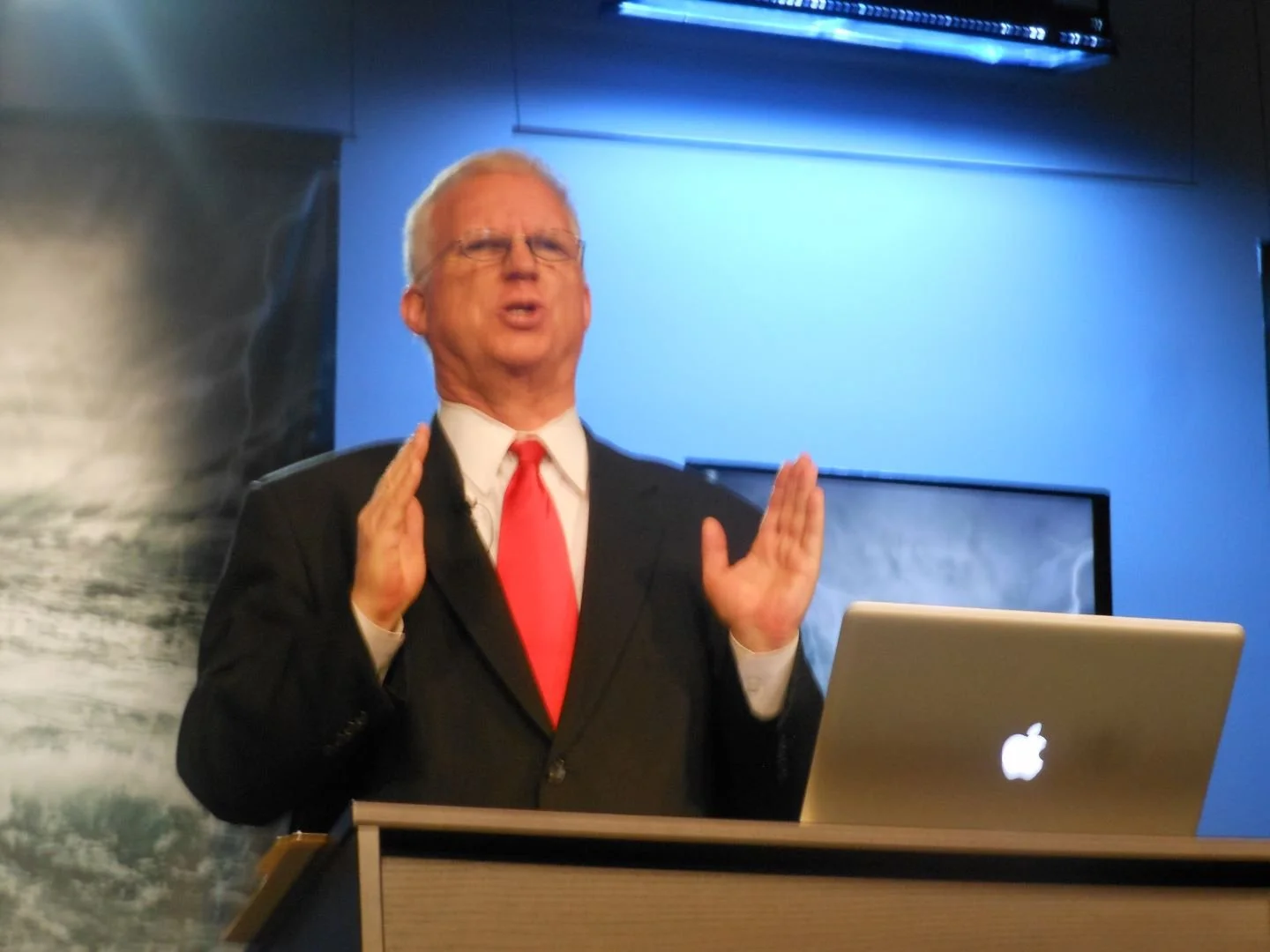
Pastor Kevin Paulson holds a Bachelor’s degree in theology from Pacific Union College, a Master of Arts in systematic theology from Loma Linda University, and a Master of Divinity from the SDA Theological Seminary at Andrews University. He served the Greater New York Conference of Seventh-day Adventists for ten years as a Bible instructor, evangelist, and local pastor. He writes regularly for Liberty magazine and does script writing for various evangelistic ministries within the denomination. He continues to hold evangelistic and revival meetings throughout the North American Division and beyond, and is a sought-after seminar speaker relative to current issues in the Seventh-day Adventist Church. He presently resides in Berrien Springs, Michigan