
During the past few days I and others have had a Facebook discussion with someone who has embraced the unscriptural doctrine of salvation by justification alone, who apparently believes that no human activity whatsoever—whether through divine power or on our own—has anything to do with salvation. At one point he states, quite categorically:
Whether it’s Christ in you or not, it’s still works.
Using his logic, one might just as easily say the apostle Paul was teaching “works-righteousness” when he admonished the Philippian believers to “work out your own salvation with fear and trembling, for it is God which worketh in you, both to will and to do of His good pleasure” (Phil. 2:12-13). Paul repeats this admonition in the following epistle, where he writes:
To whom Christ would make known what is the riches of the glory of this mystery among the Gentiles, which is Christ in you, the hope of glory.
Whom we preach, warning every man, and teaching every man in all wisdom; that we may present every man perfect in Christ Jesus:
Whereunto I also labor, striving according to His working, which worketh in me mightily (Col. 1:27-29).
We can’t repeat it often enough that when Paul writes against salvation by works (e.g. Rom. 3:20,28; Gal. 2:16; Eph. 2:8-9), he is not referring to the works attendant to the processes of regeneration and sanctification, but rather, to the self-generated works of the unrenewed heart (Rom. 2:17-23). Both regeneration and sanctification are specifically described by the apostle Paul as being an actual part of salvation, not its result:
God hath from the beginning chosen you to salvation through sanctification of the Spirit and belief of the truth (II Thess. 2:13).
Not by works of righteousness which we have done, but according to His mercy He saved us, by the washing of regeneration, and renewing of the Holy Ghost (Titus 3:5).
Notice the contrast in the above verse between “works of righteousness which we have done” (obviously in our own strength) and “the washing of regeneration, and renewing of the Holy Ghost.” Any idea that the works Paul excludes from the saving process include what the Spirit does in and through the believer, is totally disallowed by this passage.
Ellen White echoes the teachings of Scripture when she writes:
So we have nothing in ourselves of which to boast. We have no ground for self-exaltation. Our only ground of hope is in the righteousness of Christ imputed to us, and in that wrought by His Spirit working in and through us [##1|Ellen G. White, Steps to Christ, p. 63.##].
Notice she doesn’t say here—or anywhere else, for that matter—that our only ground of hope rests with imputed righteousness, with the work of the Spirit in and through us merely proving that imputed righteousness has been received in the first place. Rather, both imputed and imparted righteousness are depicted in this passage as the ground of the Christian’s saving hope.
Acceptance With God
The individual with whom I and others have been discussing these issues has made the statement:
I believe in living a Christlike life. I just don’t believe my Christlike life is acceptable before the Lord.
But the apostle Peter declared to those assembled in the house of Cornelius, that “in every nation he that feareth [God], and worketh righteousness, is accepted with Him” (Acts 10:35). Ellen White, speaking of imputed and imparted righteousness, declares that “the righteousness by which we are justified is imputed; the righteousness by which we are sanctified is imparted” [##2|——Messages to Young People, p. 35.##]. With this in mind, consider the following Ellen White statement regarding our acceptance with God:
It was impossible for the sinner to keep the law of God, which was holy, just, and good; but this impossibility was removed by the impartation of the righteousness of Christ to the repenting, believing soul. The life and death of Christ in behalf of sinful man were for the purpose of restoring the sinner to God’s favor, through imparting to him the righteousness that would meet the claims of the law and find acceptance with the Father [##3|——Faith and Works, p. 118 (italics supplied).##].
Elsewhere she writes:
This (Ex. l9:7-8) is the pledge that God’s people are to make in these last days. Their acceptance with God depends on a faithful fulfillment of the terms of their agreement with Him. God includes in His covenant all who will obey Him [##4|——SDA Bible Commentary, vol. 1, p. 1103.##].
Many of those who claim to believe the testing truths for these last days, act as though God took no note of their disrespect of, and manifest disobedience to, the principles of His holy law. The law is the expression of His will, and it is through obedience to that law that God proposes to accept the children of men as His sons and daughters [##5|——Sons and Daughters of God, p. 45.##].
There is no way back to innocence and life except through repentance for having transgressed God’s law, and faith in the merits of the divine sacrifice, who has suffered for your transgressions of the past; and you are accepted in the Beloved on condition of obedience to the commandments of your Creator [##6|——Signs of the Times, Dec. 15, 1887.##].
We must study, and copy, and follow the Lord Jesus Christ; then we shall bring the loveliness of His character into our own life, and weave His beauty into our daily words and actions. Thus we shall stand before God with acceptance, and win back by conflict with the principalities of darkness, the power of self-control, and the love of God that Adam lost in the fall [##7|——Signs of the Times, Dec. 22, 1887.##].
Through Jesus there is divine sympathy between God and the human beings who, through obedience, are accepted in the Beloved. Thus humanity conforms to the will of divinity, fulfilling the words, “If ye love Me, keep My commandments.” The commandment-keeping people of God are to walk in the sunlight of Christ’s righteousness, their countenances expressing cheerfulness and thanksgiving, joyful in the assurance: “Blessed are they that do His commandments, that they may have right to the tree of life, and enter in through the gates into the city” [##8|——Review and Herald, May 3, 1898.##].
Through obedience to all the commandments of God, we are accepted in the Beloved [##9|——Signs of the Times, Dec. 28, 1891.##].
Our faith requires us to elevate the standard of reform, and take advance steps. The condition of our acceptance with God is a practical separation from the world [##10|——Counsels on Health, p. 51.##].
For anyone, in light of the above statements, to believe sanctified obedience to not be a condition of our acceptance with God, escapes understanding. The kind of works that aren’t accepted before God are the unconverted kind, not those produced through the experience of conversion and sanctification.
Conclusion: The Pleasing Fable Destroying Thousands
It is sad to see professed Adventists, even among those who appear conservative in their faith and lifestyle, permitting themselves to be fooled by a believe-only doctrine of salvation. The modern prophet wrote long ago, addressing this fallacy:
The pleasing fable that all there is to do is to believe, has destroyed thousands and tens of thousands, because many have called that faith which is not faith, but simply a dogma. Man is an intelligent, accountable being; he is not to be carried as a passive burden by the Lord, but is to work in harmony with Christ. Man is to take up his appointed work in striving for glory, honor, and immortality [##11|——Review and Herald, April 1, 1890.##].
Notice how the inspired pen doesn’t restrict the Christian’s striving to a mere response to one’s allegedly finished salvation. Rather, we are to strive for salvation itself. What else does it mean to strive “for glory, honor, and immortality”? The inspired writings do not restrict human effort in the Christian life to some post-salvation category. Without question such effort cannot succeed in the absence of Christ’s imparted strength. Ellen White, like the Bible (Phil. 2:12-13; Col. 1:26-29), is clear beyond misunderstanding on this point:
The work of gaining salvation is one of copartnership, a joint operation. . . . Human effort of itself is not sufficient. Without the aid of divine power it avails nothing. God works and man works [##12|——Acts of the Apostles, p. 482.##].
The gospel that is to be preached to all nations, kindreds, tongues, and peoples presents the truth in clear lines, showing that obedience is the condition of gaining eternal life. Christ imparts His righteousness to those who consent to let Him take away their sins [##13|——SDA Bible Commentary, vol. 7, p. 972.##].
Salvation, in other words, is a cooperative process, not a “let go and let God” affair. Passive belief is by no means the only role played by the Christian in the work of salvation. Let us not be fooled by the devil’s pleasing fables. Let us claim the righteousness of our Lord for both our justification and our sanctification, and repose our faith in the purity God has promised to bequeath to us in both these phases of Biblical salvation.
REFERENCES
1. Ellen G. White, Steps to Christ, p. 63.
2. ----Messages to Young People, p. 35.
3. ----Faith and Works, p. 118 (italics supplied).
4. ----SDA Bible Commentary, vol. 1, p. 1103.
5. ----Sons and Daughters of God, p. 45.
6. ----Signs of the Times, Dec. 15, 1887.
7. Ibid, Dec. 22, 1887.
8. ----Review and Herald, May 3, 1898.
9. ----Signs of the Times, Dec. 28, 1891.
10. ----Counsels on Health, p. 51.
11. ----Review and Herald, April 1, 1890.
12. ----Acts of the Apostles, p. 482.
13. ----SDA Bible Commentary, vol. 7, p. 972.
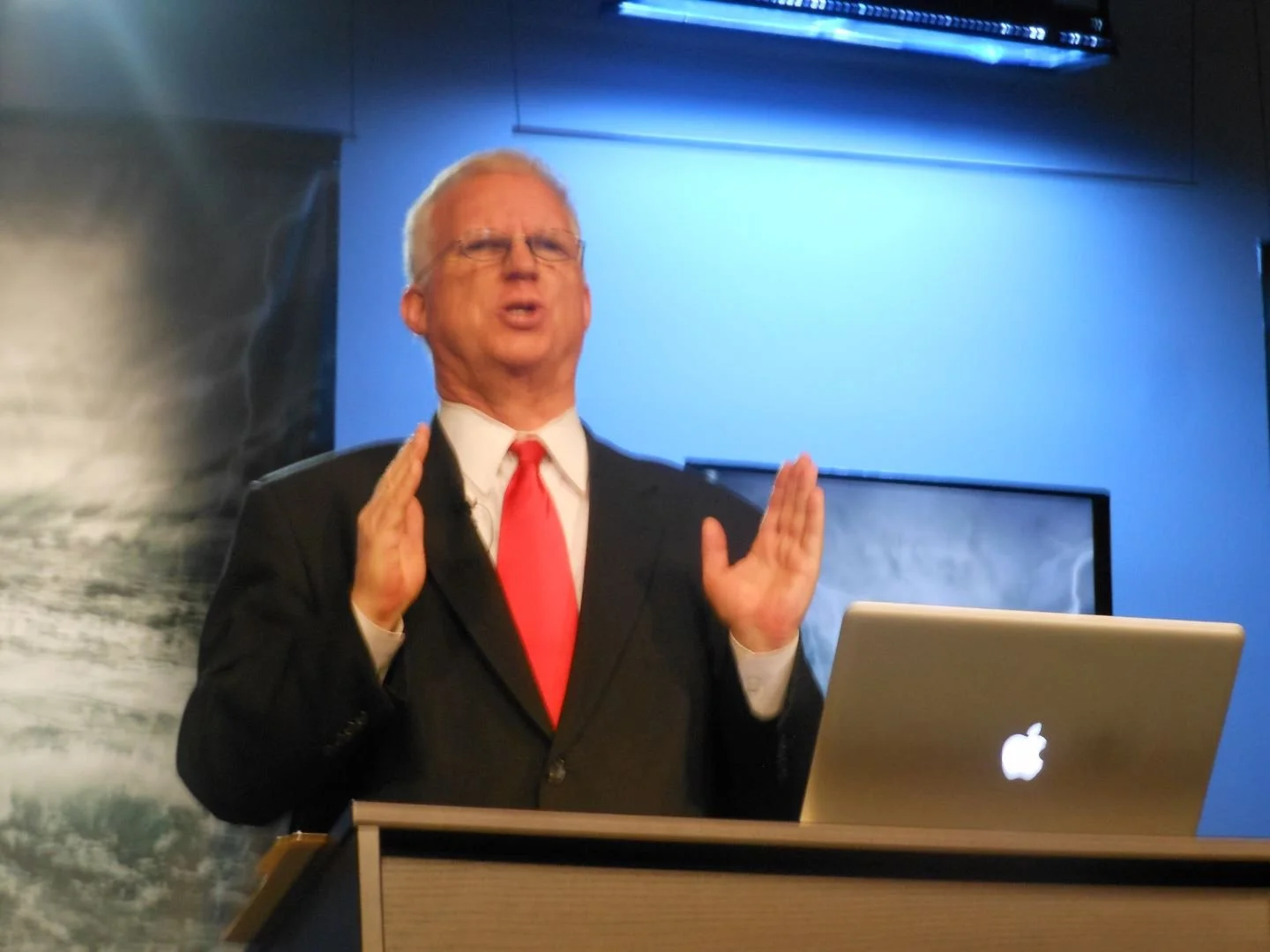
Pastor Kevin Paulson holds a Bachelor’s degree in theology from Pacific Union College, a Master of Arts in systematic theology from Loma Linda University, and a Master of Divinity from the SDA Theological Seminary at Andrews University. He served the Greater New York Conference of Seventh-day Adventists for ten years as a Bible instructor, evangelist, and local pastor. He writes regularly for Liberty magazine and does script writing for various evangelistic ministries within the denomination. He continues to hold evangelistic and revival meetings throughout the North American Division and beyond, and is a sought-after seminar speaker relative to current issues in the Seventh-day Adventist Church. He presently resides in Berrien Springs, Michigan