
For the fourth time in a span of two months [##1|Stanton Witherspoon, “Mark Finley Nets Last Generation Theology Attention,” Spectrum, Dec. 5, 2025; Reinder Bruinsma, “Finley’s Last Generation Theology: Turn Off LGT Light,” Spectrum, Dec. 9, 2025; Witherspoon, “Mark Finley’s Video Widens Global and GYC Debate Over Last Generation Theology,” Spectrum, Dec. 11, 2025; Denis Fortin, “Have We Learned Nothing?” Spectrum, Jan. 15, 2026.## ], a leading liberal Adventist website has published articles taking Elder Mark Finley to task for his recent endorsement of the construct that in recent times has come to be known as Last Generation Theology. The most recent of these articles [2] calls to mind a tragic incident in the history of Old Testament Israel, which we will consider in a moment.
One could be forgiven for thinking those from the aforementioned outlet, along with many of their theological fellow travelers in the denomination, are running scared. Some of them still desperately cling to the illusion that Last Generation Theology is some sort of “fringe” construct in contemporary Adventist thinking; one of the above authors writes of how this theology is “especially popular among independent ministry organizations” [3]. This is what happens when cherished notions start crumbling, which opponents of this theology fear so deeply in the wake of one with Mark Finley’s stature coming out in its favor.
It appears the folks on the aforementioned website were particularly desirous of inciting conflict within the GYC (Generation of Youth for Christ) movement as a result of Finley’s statements, implying that the latter’s video was “widening” debate over Last Generation Theology within the GYC ranks [4]. Having returned several weeks ago from the recent GYC conference in Orlando, Florida, where Finley was a featured speaker and attention to his recent statements on this subject had drawn notable interest, I can assure our readers that if in fact debate was provoked within GYC over Finley’s views, it flew totally under the radar. All I could hear was enthusiasm and widespread support for Finley’s stance, and for the Last Generation message altogether.
“Spiritual Prowess”
The most recent of the articles noted above spoke of how Finley’s presentations “resonated with many Adventists who long for some form of spiritual prowess as a mark of God’s favor on them in these last days” [5]. The article goes on to say:
The allure of being different from others, whether other Christians or non-believers, is deeply ingrained in the Adventist spiritual psyche. If we are not different from others, then why do we even bother being Adventists? [6].
Perhaps the author of this piece forgets that the imperative of God’s people standing apart from those around them—like so much else in classic Adventism—is deeply ingrained in the Bible, first and foremost. What, after all, did Moses say to ancient Israel?
For thou art an holy people unto the Lord thy God: the Lord thy God hath chosen thee a special people unto Himself, above all people that are upon the face of the earth (Deut. 7:6).
The New Testament says the same thing regarding Christians:
Wherefore come out from among them, and be ye separate, saith the Lord, and touch not the unclean thing; and I will receive you.
And I will be a Father unto you, and ye shall be My sons and daughters, saith the Lord Almighty (II Cor. 6:17-18).
But ye are a chosen generation, a royal priesthood, an holy nation, a peculiar people; that ye should show the praises of Him who hath called you out of darkness into His marvelous light (I Peter 2:9).
Any notion that theologically liberal Adventists want to measure our distinctive faith by the teachings of Scripture, keeping what harmonizes with Scripture and dropping the rest, loses credibility almost by the day. The Biblical worldview is pervasive throughout the Seventh-day Adventist doctrinal edifice; the imperative of standing apart isn’t something unique to the “Adventist spiritual psyche.” It comes directly from the Bible itself.
Powerless Grace
The article in question states as follows:
The word of God teaches that because we are sinners, only the gift of God’s grace can save us. A repentant and justified sinner, covered by Christ’s robe of righteousness, is still a broken and frail human being under that robe. Any good works a redeemed sinner does, by the sanctifying gift of the Holy Spirit, including our obedience to the commandments of God, are always tainted by sin, and therefore, even after the sanctification of our characters, we can only be saved by grace, trusting in Christ’s merits alone. Have we not learned that our perfection can only be found in Christ? [7]
It would seem there are a number of things we haven’t learned. One of them is that Biblical grace doesn’t mere forgive or “cover” the Christian—which, praise the Lord, it most assuredly does (Ex. 34:6-7; Rom. 3:24; Eph. 1:7)—but that it also transforms and empowers the Christian for the total conquest of sin. The apostle Paul is especially clear on the transformative aspect of divine grace:
And God is able to make all grace abound toward you; that ye, always having all sufficiency in all things, may abound to every good work (II Cor. 9:8).
For this thing I besought the Lord thrice, that it might depart from me. And He said unto me, My grace is sufficient for thee: for My strength is made perfect in weakness. Most gladly therefore will I rather glory in my infirmities, that the power of Christ may rest upon me (II Cor. 12:8-9).
Thou therefore, my son, be strong in the grace that is in Christ Jesus (II Tim. 2:1).
For the grace of God that bringeth salvation hath appeared to all men. Teaching us that, denying ungodliness and worldly lusts, we should live soberly, righteously, and godly, in this present world (Titus 2:11-12).
Wherefore we receiving a kingdom which cannot be moved, let us have grace, whereby we may serve God acceptably with reverence and godly fear (Heb. 12:28).
Scripture doesn’t define the robe of righteousness that covers the Christian as merely external. The book of Revelation speaks of this robe as representing righteous actions on the part of God’s people:
Let us rejoice and be glad and give Him glory! For the wedding of the Lamb has come, and His bride has made herself ready.
Fine linen, bright and clean, was given her to wear. Fine linen stands for the righteous acts of the saints (Rev. 19:7-8, NIV).
This is the gospel of grace Philip Yancey forgot; in a nearly 300-page book of his on God’s grace, the above verses go entirely without a mention. Tragically, his doctrine of powerless grace has now revealed itself in his recent confession of an eight-year adulterous affair with a married woman [8]. And Yancey isn’t the only one. More recently, a music minister from Kentucky was caught in a sexual affair with an underage boy, and as a result has been sentenced to fifteen years in prison [9]. But one could only be appalled at how this man effectively excused his sin by declaring:
All of my sins, past, present, future, all of them were covered by [the] blood that day of Jesus Christ, all of them. These too [10].
When Christians make light of sin, and preach its inevitability even for the converted, these are the kind of horrific misdeeds they invite. Where is this doctrine of “continuous” or “advance” forgiveness taught in the Scriptures? The Bible is repeatedly clear that sin must be forsaken as well as confessed in order to be forgiven (II Chron. 7:14; Prov. 28:13; Isa. 55:7). How does the theology of this now-convicted child molester differ from the Roman Catholic doctrine of indulgences, except that in his case the indulgences are free?
Perpetual brokenness, as the article in question teaches, is not a Bible doctrine. Neither the Old nor the New Testament promotes powerless grace, a legal covering under which occasional sin persists. The apostle Paul writes, “Having therefore these promises, dearly beloved, let us cleanse ourselves from all filthiness of the flesh and spirit, perfecting holiness in the fear of God” (II Cor. 7:1). Elsewhere he writes:
For the weapons of our warfare are not carnal, but mighty through God to the pulling down of strongholds.
Casting down imagination, and every high thing that exalteth itself against the knowledge of God, and bringing into captivity every thought to the obedience of Christ (II Cor. 10:4-5).
That sounds like sinlessness to me.
Yes, Christ and His merits are the sole source of the Christian’s righteousness. But those merits are imparted to the believer as well as imputed. In the writings of Ellen White—the only inspired writings to use the term “merits of Christ”—this expression refers not only to forgiveness [##11|Ellen G. White, Selected Messages, vol. 1, p. 367.##], but to transformation and empowerment as well. Such statements as the following are especially clear in this regard:
Becoming partakers of His divine nature, we are to learn to discern the temptations of Satan, and, in the strength of His grace, overcome the corruptions that are in the world through lust. He who was once a sinful human being may be refined and purified through the imparted merits of Christ, and stand before his fellow men as a laborer together with God [##12|——This Day With God, p. 151.##].
Through the merits of Christ man may be able to exercise the noblest powers of his being, and expel sin from his soul [##13|——This Day With God, p. 124.##].
Through the merits of His blood, you may overcome every spiritual foe, and remedy every defect of character [##14|——Sons and Daughters of God, p. 227.##].
“Have we learned nothing?” the aforementioned author asks [15]. A most appropriate question, to be sure, but it would seem he’s asking it of the wrong people.
The Ultimate Excuse
The article in question raises perhaps the most oft-repeated excuse for the theory that sin can’t be fully conquered, even by the converted Christian, here on earth. The author writes:
Needless to say, and it seems that by now it should be evident, that after preaching this idea for decades, if not centuries, there is still no evidence that anyone has attained this perfection. . . . Even the most pious and dedicated church members struggle with imperfections of character, with weak resolve, lack of steadfastness, and annoying habits [16].
Such claims as these from opponents of perfection theology often make me as curious as anything else, as I frequently wonder if these folks would actually recognize a sinless person if they ever did meet one! Our utterly sinless and consummately loving Lord, after all, was repeatedly accused of being devil-possessed (John 7:20; 8:48,52; 10:20), even as He challenged His accusers, “Which of you convinceth Me of sin?” (John 8:46). And of His followers He declared, “If they have called the Master of the house Beelzebub, how much more shall they call them of His household?” (Matt. 10:25).
A sobering fact of sacred history is that the holier people get, the less popular they get. Speaking of the holiness of Christ and its effect on His adversaries, Ellen White declares:
Though His every word and act breathed of divine compassion, His unlikeness to the world provoked the bitterest hostility. Because He would give no license for the exercise of the evil passions of our nature, He aroused the fiercest opposition and enmity [##17|White, Thoughts from the Mount of Blessing, p. 29.##].
The purity and holiness of the character of Christ stirred up the very worst passions of the human heart…. His perfect obedience to the commandments of God was a continual rebuke to a sensual and perverse generation [##18|——Sons and Daughters of God, p. 41.##].
Conclusion: Sethur, Shaphat, & Co.
Few remember their names today. Nor do many remember the names Shammua, Igal, Palti, Gaddiel, Gaddi, Ammiel, Nahbi, or Geuel. These, of course, are the names of the ten faithless spies (Num. 13:4-5,7,9-15), identified by Ellen White as rulers of their respective tribes [##19|——Patriarchs and Prophets, p. 387.##]—who, in contrast with Caleb and Joshua (verses 6,8), insisted that the Canaanites were too powerful for Israel to conquer (verses 31-33).
Like today’s anti-perfection Adventists, who extol the power of “imperfections of character . . . weak resolve, lack of steadfastness, and annoying habits” [20] over that of “Him that is able to do exceeding abundantly above all that we ask or think, according to the power that worketh in us” (Eph. 3:20), Sethur, Shaphat, and their fellows dwelt on the giants of Canaan, and how in comparison they and the other spies “were in [their] own sight as grasshoppers, and so we were in their sight” (Num. 13:33).
But because Caleb and Joshua placed their trust in God and His strength, they urged the Israelites to repose the same trust in the God who had led them thus far from Egyptian bondage, through the Red Sea and the wilderness beyond. In their words:
If the Lord delight in us, then He will bring us into this land, and give it us; a land which floweth with milk and honey.
Only rebel not ye against the Lord, neither fear ye the people of the land; for they are bread for us: their defense is departed from them, and the Lord is with us; fear them not (Num. 14:8-9).
But the appeal of these men of God fell on resistant ears. Like those in contemporary Adventism who seek to marginalize and ostracize those believing in the cluster of Bible doctrines known as Last Generation Theology, the unbelieving Israelites tried to stone Caleb and Joshua (verse 10), and would likely have done so had not the glory of God intervened in their defense (verse 10).
Ellen White makes the following, very sobering statement about the unbelief that pervaded Israel at that moment:
If only the two men had brought the evil report, and all the ten had encouraged them to possess the land in the name of the Lord, they would still have taken the advice of the two in preference to the ten, because of their wicked unbelief [##21|White, Patriarchs and Prophets, p. 390.##].
Sin and cowardice have always been preferable to the likes of Sethur, Shaphat, and Co. But the ten spies proved to be the first of faithless Israel to die in the wilderness, being smitten by the plague before the Lord (Num. 14:37). And once the forty years of wandering had expired, and the faithless generation had finally perished (verses 32-33,35), the next generation would rise in their place and enter the Promised Land (verse 31), led by Caleb and Joshua (Josh. 14:9-14)—whose names everyone remembers today.
Many generations of Seventh-day Adventists have fallen in the wilderness of this earth, who might long ago have brought the controversy between good and evil to its triumphant finish. Many of today’s youthful Adventists, as evidenced by the growth and prosperity of the GYC movement and others, are striving to experience the faith God seeks from His Last Generation saints. Perhaps a few older ones, like Caleb and Joshua, can set an example of faithfulness for this rising generation, and at last lead them—and the great Advent movement—into the heavenly Canaan.
REFERENCES
1. Stanton Witherspoon, “Mark Finley Nets Last Generation Theology Attention,” Spectrum, Dec. 5, 2025 https://spectrummagazine.org/news/mark-finley-nets-last-generation-theology-attention/ ; Reinder Bruinsma, “Finley’s Last Generation Theology: Turn Off LGT Light,” Spectrum, Dec. 9, 2025 https://spectrummagazine.org/views/analysis/finleys-last-generation-theology-turn-off-lgt-light/ ; Witherspoon, “Mark Finley’s Video Widens Global and GYC Debate Over Last Generation Theology,” Spectrum, Dec. 11, 2025 https://spectrummagazine.org/news/finleys-video-widens-global-and-gyc-debate-over-lgt/ ; Denis Fortin, “Have We Learned Nothing?” Spectrum, Jan. 15, 2026 https://spectrummagazine.org/views/columns/have-we-learned-nothing/
2. Fortin, “Have We Learned Nothing?” Spectrum, Jan. 15, 2026 https://spectrummagazine.org/views/columns/have-we-learned-nothing/
3. Bruinsma, “Finley’s Last Generation Theology: Turn Off LGT Light,” Spectrum, Dec. 9, 2025 https://spectrummagazine.org/views/analysis/finleys-last-generation-theology-turn-off-lgt-light/
4. Witherspoon, “Mark Finley’s Video Widens Global and GYC Debate Over Last Generation Theology,” Spectrum, Dec. 11, 2025 https://spectrummagazine.org/news/finleys-video-widens-global-and-gyc-debate-over-lgt/
5. Fortin, “Have We Learned Nothing?” Spectrum, Jan. 15, 2026 https://spectrummagazine.org/views/columns/have-we-learned-nothing/
6. Ibid.
7. Ibid.
8. Emily Belz, “Author Philip Yancey Confesses Affair, Withdraws from Ministry,” Christianity Today, Jan. 6, 2026 https://www.christianitytoday.com/2026/01/author-philip-yancey-confesses-affair-withdraws-from-ministry/
9. Leonardo Blair, “Ex-Ark Encounter, Creation Museum band member gets 15 years for abusing teenage boy,” Christian Post, Jan. 16, 2026 https://www.christianpost.com/news/ex-creation-museum-band-member-gets-15-years-for-abusing-teen.html?fbclid=IwY2xjawPbLxVleHRuA2FlbQIxMABicmlkETFaTmMwMW9WMkNRd1ZjMnI3c3J0YwZhcHBfaWQQMjIyMDM5MTc4ODIwMDg5MgABHtxTObd22Zkh2JlWt94mgfD4OeFeeAWSZwCJX3bB2mxKqGKmdlj1HZ4Twy2O_aem_VqJDOZF1jTiQaq5uyu-oFA
10. Ibid.
11. Ellen G. White, Selected Messages, vol. 1, p. 367.
12. ----This Day With God, p. 151.
13. Ibid, p. 124.
14. ----Sons and Daughters of God, p. 227.
15. Fortin, “Have We Learned Nothing?” Spectrum, Jan. 15, 2026 https://spectrummagazine.org/views/columns/have-we-learned-nothing/
16. Ibid.
17. White, Thoughts from the Mount of Blessing, p. 29.
18. ----Sons and Daughters of God, p. 41.
19. ----Patriarchs and Prophets, p. 387.
20. Fortin, “Have We Learned Nothing?” Spectrum, Jan. 15, 2026 https://spectrummagazine.org/views/columns/have-we-learned-nothing/
21. White, Patriarchs and Prophets, p. 390.
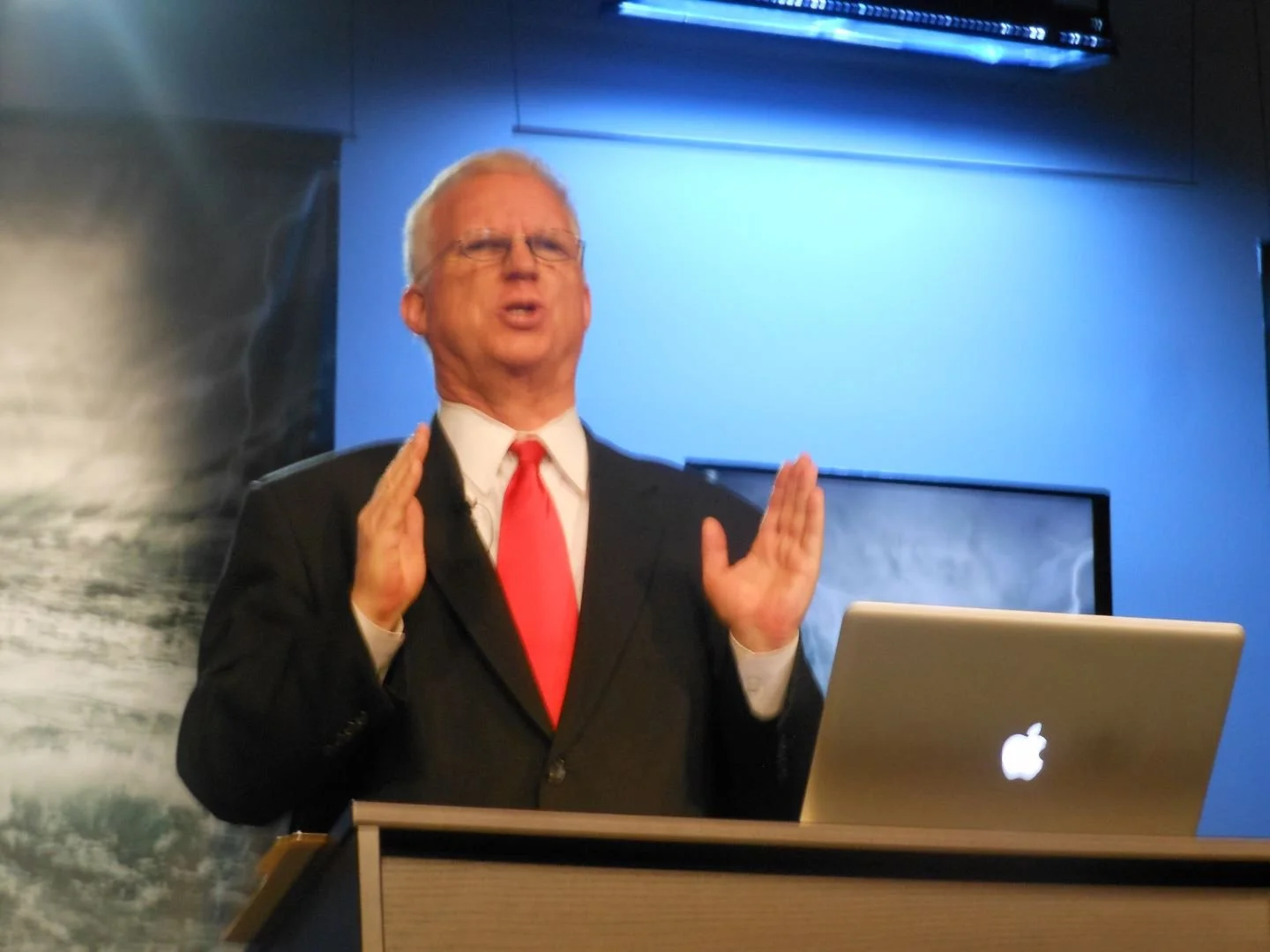
Pastor Kevin Paulson holds a Bachelor’s degree in theology from Pacific Union College, a Master of Arts in systematic theology from Loma Linda University, and a Master of Divinity from the SDA Theological Seminary at Andrews University. He served the Greater New York Conference of Seventh-day Adventists for ten years as a Bible instructor, evangelist, and local pastor. He writes regularly for Liberty magazine and does script writing for various evangelistic ministries within the denomination. He continues to hold evangelistic and revival meetings throughout the North American Division and beyond, and is a sought-after seminar speaker relative to current issues in the Seventh-day Adventist Church. He presently resides in Berrien Springs, Michigan