
On Tuesday, January 6, 2026,, popular evangelical author Philip Yancey confessed publicly to an eight-year extramarital affair with a married woman, and has consequently discontinued his written and spoken ministry [1].
In Yancey’s words:
I have confessed my sin before God and my wife, and have committed myself to a professional counseling and accountability program. I have failed morally and spiritually, and I grieve over the devastation I have caused. I realize that my actions will disillusion readers who have previously trusted in my writing. Worst of all, my sin has brought dishonor to God. I am filled with remorse and repentance, and I have nothing to stand on except God’s mercy and grace [2].
We thank God for what appears to be a genuinely repentant spirit on Yancey’s part. All of us, regardless of denominational affiliation or theological beliefs, wish him a full spiritual recovery and pray for him and his dear wife of 55 years, who has understandably been devastated by this terrible news. May the prayer of King David for his own healing after his sin with Bathsheba be fulfilled in Yancey’s life also: “Create in me a clean heart, O God, and renew a right spirit within me” (Psalm 51:10).
More than twenty years ago, the present writer wrote an in-depth review of what is perhaps the most famous of Yancey’s books, What’s So Amazing About Grace? [##3|Philip Yancey, What’s So Amazing About Grace? (Grand Rapids, MI: Zondervan Publishing House, 1997).##]. The book was named Book of the Year in 1998 by the Evangelical Christian Publishers Association [4], and in 2006 ranked 17th on Christianity Today’s list of fifty books that have shaped evangelicals the most [5].
My initial review of Yancey’s book doesn’t appear to be available just now in any electronic form. And in view of this week’s shattering revelation, and what the present author holds to be its relationship to Yancey’s perspective on sin, grace, and salvation, it would seem an opportune time to revisit the subject of that book review, and the review itself. Hence the following revised edition thereof.
Revised Book Review
For decades Yancey has likely been the most popular author in Christian circles. And he may well have been, at least till now, the most popular non-Adventist author within the Seventh-day Adventist Church. Without question, the impact of his book What’s So Amazing About Grace? has been profound within the circles of First World Adventism.
Emotional stories, flowery rhetoric, and lyrical beauty adorn the pages of this verbal masterpiece. Certainly none can quarrel with the author's sincerity, nor with the truth of many insights offered. His call for reconciliation—the dispensing of grace—within families, between individuals and nations, offers some of the best of practical Christianity. Repeatedly he denounces the "graceless" conduct of professed Christians in a wide variety of settings. While he overstates his case from time to time, much of what he says in this regard is beyond dispute.
Yancey's book has doubtless contributed to what some might call the "grace saturation" in numerous books, sermons, articles, Sabbath School lessons, and other features of contemporary Adventism. To a large degree because of Yancey, the word grace has come to rival the word relationship in the vocabulary of those Adventists desirous of reduced doctrinal emphasis, greater moral vacillation, and less insistence on the application of the church’s classic standards relative to lifestyle, worship, and institutional governance. And increasingly, to the chagrin of many thoughtful observers, Yancey’s influence has resulted in grace being defined by opinions not anchored in the written counsel of God.
Many Adventists I know have been enthralled by Yancey's portrayal of grace. Reading the book in question, it isn't hard to understand why. One can easily get caught up in the stories, the skillfully crafted words, the experience-driven appeals. But for Seventh-day Adventist Christians, the Bible remains the unerring test of doctrine, lifestyle, and worship (Isa. 8:20; Acts 17:11). The pull of the heart cannot be allowed to dislodge the anchor of the mind. Any other course leaves us adrift on the sea of experience and emotion.
Yancey describes grace as "the last best word" in the English language [##6|——What’s So Amazing About Grace?, p. 12.##]. I wouldn't necessarily argue with him. Sadly, though, his book on the subject might better have been titled, Only Half of Grace.
The Absent Balance
Yancey's discussion of grace starts badly, in more ways than one. The most dangerous of his premises, by which all that follows is affected, is stated in the first chapter:
To borrow E.B. White's comment about humor, “Grace can be dissected, as a frog, but the thing dies in the process; and the innards are discouraging to any but the pure scientific mind.” I have just read a thirteen-page treatise on grace in the New Catholic Encyclopedia, which has cured me of any desire to dissect grace and display its innards. I do not want the thing to die. For this reason, I will rely more on stories than on syllogisms.
In sum, I would far rather convey grace than explain it [##7|——What’s So Amazing About Grace?, p. 16.##].
Laying aside the New Catholic Encyclopedia (not a promising source in any case), a simple trek through a Bible concordance would have given Yancey's book the Biblical balance it lacks on the subject of God's grace. Biblical grace not only forgives our sins (Ex. 34:6-7; Rom. 3:24; Eph. 1:7); it provides power for obedience and total sanctification. The following Bible verses give the other half of grace, verses without mention in the nearly 300 pages of Yancey's book:
And God is able to make all grace abound toward you; that ye, always having all sufficiency in all things, may abound to every good work (II Cor. 9:8).
For this thing I besought the Lord thrice, that it might depart from me. And He said unto me, My grace is sufficient for thee: for My strength is made perfect in weakness. Most gladly therefore will I rather glory in my infirmities, that the power of Christ may rest upon me (II Cor. 12:8-9).
Thou therefore, my son, be strong in the grace that is in Christ Jesus (II Tim. 2:1).
For the grace of God that bringeth salvation hath appeared to all men. Teaching us that, denying ungodliness and worldly lusts, we should live soberly, righteously, and godly, in this present world (Titus 2:11-12).
Wherefore we receiving a kingdom which cannot be moved, let us have grace, whereby we may serve God acceptably with reverence and godly fear (Heb. 12:28).
Yancey, like some of his kindred spirits in Adventism, focuses exclusively on what he calls Jesus' "parables of grace" [##8|——What’s So Amazing About Grace?, p. 91.##]—a strange observation, to be sure; did Jesus ever tell a parable of ungrace? The parables of seeking the lost in Luke 15 [##9|——What’s So Amazing About Grace?, pp. 52,54,59,68.##], the farmer who hired laborers for his vineyard and paid all the same wage (Matt. 20:1-16) [##10|——What’s So Amazing About Grace?, pp. 60-62.##], as well as the man who owed ten thousand talents and was forgiven his debt (Matt. 18:23-35) [##11|——What’s So Amazing About Grace?, p. 63.##]—all receive significant attention in Yancey’s portrayal of grace. No attention is paid, however, to other parables, which would give Yancey's grace-doctrine a much-needed balance.
Why, for example, does Yancey make no mention of Jesus' parable of the man who sold all he had to purchase the field with a hidden treasure (Matt. 13:44)? Or the merchant who did the same in order to buy a pearl of great price (Matt. 13:45-46)? What about the parable of the talents, in which the diligent use of God's gifts decides our eternal destiny (Matt. 25:14-30)? We could mention others. But Yancey mentions none of these.
Nor does he carefully consider even the content of the "grace" parables he loves so much. Describing a woman's refusal to forgive her wayward son, he quotes the woman as saying that in the Prodigal Son story, "he (the son) had to repent" [##12|——What’s So Amazing About Grace?, p. 80.##]. Yancey disagrees strongly, implying that repentance or the lack thereof made no difference to the father in Jesus' story [##13|——What’s So Amazing About Grace?, p. 80.##]. But while not wishing to defend the unforgiving mother quoted by Yancey, it remains true that the prodigal left the pigpen and his sinful life before his father took him back. We don't read of the father traveling to the city where his son partied, apologizing for the "legalistic" rules which the son might have cited as reasons for leaving home, then offering the son an unconditional invitation to return, irrespective of how he lived. Jesus taught no such gospel, no such perversion of divine grace.
Likewise, in referring to the parable of the servant forgiven for the ten thousand talents, Yancey fails to mention the Bible's clear teaching that the servant's forgiveness depended on his willingness to forgive another (Matt. 18:32-34), after which Jesus states that our forgiveness by God depends on our willingness to forgive offenses committed by others against ourselves (verse 35; see also Matt. 6:14-15).
Yancey writes, "The more I reflect on Jesus' parables, the more tempted I am to reclaim the word 'atrocious' to describe the mathematics of the gospel"[##14|——What’s So Amazing About Grace?, p. 64.##]. He obviously hasn't reflected on all the parables, or even the full message of those he mentions. In short, his preference to "convey grace rather than explain it" [##15|——What’s So Amazing About Grace?, p. 16.##] causes his book to veer dangerously from the Biblical message. Unless grace is first explained by a consistent use of Scripture, we cannot know if it is true grace that is being conveyed.
Too much space is consumed in Yancey's book by quotations from playwrights, novelists, philosophers, and theologians, in his effort to explain what grace is. A partial view of Scripture, heavily laced with fallible human opinion, leaves one at major risk of accepting error.
Bad Theology, Bad Reasoning
A favorite quote from Yancey's book is one where he seeks to define grace in a nutshell: "Grace means there is nothing we can do to make God love us more . . . And grace means there is nothing we can do to make God love us less" [##16|——What’s So Amazing About Grace?, p. 70.##]. Unfortunately, he makes the common mistake of some in blurring the line between God's love and God's salvation. Two pages later he writes:
Jesus' kingdom calls us to another way, one that depends not on our performance but His own. We do not have to achieve but merely follow. He has already earned for us the costly victory of God's acceptance [##17|——What’s So Amazing About Grace?, p. 72.##]
God's love is indeed unconditional. But His acceptance of us as saved Christians is quite another matter, as the New Testament makes clear (Matt. 12:36-37; 19:17; Luke 10:25-28; John 3:3,5; Acts 10:35; Rom. 2:6-10,13; 8:13; Heb. 5:9). Jesus declared to Nicodemus, in perhaps the most famous of Bible verses: "God so loved the world that He gave His only begotten Son, that whosoever believeth on Him should not perish, but have everlasting life" (John 3:16). Notice how God's love extends to all the world, while salvation is available on condition of belief in Christ--a belief which, in context, includes the new birth and obedience (see John 3:3,5,36, RSV).
Yancey's book indulges the typical evangelical misunderstanding of such issues as the clean and unclean foods in the Old Testament [##18|——What’s So Amazing About Grace?, pp. 147-153.##], claiming this distinction is arbitrary and no longer binding on Christians. His tirade against legalism includes the strange attempt to pit Jesus against John the Baptist on the issue of alcohol [##19|——What’s So Amazing About Grace?, p. 194.##], together with the absurd claim that the Bible nowhere condemns cigarettes or rock music [##20|——What’s So Amazing About Grace?, pp. 194,195.##]. (The Bible doesn't condemn heroin or crack cocaine either.) The fact that Scripture speaks of the body as God's temple (I Cor. 6:19-20), and commands Christians to think only on what is true, pure, honest, just, lovely, and of good report (Phil. 4:8)—not a principle reflected in many rock music lyrics—is completely ignored.
Yancey starts his book with the tale of a Chicago prostitute who rented out her two-year old daughter for kinky sex. When asked if she had considered going to a church for help, she replied "Church? Why would I ever go there? They'd just make me feel worse" [##21|——What’s So Amazing About Grace?, pp. 11,14,273-274.##]. Yancey claims it was this story that originally prompted him to write this book [##22|——What’s So Amazing About Grace?, p. 232.##], largely because he fears the world sees so little grace in the lives of professed Christians [##23|——What’s So Amazing About Grace?, p. 14.##].
Again, few could fairly argue with him on the lack of grace in the lives of so many who wear the Christian label. And surely all of us have much to learn in the school of compassion, especially with regard to those whose sins we find especially repugnant. At the same time, one finds it hard to think many sensible people of the world would consider the church unduly harsh because it fostered guilt in a woman who "rented out" her two-year old for kinky sex! Surely the world has many legitimate grievances with professed Christianity, but what decent worldly person would fault the church for condemning this sort of behavior?
One other point deserves consideration regarding this and similar stories. Why are we so quick to assume that if a woman like this prostitute feels guilty because of the witness of the church, that this is because of church members' legalistic severity rather than the Holy Spirit’s conviction? The Bible declares one aspect of the Spirit's work to be convicting us of sin (John 16:8). Why does Yancey give no consideration to the possibility that this was why this woman felt guilty?
None can deny that true love for sinners is a problem with many professed Christians. Yancey is very right to express concern here. But is it possible that in a culture where so many are on a binge to be liked, that we give too little thought to the possibility—so evident throughout the Bible story—that those who reject God's Word might just be doing so because, despite all the love shown them, they still prefer sin over righteousness?
Another, rather embarrassing vulnerability in Yancey's argument is his high regard for novelist Leo Tolstoy. At one point Tolstoy is hailed as an insightful thinker who "battled legalism all his life” [##24|——What’s So Amazing About Grace?, p. 197.##], denouncing "rule-oriented" religion in presumed contrast to the teachings of Christ [##25|——What’s So Amazing About Grace?, pp. 197-198.##]. Yet earlier in his book, writing of our need to forgive each other, Yancey recounts the pain Tolstoy inflicted on his wife Sonya through his multiple affairs with other women [##26|——What’s So Amazing About Grace?, p. 85.##]. One can't help wondering if Tolstoy—and Yancey also, considering recent disclosures—should have spent as much time battling their own disobedience to God's law as they did battling religious and lifestyle norms they considered "legalistic."
Contradictions
Confusion and contradiction lurk amid the lovely words and anecdotal tidbits of Yancey's book. At one point he quotes favorably one who writes of "God's unconditional grace and forgiveness" [##27|——What’s So Amazing About Grace?, p. 15.##], and quotes another who insists that grace comes with "no strings attached," demanding "nothing from us but that we shall await it with confidence and acknowledge it in gratitude" [##28|——What’s So Amazing About Grace?, p. 26.##].
Yet elsewhere he states, quite correctly: "Authentic forgiveness deals with the evil in a person's heart, something for which politics has no cure" [##29|——What’s So Amazing About Grace?, p. 117.##]. Earlier he declares, while urging forgiveness between individuals and nations: "Jesus plainly links our forgiven-ness by the Father with our forgiving-ness of fellow human beings" [##30|——What’s So Amazing About Grace?, p. 87.##]. Right again. The Bible is clear that God's forgiveness demands the heart's renunciation of sin—as well as our willingness to forgive others—as a prerequisite (II Chron. 7:14; Prov. 28:13; Isa. 55:7; Matt. 6:14-15; 18:35; Rom. 2:13), and that this forgiveness cleanses the heart as well as the heavenly records (Psalm 51:10).
It is these Biblical teachings that Ellen White echoes when she writes:
God’s forgiveness is not merely a judicial act by which He sets us free from condemnation. It is not only forgiveness for sin, but reclaiming from sin. It is the outflow of redeeming love that transforms the heart. David had the true conception of forgiveness when he prayed, “Create in me a clean heart, O God, and renew a right spirit within me.” Psalm 51:10 [##31|Ellen G. White, Thoughts from the Mount of Blessing, p. 114 (italics original).##].
None of this sounds like "unconditional forgiveness" with "no strings attached." Unlike human forgiveness, which involves the letting go of a grudge, God's forgiveness involves no grudges, since God never had these to start with. Rather, God's forgiveness removes the forgiven sin from the heart of the one being forgiven. And because God honors our liberty, He cannot do this unless we want it (Josh. 24:15; Rev. 22:17). This is why, at the bottom line, God's forgiveness cannot be unconditional.
Yancey seems to want it both ways. He is rightly bothered by the lack of forgiveness and reconciliation among professed Christians. Thus he quotes Jesus' statements that if we don't forgive others, God won't forgive us (Matt. 6:15) [##32|Yancey, What’s So Amazing About Grace?, pp. 87,88.## ]. Yet Yancey also wants the extremism, outrage, and shock-value of a forgiving grace without conditions. He seems not to realize that the two are fundamentally incompatible.
Grace Without Victory
Like so much of evangelical Christianity, as well as some within Adventism, Yancey teaches a salvation doctrine based on an "umbrella" view of God's forgiveness, a canopy supposedly covering past, present, and future sins—all at once. In his own words:
When God looks upon my life graph, He sees not jagged swerves toward good and bad but rather a steady line of good: the goodness of God's Son captured in a moment of time and applied for all eternity [##33|——What’s So Amazing About Grace?, p. 69.##].
I grew up with the image of a mathematical God who weighed my good and bad deeds on a set of scales and always found me wanting. . . . God tears up the mathematical tables and introduces the new math of grace [##34|——What’s So Amazing About Grace?, p. 70.##].
Why does Daniel's statement to Babylon's King Belshazzar suddenly come to mind: "Thou art weighed in the balances and art found wanting" (Dan. 5:27)?
We noted earlier the following statement by Yancey:
Jesus' kingdom calls us to another way, one that depends not on our performance but His own. We do not have to achieve but merely follow. He has already earned for us the costly victory of God's acceptance [##35|——What’s So Amazing About Grace?, p. 72.##].
The man who wrote The Jesus I Never Knew [##36|——The Jesus I Never Knew (Grand Rapids, MI: Zondervan Publishing House, 1995.##] has invented a Jesus the Bible never knew.
How does Yancey deal with the Christ who declared to the rich young ruler, "If thou wilt enter into life, keep the commandments" (Matt. 19:17; see also Luke 10:25-28)? How does he relate to Jesus' statement in Matthew 12:36-37: "But I say unto you, That every idle word that men shall speak, they shall give account thereof in the day of judgment. For by thy words thou shalt be justified, and by thy words thou shalt be condemned"? What about the parable of the sheep and the goats, where our entrance into Christ's kingdom is directly linked to our treatment of one another (Matt. 25:31-46)?
Jesus is equally clear, of course, that only through His strength in our lives is such obedience possible (Matt. 19:25-26; John 15:5). But Yancey, like so many others, makes no distinction between what we attempt in our own strength and what the sanctified Christian does through God's strength. Instead he categorically dismisses human performance of any kind from the ground of our acceptance with God. No careful study of Scripture can sustain such a concept.
The Bible nowhere teaches a forgiveness "captured in a moment of time and applied for all eternity," since it is repeatedly stated how the heart's turning from sin is essential for forgiveness to happen (II Chron. 7:14; Prov. 28:13; Isa. 55:7; Rom. 2:13-15). God can't possibly forgive us in advance because this would not only mean resignation to sin's presumed inevitability, but also presumes we will want to forsake the sin once it is committed. Such a violation of human freedom is contrary to the principles of God's government. Elsewhere Scripture declares, "If any man sin, we have an advocate with the Father, Jesus Christ the righteous" (I John 2:1). Notice that forgiveness is available if we sin, not when. Nowhere is Yancey's idea of "advance forgiveness" [##37|——What’s So Amazing About Grace?, p. 180.##] taught in the pages of the Bible. This is really another form of the Catholic doctrine of indulgences, only in this case the indulgences are free!
Later, Yancey further contrives his imaginary Jesus with the following statement:
Jesus proclaimed unmistakably that God's law is so perfect and absolute that no one can achieve righteousness. Yet God's grace is so great that we do not have to [##38|——What’s So Amazing About Grace?, p. 210.##].
Actually, just the opposite is true. God’s grace is so great that we can, through the power that grace provides, achieve perfect righteousness!
Elsewhere he writes:
It is our human destiny on earth to remain imperfect, incomplete, weak, and mortal, and only by accepting that destiny can we escape the force of gravity and receive grace [##39|——What’s So Amazing About Grace?, p. 273.##].
At one point Yancey writes that Jesus replaced the categories of "righteous" and "guilty" with "sinners who admit" and "sinners who deny" [##40|——What’s So Amazing About Grace?, p. 182.##]. Unlike the book of Revelation (2:7,11,17,26; 3:5,12,21; 12:11; 21:7), Yancey offers no category for sinners who overcome.
By contrast, we have already seen how Jesus declared Spirit-empowered obedience to be the condition of our salvation (Matt. 19:17,26; Luke 10:25-28). To the woman caught in adultery He declared: "Neither do I condemn thee; go, and sin no more" (John 8:11). While Yancey refers to this encounter and to this verse [##41|——What’s So Amazing About Grace?, pp. 181-182.##], he seems again not to realize how his own teachings contradict this statement from our Lord [##42|——What’s So Amazing About Grace?, pp. 203-204,210,273.##]. Throughout the New Testament the command to achieve perfect obedience through heaven's power is stated, over and over again (Rom. 8:4,13; I Cor. 15:34; II Cor. 7:1; Phil. 4:13; I Thess. 5:23; I Tim. 6:13-14; I Peter 2:21-22; 4:1; II Peter 3:10-14; I John 1:7,9; 2:1; 3:2-3,7; Jude 24; Rev. 3:21; 14:5). The following verses are perhaps clearest in their denial of Yancey’s doctrine of inevitable imperfection:
Having therefore these promises, dearly beloved, let us cleanse ourselves from all filthiness of the flesh and spirit, perfecting holiness in the fear of God (II Cor. 7:1).
I can do all things through Christ which strengtheneth me (Phil. 4:13).
And the very God of peace sanctify you wholly: and I pray God your whole spirit and soul and body be preserved blameless unto the coming of our Lord Jesus Christ (I Thess. 5:23).
I give thee charge in the sight of God, who quickeneth all things, and before Christ Jesus, who before Pontius Pilate witnessed a good confession;
That thou keep this commandment without spot, unrebukeable, until the appearing of our Lord Jesus Christ (I Tim. 6:13-14).
Little children, let no man deceive you: he that doeth righteousness is righteous, even as He is righteous (I John 3:7).
In his chapter on "Loopholes" [##43|——What’s So Amazing About Grace?, pp. 177-191.##], Yancey sincerely tries—as do others—to prove that his doctrine of effortless salvation doesn't encourage moral and spiritual license. But if sin is unconquerable, even through God's power, allowing for a little sin becomes inevitable. Only the true Bible doctrine of grace, which provides both pardon and victory, can forestall the exploitation of divine forgiveness. No matter how sincerely Yancey and others claim to despise such exploitation, their theology leaves them helpless against it.
In light of the recent turn in Yancey’s spiritual journey, need we say more?
Coercion or Conversion?
Where Yancey shines best, to be sure, is in his much-needed critique of the American Religious Right and its use of politics as a means of addressing moral problems. He writes: "In no other arena is the church at greater risk of losing its calling than in the public square" [##44|——What’s So Amazing About Grace?, p. 229.##]. "Christians are not doing a very good job of dispensing grace to the world, and we stumble especially in this field of faith and politics" [##45|——What’s So Amazing About Grace?, p. 242.##].
In a candor voiced by few evangelicals of his stature, he observes: "A state government can shut down stores and theaters on Sunday, but it cannot compel worship. . . . It can ban adultery but not lust, theft but not covetousness, cheating but not pride. It can encourage virtue but not holiness" [##46|——What’s So Amazing About Grace?, p. 251.##].
The rise of the MAGA (Make America Great Again) movement during the past decade has exposed this deficit in Christian theology more grotesquely than ever.
From Revelation 13 and The Great Controversy, Seventh-day Adventists know what Yancey does not—that under professed Christian tutelage America will one day seek to compel Sunday worship, in defiance of Scripture and of the truth of the above observation by Yancey himself. Sadly, what Yancey and the popular Christian world fail to consider is the role of their own theology in creating America's moral wasteland, and in rendering professed Christians helpless against the self-indulgent onslaught of contemporary culture, thus goading them into trying to redeem their credibility through civil force in God's name.
America may be an immoral country, but it is not irreligious. Surveys taken just prior to the publication of Yancey’s book showed at least 4 out of 10 Americans attending church or synagogue at least once a week [##47|Survey reported by Bruce Morton on CNN’s “Inside Politics,” Feb. 27, 2000; see also “Hollywood vs. America,” interview with Michael Medved, Christianity Today, March 8, 1993, pp. 23-25.##], with 66 percent attending at least once a month [##48|Karen S. Peterson, “Poll: 59% call religion important,” USA Today, April 1-3, 1994, p. A1.##]. In one of these surveys at least 59 percent claimed religion is "very important" in their lives [##49|——”Poll: 59% call religion important,” USA Today, April 1-3, 1994, p. A1.##], and in another, 90 percent claimed membership in some religious organization [##50|Survey conducted by City University of New York, reported in the San Bernardino (CA) Sun, April, 10, 1991, pp. A1,A14.##]. A U.S. News & World Report editorial during the same period claimed "96 percent of Americans tell surveyors they believe in God [##51|”Divining the God Factor,” U.S. News & World Report, Oct. 23, 2000, p. 22.##].
Ralph Reed, founder of the Christian Coalition during the 1990s, quoted a survey to the National Press Club in October 1994, which stated that 80 percent of Americas believed the Bible to be God's infallible Word. Yancey quotes historian Garry Wills as saying that "the first nation to separate Christianity from government produced perhaps the most religious nation on earth" [##52|Yancey, What’s So Amazing About Grace?, p. 235.##]. The above statistics, and more recent ones also, would seem to imply that Wills' observations is still true.
Lest some discount the above statistics as outdated, a recent article in the culturally and politically progressive magazine The New Republic noted that at least 69 percent of college-educated men under 40 now claim religious affiliation, up ten points since 2022 [53]. On October 10, 2025, a report on the CNN daily show “Inside Politics” gave a number of statistics regarding the role of religion in contemporary American life. Among other things, it was stated that 76 percent of Americans consider themselves religious or spiritual, that 40 percent claim their faith informs their political decisions, that 71 percent of Democrats say they regularly attend religious services—evidence strikingly at odds with the widespread notion that those of this persuasion are largely secular—and that 86 percent of Republicans say they regularly attend religious services [##54|CNN’s “Inside Politics,” Oct. 10, 2025.##].
Coming from the opposite end of the American media universe, it was recently reported that since 2019, religion and spirituality app downloads have increased by 79.5 percent, sales from contemporary Christian music outlets during the same period have increased by 50 percent, and since 2022, annual Bible sales have increased by 41.6 percent [55]. Between 2024 and 2025, the Pew Research Center recently noted that a growing share of U.S. adults believe religion is gaining influence in American life [56].
However, despite evidence to the contrary, Yancey’s book persists in describing American Christians as "besieged by secularism" [##57|Yancey, What’s So Amazing About Grace?, p. 234.##]. If by secularism he means overt disbelief in religion or its moral imperatives, the above figures (and others) would make such a claim hard to defend. More accurate, perhaps, would be a portrait of Christian America besieged by hypocrisy, imposed on them by their own doctrine of powerless grace.
Yancey apparently doesn't notice the breach in his own logic when he writes the following:
The state must always water down the absolute quality of Jesus' commands and turn them into a form of external morality--precisely the opposite of the gospel of grace. . . . It (the New Testament) commands conversion and then this, 'Be perfect . . . as your heavenly Father is perfect.' Read the Sermon on the Mount and try to imagine any government enacting that set of laws [##58|——What’s So Amazing About Grace?, pp. 250-251.##].
The problem is, Yancey insists elsewhere—as we have seen—that the perfection Jesus commands is impossible [##59|——What’s So Amazing About Grace?, pp. 203-204,210,273.##]. Tragically, most Christians who profess to revere the Bible have embraced this departure from Bible truth. And the end result is that those holding to such a view inevitably find a comfort level with their more persistent shortcomings. Multiply this on the wide scale of our modern culture, and moral chaos is the sure result.
Meanwhile technology, communication, and the fast pace of modern life make sin ever more intrusive within the church's once-safe subculture. Desperate to guard themselves and their families from what they know is wrong, conservative Christians have turned to politics, striking back like a cornered cobra. They mean well. They want the best for those they love. But the false gospel at the core of their faith has long since made room for sin, and the society in which they find themselves—much of which professes the same Christian faith—reflects this accommodation.
When former President Clinton suffered attack for failings in his personal life, Newsweek religion editor Kenneth Woodward described the theology of Clinton's Baptist upbringing—the notion that once he was born again, "sinning—even repeatedly—would not bar his soul from heaven" [##60|Kenneth L. Woodward, “Sex, sin, and salvation,” Newsweek, Nov. 2, 1998, p. 37.##]. Woodward wrote that the former president "learned his world view not in the dark of a Saturday night but in the light of a Sunday morning" [##61|——”Sex, sin, and salvation,” Newsweek, Nov. 2, 1998, p. 37.##]. In a monstrous yet much-unnoticed irony, this theology is one thing Clinton shared in common with those evangelicals who thirsted for his political blood. Yet one can't help asking: if the ex-president's sins couldn't cost him his place in heaven, why should they have disqualified him for the Oval Office?
Some years ago, when the Meese Commission on Pornography held its hearings, one state attorney from North Carolina observed that while at least 80 percent of his state's residents are conservative, churchgoing Christians, North Carolina sold more pornography per capita than any other state in the Union [##62|Philip Mobile and Eric Nadler, The United States of America vs. Sex: How the Meese Commission Lied About Pornography (New York: Minotaur Press Ltd, 1986), p. 58.## ]. The attorney then asked, "Is it the churchgoers who are creating the market or is it the other 20 percent?" [##63|——The United States of America vs. Sex, p. 58.##]. I'm afraid we know the answer.
In short, if the Holy Spirit's power for total victory over sin is denied, accommodation at some level to one's favorite (or most persistent) sins is inevitable. And when faced with sin's destructive consequences in themselves, their families, and society, Christians know their credibility before the world is at stake. So they strike back with carnal weapons rather than spiritual ones. Yancey writes, correctly, that when Christians in past ages succumbed to the lure of politics, "Grace gave way to power" [##64|Yancey, What’s So Amazing About Grace?, p. 234.##]. But when the grace Christians teach is stripped of its power over sin, resorting to civil power becomes an irresistible substitute.
It is no coincidence that the second angel of Revelation 14 declares Babylon to be fallen "because she made all nations drink of the wine of the wrath of her fornication" (Rev. 14:8). This fornication she commits with "the kings of the earth" (Rev. 17:2), referring to the illegitimate union of church and state which Christ forbids (John 18:36). Spiritual bankruptcy is the direct progeny of powerless grace, the end-time condition depicted by Paul as "having a form of godliness, but denying the power thereof" (II Tim. 3:5). In the absence of this power, another power is brought in. Coercion becomes a substitute for conversion.
The Ultimate Irony
Yancey's doctrine of grace without victory leads to the ultimate irony.
So much of what he says about the way Christians treat each other, as well as others, is true. What he seems not to grasp is that a grace which leaves people imperfect cannot solve the very problems or bridge the very chasms he regrets so eloquently.
Like other so-called "recovering legalists," as he describes himself [##65|——What’s So Amazing About Grace?, p. 204.##], Yancey disparages the interest of some Christians in certain aspects of behavior, while placing great stress on other aspects which he believes the church has neglected. Again, one finds it hard to quarrel with his contention that too many professed Christians looked the other way while African-Americans in the South were mistreated, while simultaneously they denounced such things as jewelry and rock music [##66|——What’s So Amazing About Grace?, p. 200.##]. Paraphrasing Jesus' rebuke to the scribes and Pharisees, Yancey asks:
What trivialities do we obsess over, and what weighty matters of the law—justice, mercy, faithfulness—might we be missing? Does God care more about nose rings or about urban decay? Grange music or world hunger? Worship styles or a culture of violence? [##67|——What’s So Amazing About Grace?, p. 201.##].
But like so many others, Yancey forgets how Jesus followed His sharp words about neglect of the law's "weightier matters" with the statement, "These ought ye to have done, and not to leave the other undone" (Matt. 23:23). I honestly get nervous when people ask which divine commands God cares most about—too often such questions are asked with what savors of a "minimum-requirement" attitude, rather than the spirit of the penitent Saul of Tarsus, "Lord, what wilt Thou have me to do?" (Acts 9:6).
We need to remember, for starters, that when Jesus spoke of the "weightier matters of the law" (Matt. 23:23), He was contrasting such priorities as justice and mercy with rules which took the practice of tithing to extremes not found in the Old Testament. The Pharisees were correct in their attentiveness to tithing; the Bible declares the neglect of such to be robbery toward God (Mal. 3:8-10). This is why Jesus told them "not to leave the other (tithing) undone" (Matt. 23:23). It was extremism in this practice, which God had not commanded, that Jesus described as less important than justice, mercy, and faith. According to Scripture, all of God's genuine commandments reveal His faithfulness, His mercy, and His justice (Psalm 119:58,89-92; Rom. 7:12). To distinguish any of God's commands from justice, mercy, or faith is to contradict the Bible.
I tend to believe that whatever divine counsel we are most inclined to neglect is—at least for us—what matters most to God. For some it might be matters of social piety, such as racial harmony, care for the homeless, concern for the environment, or similar issues. For others it might be matters of personal piety, such as the governing of our intimate relationships, diet, dress, entertainment, or similar issues. The converted Christian cannot pick and choose here. Such a one is determined, through heaven's imparted strength, to live "by every word that proceedeth out of the mouth of God" (Matt. 4:4).
The same Bible which commands us to feed the hungry and clothe the naked (Matt. 25:35-36), also declares that what we eat and wear matters to God (I Cor. 6:19-20; III John 2; I Tim. 2:9-10; I Peter 3:3-4). The same Bible which commands us to relieve the oppressed and plead for the widow (Isa. 1:17), also summons the believer to think only on what which is true, pure, honest, just, lovely, and of good report (Phil. 4:8)—a principle which easily excludes most of today's popular entertainment. The same Bible which condemns racism and violence (Isa. 1:15; Acts 17:26) declares that certain ways of approaching God in worship are unacceptable to Him (Gen. 4:4-5; Ex. 32; I Cor. 14:40).
Why, may we ask, is the allegation of legalism and works-righteousness nearly always raised regarding those issues of lifestyle or worship which someone thinks aren't important? Yancey talks a great deal in his book about bad Christian behavior—families where grudges are held, nations and ethnic groups that won't forgive past injuries done to them, church members indifferent toward world hunger, and much more. But what Yancey presumes to be the danger of legalism only seems to arise regarding lifestyle issues he considers petty, such as skirt lengths, jewelry, dancing, etc. [##68|——What’s So Amazing About Grace?, pp. 193,194.##]. Admonitions that "no one can achieve righteousness," that "you cannot earn God's acceptance by climbing" [##69|——What’s So Amazing About Grace?, p. 210.##], are found nearly always as he discusses lifestyle issues he deems trivial. The possibility that one might try working his way to heaven by opening a homeless shelter or protesting racial hatred doesn't seem to have occurred to him.
The fact is that if one accepts the doctrine of unconditional forgiveness and its Siamese twin—that sin can't be overcome even through God's power—all aspects of Christian living will suffer. If, as Yancey maintains, our acceptance with God has nothing to do with our performance [##70|——What’s So Amazing About Grace?, pp. 69,72,210.##], that includes how we treat people as much as any issue of private conduct. In such a theology, one can no more lose salvation by harboring racial prejudice than by wearing earrings or drinking wine.
If, as Yancey claims, "it is our human destiny on earth to remain imperfect" [##71|——What’s So Amazing About Grace?, p. 273.##], humans will invariably find their comfort level with whatever sinful feelings or practices seem most ingrained within them. The mother who can't bring herself to forgive her straying child is as doomed to imperfection as the one who can't bring himself to stop smoking. And within these confines of "inevitable" imperfection, social justice and reconciliation will be just as unattainable as private moral rectitude. The ultimate irony is that the very graceless conduct Yancey deplores is made inevitable by the doctrine of powerless grace he teaches.
As a rule, those Adventists I have known through the years who hold views of grace like Yancey's have no more passion for the poor than for health reform, no more zeal for sacrificial giving on behalf of starving children than on behalf of what they might scorn as "sectarian" evangelism. Salvation divorced from lifestyle has merely liberated them to sample earth's temporal joys without guilt. Those who ignore the Biblical directive to remove jewelry might get more respect if they had the grace to sell it to feed the poor! Perhaps then their vaunted "grace orientation" might be more impressive.
Yancey quotes favorably one evangelical author who states: "We read, we hear, we believe a good theology of grace. But that's not the way we live" [##72|——What’s So Amazing About Grace?, p. 15.##]. I submit that the reverse is true. A bad theology of grace lies at the heart of evangelical Christendom, and has sadly found its way into the beliefs and lives of too many modern and contemporary Adventists. And too many who believe this cheap-grace doctrine—like Yancey himself, it would seem—find themselves living accordingly.
Conclusion
Those who recognize the egregious flaws in Yancey’s doctrine of sin, grace, and salvation should not feel smug at his fall. None of us is immune to the arrogance and self-confidence of Peter, who turned his eyes from the Power that enabled him to do what was otherwise impossible, thus causing him to sink beneath the waves of Galilee. For now, it appears Yancey is taking responsibility for his actions, seeking counsel, and stepping away from ministry. For this we can be grateful. No one with a public profile in Christian leadership, be it high or low, can fail to appreciate the pain that must be coursing through this man’s being just now, at the loss he has suffered.
But as Ellen White has written, “Error is never harmless” [##73White, Testimonies, vol. 5, p. 292.##]. One can believe the truth while neglecting its power for victory, but it is far more perilous to embrace a theology which from the start considers sin unconquerable and an inevitable component of the Christian life. The circumstances and nuanced dilemmas of life being what they are, a sin-accommodating theology will invariably weaken the soul’s defenses and render one vulnerable to the never-ending siege imposed by temptation.
The evangelical gospel, whose denunciation of societal and personal sin has for centuries been compromised by its unscriptural doctrines of sin, grace, and salvation, lies at the heart of Yancey’s problem, and of the entire evangelical dilemma. Whether the sin in question be societal or personal, corporate or individual, any doctrine that views humanity as captive to recurrent failings is going to bear scandalous fruit.
It is time Christians returned to the perfect example of Jesus relative to sinless conduct and victory over temptation (Rom. 8:3-4; I Peter 2:21-22), and ceased to be enamored of those whose lyrical rhetoric and tear-jerking stories mask a dangerous theology of sin-excusing and false assurance of salvation. May Yancey’s frailty serve as a warning to us all, guarding us not only against occasional laxity in our Christian walk, but most of all against theories and worldviews which see the transgression of God’s law as unavoidable, even when one partakes of the power bestowed at conversion.
REFERENCES
1. Emily Belz, “Author Philip Yancey Confesses Affair, Withdraws from Ministry,” Christianity Today, Jan. 6, 2026 https://www.christianitytoday.com/2026/01/author-philip-yancey-confesses-affair-withdraws-from-ministry/
2. Ibid.
3. Philip Yancey, What’s So Amazing About Grace? (Grand Rapids, MI: Zondervan Publishing House, 1997).
4. “What’s So Amazing About Grace?” https://en.wikipedia.org/wiki/What%27s_So_Amazing_About_Grace%3F
5. Ibid.
6. Yancey, What’s So Amazing About Grace?, p. 12.
7. Ibid, p. 16.
8. Ibid, p. 91.
9. Ibid, pp. 52,54,59,68.
10. Ibid, pp. 60-62.
11. Ibid, p. 63.
12. Ibid, p. 80.
13. Ibid.
14. Ibid, p. 64.
15. Ibid, p. 16.
16. Ibid, p. 70.
17. Ibid, p. 72.
18. Ibid, pp. 147-153.
19. Ibid, p. 194.
20. Ibid, pp. 194,195.
21. Ibid, pp. 11,14,273-274.
22. Ibid, p. 232.
23. Ibid, p. 14.
24. Ibid, p. 197.
25. Ibid, pp. 197-198.
26. Ibid, p. 85.
27. Ibid, p. 15.
28. Ibid, p. 26.
29. Ibid, p. 117.
30. Ibid, p. 87.
31. Ellen G. White, Thoughts from the Mount of Blessing, p. 114 (italics original).
32. Yancey, What’s So Amazing About Grace?, pp. 87,88.
33. Ibid, p. 69.
34. Ibid, p. 70.
35. Ibid, p. 72.
36. Yancey, The Jesus I Never Knew (Grand Rapids, MI: Zondervan Publishing House, 1995).
37. Yancey, What’s So Amazing About Grace?, p. 180.
38. Ibid, p. 210.
39. Ibid, p. 273.
40. Ibid, p. 182.
41. Ibid, pp. 181-182.
42. Ibid, pp. 203-204,210,273.
43. Ibid, pp. 177-191.
44. Ibid, p. 229.
45. Ibid, p. 242.
46. Ibid, p. 251.
47. Survey reported by Bruce Mortion on CNN's "Inside Politics," Feb. 27, 2000; see also "Hollywood vs. America," interview with Michael Medved, Christianity Today, March 8, 1993, pp. 23-25.
48. Karen S. Peterson, "Poll: 59% call religion important," USA Today, April 1-3, 1994, p. 1A.
49. Ibid.
50. Survey conducted by City University of New York, reported in the San Bernardino (CA) Sun, April 10, 1991, pp. A1,A14.
51. "Divining the God Factor," U.S. News & World Report, Oct. 23, 2000, p. 22.
52. Yancey, What’s So Amazing About Grace?, p. 235.
53. Molly Worthen, “What Besieged Universities Can Learn from the Christian Resurgence,” The New Republic, Aug. 11, 2025 https://newrepublic.com/article/198386/besieged-universities-can-learn-christian-resurgence
54. CNN’s “Inside Politics,” October 10, 2025.
56. Chip Rotolo, “Growing Share of U.S. Adults Say Religion Is Gaining Influence in American Life,” Pew Research Center, Oct. 20, 2025 https://www.pewresearch.org/religion/2025/10/20/growing-share-of-us-adults-say-religion-is-gaining-influence-in-american-life/
57. Yancey, What’s So Amazing About Grace?, p. 234.
58. Ibid, pp. 250-251.
59. Ibid, pp. 203-204,210,273.
60. Kenneth L. Woodward, "Sex, sin, and salvation," Newsweek, Nov. 2, 1998, p. 37.
61. Ibid.
62. Philip Mobile & Eric Nadler, The United States of America vs. Sex: How the Meese Commission Lied About Pornography (New York: Minotaur Press Ltd, 1986), p. 58.
63. Ibid.
64. Yancey, What’s So Amazing About Grace?, p. 234.
65. Ibid, p. 204.
66. Ibid, p. 200.
67. Ibid, p. 201.
68. Ibid, pp. 193,194.
69. Ibid, p. 210.
70. Ibid, pp. 69,72,210.
71. Ibid, p. 273.
72. Ibid, p. 15.
73. White, Testimonies, vol. 5, p. 292.
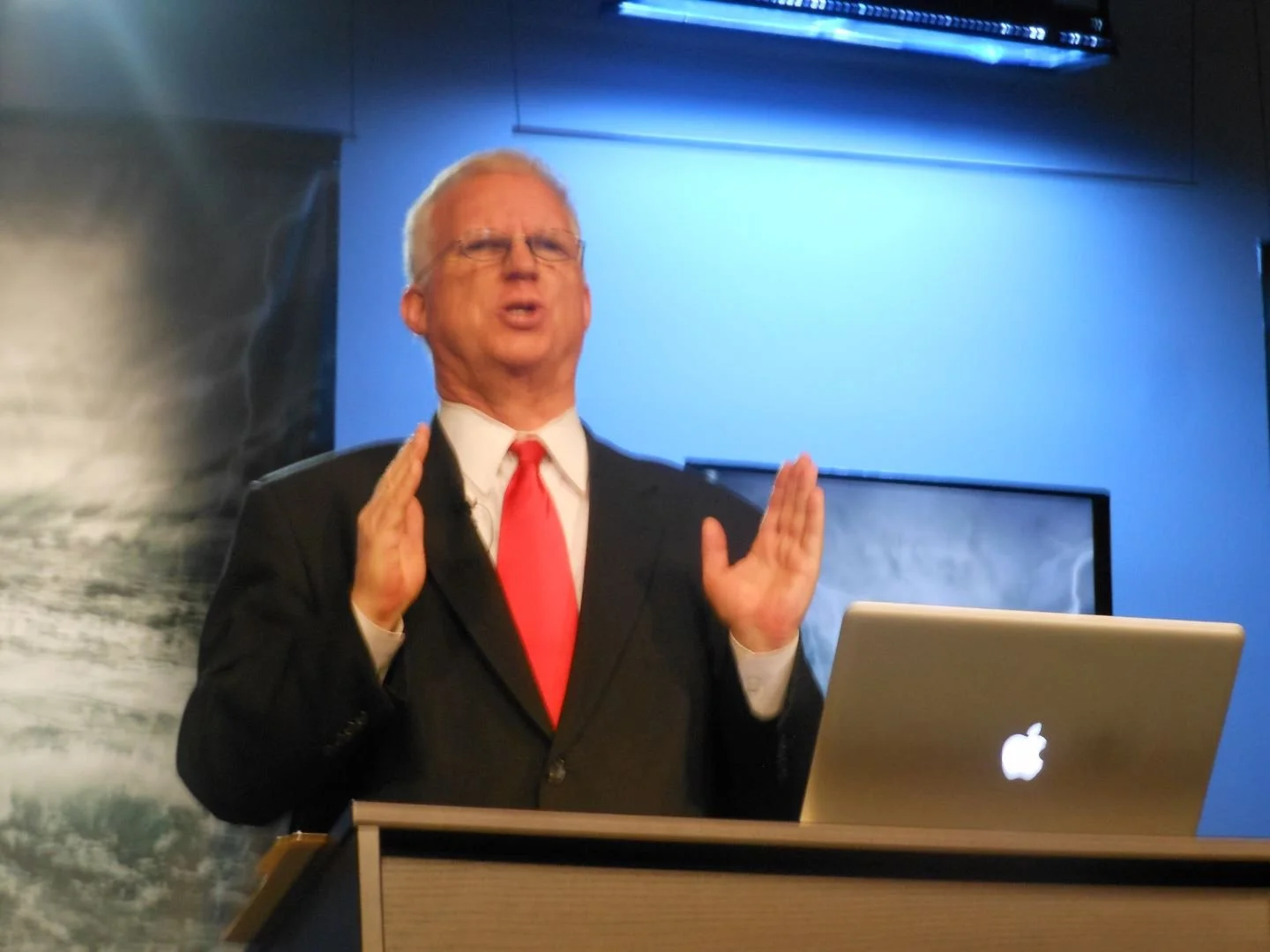
Pastor Kevin Paulson holds a Bachelor’s degree in theology from Pacific Union College, a Master of Arts in systematic theology from Loma Linda University, and a Master of Divinity from the SDA Theological Seminary at Andrews University. He served the Greater New York Conference of Seventh-day Adventists for ten years as a Bible instructor, evangelist, and local pastor. He writes regularly for Liberty magazine and does script writing for various evangelistic ministries within the denomination. He continues to hold evangelistic and revival meetings throughout the North American Division and beyond, and is a sought-after seminar speaker relative to current issues in the Seventh-day Adventist Church. He presently resides in Berrien Springs, Michigan