• About
  • Submit Article
  • Style Guide
  • Writing Agreement
  • Podcast
  • Subscribe
  • Donate
  • Archive
  • Comment Policy
  • Contact
Menu

ADvindicate

11256 Benton Street
Loma Linda, CA, 92354
Phone Number
Reasoning from Scripture

Reasoning from Scripture

ADvindicate

  • About
  • Writers
    • Submit Article
    • Style Guide
    • Writing Agreement
  • Podcast
  • Subscribe
  • Donate
  • Archive
  • Comment Policy
  • Contact

Watch PUC special constituency session live

August 16, 2012 ADvindicate News
PUC-session.png

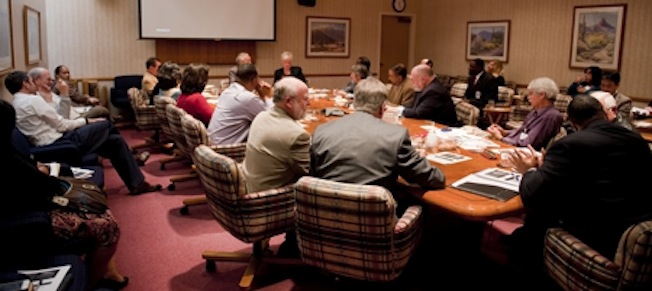
You can watch the Pacific Union Conference's special constituency session live August 19 at 1 p.m. (Pacific Time). A list of the delegates has been published in the July edition of the PUC Recorder. Below is the special constituency session announcement:

Notice of Pacific Union Conference Special Constituency Session

A Special Session of the Pacific Union Conference of Seventh-day Adventists will be held at the Warner Center Marriott, Woodland Hills, 21850 Oxnard Street, Woodland Hills, California, 91367 on August 19, 2012. Registration will begin at 10 a.m., with the meeting beginning at 1 p.m., August 19.

This session is called to consider the following changes to the Pacific Union Bylaws. The proposed changes will enable the union to approve the ordination of ministers without regard to gender, when a local conference requests such approval. [Words highlighted in gray to be deleted; underlined words to be added]

"All In general, the policies, purposes and procedures of this Union shall will be in harmony with the working policies and procedures of the North American Division and the General Conference of Seventh-day Adventists."

The Pacific Union bylaws entitle each local conference to one delegate without regard to the membership count of the conference. Additional delegates are based on a proportional basis, on the count of the membership of the conferences, made at the end of the calendar year immediately preceding the date of the regularly scheduled session.

Ricardo Graham, President

Bradford Newton, Executive Secretary

In News Tags feature, PUC, special constituency session, spotlight, womens ordination

The ASI Convention and ADvindicate

August 15, 2012 Gerry Wagoner
ASIConvention2012_02.jpg

ASI Convention 2012The 2012 International ASI convention arrived in Cincinnati last Wednesday with a reminder that each of us are called to action. The theme was “It’s Time.” And it was. It was time for thousands of believers to gather together for encouragement. It was time for preaching, seminars and re-connecting with those who take the Advent Message seriously. Perhaps we take it a bit more seriously now, after Shawn Boonstra’s Sabbath sermon and Elder Wilson’s evening message the same day. Both were good. This convention was also a first for ADvindicate. We had a booth there for the first time. Judging by the comments from people who visited our booth in the exhibit hall, now is a good time for a website like ADvindicate – a website that appreciates the Advent Message. ADvindicate’s goal is to find ways to strengthen that which God has given us, not tear down the message with unbelief and theological pessimism. The people that I talked to were encouraged by our vision. There were even several rather notable fellow Adventists who stopped by and thanked us for what we are doing. We appreciate them too.

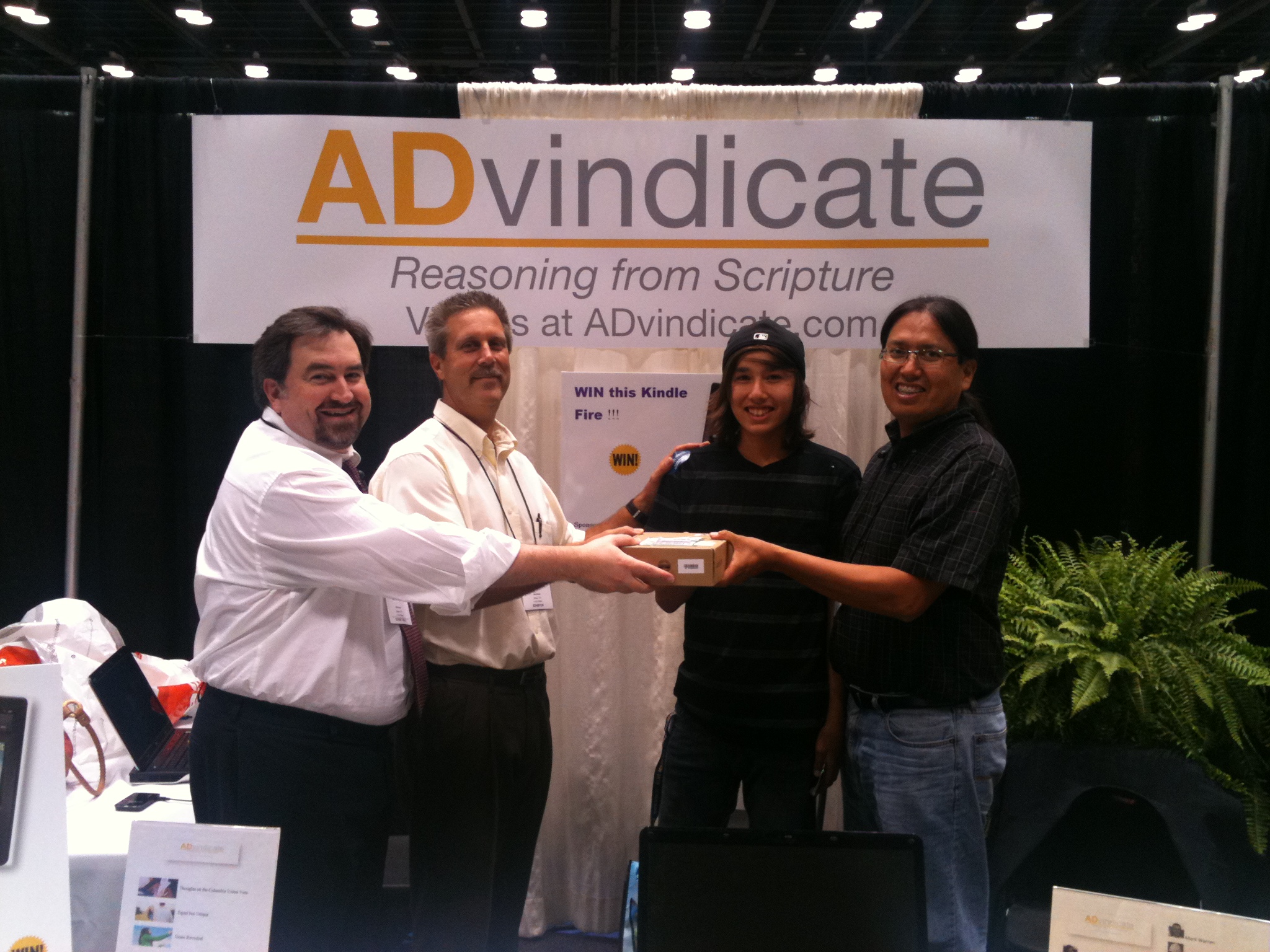
During the convention we gave away a Kindle Fire to a fortunate individual who signed the register. Congratulations to Nehemiah Fowler! Let us know what great things you read with it someday.

ASI Convention 2012 - Kindle Winner

Those of you who couldn’t make it, we appreciate your prayers and contributions to the ADvindicate forum. Walk with the King and be a blessing.

For more information on the ASI Convention, please visit the ASI website.

In News Tags feature, news, spotlight

Two of the Best!

August 12, 2012 Bill Krick
1Circle_Prayer_big_thumb.jpg

Exciting experiences that happened this month in the California Youth Rush Student Literature Evangelism Programs.

California Youth Rush Literature EvangelistsNumerous students have been used to change lives and have themselves been changed by student magabook programs. Each day they come back with all kinds of experiences to tell. Here are two that ranked at the top of the list this summer.

It was a hot day in Porterville, California. As she knocked on yet another door, little did Sheela know that she was about to have an extraordinary experience. As Sheela showed her books to a lady we’ll call Jane, she popped a routine question at her, attempting to make friends: “What church do you go to?” Jane answered, surprisingly, “I don’t go to a church really, but actually I’ve been thinking about attending the Seventh-day Adventist church.” Sheela was in shock. “Really? I’m a Seventh-day Adventist!” she exclaimed. Now it was Jane’s turn to be surprised. “Wow, that’s great! I thought only Mormons and Jehovah’s Witnesses go door-to-door!” she said.

At that point Sheela showed her all the books and Jane said, “You know, Sheela, I have to tell you something. Just before I opened the door I looked through my window and saw that your face was lighted up and shining; you seemed so happy, and it made me want what you have. I knew there was something different about you.”

Sheela showed her Man of Peace (modern English Desire of Ages), Lessons of Love (Christ’s Object Lessons), The Great Controversy, and Final Events DVD by Doug Batchelor. She gave Sheela a $50 donation for the five books/DVDs.

Jane was still in disbelief as she said: “I just can’t believe that a Seventh-day Adventist came to my door. You are an answer to my prayer. I had been praying that someone would come and talk to me about religious things. And the shine on your face is great!” Sheela then had the presence of mind to ask her how she knew about Seventh-day Adventists. Jane replied that she had known about Adventists for a long time, and had been curious about them, adding, “I’ve been reading my Bible, and it seems that what they believe is right.”

Sheela offered Bible studies, which Jane accepted, and then proceeded to tell Jane that she knew of a Seventh-day Adventist family who lived close to her. After they prayed together, Sheela left. Upon hearing this story a few minutes later, her leader thought, “It would be fun to return and sing for her at the end of the night.” So, she took the whole group—seven of them—back to Jane’s house to sing for her. The very next Sabbath, three days later, the lady showed up at church, saying how amazed she was that young people could be so vibrant and on fire for the Lord, singing and working for Him.

Over in Salinas, California, Raeann was surprised by a very welcoming smile, and the words, “You’re here”, as she knocked on a door, like she had hundreds of times before. The lady continued, “You’re the students, right?”

At that moment the husband arrived in a car, and Josie started waving her hands wildly and saying, “The students are here! The students are here!” As he was exiting his car, he exclaimed, “We’ve been waiting for you for so long!” Raeann was somewhat in disbelief. “We’ve been waiting for you students with the books for over a year now,” said Josie. “What other books do you have that we don’t have?”

Then, the story unfolded. Four years ago, a student knocked on Josie’s door, and she rejected him. The next year, she rejected another student. The third year, she got a Final Events DVD by Doug Batchelor; she watched it and loved it. The next year (the previous year), a student, Anna, knocked on her door, and Josie chose The Great Controversy for her husband. In January of this year, her husband read The Great Controversy, reading it through twice; he was now reading it for his third time. Raeann’s leader arrived at this point and began talking to the husband. The husband was so excited. “I have never seen anyone more excited,” she said. “He was waving his hands.” He then asked, “Why don’t you guys come every six months instead of only once a year? . . . How much money do you want for these books? I will pay you good money for them. Is $20 for each one good enough?” He showed her his extensive library of Christian books, and proceeded to choose six of Raeann’s books and give a $100 donation. Raeann told them about the location of the local SDA church and invited them.

The very next Sabbath—only three days later—Josie came to church, and sat with Raeann and her leader. After church, the rest of the students (about 15 of them) met her, and she said to them: “You all never stop doing what you are doing. I rejected the student two years in a row!” She added, “I recently talked to my [Baptist] pastor about the Sabbath, and my pastor told me to leave. . . . The Bible has become alive to me this year more than any year in the last twenty years.” With students gathered around, our pastor prayed for her, and when he finished, she was crying. “This is how heaven is going to be like,” Josie said, “with all these kind of people around you.”

For more information on the California Youth Rush Student Literature Evangelism Programs, please visit their website YouthRushCentral.com.

In News Tags evangelism, feature, literature evangelism, spotlight, youth

Elder Ted Wilson's Appeal for Unity

August 12, 2012 ADvindicate News
tedwilson_cuc.jpg

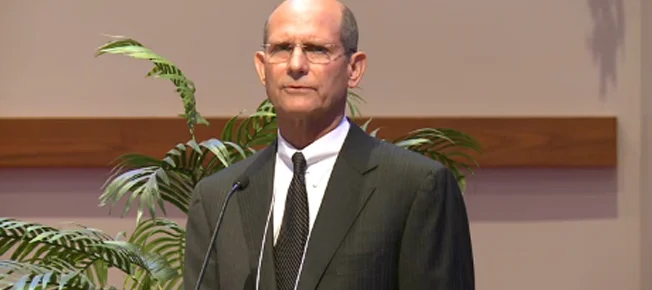
The following video is of Elder Ted Wilson on Sunday, July 29th, at the Columbia Union Conference's 2012 Special Constituency Meeting. The special meeting was called in regards to the motion of authorizing ordinations without regard to gender. Elder Wilson addressed the meeting before the vote. He appealed for unity and encouraged the delegates to wait for the new church study on this issue, which is scheduled to be completed in 2014. Using secret ballots, delegates passed the motion with 209 in favor, 51 opposed, and 9 abstentions.

For the Columbia Union's statements, video recording of the full session, and more, visit the official 2012 Special Constituency Meeting page.

In News Tags feature, leaders, ordination, spotlight, unity, womens ordination

Columbia Union votes ordination without regard to gender

July 31, 2012 ADvindicate News
20120630-102600.jpg

A special July 29 constituency meeting called by the Columbia Union Conference of Seventh-day Adventists voted a resolution: “That the Columbia Union Conference authorize ordination to the gospel ministry without regard to gender.” Using secret ballots, delegates from the eight conferences of the union’s mid-Atlantic United States territory voted 209 in favor and 51 opposed, with nine abstentions. The Columbia Union says it has 135,000 members in more than 700 congregations.

According to a statement issued by the Columbia Union Conference late Sunday, the union executive committee will no longer deny requests from conferences to ordain proven female ministers to the gospel ministry, but their calling will be fully recognized on par with their male counterparts.

“This is not an easy time for the church, but it is the time for the church,” said Dave Weigley, Columbia Union president, following the vote. “We are part of the worldwide church, and we are united in the mission of the Seventh-day Adventist Church.”

Dan Jackson, North American Division president, cautioned, “What we are doing here today not only will impact us personally and as a union but will also impact our world church. I want to say that our primary accountability is to God.”

In extended remarks, Adventist world church President Ted N. C. Wilson appealed to delegates not to move forward with the motion but to wait for the results of a worldwide study of ordination approved last October by the church’s Executive Committee, and expected in 2014.

“I come to you today because I care about matters of conscience,” he said. “I come to you because I care about the unity of the church at large.”

Lowell Cooper, a general vice president of the world church, challenged the premise that union conferences are authorized to make the kind of change envisioned under current denominational polity.  “The idea that the authority and responsibility of one type of organization in the world family can be exercised autonomously and unilaterally is a concept alien to the ethos and practices of the [Seventh-day Adventist] Church,” he told the delegates.

Bill Miller, president of the Potomac Conference and chair of the ad hoc committee tasked with studying this issue, started his presentation of the committee’s report by reiterating that he was a “loyal member of God’s remnant church.” He then recounted the church’s history of discussions and decisions on the issue of ordaining women to gospel ministry.

Shortly after noon, Weigley, who chaired the special session, opened the floor for constituent input. Delegates quickly formed three long lines at the microphones. Many voiced their belief  that all whom the Holy Spirit has clearly called to ministry should be ordained without regard to gender, though several admitted to being conflicted.

Larry Boggess, president of the Mountain View Conference, whose executive committee released a statement opposing the motion, said, “Lest it be misunderstood, I love you, too, even though I disagree with you. If we say we are the body of Christ, then we would act in unity. What we do today will not generate thousands of new members.”

Following the vote, Rick Remmers, president of the Chesapeake Conference, commented, “I appreciated greatly the spiritual tone set today and sensed the love and loyalty for our church.”

“I am so proud to be part of a historic day in the Columbia Union,” said Deborah Hill, a member of the Allegheny West Conference. “We voted on the right side of history and will work very hard to unify not only our union but to work more closely with the General Conference.”

Source: Adventist News Network

In News Tags Columbia, cuc, feature, ordination, spotlight, union, vote, women

ADvindicate booth at upcoming ASI Convention

July 26, 2012 Gerry Wagoner
perspectives.adventist.org_.jpg

Address at ASI ConventionIn less than two weeks, Cincinnati, Ohio, will be filled with committed Adventists from around the world. Only a couple blocks from the Ohio River, the Adventist-laymen's Services & Industries (ASI) convention begins August 8th and ends on the 11th. The atmosphere at ASI is a combination of energy, encouragement, and excitement. And this is exciting: ADvindicate will have a booth there for the first time. The Lord placed it on the hearts of two couples in Ohio to help make this booth happen, and I am grateful to my friend Steve and his wife for their gracious participation in helping to organize this event. I am also grateful to Nancy Wagoner and her untiring support. The booth number is 1022 in the exhibit hall.

David Read and Gerry Wagoner will take turns working the booth during exhibit hours. There will be a drawing for a Kindle Fire, and other materials made available to exhibit hall attendees. Please pray for us, and all who attend the ASI convention.

As they say in Kentucky (just over the river) “Ya’ll come.” It ought to be fun!

For more information on the ASI Convention, please visit the ASI website.

In News Tags asi, convention, feature, news, spotlight

After Lawsuit, Alabama City Agrees To Adventist Literature Evangelists' Return 

July 20, 2012 ADvindicate News
20120630-102600.jpg

Literature evangelists are expected return to the streets of Alabaster, Alabama on July 18, one day after a U.S. District Court Judge in Alabama set March 2013 for a hearing on a Seventh-day Adventist Church challenge to local laws requiring colporteurs to get a permit from the city. Alabaster police issued tickets June 27 to two Oakwood University students who were canvassing there. U.S. District Judge Karon O. Bowdre, during a July 18 hearing at the Hugo L. Black U.S. Courthouse in Birmingham, Alabama, said she was “convinced” the Adventist activity – a longtime staple of church outreach in the United States and other countries – was spiritual and not commercial in nature, according to attorney Todd McFarland, an associate general counsel for the General Conference of Seventh-day Adventists.

In a lawsuit filed with the court, the Adventist Church alleged Alabaster’s “ordinances directly target, and impose a prior restraint upon, speech afforded the highest levels of protection by the First Amendment,” noting, “Courts have routinely rejected governmental efforts to impose this sort of sweeping prior restraint on speech, and particularly so when the speech involved lies at the very core of our constitutional system.”

The Alabaster regulations, which media reports said were enacted in 1994, require filing of an extensive application, without the promise of approval, or even the opportunity to appeal, before activity is slated to begin. The city “may,” according to its regulations, grant such approval, but is not required to do so even if all the conditions are met, the Adventist Church complaint alleges.

McFarland said the student missionaries – often referred to as “Literature Evangelists” – attend church-owned Oakwood University in Huntsville, 122.5 miles north of Alabaster. The school’s summer evangelism teams had planned a door-to-door effort in the Birmingham suburb, and had notified city officials of their plans.

In common with many religious groups, including The Church of Jesus Christ of Latter-day Saints, Jehovah’s Witnesses, The Salvation Army and other Christian and non-Christian movements, Seventh-day Adventists believe it is a basic right to go door-to-door to spread their message. The Supreme Court of the United States has upheld this right in two celebrated cases, 1943’s Murdock vs. Commonwealth of Pennsylvania and 2002’s Watchtower Society vs. Village of Stratton, and Judge Bowdrie cited Murdock in her comments from the bench.

For Adventists, such activity is said to be in fulfillment of what is often called Jesus’ “Great Commission” to His disciples: “go and make disciples of all nations,” as recorded in Matthew 28:19.

According to the legal complaint, “One of the methods by which the Plaintiffs and other members of the Seventh-day Adventist Church communicate their religious views is through door to door solicitation, evangelism and the distribution of free literature about the Seventh-day Adventist faith to interested persons.”

Receiving voluntary donations, the lawsuit says, is often the “first step” in someone’s interactions with, and eventual affiliation with, the Seventh-day Adventist Church.

The lawsuit was filed on behalf of the South Central Conference of Seventh-day Adventists and literature evangelists Nathanael De Canal and Joshua Desire. The tickets against De Canal and Desire, which carried potential fines of up to $500 or a penalty of six month’s imprisonment “at hard labor,” are on hold pending a final resolution of the matter, McFarland said.

By Mark KelLner Adventist Review

In News Tags feature, freedom, lawsuit, literature, religious, spotlight

Church leaders issue an appeal for unity over women's ordination

June 29, 2012 ADvindicate News
20120630-102600.jpg

The world leadership of the Seventh-day Adventists issued an “appeal for unity” to several union conferences that have either taken or are considering independent action regarding the ordination of women to gospel ministry. The request comes in a statement issued June 29, 2012.

An Appeal For Unity in Respect to Ministerial Ordination Practices

Since the beginning of 2012 several union conferences1 have recorded actions expressing support for, or commitment to, the ministerial ordination of women. The world-wide Seventh-day Adventist Church is currently engaged in a study of the theology of ordination and its implications. This study is scheduled for completion by the 2014 Annual Council of the General Conference Executive Committee. At that time the Executive Committee will determine the report which will be given to the 2015 General Conference Session along with whether or not any new recommendation should be considered by delegates to the Session. [Main News Story]

In the light of this current study and the actions of several unions, General Conference officers2, including presidents of the 13 world divisions, have unanimously communicated an appeal for unity in respect to ministerial ordination practices. The appeal calls: 1) for unity in respecting a global church action (i.e. the 1990 and 1995 General Conference Session decisions on ministerial ordination); 2) for each union executive committee to carefully review the far-reaching effects of pursuing a course of action that is contrary to the decisions of the General Conference in session; and 3) for each union to participate in the current study about the theology of ordination and its implication.

1. Respecting a global decision of the Church The world-wide Church recognizes the General Conference in Session as the highest ecclesiastical authority for Seventh-day Adventists. The 19903 and 19954 General Conference Session decisions with respect to granting ministerial ordination to women represent the current voice of the Church in this matter. The actions of certain unions indicate their desire to establish an alternative source of authority for a matter that already carries the authority of the world Church.

As currently understood in the Seventh-day Adventist Church, ordination to the gospel ministry is ordination to serve the global Church. No provision exists for a geographically localized ministerial ordination.5 Consequently the decision to change or modify ordination practices is a global one and necessitates a decision from the world body.

For any union to introduce a different ministerial ordination practice is seen, by the rest of the Church, as readiness to set aside a world Church decision and proceed in another direction. Such actions, taken at the very time when the world Church is engaged in a study and discussion of the matter, pre-empt the process and any decision that might come from it. This creates widespread confusion, misunderstanding as well as erosion of trust and also nurtures doubt about these unions acting in good faith as members of the world-wide family.

Some who would encourage unions to proceed with ministerial ordination for women draw attention to selected statements from a General Conference Executive Committee document.6 As used by these individuals, the statements would indicate that a union has final authority in matters relating to ministerial ordination. The intent of the document from which such statements have been taken is to emphasize the interconnectedness of Seventh-day Adventist denominational structure. The authority and responsibility entrusted to any entity of the Church is exercised within the context of beliefs, values, and policies of the entire Church. Being a part of the global Seventh-day Adventist Church obliges every organization to think and act for the good of the whole and to shun a spirit of autonomy and self-determination.

2. The effects of unilaterally pursuing a different course of action The significance of any union proceeding in a manner contrary to a global Church decision is not limited to the specific action involved (ministerial ordination in the present instance); it touches the very heart of how this Church functions as a global family. The essence of unity in Seventh-day Adventist organizational functioning is the mutual commitment of all organizations to collective decision-making in matters affecting the whole family—and the acceptance of those decisions as the authority of the Church. The action of any union in pursuing a different course of action represents a rejection of this key value in denominational life. Unless this value (i.e. collective decision-making and the acceptance of those decisions as the authority of the Church) is maintained, all other values that contribute to unity are seriously weakened.

For one entity to express its reasoned dissent with a global decision of the Church might appear to some as a legitimate course of action. However, the implications of acting contrary to a world Church decision are not limited to the one entity. Any organization contemplating a course of action contrary to a global Church decision must ask itself, “Is this the pattern of participation in Church life that we wish to establish and recommend for other entities to follow?” “How will we deal with the situation if an organization in our territory should decide to discontinue its participation in one or more matters under which it disagrees with the larger family of organizations?” Mutually agreed upon policies benefit the entire Church and keep it from fragmenting into independent, locally-driven units. They are the reflection of the Spirit-directed will of the body and allow each entity to look beyond itself for the good of the whole body of Christ.

3. Participation in the current study of ordination and its implications General Conference officers welcome and invite unions to participate in the global study of ordination. This study will be the most widespread and thorough study the Church has undertaken on this topic. Earlier studies have been conducted by commissions. This is the first time that a study of ministerial ordination engages the whole Church through the 13 divisions.

Biblical Research Committees in all divisions have been asked to conduct a study on the theology of ordination and its implications. In addition, during 2012, the General Conference Administrative Committee will appoint a Theology of Ordination Study Committee, with representation from all divisions, to oversee and facilitate the global discussion process and to prepare reports for presentation to the General Conference Executive Committee. The Annual Council 2014 will determine what action, if any, should be recommended to the 2015 General Conference Session. Careful thought is being given to ensure that the study and education process is conducted with fairness and thoroughness in respect to examining the theology of ordination and its practical implications.

All unions are welcome to submit their conviction as part of the global dialog on this question. Their voices, along with others, in this matter need to be heard. Now is the time for unions to share their position on ministerial ordination, and the rationale behind it. Doing so will ensure that various perspectives will be clearly understood by the world Church.

The appeal sent by the General Conference officers to certain unions also reflects this Church leadership group’s message to other unions that may be considering similar steps with respect to ministerial ordination practices. The communication concludes: “We have shared with you our deep concerns about the course of action you have chosen. We realize that sharply differing convictions with respect to ministerial ordination for women exist in our global family. We also realize that the passage of time without finding satisfaction for the tensions on this question can give rise to frustration and the erosion of confidence that a timely and mutually satisfactory resolution can be found.”

“We therefore earnestly appeal to you:

1. That your union continues to operate in harmony with the global decisions and global decision-making processes of the Church. 2. That until such time as the Church decides otherwise, your union refrains from taking any action to implement ministerial ordination practices that are contrary to the 1990 and 1995 General Conference Session actions. 3. That the union membership be informed concerning the implications for the entire Church in the event that one entity, for whatever reason, chooses a course of action in deliberate opposition to a decision of the whole Church. 4. That the union actively participates in the global discussion about the Church’s understanding and practice of ordination. The contributions of a union in this discussion can be forwarded to the Theology of Ordination Study Committee through the respective Ordination Study Committee set up by each division.

“Thank you for your willingness to receive and reflect on these things. We join you in diligently and prayerfully seeking to know the will, the blessing and the guidance of God in this and all other matters affecting our life together as a Church and our collective endeavor to advance His kingdom.”

______________________________ 1. At December 31, 2010 the Seventh-day Adventist Church had 60 unions with conference status and 59 unions with mission status 2. The group of 40 officers involved include officers from the Presidential, Secretariat and Treasury offices of the General Conference plus the presidents of divisions who, in additional to being presidents of their divisions are vice-presidents of the General Conference. 3. The 1990 General Conference Session approved that women should be given wide participation in all church activities, including soul winning and pastoral duties, but that “in view of the possible risk of disunity, dissension, and diversion from the mission of the Church” the Session also approved the Annual Council recommendation that ordination of women to the gospel ministry not be authorized. 4. The 1995 General Conference Session action denied the request of the North American Division that the Session adopt provisions on ordination as outlined below: "The General Conference vests in each division the right to authorize the ordination of individuals within its territory in harmony with established policies. In addition, where circumstances do not render it inadvisable, a division may authorize the ordination of qualified individuals without regard to gender. In divisions where the division executive committee takes specific actions approving the ordination of women to the gospel ministry, women may be ordained to serve in those divisions." 5. Information that a number of women serve as ordained ministers in China has been cited as justification, for unions elsewhere to proceed in a similar manner. It has been alleged that the Northern Asia-Pacific Division recognizes these ordinations and has therefore established a precedent for granting ministerial ordination to women. However, these ordinations were not authorized or conducted according to the policies of the Church. Nor are these ordinations approved or recognized/endorsed by the Northern Asia-Pacific Division. The Seventh-day Adventist Church does not have an officially organized structure in China that is comparable to other areas of the world. Government regulations do not permit outside involvement in church affairs within China. The practice, in China, of ministerial ordination for women is acknowledged as a reality that has arisen in China and is beyond the influence of the world-wide structure of the Seventh-day Adventist Church. 6. “The General Conference and Its Divisions”, General Conference Executive Committee, April 2012

ADvindicate is sponsoring a new website, Christ or Culture, to provide biblical, historical, and church support for this position and to address the challenges of the latest effort to compromise biblical truth in favor of social and cultural acceptance.

Please read the material, sign the petition, and forward to your Adventist friends. The support of this petition will be presented to our denominational leaders.

In News Tags feature, leaders, news, ordination, spotlight

Christ or culture: Adventist ordination crisis

June 8, 2012 ADvindicate News
christorculture.png

A segment within the Seventh-day Adventist Church is currently campaigning to change our historic position regarding the ordination of pastors —that only consecrated men should be ordained. In addition, this push to begin ordaining women as pastors is being done in disregard to the world church’s clear policy on this issue. This presents a serious crisis that threatens to fragment our beloved church, create confusion in our homes, and cripple the progress of the three angels’ messages. Your voice here today can help prevent this disunion. For nearly 150 years, the Seventh-day Adventist Church’s position has consistently been that only men should be ordained as pastors. This doctrine has been based on the clear guidance of multiple scriptures, including such passages as 1 Timothy 3:1–7 and Titus 1:5–9.

ADvindicate is sponsoring a new website, Christ or Culture, to provide biblical, historical, and church support for this position and to address the challenges of the latest effort to compromise biblical truth in favor of social and cultural acceptance.

Please read the material, sign the petition, and forward to your Adventist friends. The support of this petition will be presented to our denominational leaders.

In News Tags gc, nad, news, ordination, petition, spotlight, women

Pacific Union committee authorizes women's ordination

May 9, 2012 ADvindicate News
Pacific-union-conference.png

At their March meeting, the Pacific Union executive committee voted to table until May 9 a motion that would immediately approve the ordination of ministers without regard to gender. They also set up an Ordination Study Committee to outline the steps necessary to make gender-neutral ordinations a reality as soon as possible. Today at the La Sierra University Alumni Center, that committee delivered their report to the full executive committee. The committee replaced the original motion with a new one and voted overwhelmingly to call a special constituency meeting, tentatively scheduled for August 19.

The committee voted separately on the main motion, including the preamble. The preamble and main motion were approved by a vote of 42-2. The process, which includes calling a special constituency session, was approved unanimously.

Voted (preamble):

  • Whereas Scripture is clear that the end-time Church is blessed precisely because men and women preach God’s message (Joel 2:28-29 and Fundamental Belief 17);
  • Whereas we are commanded to “act justly and to love mercy and to walk humbly with our God (Micah 6:8);
  • Whereas “There is neither Jew nor Greek, there is neither bond nor free, there is neither male nor female: for all are one in Christ Jesus (Galatians 3:28);
  • Whereas “differences between male and female must not be divisive among us” and “we are to serve and be served without partiality or reservation” (Fundamental Belief 14);
  • Whereas the Seventh-day Adventist Church is co-founded by a woman, Ellen G. White, who remains an authoritative and guiding voice;
  • Whereas the Pacific Union is enriched by Spirit-filled women who are responding to God’s call in our schools, churches and conferences;
  • Whereas the Seventh-day Adventist Church assigns Unions the final decision-making authority and responsibility with respect to ordination (NAD Working Policy L45 05 3, Spring Council 2012 116-12G Report);
  • Whereas the Pacific Union Conference voted its full commitment to Women’s Ordination, August 30, 1995 (reaffirmed May 12, 2010 and March 15, 2012);

Therefore, [main action]

  • The Pacific Union Conference Executive Committee will approve or disapprove candidates for ordination without regard to gender, effective when the Union Bylaws are amended.

The Process

Voted, approval for the following process:

  • Because the Pacific Union Conference Executive Committee is committed to following denominational procedures and processes, and to facilitate the involvement of the entire Union constituency, a special constituency session will be called to consider amendments to the Pacific Union Conference Bylaws to clearly authorize the ordination of ministers without regard to gender.
  • The Pacific Union Conference Bylaws Committee will examine the Union bylaws and suggest amendments to clearly authorize the ordination of ministers without regard to gender.
  • The Pacific Union Conference will provide an informational packet for the delegates, pertinent to the issues to be discussed in the special constituency session.

Both the study committee and the executive committee made it clear that they are committed to following established church processes and procedures. Their recommendations and actions were guided in large part by a summary of church structure prepared earlier this year by the General Conference and distributed at GC spring meetings. The full name of the document is The General Conference and Its Divisions — a Description of Roles and Relationships in Light of Organizational Structure Development, Current Governance Documents, and Practices. That documents makes clear that:

Authority and responsibility in the Seventh-day Adventist Church is not centralized in a hierarchical structure. Instead authority and responsibility is distributed throughout the Seventh-day Adventist Church structure ….

The distribution of authority and responsibility in the Seventh-day Adventist Church is illustrated by the following examples of how and where final decision-making authority and responsibility are located ….

The document goes on the explain that the “final authority and responsibility” for deciding who will be a church member is located at the local church; the “final authority and responsibility” for the employment/assigning of pastors and other workers resides at the local conference; and the “final authority and responsibility” for deciding who will be ordained is officially located at the unions.

The committee also considered that the same paragraphs that declare ordination decision are to be made by the unions, not by the divisions or the General Conference, include this counsel:

It is to be understood that the exercise of authority and responsibility is done within the context of the belief, values, and policies of the entire church. No entity is authorized to exercise its authority and responsibility in a manner that is contrary to the interests of the whole church and its activities in fulfilling its mission.

Obviously the distribution of authority found in the Seventh-day Adventist Church can result in tension between world-wide policy and the “final authority and responsibility” which has been assigned to the congregations, conferences and unions. The GC document has much to say about balancing those centers of authority, especially in the final Conclusions and Recommendations:

The following paragraphs and sentences are chosen from the Conclusion to the GC Spring Document. The full document will be made available in the next few days.

The distribution of authority and responsibility in the Church along with the recognition that “authority rests in membership” presents significant challenges in finding a balance between centralized authority (actions of the global church) and the more localized authority (actions of the constituency) in churches, conferences and unions.

At the same time the church has worked to preserve unity, the effect of church growth has enlarged the understanding of diversity and its rightful place in a worldwide community. To expect that every entity in the world church will look and function exactly like every other entity of its type may in itself become an impediment to mission. The development of structural designs in the history of the church indicates that unity must be built on a stronger foundation than uniformity.

There must be room to recognize the need for a legitimacy of local adaptation of policies and procedures that facilitate mission while not diminishing the worldwide identity, harmony and unity of the Church.

The relationship among the entities of the church is more than a matter of law and policy. Therefore attempts to codify that relationship will always be inadequate. The primary strength of the Church comes not from its structure but from its collective desire to live out a commitment to the Lordship of Jesus Christ. Such a commitment embraces a call to community.

Pacific Union executive committee members made it clear during discussions this week that they are committed to taking seriously the “final” authority and responsibility that the Seventh-day Adventist church has assigned to unions. And they made it clear that their call for a special constituency session is not to be interpreted as a way to delay the ordination of all whom God has called to ministry. It is rather, the result of a commitment to follow church procedures and to make sure the final action, whatever it is, is backed by the full authority that the Seventh-day Adventist Church has assigned to the Pacific Union Conference.

CONTACT:

Gerry Chudleigh Communication Director 2686 Townsgate Road Westlake Village, CA 91361 Mail to: (PO Box 5005, 91359) www.puconline.org Office: 805-413-7286

Source: Pacific Union Conference

In News Tags news, ordination, pacific union, spotlight, women

La Sierra biology professor terminated over creation-evolution controversy

May 9, 2012 ADvindicate News
imgres.jpeg

This press release was issued by Lee Greer and his lawyer Chris Heikaus Weaver. Riverside, CA — May 09, 2012 — It’s not every day that a church-affiliated University terminates a biology professor for proposing a way to teach creation as a theological position alongside evolutionary science in classes on origins, but that is exactly what happened to La Sierra University’s Dr. Lee Greer.

Dr. Greer has been a biology professor at La Sierra University for 5 years and was only one year away from tenure review. Since early 2009, he has seen an ongoing conflict in the blogosphere and on campus over the teaching of evolution in LSU’s biology program. This conflict has created divisions between the University and the Church and even threatened the school’s accreditations with the Western Association of Schools and Colleges (WASC) and the Adventist Accrediting Association (AAA).

During the conflict, Dr. Greer, an evolutionary biologist by research discipline, reached out to conservative students on campus, as well as to conservative Trustees of the University’s Board, and also Church officials, notably the Adventist North American Division Vice President for Education, Larry Blackmer. Consulting with these and other individuals, Dr. Greer drafted an informal “Joint Proposal of individual La Sierra University Faculty and Trustees” that he hoped would balance the interests of the biology faculty who need to teach evolutionary science and students who need to learn it, with the concerns of the Church and constituents, who want the inclusion of creation in this Seventh-day Adventist institution.

Dr. Greer’s Joint Proposal suggested continued inclusion of evolution by “teaching and research in the various disciplines of the modern sciences according to the most up-to-date and rigorous standards of the published science . . . including the data which highlight the strengths and weaknesses of various models.” The proposal also suggested that biology faculty affirm and incorporate “the Biblical concept of creation, including the Seventh-day Adventist understanding of Genesis 1 and 2, as a faith position at the classroom level, when questions of origins are discussed.” The proposal noted that “creation is not a scientific construct. It is a faith construct. The conviction of Divine Creation lies beyond the purview of the methods of empirical science, and cannot be subjected to them. Nevertheless, faith and science can and should interact.”

This proposal was endorsed by the majority of La Sierra’s biology faculty and by four Trustees. Although signed on to by individuals, explicitly not on behalf of the University, the informal proposal was welcomed by the Board chair and also officials of the Adventist Church. The Board of Trustees voted to affirm the document by officially adopting it verbatim as a “curriculum proposal.”

According to Dr. Greer, “I intended the proposal to be a suggested compromise to finally put an end to the conflict over the teaching of evolution on our campus, by safeguarding the scientific integrity of our program, the affirmation of the official denominational position, and the University’s continuing accreditations."

Unfortunately, the Administration’s response to the independent proposal was not positive. “It seemed to me that President Randal Wisbey was upset that biology faculty, such as myself, had independently exercised our academic freedom by proposing a solution,” Dr. Greer said. In addition, three of the four Trustees who signed were removed because of their role in the Joint Proposal. The Administration insisted that the biology faculty sign a hastily-written, official apology memo over the release of the informal proposal. Because of the memo’s mischaracterizations and errors of fact, Dr. Greer refused to sign giving his reasons in summary—despite several warnings communicated to him that failure to sign would place his faculty position in jeopardy. Two months later during the Christmas break 2011, Dr. Greer was notified that his contract at LSU would not be renewed. Furthermore, he was informed that this “does not constitute a ‘for cause’ termination.”

Dr. Greer is convinced that the University terminated him because of the informal proposal. “Before this, things were going positively – the University often let me know how well I was performing. The provost thanked me by letter ‘for the many stellar things which you have done, and continue to do, to enhance the learning experiences of our students.’ The termination of my appointment really came out of the blue, especially since I had been assured shortly before Christmas that no problems were anticipated.” To many it is evident that the issue was neither Dr. Greer’s teaching, his research publications and presentations, nor his service on campus and beyond, including for the City of Riverside, and his widely-reported work on the Navajo Nation.

Kathryn Proffitt, a former LSU Trustee who individually endorsed Dr. Greer’s informal Joint Proposal, agrees with Dr. Greer’s assessment, “For a faculty member to take the initiative to suggest an approach-in-principle to resolve this long-standing controversy, which was acceptable to the Church, was extraordinary. Rather than losing his position, Professor Greer should have been commended. President Wisbey has done a great injustice to Dr. Greer."

Dr. Greer hoped for a fair, expeditious hearing and to return for the new school year in the Fall, after the facts had been revealed. On February 23rd, he filed a grievance which, if successful, would have led to his reinstatement. His expectations were ended when LSU’s lawyer sent a letter that in effect attempted to close the door on the grievance process for Dr. Greer.

This leaves Dr. Greer with little recourse other than filing an action against the University for violating his contract, which guaranteed him complete academic freedom to teach and publish without interference from the University. His attorney, Chris Heikaus Weaver, remains hopeful that such a move will be unnecessary, stating, “Dr. Greer was trying to incorporate creation into La Sierra’s science classrooms in a way that would respect the Church's beliefs, while maintaining scientific integrity. I have to believe that once the University’s Trustees understand this, they will reverse course and let Dr. Greer get back to the teaching and research he loves.”

In News Tags la sierra, lee greer, lsu, spotlight, terminated

Southern Calif. Conference votes for women's ordination

May 6, 2012 ADvindicate News
scc.png

A Southern California Conference (SCC) survey shows significant support for women's ordination from pastors, executive committee members and lay members of the region committees. However, only 45 percent responded to the survey, and of the 71 pastors who responded, 66 percent thought women's ordination was a cultural issue. The SCC voted May 1, 2012, to support ordination of women to gospel ministry and to encourage the Pacific Union Conference Executive Committee to implement its action after receiving the reports from the surveys.

SCC Women's Ordination Survey

2SCC Votes to Support Ordination of Women

In News Tags scc, spotlight, survey, womens ordination

La Sierra University responds to bond discovery

April 20, 2012 ADvindicate News

ADvindicate contacted La Sierra University early this morning requesting a response to the discovery of the bond President Randal Wisbey signed in August 2008: La Sierra Bond Response

In News Tags bonds, la sierra, lsu, response, spotlight, wisbey

La Sierra University professors prohibited from teaching creation

April 19, 2012 Shane Hilde
thaine-b.-price.jpeg

For the last four years, La Sierra science professors have been legally restricted from teaching Seventh-day Adventist beliefs in their classrooms, according to a recently discovered bond document that President Randal Wisbey and Vice President for Financial Administration David Geriguis signed in August 2008. The tax-exempt revenue bonds totaled over 24 million, but the bonds used to refinance the new Thaine B. Price Science Complex were about $17 million. By signing, Wisbey and Geriguis agreed the complex would not be used for sectarian instruction, devotional activities, religious worship or to be connected with any programs of any school or department of divinity:

The Corporation covenants and agrees that no portion of the proceeds of the Bonds will be used (1) to finance or refinance any facility, place or building used or to be used for sectarian instruction or study or as a place for devotional activities or religious worship or in connection with any part of the programs of any school or department of divinity.... (Page D-32)

Page 27 of the bond document says these restrictions will last "for the duration of the useful life of the project financed with the proceeds of the Bonds."

Knowing the terms of the bond might explain Wisbey's reaction to the joint statement published in the Adventist Review October 2011 by six biology faculty and four board members "to affirm and incorporate the church's position on creation at the classroom instruction level." Wisbey condemned the joint statement under the pretense the statement creators had not recognized normal and established governance protocols. However, La Sierra administration was aware of the joint statement prior to its publication. The Associate Provost for General Education and Academic Support at La Sierra Barbara Favorito edited it.

The board later dismissed three of the four board members whose names were on the joint statement, and a few months later Lee Greer was fired.

Because of the actions of a few men, La Sierra University is caught in a covenant agreement, which prohibits it from promoting Seventh-day Adventist beliefs. The consequences of breaking the bond agreement are dealing with a potential lawsuit and/or having to pay the bond principle immediately.

Page 27 Prohibited Use Covenant

Page D-32 Prohibited Use Covenant

In News Tags biology, complex, creation, faculty, la sierra, lee greer, lsu, prohibited, science, spotlight, thaine b- price

[UPDATE] Michigan Conference accused of shunning LSU choir students

April 8, 2012 Shane Hilde
Monthly_Banner_1.jpeg

Charles Scriven, president of Kettering College and chair of the Adventist Forum board, recently accused the Michigan Conference of shunning a La Sierra University choir. Tensions between the university and conference began in 2009 when a website published evidence the university was allowing the theory of evolution to be taught to the exclusion of creationism. A year later the Michigan Conference Executive Committee voted to remove LSU from its list of colleges and universities that qualify for employee subsidy.

A letter dated Aug. 29, 2011, was sent to La Sierra University President Randal Wisbey from the Michigan Conference Board of Education, requesting LSU no longer recruit on Michigan Conference campuses until LSU resolved its problem.

La Sierra's request to sing was initially accepted by the academy principal, and according to La Sierra adjunct professor of music David Kendall, planned months in advance; however, it wasn’t until the principal contacted the office of education in March 2012 that the conference was aware the La Sierra Chamber Singers were coming, according to a phone call with Jay Gallimore.* While university choir tours are recognized as an important element in recruiting, Kendall said the trip was not intended as a recruiting tour. The Michigan Conference though considered the Chamber Singers' performance as recruitment, and the principal declined their request to sing weeks before their performance. It is unknown why the principal waited weeks before the performance to notify the office of education.

President of Michigan Conference Jay Gallimore issued a statement Thursday to conference pastors and teachers, regarding Schriven’s allegations:

We have been getting questions recently concerning the Michigan Conference refusal to allow La Sierra, which teaches theistic evolution, to be allowed to recruit on our academy campuses. A letter dated August 29, 2011, was sent to Dr. Randy Wisbey, president of La Sierra University stating; “Our Board of Education has voted to ask that La Sierra not be present in recruiting on our campuses until the issues of creation and evolution have been resolved.” We recently declined their offer to have their choir sing at one of our academies in light of the above action, because we see that as part of recruitment.

The principal of one of our academies called our office of Education around the first of March 2012 and said that his school had been asked by a La Sierra Choir to sing on their campus. He at first said yes, as he would normally for any of our colleges. But he had second thoughts in light of the above action. Normally our office would not be asked about one of our colleges coming. But the principal’s discernment was right to see a link to the recruitment issue. Educational administrators know that music groups are important to any school’s recruitment.

In light of the vote by our Board of Education, we responded by saying we see it as part of their recruitment and we would not want them performing on our campuses. The Office of Education’s understanding of the matter was straight forward. La Sierra offered to come and we, through the principal, declined their offer to come.

The published premise by an independent magazine that that we are somehow “punishing” their students because we declined their offer speaks for itself. How did they, the promoters of faith destroying evolution suddenly become a “victim” of those who are trying to protect the faith of their children? Is a mother bird to be condemned for flapping her wings in the face of a threat to her nest? We do not want our youth being recruited in any way by any institution that continues to defy the nearly unanimous vote in 2010 of nearly 2300 delegates in General Conference Session. That vote directed that all Seventh-day Adventist schools of higher learning to teach and support Creation as given in Genesis. The action was very clear. La Sierra’s continued action of teaching and supporting theistic evolution is also very clear. We offer no apologies for endeavoring to protect the faith of our youth.

*Comments from David Kendall and Jay Gallimore added.

In News Tags choir, lsu, michigan, spotlight

One union says no to women's ordination

April 2, 2012 Shane Hilde
southern-union.png

Southern Union Conference says no to women’s ordination. The executive committee voted Thursday to keep in harmony with the Seventh-day Adventist Church’s decision not to ordain women to the gospel ministry:

The Southern Union Conference, following the scriptural mandate of the priesthood of all believers, intentionally chooses to continue its long-held commitment to supporting, encouraging, empowering, and celebrating the involvement of women in ministry. However, we will do so only in harmony with the Seventh-day Adventist World Church as expressed by actions taken during the General Conference in business session.

As the largest union in the North American Division, this action could be a potential hindrance to the recent thrusts from the Mid-America, Pacific and Columbia Unions to begin ordaining women as pastors.

It would appear some church leaders are taking seriously NAD President Dan Jackson’s call to “become more intentional in the development of pathways to ministry for female pastors.”

The Mid-America Union was the first, voting to ordain women in its March 8 executive committee meeting. What followed was a flurry of similar actions.

After the Columbia Union’s decision to affirm its request to the NAD to ordain women, the union’s Potomac Conference voted to review its bylaws in order to enable women’s ordination. A week after the Pacific Union affirmed their commitment to ordain women, the union’s Southeastern California Conference voted to drop “commissioned-ordained” from their ministerial credentials in favor of just “ordained.”

The 1989 Role of Women Commission recommended not to ordain women as pastors due to “widespread lack of support” and “the possible risk of disunity, dissension, and diversion from the mission of the church” (Adventist Review, July 13, 1990, p. 15). This didn’t stop the NAD from trying to make a variance for itself.

In 1994 the NAD recommended through the Annual Council that each division be given the right to ordain individuals within its territory, but the Annual Council voted to refer the NAD’s request to the 1995 General Conference Session; however, July 5, 1995, the NAD’s recommendation was rejected -- 1,481 to 673.

Time will tell whether the remaining five NAD unions will vote to stay in harmony with the world church or not.

In News Tags ordination, southern, spotlight, Unions, women

Southeastern Calif. Conference removes 'ordained-commissioned' from ministerial credentials

March 22, 2012 Shane Hilde
Picture_of_discussion_large.jpeg

FOR IMMEDIATE RELEASE CONTACT: Enno Mueller, Interim Communication Director Southeastern California Conference 951.509.2258 enno.mueller@seccsda.org

March 22, 2012 (Riverside, CA) – The Executive Committee of the Southeastern California Conference voted today “to remove the term ‘Ordained-Commissioned’ and replace it with the term ‘Ordained’ on all ministerial credentials, regardless of the gender of the credential holder.” This is effective immediately.

Since 2000 the conference had issued “Ordained-Commissioned” ministerial credentials to men and women.

The committee believes this step will enable all pastors to better fulfill the conference’s mission statement, which is the expansion of God’s kingdom through preaching, teaching, publishing and living of the everlasting gospel throughout the cross-cultural communities of its territory.

###

Southeastern California Conference is the administrative headquarters for the more than 70,596 members of 156 churches and companies. The conference employs 177 pastors that hold ministerial credentials, of which 10 are female. The conference territory encompasses the Imperial, Orange, Riverside, San Bernardino and San Diego counties. Southeastern California Conference is one of seven conferences that make up the Pacific Union Conference, which has approximately 222,000 members and is one of nine union conferences that form the North American Division. The North American Division has more than 1 million members.

In News Tags ordination, secc, spotlight, women

The One Project makes Jesus center of theology

February 28, 2012 ADvindicate News
The-One-Project.png

The annual gathering of The One Project has its roots in Japhet De Oliveira’s 2009 cancer diagnosis, which he says was a wake-up call. With the threat of a worsening sickness looming over him, De Oliveira met with a support group for two days in a Denver hotel in 2010. He and four fellow pastors revealed and examined issues in their lives. Now, his cancer in remission, De Oliveira has seen that small group grow into an annual gathering of hundreds of Seventh-day Adventists seeking to reconnect with Jesus in their personal and corporate worship.

This year’s gathering of The One Project on February 13 and 14 brought more than 700 people to Seattle for conversations on practical applications of Jesus’ ministry in their own lives, churches and communities. De Oliveira hopes it’s an environment where people can honestly look at their own priorities, examine the core of Christianity, and promote Jesus in their theology as Seventh-day Adventists.

For some, it’s a place to challenge and even question one’s own beliefs.

“We’re trying to create a safe place to say Jesus is the center of our church and always has been,” said De Oliveira, chaplain for missions at Andrews University in Berrien Springs, Michigan. He's especially looking to support those who may become frustrated with the church.

“We love our church. I really do believe that God has called the Seventh-day Adventist Church and I’m tired of losing people when we work so hard to bring them in,” he said.

The One Project is short on programming and long on discussions. De Oliveira says the event format grew out of his wish to make a gathering similar to the best part of the numerous conferences he attends each year – talking with people individually. A small stage is set in the middle of a banquet room and speakers are allowed 20 minutes to present. The event is then geared toward the 40 minutes of discussion at each table following the speaker.

“I go to so many conferences and so many meetings and honestly the best part is meeting with someone over lunch,” De Oliveira said. “We didn’t want to have another event that’s packed with programming all day.”

The gathering is also short on exhibitors. The only ones allowed are publishers.

“By reading people will learn and change and transform their lives,” De Oliveira said.

Sam Leonor, senior chaplain at La Sierra University, highlighted the 1888 meeting of the Adventist world church body at General Conference Session in Minneapolis, Minnesota, when leaders discussed righteousness by faith. “From that meeting in 1888, Adventists emerged re-focused on Jesus: crucified, living, and coming again," Leonor said.

Dr. David Kim, a family practice physician from Atlanta, said The One Project gathering was long overdue. “I grew up in a legalistic Adventist culture where the three R's dominated – rules, regulations, and rituals. Missing was the biggest R of Christianity – a relationship with Jesus.”

The original meeting in Denver in July of 2010 brought the five pastors together for support and soul searching. De Oliveira admits he had “sort of lost [his] way," focusing on success as a pastor and not caring enough for his family or health. “I would only read the Bible to prepare sermons,” he said.

The original five were De Oliveira; Leonor; Alex Bryan, pastor of Walla Walla University Church; Tim Gillespie, young adult pastor at Loma Linda Church; and Terry Swenson, senior chaplain at Loma Linda University.

It was a real honest conversation,” De Oliveira said. “Some crying and a lot of praying. We said, ‘let’s do this at least once a year.’”

The group agreed to meet annually to focus on Jesus. Each invited friends for a similar meeting the following year in Atlanta. More than 170 people showed up.

For that 2011 gathering in Atlanta, participants may not have fully understood what they were coming to, De Oliveira said. They were each asked to read the four gospels and the book Desire of Ages, authored by Adventist Church co-founder Ellen G. White. The invitation then was simply, “Come have a two-day conversation about Jesus.”

The conversation continues later this year in Australia and Denmark, and next year in Chicago. For more information, visit: the1project.org.

By Ansel Oliver (additional reporting by Bernadine Delafield and Suzanne Ocsai) Source: Adventist News Network

In News Tags jesus, one project, spotlight

Survey of Adventist ‘opinions, attitudes and spiritual life patterns’ coming to local churches

February 24, 2012 ADvindicate News
online-surveys.jpeg

More than 60 percent of Seventh-day Adventists worldwide are women. Less than 40 percent of American Adventists study their Bible once a week. Regularly cited at Adventist board meetings and business sessions, these and other so-called church statistics are not actually known to be factual. Many familiar “facts” might better be classified as “anecdotes, hunches and instincts,” says Adventist researcher David Trim.

Trim, who directs the world church’s Office of Archives, Statistics and Research, wants to see anecdotal evidence replaced by “actual data.” Beginning this year, his office will oversee a major research project to survey the opinions, attitudes and spiritual life patterns of Adventist pastors, church members, institutional employees and college and university professors worldwide.

“We need to know what is actually happening in the church, not just what we’d like to be happening,” Trim says. That knowledge can equip church leaders to use money and resources more judiciously and effectively, he says.

“We’re doing this because we want to do ministry and mission better. We want to be better stewards of what God has given to us, and we want to be more effective in discipling and winning souls,” Trim says.

It wasn’t until last year that top church officials first voted to establish an ongoing budget for Adventist research meant to inform the church’s strategic plan. Previously, Adventist research was conducted sporadically, with limited focus and funding, and almost exclusively in North America, Trim says.

This time around, the plan is for a “rigorous” survey carried out in each of the church’s 13 world divisions, Trim says. Using the new research budget, his office has contracted with research teams at Adventist universities in North America, Europe, Africa, Southeast Asia and Australia. Each team has demonstrated research “expertise and experience,” Trim says. While much of the anonymous polling will take place this year, some surveys may continue into early 2013, with full results due back at world church headquarters by June of 2013.

Survey questions will go beyond age, gender, ethnicity and other statistics-based research to ask about attitudes and opinions on spiritual life, fundamental beliefs and values, church leadership, Adventist institutions and fellow members, among other topics.

“The Adventist Church is committed to a strategic planning process that provides direction based on a body of evidence,” says Michael L. Ryan, a world church general vice president and vice-chair of the church’s Strategic Planning and Budgeting Committee.

“All strategic planning is really only for one reason: How do we better advance the mission?” Ryan says.

How beneficial the results are depends largely upon whether Adventists worldwide fully engage in the survey, Trim says. There’s no way to track survey results back to individual respondents, so researchers are hoping members will feel confident in giving honest answers -- “not what you think we’d like to hear,” he says.

“We understand that people will not always be doing what we wish they were doing. We understand that people are not necessarily believing what we want them to believe. And we understand that often they won’t be feeling very happy with us,” Trim says. “There’s going to be what will be perceived as bad news. But we want to know this so we can do a better job.”

In some cases, survey results might spur church leaders to launch programs that would “modify our behavior and practices,” Trim says. Other results may prompt better communication between leaders and members.

“If people are unhappy with an area that’s fundamental to our faith, then we can educate and explain to members why this is essential,” Trim says.

While he expects that much of the research will be published by Adventist scholars, Trim says some of it will remain confidential.

“My hope is that in fact we would not only get answers to really important questions, but -- as a side product -- we would also increase the research capacity of the church,” Trim says.

Many Adventist researchers have demonstrated that they can produce “good, rigorous research,” and Trim is keen to see them given “time and space” to benefit the church.

“I think at times we have made decisions based on who can give the best speech at a [church business meeting]. Somebody who gets up and has a burden on his heart and says, ‘Brethren, I feel we should do thus and so,’ and he’s eloquent, he’s impassioned, and he uses all the right Adventist buzzwords and everybody says, ‘Amen, vote the money.’ And often nobody asks, ‘Is this really reflecting a need wider than this one person’s perception?’” Trim says.

More and better Adventist research will equip leadership to use church money and resources in the best possible way rather than the most immediately appealing way, Trim says.

He also hopes the church’s growing commitment to research will help boost member confidence in Adventist leadership. They’ll know that research is steering leadership toward better informed decision-making and, ultimately, better methods of spreading the Adventist hope.

Church leaders expect the first wave of surveys to begin by the end of April.

By Elizabeth Lechleitner Source: Adventist News Network

In News Tags sda, spotlight, survey

Unauthorized wording change allowed female conference presidents

February 7, 2012 Shane Hilde
nad.png

A one-word revision in 2009 of Working Policy E-60 allowed for female ministers who are commissioned to serve as conference presidents within the North American Division. The revision, which added the word "commissioned," was voted in 2009 by the North American Division Executive Committee (NADCOM). However, after a review of the General Conference Constitution, working policy, and church manuel, NAD's legal counsel found that NADCOM did "not have the right to establish policies which are out of harmony with the General Conference Model Constitution or General Conference Working Policy." This means the North American Division Committee did not have authority to vote the inclusion of the word "commissioned" into the E-60 Policy, because it was out of harmony with the General Conference Working Policy.

In his letter to the full NAD committee, NAD President Dan Jackson said, "The editors will be directed to omit the word 'commissioned' from the E-60 Policy contained in the 2011-2012 edition of the NAD Working Policy."

He added, "In bringing this matter to the floor in 2010 and 2011 we were doing so under the assumption that the North American Division had a constituency separate and distinct from the General Conference. Unfortunately, we were wrong and we sincerely apologize."

Read the North American Division press release.

In News Tags dan jackson, e60, nad, spotlight
← Newer Posts

Recent
IS BELIEF IN ELLEN WHITE’S PROPHETIC GIFT MERELY OPTIONAL FOR SEVENTH-DAY ADVENTISTS?
Nov 28, 2025
Kevin Paulson
IS BELIEF IN ELLEN WHITE’S PROPHETIC GIFT MERELY OPTIONAL FOR SEVENTH-DAY ADVENTISTS?
Nov 28, 2025
Kevin Paulson
Nov 28, 2025
Kevin Paulson
WHY LAST GENERATION THEOLOGY IS BIBLICAL
Nov 20, 2025
Mark Finley
WHY LAST GENERATION THEOLOGY IS BIBLICAL
Nov 20, 2025
Mark Finley
Nov 20, 2025
Mark Finley
OF CREEDS, CANCEL CULTURE, AND THE U.S. SENATE FILIBUSTER
Nov 14, 2025
Kevin Paulson
OF CREEDS, CANCEL CULTURE, AND THE U.S. SENATE FILIBUSTER
Nov 14, 2025
Kevin Paulson
Nov 14, 2025
Kevin Paulson
THE CONTEXTUALIZATION TRAP
Nov 7, 2025
Kevin Paulson
THE CONTEXTUALIZATION TRAP
Nov 7, 2025
Kevin Paulson
Nov 7, 2025
Kevin Paulson
PROTECTING WHAT IS MOST IMPORTANT
Nov 7, 2025
Ted N.C. Wilson
PROTECTING WHAT IS MOST IMPORTANT
Nov 7, 2025
Ted N.C. Wilson
Nov 7, 2025
Ted N.C. Wilson

ADvindicate Inc. Copyright © 2012-2022. All Rights Reserved. TERMS & CONDITIONS | PRIVACY POLICY