• About
  • Submit Article
  • Style Guide
  • Writing Agreement
  • Podcast
  • Subscribe
  • Donate
  • Archive
  • Comment Policy
  • Contact
Menu

ADvindicate

11256 Benton Street
Loma Linda, CA, 92354
Phone Number
Reasoning from Scripture

Reasoning from Scripture

ADvindicate

  • About
  • Writers
    • Submit Article
    • Style Guide
    • Writing Agreement
  • Podcast
  • Subscribe
  • Donate
  • Archive
  • Comment Policy
  • Contact

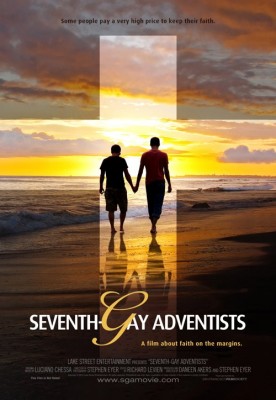
A letter to 'Seventh-Gay Adventists' interviewees

May 5, 2012 Wayne Blakely
know-his-love.png

Do not be deceived: God cannot be mocked. A man reaps what he sows. Whoever sows to please their flesh, from the flesh will reap destruction; whoever sows to please the Spirit, from the Spirit will reap eternal life. Let us not become weary in doing good, for at the proper time we will reap a harvest if we do not give up. Therefore, as we have opportunity, let us do good to all people, especially to those who belong to the family of believers. Galatians 6:7-10

Regardless of your position as individuals in the film "Seventh-Gay Adventists," I commend you for your honesty and boldness in sharing what has undoubtedly been a difficult walk for each of you. Without question God loves you. And as a child of God, I love you with His love also.

The fallout from the church’s silence on this biblical issue has been devastating. I was a victim of Satan’s lies and deceptions as well. There was no hope or help delivered from the church during my childhood, teenage years and adult life. Because of this silence I was propelled into a sensual abyss. I desperately wanted to be wanted, needed and loved. Yet in the midst of Christ’s believers, I was isolated, alienated and rejected. The loneliness was overwhelming and it took very little to tempt me with the feelings that resulted in “acceptance” by the gay community.

In the spring of 2009, I was struck with a contemplation one day that was inspired by the Holy Spirit without any question whatsoever. God spoke to me and asked me to consider the relationship that He had desired from me all along. Unquestionable clarity was revealed to me. It was not about me. I had had it all backwards. It is about Jesus Christ, my redeemer and creator and how to live according to His plan. Not mine. As I surrendered fully to Him, He revealed truth after truth and gave me strength to begin to continually abide and depend on Him. Each day He revealed more and more of His love to me. As I studied and prayed, I wondered how I could have missed what He had wanted to convey to me since childhood. Satan had deceived me with lies of being unwanted, unloved and unimportant. My day of rejoicing had arrived.

I gave myself to Jesus Christ and became a “New Creation” in Him (2 Corinthians 5:17). This requires dying to self daily. I didn’t have any idea that the church still seemed to be in the dark regarding how to reach out to those with same-sex attraction. We need to consider here that there has been a hundred and fifty year history of silence and ignorance. What we don’t talk about, grows like a bacteria in the dark. In fact during the silence, an entire culture and community of gays developed.

Emerging victorious in Jesus, I began to openly share the clarity revealed to me by God and His Word. Now if we don’t believe that God’s Word is inspired by Him, we are at great risk. We then might as well believe in anything. But God’s Word is the same yesterday, today and tomorrow. Matthew 24:3, Hebrews 13:8. If we don’t believe God’s Word, this is where the danger begins.

In the fall of 2009 I was invited to share my testimony at Andrews University during the conference on Marriage, Homosexuality and the Church. Daneen Akers and Stephen Ayers, (producers of "Seventh Gay Adventists") were present at the conference and their work had begun on the film. They heard my testimony and I had contacted them about the film, not realizing the intended angle. By January, it seemed apparent that they were not seeking any testimonies from same-sex attracted individuals who have been redeemed and are choosing to live sexually pure through Christ.

I wrote an article for the Adventist Review which appeared in the April 15, 2010 issue conveying my concern that the film would not represent those who have given their lives to Christ and live sexually pure. The film’s producers contacted me and the Review’s editor asking for a retraction to be printed. Since this film is about loving those who are same-sex attracted, my question is why haven’t they given a voice to those who also suffered so many years of alienation by the church, but have returned to worship God and interact with His family while living a sexually pure life?

So this brings us to the core of what the film is about: God’s approval or disapproval of homosexual sex. If you read His Word there is no question as to where God stands on this issue. I was recently contacted by a “Gay Christian” who pointed out to me that God loves him and his same-sex partner just the way they are, and that they are familiar with the nine “hate verses” regarding homosexuality in God’s Word. Our God is a God of love and He has not compiled “hate verses,” but has given instruction on sins that are displeasing to Him. Due to the fact that gays and homosexuals have not seen the reflection of God’s love in His people, one can begin to realize why more and more alienated souls have gathered together in their spiritual darkness and created their own truths and are seeking to manipulate God’s approval.

But God’s Word is clear about His desires. He asks that we cast all our burdens upon Him. He asks for our trust and our faith regardless of what our feelings are telling us. There are a lot of feelings that come naturally to people that wouldn’t meet God’s approval much less man’s approval. But for some reason, many are seeking to make an exception for this clearly defined sinful behavior.

With such strong feelings of desire, lust, love, etc., Bible-banging is not going to make any of those feelings less intense. So what actually brings a soul into living according to God’s will? We have got to see the reflection of the love of Jesus in those who claim to be His children. Leading a soul to Christ must be done gently and lovingly under the guidance and direction of the Holy Spirit.

John 8:32 says, “Then you will know the truth and the truth will set you free.” It doesn’t say your feelings will set you free. But if we are not personally and intimately connected to Christ, we are not likely going to be able to help a struggling soul engage with Him in the relationship He intended.

Jesus loves each and every one of us as His own precious child. A child for whom He shed blood and died for while we were still sinning (Romans 5:8). What are we willing to give up for Jesus? Every mention of homosexuality in God’s Word is in a negative connotation. There is no sanctified instruction from God for homosexual unions as there are for unions between a man and a woman. Why would one even venture to take over for God? Doesn’t this sound much like Lucifer saying that he knows better, or has a better plan? Do you see the terminal risk involved? Jeremiah 17:9 says “The heart is deceitful above all things and beyond cure. Who can understand it?” We cannot afford to trust our feelings, especially under the duress and deception of Satan.

Sin is natural. We were all born with it. Choosing Christ is unnatural. It is everything that Satan claims is impossible. We are at the end of this great controversy between Christ and Satan. We are exactly where Christ has told Satan there will be a people who will remain steadfast in truth and trust regardless what they feel. “I waited patiently for the Lord; And He inclined to me, And heard my cry. He also brought me up out of a horrible pit, Out of the miry clay, And set my feet upon a rock, And established my steps. He has put a new song in my mouth— Praise to our God; Many will see it and fear, And will trust in the Lord” (Psalm 40: 1-3).

Without self-denial and without a love-relationship with Jesus stemming from humility, we will fail to see His plan for us.

Dear precious children of God, this is not a constructed prayer that begs for the same-sex attracted person to miraculously become straight. This is a humbling of ourselves before our Creator and asking Him to help us fall more in love with Him each day. Thy will, not my will. Lay your heart in His hands. Surrender completely to Him and let Him make you a “New Creation” in Him. Allow the change to be one that draws you to holiness. Then listen as He guides and directs you. Yes… it’s possible. He may want you to live a celibate life for Him, whether you are attracted to the opposite sex or the same sex. But let Him decide what He wants for you that is in accordance with His Word. Insisting that we know better than Him will only align us with the enemy.

Is it painful? Sometimes. Sometimes my carnal nature just wants to be next to warm flesh that says I love you. But Jesus would rather that I know He loves me. His love, and my trust in that love, brings eternal life and a relationship that will grow forever and ever. Shaping my relationships around what currently feels or seems good, ends here. God is seeking those… those precious few who will make Him their God and obey Him out of love. These are the ones He wants to spend eternity with. Do you see the difference? Can you see how always putting self first is too dangerous for God to allow?

I want you to know with all my heart, that with Christ all things are possible to them that love Him (Philippians 4:13), all things that are according to His plan, not ours. Job endured horrendous trials and mental pain. As we have been given Job as an example, how can we seek our own pleasure in this modern age? How can we not come to God and say, "Lord, I am yours; do with me as you will. Make me a servant of yours?” If that sounds impossible to you, think about it. Pray about it. Invite Him to take control of your life. He’ll do it! I promise! There isn’t anything that He won’t do for you that is better than what you can possibly imagine for yourself. But be careful not to play God. Be careful not to listen to the power of suggestion rather than the love and truth of Jesus.

Experience this: "you may declare the praises of him who called you out of darkness into his wonderful light” (1 Peter 2:9). He deeply desires a one-on-one intimate relationship with you. He died to save you. He knew you and chose you … before you were born.

I am passionate about God’s love and redemption regardless of the sin. I want to ask you, whoever might be reading, whether you have been in the church your whole life or if you have shaped your life around your own truths and feelings, to consider this, forgive and seek forgiveness. Everyone of us are ignorant. We have much to learn. Let’s heal together. Not a single person on this earth can claim perfection in and of their own. Jesus offers us His righteousness if we will accept it. It is a lifelong transforming process. But He asks us to model ourselves after Him. Live as He lived. Resist temptation. Surrender. Abide in Him.

As for the film “Seventh Gay Adventists,” ask God to put love in your heart that will draw all sinners to Him, not condone their sin. Be careful not to put your own salvation at risk by sympathizing with the sin rather than the sinner. Love deeply with the love of Jesus. Love is a two-way relationship. Because of our love for Christ, He will grow us and we will want to obey His commands. He is righteous and He is just. He is the Almighty.

If you are a pastor, leader or teacher and you are interested in presentations that exemplify the changing love of our beautiful Savior through those He has redeemed, please do not hesitate to contact me. Four ministries under the umbrella, "Coming Out Ministries," are available to come to wherever you are. We give weekend presentations, week of prayer, and college presentations that bring to light the changing power of God.

This article originally appeared at Know His Love as "Seventh Gay Adventists--Movie vs God's reality." It is reprinted by permission of the author.


Tags adventist, gay, homosexual, seventh gay adventist, spotlight

Southern Calif. Conference votes for women's ordination

May 6, 2012 ADvindicate News
scc.png

A Southern California Conference (SCC) survey shows significant support for women's ordination from pastors, executive committee members and lay members of the region committees. However, only 45 percent responded to the survey, and of the 71 pastors who responded, 66 percent thought women's ordination was a cultural issue. The SCC voted May 1, 2012, to support ordination of women to gospel ministry and to encourage the Pacific Union Conference Executive Committee to implement its action after receiving the reports from the surveys.

SCC Women's Ordination Survey

2SCC Votes to Support Ordination of Women

In News Tags scc, spotlight, survey, womens ordination

'Seventh-Gay Adventists' film an emotional appeal, not a biblical one

May 4, 2012 Shane Hilde
Seventh-Gay-Adventists.jpeg

Seventh-Gay Adventists, a documentary film advocating for the acceptance of gays and lesbians in the Seventh-day Adventist Church, asks Adventists to think twice about what it means to love their neighbor. The independent film follows three gay and lesbian individuals, as they attempt to reconcile their Adventist identity with their sexuality. David, Marcos and Sherri express their struggles with coming out in an Adventist community, yet attempting to remain in it. All of them relate that at one time they had tried to become straight, but with no success. David tried for five years, eventually leaving fellowship with the Adventist church and finding a non-denominational church with his new partner Colin.

Marcos also leaves the church after being fired as a minister for cheating on his wife with another man. He eventually finds and begins attending Second Wind, a church created by Greg & Shasta Nelson. Later in the film the church closes for financial reasons, and seizing the opportunity, Marcos realizes his dream of being a pastor again and begins his own church.

Sherri and Jill’s story is different because they continue to fellowship with a Seventh-day Adventist church. They tell of the mixed reactions they received from members, but that over all, the church has been very accepting, even allowing Jill to head up the new Adventurer club, which no one was willing to lead out in. There is some initial apprehension when their current pastor Loren Seibold leaves, because they are unsure how the new pastor will treat them. Their eldest daughter is baptised by the new pastor later in the film.

Producers and married couple Daneen Akers and Stephen Eyer do a masterful job at provoking an emotional sympathy for the struggles and pain each couple experienced at the hand of individuals and leaders within the church.

“The ultimate question we wanted to ask is how do we treat each other,” Eyer says. “We wanted to begin a conversation that would break stereotypes, and allow gays to tell their story, and not just have a film talking about gays.”

Akers and Eyer originally had planned to do an issues film, inspired by the political buzz generated by Proposition 8 in California. The proposition says only marriage between a man and a woman is valid or recognized in California. They initially were angry with Proposition 8, but after delving into the personal stories they were following, they decided to tone the film down and focus exclusively on the individuals.

“We wanted to start a thoughtful conversation through story,” says Akers.

The couple spent three years following the lives of about 12 individuals, eventually narrowing it down to the three seen in the film.

Stories are a powerful form of propaganda. The film tells stories in a very non-confrontational style, but the message is loud and clear. With the exception of a few intimate scenes of the couples kissing and a protracted scene of David receiving a backrub from Colin without his shirt, there’s not much to take offense at. The film shows the very mundane activities of each couple. The stereotypes of gay and lesbians as uncommitted, promiscuous sex fiends are absent.

While the film did produce some food for thought, the manner in which the subject is presented is biased against the Seventh-day Adventist Church’s understanding of the biblical view on homosexual behavior. The film is deceptive and artful in its normative presentation of homosexual behavior. It presents homosexual behavior in the most benign way with little regard for the plain texts in the Bible, which prohibit it.

The premise of the film shows you can be gay and Adventist. However, it is impossible to reconcile homosexual behavior with being a Seventh-day Adventist Christian, and here is where the film completely misses the boat. Christians cannot identify with sin while calling themselves Christian. Paul said in 2 Corinthians 5:17, “Therefore if anyone is in Christ, he is a new creature; the old things passed away; behold, new things have come” (NASB). A gay Adventist is an oxymoron. When we’ve died to self and become a new creature in Christ, we will no longer identify ourselves with the sins of our past. Yet the film attempts to place sexual identity and the desire to be with someone over the Bible and our need to place God’s will before our own. It’s not a film about dying to self and coming into a loving and obedient relationship with Jesus, it’s about taking any measures to please and appease self.

Consider Akers, a fifth generation Adventist, who hasn’t attended an official Adventist church in years. Due to their work on this film, Akers and Eyers have found it difficult to find a church to attend, according to Akers. While she and her husband appear to identify themselves with the Seventh-day Adventist Church, they are opposed to the church theologically regarding homosexuality, which puts them at a disadvantage in the conversation about the intersect of Adventism and homosexuality.*

“Ultimately it’s a question of hermeneutics--how do we interpret the Bible,” Akers said during the Palm Springs screening.

She couldn’t be more correct, but the film doesn’t address what the Bible says with any depth, relying exclusively on emotion appeal.

And the lack of representation from individuals who have overcome homosexual behavior is concerning.

“Initially Daneen [Akers] told me I was the person they were considering to represent those who had been living the gay lifestyle and were now celibate,” Wayne Blakely of Know His Love Ministry said. Blakely is also participating in a merger of ministries dealing with homosexuality called Coming Out.

Blakely said he and his colleagues offered Akers and Eyer their stories of freedom, but the producers didn’t want anything to do with them.

“If [Eyer and Akers] are calling for a reconciliation, is it a reconciliation to God or to the world?” said Blakely. “God's word is not a message of hate, but a message of love. Some Christians are accused of being homophobic, because they’re not placing their stamp of approval on someone's lifestyle. You say you're unable to love your child without condoning their behavior? My parents’ loved me while I was living a gay lifestyle, but they never stopped praying for me and they never condoned my lifestyle.”

Blakely is concerned the film doesn’t give any representation to those who have started a new life in Jesus, and who have overcome homosexuality through the power of Jesus’ healing and restoring grace. This doesn’t mean anyone has labels of gay or straight; it means they are a new creature in Jesus, denying self, ready to be obedient to what a loving God asks in His word.

In response to this lack of representation, Akers said: “A film is really an exploration of a question, and our questions were: how does someone reconcile being both Adventist and gay, and is there a home in the Adventist church for those who are on the margins? The story of celibate gays also deserve attention, as all of our stories do, but it's a very different story because celibate gays live within the church's prescribed standards. That just wasn't the intersection we ultimately wanted to explore because that's not where the real identity challenge is.... We didn't connect with anyone who seemed appropriate to profile in depth with the rigor that participating in a film like this requires.”

It doesn’t appear the producers were interested in how Blakely and others had overcome their sin, but were more interested in promoting stories that nicely condone homosexual behavior in the church, while at the same time desensitizing people to the serious nature of sin. The film pushes a homosexual-behavior-is-acceptable agenda, and doesn’t give a gay person any resources or hope for overcoming sin.

There is no doubt the church has not always dealt with the issue of homosexuality in a loving manner. The church needs to ask forgiveness, and those who have been wronged need to forgive, even if not asked.

Too often “love the sinner but hate the sin” is repeated, but without any knowledge of how this plays out practically. What does it look like to love a brother or sister in Christ who chooses to participate in homosexual behavior and yet hate the sin? It’s a challenge all Christians ask who have friends or family choosing a gay lifestyle.

What’s dangerous about this film is its treatment of homosexuality. Unlike other sins that are universally recognized as such, homosexual behavior is no longer being considered a sin by an increasing number in the church. That poses a problem for the church. The church has not educated its membership adequately, and hopefully this film will stir the laity and church leaders to be more proactive in teaching what the Bible says about how we should love each other and what appropriate boundaries should be made both in the church and in personal relationships with people who choose to live in sin.

Unfortunately, this film will do more to desensitize members to sin than anything else, and if the church remains complacent about the film’s influence, it will also hold some responsibility for the souls it did not educate or help. Even if the producers are misguided, at least they are speaking. We are to be hot or cold, not somewhere in the politically-correct middle.

* UPDATE 5/7/12 Clarification as to why Akers and Eyer no longer regularly fellowship at a Seventh-day Adventist Church.

In Reviews Tags akers, daneen, eyer, film, gay, homosexual, seventh gay adventist, spotlight, stephen

The blessed hope; what sustains it?

May 3, 2012 Rob Wilcox
Christs-Second-Coming.jpeg

A strong expectation of the end of time can make the continued passage of time an embarrassment. Even worse, it can lead to giving up on the expectation. Embarrassed Adventists and disillusioned Adventists are not an unknown species. How then are we to sustain expectation in the face of apparent delay? This question has pressed itself upon me over the last few years, coming at me in bits and pieces and at the oddest of times--not a sustained reflection, but more an existential reflection that has arisen out of the experiences and questions of daily life. That is how I would characterize my end of the world pondering.

At the same time I must admit that my scattered reflections have been possessed of an undergirding concern. It has seemed to me that just when we should be anticipating more than ever long awaited events, then either distraction or lethargy seizes us. Many times I have said to my wife, and only those who are readers of Lewis' Narnia books will understand this, “It is time for Puddleglum to stick his feet into the fire.” If there were ever a time when we cannot afford to be caught spiritually napping, certainly it is now.

But I must make clear that this is not to give expression to an overweening personal concern. It should not be primarily a self-concern which fuels a desire to stay awake, but rather a concern for the glory and truth of God and for the salvation of those who do not yet know Him. Indeed self-concern is only proper when it is a concern to not fail of engagement with these larger realities, which are the true and proper concerns of humans anyhow.

But back to our question: how do we sustain expectation, when what we have been expecting seems so long in coming? In the light of this question a new thought came to me, out of the blue, as I drove home from the woodshop to eat my lunch. My thought had to do with the way we think about time, especially the time of His coming.

The End of Time or the Time of the End?

We cannot think of the coming of Jesus in terms of a specific point in time. He himself told us this when he said, “No man knows the day, nor the hour.” Jesus’ statement makes this particular waiting unique in the annals of salvation. The faithful in Noah's time knew not only that an end was approaching, but they also knew the time of that end. One hundred and twenty years had been granted and signified in the very year of fulfillment by the death of Methuselah. Abraham was told the year that his descendants would be delivered from bondage. The exiles were told by Jeremiah the number of years their captivity would continue. And finally, Daniel was given insight as to the very year that Messiah would accomplish his greatest work, the work of blood atonement. In all these cases men and women could point to a specific time. Specificity had been given them. The “day and hour” were known.

But the last great prophecy is different. The long stretch of the 2300 days does not bring us to the end of time, but only to the time of the end. And that is why we must think of time differently. But how then are we to think of it? What is involved in knowing that we are in the “time of the end” that makes it different from knowing the “end of time”?

The answer to that question, I have come to believe, is this: Knowing the “end of time” would focus our attention upon a specific point in time and the event which will take place at that point, namely the second coming of our Lord. But not knowing that point and knowing only that we are in the “time of the end” focuses our attention on essential developments which will culminate in that end.

I can still remember Jon Paulien in seminary class emphasizing the apparent oddity of Satan going “off” to make war. The Greek word that we translate “off” literally means “he left,” “he departed” (Revelation 12:17). So we have the idea, “Satan went away—he departed—so as to make war.” What seems to be pictured is a strategic retreat, a retreat for the purpose of re-grouping and re-launching the offensive anew. It has been my growing conviction for some time now that the Enlightenment was the start of this new offensive, Satan's counterattack to the Reformation.

That Satan should be checked and have to begin again along a new line is nothing new. God has checked him before. Only this time God has revealed to us that this will be the last time. This is the last time that Satan will rearm himself. This is the last time he will engage in a new offensive. The deceptions and distortions launched by the thinkers of the Enlightenment will not be replaced by yet another system. They will only come more and more to fruition. And this insight gives focus and shape to our “waiting.” We do not wait blindly for a mere point in time. We wait and watch the development of an identifiable system of thought, which as it grows into full fruition signals the approaching end. Even unbelievers have recognized this truth. The erudite and learned George Steiner, who surveys the philosophical and artistic state of western civilization in his book, Grammars of Creation, makes the startling statement, “There are no new beginnings.”

And so watching the development of the outlook and the way of life rooted in the Enlightenment is somewhat like watching a drop of water on a leaf. Swelling with the falling mist it moves recognizably towards the point when it will burst and break away. You know this will happen, and the more it swells the closer you know that moment to be, even though you do not know the exact moment it will occur. And so we see the fullness accumulating, though we know not the time of its end.

But then again, this waiting period is not one-sided. God has also engaged. In 1844 He initiated the divine movements that would culminate in final victory, sifting, testing, judging, lifting up truths essential for the times, calling people out, calling them to move higher, to find the true foundations, to give witness to the true pattern and to grow in it themselves.

And we as Adventist have been privileged to be a part of this waiting period, to have been at the front of this movement. But I sometimes fear that we have been content with merely mapping events, giving shape to an eschatology identifiably Adventist, and patting ourselves on the back that we have it all figured out. In such a scheme events can only be waited for, engendering a kind of passivity, centered in self-concern, spiced at times with wide-eyed apocalyptic fervor.

With this attitude we should not be satisfied. We must dig deeper. We should go back again and again to the books of Daniel and Revelation, not so much to map out events, as to be made vitally aware of the spiritual issues which are at the root of present conflicts. Satan is working through his agents to redefine the whole playing field of life—spiritually, intellectually, culturally—to bring men and women to the point where biblical faith is no longer accessible to them. And against these movements we can and must engage or be swept away ourselves in the growing flood.

Disappointed with delay? Distracted by the seeming inattention of God—the silence—as the world increasingly slides into a moral pit? We should shift our focus. That which began in the Enlightenment on one side, and in 1844 on the other continues to develop apace and in every new development we may find, not only the confirmation of His soon coming, but also the call to engagement for the sake of a world that is fast losing its grip on the truth. There is no time to think of delay and to collapse into distraction and disappointment. Even now all things move towards the climax.

In Opinion Tags blessed, hope, second coming, spotlight

Witnessing: let your light shine

April 30, 2012 Jacquelyn Fisher
GLOW.jpeg

“But you shall receive power when the Holy Spirit has come upon you; and you shall be witnesses to Me in Jerusalem, and in all Judea and Samaria, and to the end of the earth” (Acts 1:8, NKJV). Evangelism and witnessing is the theme for the current Sabbath School quarterly. As the teacher of a young adult Sabbath School class, I have had the opportunity to discuss this topic with peers from a wide variety of backgrounds, and I am struck with how applicable these lessons are for our time and situations. As we learn from Scripture, each member of the body of Christ is called to be a witness for Christ within our circle of influence—be it among our family, friends, classmates, co-workers, neighbors, or the strangers we pass and hold brief conversations with throughout our busy days. Yet some of us have a difficult time understanding what evangelism and witnessing mean to us individually.

One of the first reactions I noticed at the beginning of this quarter was a very strong, negative attitude towards the terms “evangelism” and “witnessing” among some Adventists. This was not the first time I have come across these feelings of loathing towards the terms and what these words represented. From my experience, those who harbor this extreme dislike more often than not were raised Adventists and do not have the joyful experience of having been reached through evangelism and witnessing.

As an individual who was raised Protestant Christian and joined the Adventist church through an evangelism outreach, I have spent a good deal of time over the years contemplating this aversion towards evangelism and witnessing that some Adventists seem to have. This is a serious problem for our church, because as followers of Christ, evangelizing and witnessing is one of the main reasons we, as a church, exist. In Matthew 28:19-20, Christ gave what is widely known as the great commission: “Go therefore and make disciples of all the nations, baptizing them in the name of the Father and of the Son and of the Holy Spirit, teaching them to observe all things that I have commanded you; and lo, I am with you always, even to the end of the age. Amen.”

After careful probing in my Sabbath School class, I have concluded that many of these negative feelings stem from experiences these Adventists had growing up within the church. Bible-thumping family or church members, an irrational fear of the end times, a strong aversion to the beast imagery of Revelation, and pressure into baptism too early are among the top reasons given. They demonstrate that there is a misunderstanding about what evangelism and witnessing is and what it is not.

First, let’s tackle what evangelism and witnessing is not. It is not out-arguing the other person until they have no choice but to concede to your view; it is not pressuring the other person into submission to regulations and traditions; it is not using fear to coerce their obedience to Biblical doctrines. I remember visiting a Kmart with my mother when I was in high school, and a very strange man suddenly cornered us in one of the aisles. When he opened his mouth, the words “Do you know Jesus?” fell out, and when my mother replied, “Yes, we do,” the atmosphere became very awkward. He would not accept our answer and began to expound on why we needed to believe in Jesus. Clearly he was on a mission, but the loving heavenly Father I knew was, in my eyes, clearly not the one who had sent him. When my older sister was away at college, she ran into a man preaching on the street corner near campus. He loudly condemned every college student who walked by to hell, calling them drug addicts and prostitutes. How many times have these scenarios and others like them played out in millions of shopping centers or on street corners around the world? How many precious souls who did not already have a relationship with our Lord find such an attack morally offensive and were turned away from God, temporarily or permanently, because of it? How many who were barely holding on to their faith found such harsh words and condescending attitudes the straw that broke the proverbial camel’s back?

We all have heard similar stories from others or maybe experienced them ourselves, but we like to think that we are better than that. Yet many of us, in our zeal to share what Christ has done for us, end up going about personal evangelism and witnessing the wrong way. We may unintentionally pressure the person we are witnessing to when he or she is still sorting out his/her life and relationship with Christ. When giving Bible studies, we may jump too far ahead of where the person is, trying to feed them spiritual meat when they have not even tasted spiritual milk (1 Corinthians 3:1-2). We may also tend to focus on the areas of study that are most interesting to us personally without consideration for the needs of the person we are studying with or witnessing to. How can we expect a person to have a solid relationship with Christ if we gloss over the basics to share the parts we may find most interesting? Some of us are not able to hold a conversation without delving into conspiracy theories and end time speculation, stirring up fear without being balanced by a knowledge of an all-knowing, all-powerful, loving Creator and Redeemer.

I sheepishly admit that I am guilty as charged. There have been times when the Lord opened the door to witness, and I, in my excitement, went in the wrong direction. Are you also guilty?

Now that we took a quick look at what evangelism and witnessing are not, we can discover their true meaning. The simplest definition of evangelism and witnessing is the act of sharing the love of God with others. You and I are given the privilege of influencing the lives of those around us by being living, breathing witnesses of our Lord. As the moon reflects the light of the sun to brighten the darkness of night, we are to reflect, through our words and actions, the love of Christ to a love-starved world. In 1 Peter 3:15, we are admonished to “sanctify the Lord God in your hearts: and be ready always to give an answer to every man that asketh you a reason of the hope that is in you with meekness and fear” (King James Version, emphasis added).

Some among us may understand the concept of evangelism and witnessing but hesitate, unsure how they are to go about being an effective witness. We are not all convincing evangelists, trained Bible workers, eloquent speakers, or passionate community outreach volunteers. Perhaps you are a student in the middle of preparing for exams, a full-time worker weighed down by responsibilities, a parent struggling to make ends meet for your family. Maybe you just do not have the extra time or spiritual gifts needed to go door-to-door, visit the sick and shut-ins, give Bible studies at homeless shelters and prisons, or work with the youth. It is possible that talking with people about the Lord makes you nervous and tongue-tied, worried you will forgetful or say the wrong thing. Maybe you are afraid of negative outcomes such as confrontation, humiliation, and rejection.

Do not be discouraged, friends! Often the most effective witnessing is the silent witness. The key to witnessing is building relationships and being a positive influence in the lives of those around you. Family, friends, classmates, co-workers, neighbors, and the stranger you meet in passing, you can show them the love of the Lord even without saying a word. People will notice that there is something different about you—a strange calm in the face of difficulties, compassion and helpfulness, a positive attitude, diligence and care, a firm conviction in your beliefs, and other fruits of the Spirit. “And you show that you are a letter from Christ delivered by us, written not with ink but with the Spirit of the living God, not on tablets of stone but on tablets of human hearts” (2 Corinthians 3:3, English Standard Version).

If we are following the teachings of Christ in our daily lives, those who are knowingly or unknowingly seeking the Lord will be drawn to us. “You are the light of the world. A city that is set on a hill cannot be hidden. Nor do they light a lamp and put it under a basket, but on a lampstand, and it gives light to all who are in the house. Let your light so shine before men, that they may see your good works and glorify your Father in heaven” (Matthew 14-16, NKJV). If we spend time on our knees in prayer and in diligent study of His Word, if we rely on His Spirit to guide us, He will give us the right words to say at the right time. And when we realize we have missed a witnessing opportunity, when we say or do the wrong thing, when our doubts and anxieties start to re-emerge, we should fall to our knees and claim the promise of Romans 8:28. “Lord, I have really messed up this time! But I lay this mess at Your feet, because I believe that all things will work out for the good of those who love You.”

You are an evangelist. You have a unique testimony to share with your circle of influence, and the Lord has placed you here for a special purpose. You may be planting a seed with the way you live your life, you may be watering a seed planted by another evangelist through your acts of kindness, you may be nurturing the tender shoots in someone’s heart with words of encouragement and hope, or you may be reaping the harvest through Bible study. All the Lord asks is that you let your light, the reflection of His glory, shine upon those around you.

In Opinion Tags light, shine, spotlight, witness

Pass the justice please, and hold the socialism

April 27, 2012 Gerry Wagoner
hands-in-sand.jpeg

Israel Narvaez, the President of the New York street gang the Mau Maus, and best friend of Nicky Cruz tells this story. While serving a 4.5-year prison term for accomplice to murder, he was approached by a man in prison who had been reading the works of Marx. The man tried hard to convince Israel that communism/socialism was the solution to life’s troubles. Israel believed it for a while, until he was released from prison and had to start supporting himself. He soon realized–through his first job, that God had gifted him to become what his ambition and talents could combine to make him. He would later look back on that brief period of communist influence with a chuckle “I had a lot to learn.”

Today we are hearing calls for social justice, not only in the progressive wings of the church, but in the hallowed halls of the White House itself. It is even being taught in some circles that modern-day social justice is a Biblical imperative. Translation: God is a Democrat. Or at least He thinks like one.

But what does the Bible say about contemporary social justice? To be fair, let’s understand what the modern term means before we go looking for Biblical principles. First, what is Social Justice? It can be lot of things to a lot of people, but here are some of the guiding tenets of it.

Social justice is the idea that everyone deserves equal economic and political rights. That kind of sounds good–at first. But there’s more. Social justice also believes in the parity of resources, and economic egalitarianism. This requires wealth re-distribution. I don’t like that sort of thing. Not because I have a lot of wealth and I’m afraid that lazy bums are going to get their greedy non-calloused hands on it. I don’t like it because of the way that it kills off a national commodity. Ambition!

Social justice is also one of the four pillars of the Green Party movement. Nowadays almost everybody is trying to outgreen each other and one of their biggest buckets of paint is, you guessed it... Social Justice. In the days of Jesus they had white-washers (Matthew 23). Today we have green-washers (Romans 1:25). More about that later.

Where did it come from? The short answer is Catholicism. The long answer is Jesuit scholar Luigi Taparelli D’Azeglio (ca 1827 AD). Because of this religio-political origin, Social Justice often finds itself in unusual blends of religion and politics. Jeremiah Wright himself enthusiastically damned America for our lack of Social Justice in his yet-another-Liberation-Theology-sermon-that-our-current-President-didn’t-hear. But we heard him. And we didn’t appreciate it.

Yet far from the excesses of cloistered socialism, the Bible has a lot to say about justice, especially in our dealings with others. I like it when God boils truth down so I can understand it, and one such paragraph is found in Micah 6:8. “He has showed you, O man, what is good. And what does the LORD require of you? To act justly and to love mercy and to walk humbly with your God.” I like that.

To act justly is to be fair with your time, your business associates and customers. Do what is right, even to your own hurt at times. Be consistent with your spouse, and your children. Same goes for parents and other family members. Let Bible truths become part of your actions. This is good, according to God.

To love mercy is to hate violence. Be quick to forgive, “considering thyself lest thou also be tempted” (Galatians 6:1). Remember that God has forgiven your (and mine) million sins and be at peace with the results.

To walk humbly with God is to keep moving in obedience to Him. Don’t stay static in your life–keep going. With each step remember that the previous step was by God’s grace alone. Don’t let pride destroy your relationships or your heart. This is good.

I come from a family where the father devoted a majority of his life to helping people. I like that sort of thing. I also like the fact that Dad was thoroughly opposed to the Social Gospel (precursor to Social Justice). He saw it as an imbalance that elevated physical needs over spiritual needs. That is a problem when that happens. First, it can give the impression that the goal of ministry is to get people to stop smoking so they can live seven more years in sin. Secondly, it can give the impression that humanitarian outreach is a convenient escape from the embarrassment we might feel for doctrine or preaching the gospel. Or could it be that lukewarm is a convenient escape from hot? Like Israel Narvaez we have a lot to learn.

So how do we keep balanced in our desire to help others? We could start by admitting that the Bible predicts no Utopian society outside of the splendor of the New Earth (Revelation 21:1-8). Indeed, Jesus’ own comment that the poor would be around until the end of time, reveals that no Utopian era lay between His First Coming and the Second Coming (Matthew 26:11). Do what you can, yes. But be real.

So let’s not try to rebuild Babylon 2.0, lest we gloat over it from the balcony of our misguided pride. Rather let us be busy about the Father’s business, ministering to the people that God brings into our path. May we help to inspire others to be all they can be, and to turn from their barren patterns. Let us never place physical needs over spiritual needs but let us give ourselves to the task of blessing both the poor, and the poor in spirit. Such a perspective will keep us both inspired and humble.

In Opinion Tags social justice, socialism, spotlight

William Wilberforce and the slave trade

April 24, 2012 David Read
william.jpeg

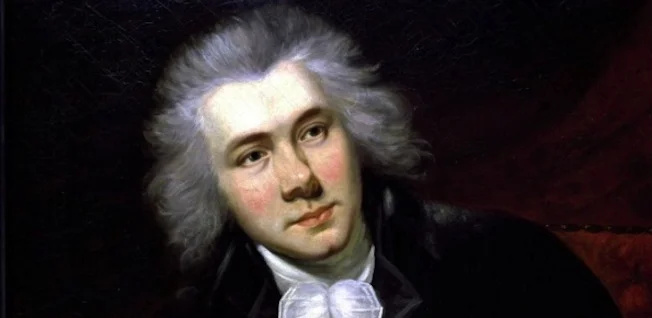
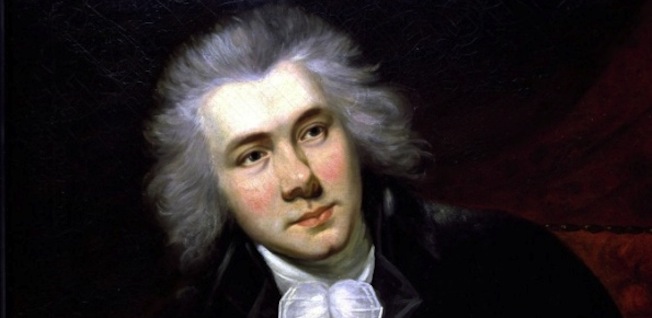
William Wilberforce (1759-1833) was the grandson of a British merchant who had made his fortune trading with the Baltic nations. William's father died when William was nine, and his temporarily overwhelmed mother sent him to live with an aunt and uncle who were Methodists. At the age of 17, William was sent to study at Cambridge, and the deaths of his grandfather and uncle in the next couple of years left him independently wealthy while still a teenager. In those days, wealthy gentlemen students pursued cards, drinking and theater more avidly than studies, and young Wilberforce was no exception. He excelled socially, however, and became friends with William Pitt, the younger, who was to become prime minister just a few years later (at age 24!) and who talked Wilberforce into a career in politics.  Wilberforce stood for parliament at age 20, while still at Cambridge, and obtained his seat, as was the custom, by spending a princely sum of money buying votes.  His political career did not impinge on his primary activities of cards, drinking and socializing in circles appropriate to a man of his standing.  The influential salon hostess Germaine de Staël called Wilberforce “the wittiest man in England,” and he must have had a fine singing voice, as Georgiana, Duchess of Devonshire, remarked that the Prince of Wales would go anywhere to hear Wilberforce sing.

In 1785, while on a tour of the European continent, Wilberforce read, “The Rise and Progress of Religion in the Soul” by a leading non-conformist minister, Philip Doddridge.  He resolved to give his life to Christ.  He began to rise early in the morning to pray and study the Bible, and he began keeping a journal.  The upper classes of Wilberforce's England considered religious fervor a faux pas, and stigmatized it.  Wilberforce wondered if he should even continue in public life, and sought advice from John Newton, a former slaver and the author of the hymn “Amazing Grace.”  Both Newton and William Pitt advised Wilberforce to remain in parliament and allow his religious convictions to inform his legislative work.

In the previous article, we saw how slavery gradually withered away in Christendom and was replaced by the feudal system.  Unfortunately, a few centuries later the nations of Christendom became involved with slavery in the “New World.”  It soon became apparent to the Spanish, Portuguese, French, English and Dutch colonizers of the Americas and “West Indies” that the best opportunity for gain came from growing sugar cane and other warm weather crops not grown in Europe.  It was believed that Africans would be best suited to the back-breaking labor necessary to operate the plantations, and more resistant to the tropical diseases that took a heavy toll on Europeans.  Slavery was well established in Africa; the Islamic ummah had been buying African slaves for several centuries.  Europeans found many localities, especially in West Africa, where they could purchase slaves from African slave-dealers.  A triangular trade route developed in which British ships took manufactured goods from Britain to Africa to be traded for slaves, then delivered the slaves from Africa to the West Indies for sale to plantation owners—the infamous “middle passage” of the triangular route—and finally delivered sugar, rum, molasses, or tobacco from the Americas and West Indies to Europe.  This terrible triangular traffic was to continue for centuries.

By the late 18th Century, the stark inhumanity of the trans-Atlantic slave traffic was becoming widely known.  In 1787, many of the drafters of the United States Constitution wanted to outlaw the traffic, but southern slave-holding interests negotiated a compromise which postponed any ban until 1808, at the earliest.  (Article 1, section 9)  On March 2, 1807, congress passed a bill that was signed into law the next day by President Thomas Jefferson (a southerner and slave owner) forbidding the importation of slaves into the United States, effective January 1, 1808, the first constitutionally permissible date.  The disdain for the slave traffic was so great, however, that by 1808 every state except South Carolina had already banned the importation of slaves.

The year 1787 marks the beginning of William Wilberforce's campaign to outlaw the slave traffic in the British Empire.  He wrote in his journal, “God almighty has set before me  . . . the suppression of the slave trade.”  He met with Thomas Clarkson, a Christian abolitionist who had been studying and researching the slave trade for many years, and who was to provide the witnesses and other evidence supporting Wilberforce's legislative efforts.  Wilberforce met with the newly formed “Society for Effecting the Abolition of the Slave Trade,” a group of Quakers and like-minded abolitionist Anglicans.  He met with Prime Minister William Pitt and future Prime Minister William Grenville, and both encouraged him to introduce a bill banning the slave trade.  In 1788, however, Wilberforce became seriously ill and had to leave London to convalesce at Bath.  During his absence, Pitt ordered the privy council to investigate the slave trade and report to parliament.  In 1789, a recovered Wilberforce gave his first major speech against the slave trade, and introduced his first anti-slave trade bill.  Opponents sidelined the bill with two years of absurdly drawn out hearings, after which the bill was defeated, 163 to 88.

Wilberforce would annually re-introduce the anti-slave trade bill every year through 1799.  In 1793, his measure failed by only 8 votes, but the radical phase of the French Revolution and war between Britain and France put the cause on the back burner.  In 1796, the measure failed by only 4 votes; at least six abolitionist members chose that day to see a new Italian comic opera playing in London.  Wilberforce wrote in his diary: “Enough at the Opera to have carried it.  I am permanently hurt about the Slave Trade.”

William's lack of success in ending the slave trade was ameliorated by happiness in his personal life.  In 1797, Wilberforce was introduced to Barbara Ann Spooner as a possible wife.  Wilberforce was instantly infatuated, and proposed marriage only 8 days later.  The couple were married six weeks later, and had six children over the next 10 years.

In 1804, Wilberforce introduced his bill for the first time since 1799; this time it passed the House of Commons but died in the House of Lords, as Wilberforce mistakenly trusted men not as committed to the cause as he was.  Thanks to constant, unflagging efforts of Wilberforce, Thomas Clarkson and many other Christian activists, the slave trade was a prominent issue in the Parliamentary election of 1806, which returned a good number of abolitionists to the House of Commons.  In 1807, Lord Grenville introduced the anti-slave trade bill, it again passed the House of Commons, and Grenville guided it through the House of Lords, which approved it and returned it to  Commons for final passage.  On February 23, 1807, after many members of parliament rose to speak and salute Wilberforce's tireless efforts, the bill to ban the slave trade was overwhelmingly passed, 283 to 16.  Wilberforce's face streamed with tears as the final tally was taken.

After at last winning the two-decades-long fight to ban the slave traffic, Wilberforce did not immediately call for abolition of slavery, feeling that the slaves were ill-prepared to fend for themselves.  In 1816, however, Wilberforce began to denounce slavery itself.  In 1823, Wilberforce at last lent his considerable prestige to the cause of total abolition of slavery within the British Empire.  He published a tract entitled, “Appeal to the Religion, Justice and Humanity of the Inhabitants of the British Empire in Behalf of the Negro Slaves in the West Indies.”  In June 1824, Wilberforce gave his last speech in Parliament, calling for the abolition of slavery.  Declining health forced his resignation from Parliament in 1825, although he continue to be active in the anti-slavery movement.  The bill to abolish slavery in the empire passed one month after Wilberforce's death on July 29, 1833; he died knowing it would pass.  He was buried in Westminster Abbey, near his good friend William Pitt.

Christianity was the animating force behind the movement to abolish the slave trade, and also behind the incomparable career of William Wilberforce.  “A man who acts from the principles I profess,” he said, “reflects that he is to give an account of his political conduct at the judgment seat of Christ.”

In Opinion Tags bible, slavery, spotlight, william wilberforce

The spectrum of scripture

April 22, 2012 Brent Shakespeare
scripture-scroll.jpeg

Depending on one's faith tradition, different images come to mind when one hears the word scripture. The fact is, we live in a religiously pluralistic world, and can’t assume that our definition of scripture is monolithic. For many, scripture applies to a set of words when and only when these words trace an intimate and ongoing relationship between a community and the transcendent (or one who is transcendent).”(1) For Hindus, scripture is the Bhagavad-Gita. For Jews, it is the Tanach; Buddhists, the Trip taka. Islam believes that the Holy Qur’an is sacred scripture. Christians consider the Holy Bible scripture, while Sikhs and the Baha’i believe that the Adi Granth and Kitab-I-aqdas are scripture. More examples could be listed, but the point is clear, the word scripture has many meanings. Historically, protestants viewed Scripture as the combination of the Old and New Testaments (excluding the Apocrypha). However, some denominations have developed a different locus for their definition. Latter-day Saints (LDS) accept the “general accuracy” of the modern day text of the Bible, but they also believe that it is incomplete and contains errors. In LDS theology, many of these lost truths were restored in the Book of Mormon, which Mormons hold to be “divine scripture and equal in authority to the Bible.”(2) Similarly, Catholics do not believe that God has restricted His authoritative communication and rule of faith to the Bible alone. They hold that “God's Revelation comes to us through the Apostolic Tradition and teaching authority of the Church [i.e. the Magisterium(3)].”(4)

Seventh-day Adventists have been accused of elevating the writings of Ellen G. White to the same authority as Scripture. While there are some within the church who have mistakenly done this, her own testimony and the official position of the church clearly state otherwise. She wrote: “The word of God is sufficient to enlighten the most beclouded mind, and may be understood by those who have any desire to understand it.”(5) “The Word of God [is] the rule of your faith and practice.”(6) “The Lord . . . has not given any additional light to take the place of His word.”(7) “The written testimonies are not given to give new light, but to impress vividly upon the heart the truths of inspiration already revealed.“(8) The Seventh-day Adventist Church officially teaches that “Her writings . . . provide for the church comfort, guidance, instruction, and correction. They also make clear that the Bible is the standard by which all teaching and experience must be tested.”(9)

What is scripture as defined by the Bible? The word scripture (graphe) appears 52 times in the New Testament (in the KJV), and is found either in the singular or in the plural form.(10) The definition of scripture is fairly consistent in most concordances: “express by written characters--to write down,”(11) “that which is written, the writing,”(12) “a writing, book, epistle”(13) “to write.”(14) This meaning can be seen in a number of Bible versions:

  • “Every scripture inspired of God . . .” (KJV; NKJV; NASB; ASV; etc.)
  • “Every holy Writing which comes from God . . .” (Basic English Bible; Darby Bible)
  • “Every Writing [is] God-breathed . . .” (Young’s Literal Bible)
  • “All that is written in the holy writings comes from the Spirit of God. . .” (WE)
  • “All scripture written by the inspiration of the Holy Spirit . . .” (Lamsa)
  • “Everything in the Scriptures is God's Word. . . (CEV)

Interestingly, scripture (graphe) in 2 Timothy 3:16 is a singular noun.(15) And in the singular, it “has reference to a particular passage (Mk 12:10; Lk 4:21; Jn 2:22; Rom. 4:3; Gal. 3:8). Whereas, in the plural, it refers to the ‘whole’ (Matt. 21:42; John 5:39; Acts 17:11; etc.).”(16) Greek scholar J.W. Roberts concurs by saying, “[I]n every N.T. use the singular term means a single passage of scripture.”(17) Therefore, from a lexical standpoint, scripture in 2 Tim. 3:16 is very specific and refers to single, succinct and short written passages. This doesn’t negate that 2 Timothy 3:16 (by implication) also refers to the Scriptures in a broader sense as well. However, the significance of the singular in 2 Timothy 3:16 should not be overlooked. In combination with our first study (which showed that “pasa” means “every”), Paul narrows down the definition of scripture to short phrases, passages, and even individual words.(18) Why is this important? Some theologians have used phrases such as “Scripture as a whole,” or “the whole Scripture.” This has the tendency of diluting or weakening the directive of distinctive passages and doctrines.(19) The implication is, that if 2 Timothy 3:16 refers to “Scripture in general,” don't be too concerned with specifics. However, when Paul refers to scripture, he refutes this understanding, showing that even precise, concise passages and words can be trusted. How else could he go on to say that “Scripture . . . is profitable for doctrine, for reproof, for correction and instruction”?

Here is an overview of the 52 references of graphe in the New Testament, revealing 15 significant points:

“Scripture” is used in a general sense, referring to the entire Old Testament (20):

Matt. 22:9 “You do err, not knowing the scriptures” John 5:39 “you search the scriptures . . .”

In one sense, scripture is used by New Testament writers to include the entire Old Testament. This definition of scripture(s) does little to help us narrow down what that includes. However, it does tell us that the scriptures are a collection of writings that are used to gain knowledge of God, salvation, etc.

“Scripture” is used in a more limited sense, but still covering large sections/themes:

Matt. 26:56 “all this was done that the Scriptures of the prophets might be fulfilled.” Luke 24:2 Jesus expounded “in all the Scriptures the things concerning Himself.”

There are times when N.T. writers used “Scriptures” to refer to general topics or themes. These sections would include the Messianic prophecies or other fulfilled prophecies. For example in John 20:9, the disciples did not understand yet the Scriptures concerning Christ’s death and resurrection. And in Acts 17:2-4, Paul reasoned out of the Scriptures concerning the suffering, death and resurrection of Christ.

“Scripture” is used in a special sense, quoting smaller, concise, individual passages:

Jn. 19:28 “that the scripture might be fulfilled, saith “I thirst . . . Vessel full of vinegar” Ps. 69:21 “in My thirst they gave me vinegar to drink”

Jn. 19:36 “the Scripture might be fulfilled, a bone of Him shall not be broken” Ps. 34:20 “He keepeth all His bones: not one of them is broken”

“In many instances “the Gospels restrict the meaning of 'Scripture' to individual passages within the OT with such terms as 'this' and 'another.' This restricted usage of Scripture is safeguarded by its contexts and special pronouns.”(21) In fact, “Scripture” can even mean one Greek word- “I thirst” (dipsao- Diyw; John 19:28 quoting Ps. 69:21). This reduction in meaning helps us see that scripture includes the very words and phrases that were written.

“Scripture” is referred to as the “word of God”:

Matt. 22:31, 32 “you err, not knowing the scriptures. . . which was spoken unto you by God saying . . .” John 10:35 “The word of God came, and the scriptures cannot be broken.”

Daniel recognized that the book of Jeremiah was the “word of the Lord” (Dan. 9:2) “David expressed the conviction that his words originated from the Holy Spirit (2 Sam. 23:2). . . When Joel the ‘prophet’ (Acts 2:16) spoke, it was ‘God’ speaking (v. 17). Likewise ‘God spoke by the mouth of His holy prophets from ancient time’ (Acts 3:21).”(22) More than 300 times the Old Testament uses phrases that “perceived itself as deriving from God . . . the ‘Word of God.’”(23) “When the New Testament writings were later included with the Old Testament as part of ‘all scripture’ [1 Tim. 5:18 quotes Lk 10:7; Peter refers to Paul’s epistles as “Scripture”- 2 Pet. 3:16], it was natural to conclude that they too were ‘inspired by God’.” (24)

“Scripture” includes the “writings of the prophets":

Rom. 1:2 ". . . by His prophets in the Holy Scriptures, concerning His Son" Rom. 16:26 "The Scriptures of the prophets" (25) 2 Pet. 1:20 "no prophecy of scripture . . ." (26)

The New Testament uses phrases like “it has been written by the prophet” (Matt. 2:5) or “all things which are written through the prophets about the Son of Man” (Lk 18:31). Paul speaks about the promise given “through His prophets in the holy Scriptures” (Rom. 1:2; see also Rom. 16:26). “The term ‘prophecy’ refers to that which was written by the inspired ‘prophets who prophesied’ (1 Pet. 1:10).

Jesus explained to His disciples on the road to Emmaus ‘all the Scriptures,’ namely, ‘Moses and the prophets’ (v. 27).“The phrase ‘all that the prophets have spoken’ seems to be identical with the phrase ‘all the Scriptures,’ expressing the totality of the Bible.”(27)

“Scripture” is referred to by the phrase “It is written”:

Lu. 24:45, 46 “That they might understand the scriptures, and said unto them, ‘It is written . . .” Rom. 15:4 “written for our learning, that we through patience . . . Of the scriptures"

“It is written” (from the Greek grapho) is a verb of the word “Scripture” (graphe).(28) It basically stands for the same thing, and is usually seen referencing the “writings” of the Old Testament. “Jesus appealed to the Bible of His day, the OT, as the word of ultimate authority when He met the Devil’s temptation in the wilderness. Jesus resisted the Devil by stating, ‘It is written,’ quoting Scripture (Matt. 4:4,7,10). . . Jesus and the apostles repeatedly appealed to ‘Scripture’ as the Word of God which is 'written.'”(29) As already mentioned, “It is Written” refers to a number of specific subjects, and among these are:

  • Geography (Matt. 2:5 quoting Micah 5:2- “Bethlehem in the land of Judah”)
  • Marriage laws (Mark 10:4,5 quoting Deut. 9:6- “Moses wrote a bill of divorcement”)
  • Conduct in God’s House (Mark 11:17 quoting Isaiah 56:7- “My house will be . . . A house of prayer”)
  • Life, death and resurrection of Christ (Lk 1:3- “write unto you. . . That you may know of a certainty”)
  • Historical narratives (1 Cor. 10:6-11- quoting Numbers- “they are written for our admonition”; Rom. 11:2 quoting 1 Ki. 19:10- “the scripture says of Elijah. . .”)
  • Specific instruction about livestock (1 Cor. 9:9 quoting- “do not muzzle an ox while it is treading. . .")
  • Condition of humanity (Romans 3:10- “as it is written: ‘there is no one righteous’. . .”)

“Scripture” points to and testifies of Jesus:

John 5:39 “Scriptures . . . testify of Me” John 20:31 “these are written (grapho) that you may believe that Jesus is the Christ”

The focus of the Bible is Jesus. While looking for writings that should be included in Scripture, the underlying theme will be Jesus Christ. There are some books where this is a bit harder to delineate, since there is no DIRECT reference to the Messiah (Esther, Nahum, Obadiah, Song of Solomon, to mention a few). However, we should see implied overtones of Jesus in all these books. The theme of “Scripture” points to a Messiah that will save humanity from sin, and restore the image of God in humanity. It points to His work in the redemption including His birth, death, resurrection and ministry in Heaven.(30)

“Scripture” is referred to as “the law”:

Luke 24:27 “Moses and all the prophets . . In all the Scriptures” Luke 2:23 “It is written (grapho) in the law of the Lord . . .” Luke 10:26 “what is written (grapho) in the law?”

The scripture(s) include the books of Moses- which are referred to as the “law”. There are a number of references that say “in the law and the prophets,” “in the law,” “the law of Moses,” etc. These phrases are called “Scripture”. It is interesting to recognize that Jesus understood the “Law” included even the smallest elements of the written language. Not “one jot or one tittle shall pass from the Law. . .” (Matt. 5:18).

“Scripture” is unified--doctrinally, thematically, historically and typologically:

John 10:35 - “and the Scripture cannot be broken” (31)

As one delves into the study of scripture, he or she is almost forced to confess the amazing unity that exists in the doctrines, themes and history within it’s pages. Theologian David Ewert has noted- “Since God is the Lord of history. . . We can expect His earlier revelations to anticipate the later. . . There are a great many prophecies in the OT that are fulfilled in the NT. . . The great truths of the Bible, such as sin, redemption, hope, and many others, take their rise in the OT and find their fuller development in the New. This is sometimes called ‘the-unity-of-ideas’ approach to the Scriptures. The thematic approach takes us even further and seeks to show the unity of the two Testaments by tracing their underlying themes.”(32) The Scriptures “though written generations apart. . . do not contradict each other.(33) The two testaments are one, as God is one. . . The Old Testament serves as foundation for the New. It provides the key to unlock the New, while the New explains the mysteries of the Old.”(34)

“Scriptures” great themes are the love of God and salvation of man through Jesus:

1 Cor. 15:3 “Christ died for our sins according to the Scriptures”

The under girding theme of Scripture is how God through Christ came to the rescue of fallen humanity, and bought him back through the plan of salvation. “The theme of God’s love, particularly as seen in Christ’s sacrificial death on Calvary--the grandest truth of the universe--is the focus of the Bible. All major bible truths, therefore, should be studied from this perspective.”(35)

“Scripture” provides comfort and hope through its written promises:

Rom. 15:4- “through patience and comfort of the Scriptures”

This is a more subjective element to our understanding of the word graphe. Obviously, there are many religious “holy books," whose adherents claim spiritual benefits through its writings. However, this is not an objective, externally verifiable reason to include a writing as “Scripture.” Nevertheless, it is a confirming reason, which can be known internally, and produces further assurance that the objective claims are valid.

“Scripture” records God’s providence's and supervision over the affairs of man:

Matt. 4:4 “it is written, man shall not live by bread alone, but by every word . . . of God” Acts 17:26 "He hath determined the times before appointed, and the bounds of their habitation” Luke 4:10 “it is written (grapho), He will give His angels charge over you, to keep you.”

God is involved in the affairs of the nations, and in providential control of human affairs. The book of Daniel makes it clear that God sets up kings and removes them. He uses pagan rulers to overrule the sinful behavior of His people. The “scriptures” reveal God’s interaction with humanity as through a “wheel within a wheel”. Above the complex play and interplay of human events, ultimately God is working to further His will and His plans. Therefore, although there may not be a direct references to God in some of the Scriptures- we can clearly see His providence through the events that transpire.(36)

“Scripture” includes “the Psalms”:

Luke 24:44- “written in the law of Moses, and in the prophets, and in the Psalms, concerning Me.”

The book of Psalms is probably quoted more in the New Testament than any other Old Testament book. It is referred to over and over as scripture.

“Scripture” includes a gospel book:

1 Ti. 5:18 “The scripture says" Lk 10:7 quoted- “the laborer is worthy of his reward”

In 1 Tim. 5:18 Paul quotes Jesus in the book of Luke.(37) This is significant, because the scriptures include at least one gospel.

“Scripture” includes the writings of Paul (38):

2 Pet. 3:16 “in his [Paul's] epistles . . . As also in the other scriptures"

“Peter’s use of ‘Scriptures’ places Paul’s writings on a level with other inspired Scripture.”(39) “The manner of referring to Paul’s letters as ‘Scriptures’ alongside the OT indicates that they had been recognized as being on the same level. They were both viewed as being of divine origin and authoritative.”(40)

In conclusion, scripture (as used in the New Testament) is a multi-faceted word that has a broad range of meanings. It can refer to the entire Old Testament, smaller themes of prophetic fulfillment or in a special sense, quoting individual passages and small units of writing. Scripture is called “the Word of God,” the writings “of the prophets,” “the Law” (“law of Moses“) and is also designated by the phrase, “it is written." The Scriptures record God’s providence in the affairs of human history and present the great themes of the love of God through Jesus Christ for lost humanity. The history and doctrines of Scripture are seen as a “golden thread”(41) that unifies the writings into a single book. The focus of Scripture is Jesus Christ, and it includes the gospels and writings of Paul. While we have looked at scripture lexically, we haven’t yet shown how these different words, passages and phrases are connected together to create the whole. In the next article, we will discuss how the Scriptures are joined internally as a unit and thus become sola-prima scriptura (i.e. the canon).

See footnotes.

Tags brent shakespeare, scripture, spectrum, spotlight

La Sierra press release skates around restrictive bond language

April 20, 2012 David Read
la-sierra-university.jpeg

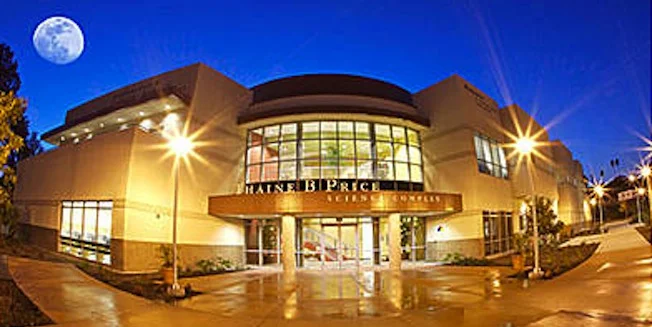
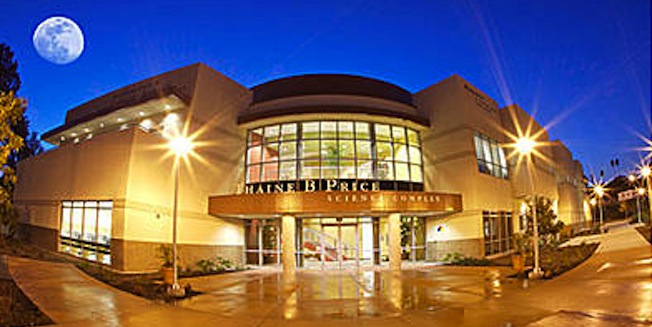
Sometimes you don't want a story to be confirmed. Sometimes you desperately want it not to be true. Unfortunately, the story about La Sierra's use of tax-exempt municipal bond money has been confirmed in its essential details by the university's official press release. Not only does Larry Becker confirm the Price Science Complex was re-financed with public bond money, he also confirms the balance of the bond money. Some $7 to $8 million has been used for capital improvement projects around the university.

Of greatest importance, however, is that the university does not deny that the bonds contain the following restrictive language:

The Corporation covenants and agrees that no portion of the proceeds of the Bonds will be used to finance or refinance any facility, place or building used or to be used for sectarian instruction or study or as a place for devotional activities or religious worship or in connection with any part of the programs of any school or department of divinity,” (page D-32) and that these restrictions apply “for the duration of the useful life of the project financed with the proceeds of the Bonds. (page 27)

Of course, it would be pointless to try to deny this, because the bonds are public documents and are posted online.

Given the prohibited covenant language, not only has the Thaine B. Price Science Complex been secularized in perpetuity, every building on campus on which the remaining $8 million has been spent, has also been secularized in perpetuity.

Unfortunately, the university's primary outside counsel, Kent Hansen, makes misleading arguments in the press release. First, he implies that the California Supreme Court's language in the case of California Statewide Community Development Authority v. All Persons Interested in Matter of the Validity of Purchase Agreement (2007) 40 Cal.4th 788; 152 P.3d 1070, is the language that governs the bonds. In a way it does, but it only sets the minimum standards that entities receiving public money in California must abide by. The covenant language demanded by the bond authority and placed in the documents that Wisbey and Geriguis signed is the language that immediately governs these bond moneys, and restricts the use of buildings on which these moneys have been spent.

By way of analogy, suppose there is a city ordinance requiring that all houses be set back 30 feet from the street, but the lot that you purchased and wish to build your house on contains a restrictive covenant that requires you to set your house back at least 45 feet from the street. If you try to build your house 30 feet from the street, the other lot owners can sue to enforce the covenant, and force you to move it back 15 feet. And they'll win, because that's what you agreed to, as evidenced by the documents that you signed with due solemnity. It doesn't matter that the city only requires you to set back 30 feet, you agreed to set back 45 feet, and if you build your house closer than that, it's liable to be bulldozed.

So what directly governs the use of the money from these bonds is not the Supreme Court's minimum standard, but what La Sierra agreed to, what Wisbey and Geriguis signed, and what they agreed to is the covenant language referred to in all the articles. There is no indication in the bond document that this covenant is unenforceable. To the contrary, the failure to abide by the covenant, if left uncorrected for more than 30 days, is an “event of default” pursuant to provision (a)(iii) on page D-32 of the bond, and one of the remedies in the event of default, as describe on page D-33 (a)(iii), is that the University can be sued and forced to abide by the covenant.

But even if Hansen were correct in his implication that what governs is not the contractual language the University agreed to but rather the California Supreme Court's decision, Hansen does not properly appreciate the implications of that ruling. The portion of the opinion Hansen selectively quotes from is as follows:

[T]he straightforward assessment for the trial court to make is whether the academic content of a religious school's course in a secular subject such as math, chemistry, or Shakespeare's writings is typical of that provided in nonreligious schools. When a school establishes, through its course descriptions or otherwise, that the academic content of its secular classes is typical of comparable courses at public or other nonreligious schools, it is not necessary to scrutinize the school's day-to-day classroom communications. The circumstance that a teacher may, in addition to teaching a course's religiously neutral content, express an idea or viewpoint that may be characterized as 'religious' does not result in a benefit to religion that is more than incidental to the state's primary purpose of enhancing secular education opportunities for California residents. (20 Cal.4th at 804-805; 152 P.3d at 1080.)

Assuming that La Sierra wanted to teach creation science, or the Seventh-day Adventist view of origins, in the Price Science Complex, it could not do so under this standard. The class offering would not be “typical of that provided in nonreligious schools” nor would the course content be “typical of comparable courses at public or other nonreligious schools.” It would be uniquely biblical and Seventh-day Adventist, and utterly atypical of anything taught in public or nonreligious schools.

So even the California Supreme Court's operative language would certainly prohibit teaching creation science, intelligent design, or flood geology in any systematic way. At most, the professor would be limited to expressing the occasional religious idea or viewpoint; he could not teach the Seventh-day Adventist view of origins in a systematic or comprehensive way. This should be obvious to any layman reading the opinion, and for Kent Hansen, who holds himself out as a lawyer, to imply otherwise is legal malpractice. In all likelihood, even beginning class with a devotional thought and a prayer will not pass constitutional muster under this California decision, and obviously runs afoul of the agreed covenantal language prohibiting “devotional activities or religious worship.”

Hansen notes that other religious institutions have received public bond money, including Azusa Pacific, Biola, Mater Dei High School, and Westmont University. This argument is familiar to every parent: “but, mom, everyone else is doing it!!” to which the time-honored reply is, “if everyone else was jumping off a cliff, would you jump off a cliff?” We are unfamiliar with the bond terms negotiated by the other institutions mentioned, but the terms Hansen negotiated for La Sierra University, and allowed his client to sign and commit to, are unacceptable.

The remainder of the university's press release is devoted to shifting blame onto the board of trustees, but nowhere does the press release state that the full board of trustees was apprised of the language of the prohibited use covenant. Ricardo Graham is quoted as saying that the bond measure passed through channels, and of course it did, but he does not say that he was aware, at the time, that the bond document contained the restrictive language. I wonder how many of the trustees will soon be coming forward denying that they were ever apprised of this issue.

In Opinion Tags bond, la sierra, lsu, opinion

La Sierra University responds to bond discovery

April 20, 2012 ADvindicate News

ADvindicate contacted La Sierra University early this morning requesting a response to the discovery of the bond President Randal Wisbey signed in August 2008: La Sierra Bond Response

In News Tags bonds, la sierra, lsu, response, spotlight, wisbey

La Sierra University professors prohibited from teaching creation

April 19, 2012 Shane Hilde
thaine-b.-price.jpeg

For the last four years, La Sierra science professors have been legally restricted from teaching Seventh-day Adventist beliefs in their classrooms, according to a recently discovered bond document that President Randal Wisbey and Vice President for Financial Administration David Geriguis signed in August 2008. The tax-exempt revenue bonds totaled over 24 million, but the bonds used to refinance the new Thaine B. Price Science Complex were about $17 million. By signing, Wisbey and Geriguis agreed the complex would not be used for sectarian instruction, devotional activities, religious worship or to be connected with any programs of any school or department of divinity:

The Corporation covenants and agrees that no portion of the proceeds of the Bonds will be used (1) to finance or refinance any facility, place or building used or to be used for sectarian instruction or study or as a place for devotional activities or religious worship or in connection with any part of the programs of any school or department of divinity.... (Page D-32)

Page 27 of the bond document says these restrictions will last "for the duration of the useful life of the project financed with the proceeds of the Bonds."

Knowing the terms of the bond might explain Wisbey's reaction to the joint statement published in the Adventist Review October 2011 by six biology faculty and four board members "to affirm and incorporate the church's position on creation at the classroom instruction level." Wisbey condemned the joint statement under the pretense the statement creators had not recognized normal and established governance protocols. However, La Sierra administration was aware of the joint statement prior to its publication. The Associate Provost for General Education and Academic Support at La Sierra Barbara Favorito edited it.

The board later dismissed three of the four board members whose names were on the joint statement, and a few months later Lee Greer was fired.

Because of the actions of a few men, La Sierra University is caught in a covenant agreement, which prohibits it from promoting Seventh-day Adventist beliefs. The consequences of breaking the bond agreement are dealing with a potential lawsuit and/or having to pay the bond principle immediately.

Page 27 Prohibited Use Covenant

Page D-32 Prohibited Use Covenant

In News Tags biology, complex, creation, faculty, la sierra, lee greer, lsu, prohibited, science, spotlight, thaine b- price

God's court room: who's on trial?

April 17, 2012 Stephanie Dawn
judge.jpeg

One of the most misunderstood concepts among Christians today is the concept of the judgment. For thousands of years it has been Satan’s intent to misrepresent the character of God, and to a very large extent he has succeeded. Satan will do anything he can to prevent people from grasping the depth and scope of God’s grace, and one of the ways he has accomplished this is to mislead them concerning the truth of the judgment. If he can lead people to an erroneous conclusion about the judgment, he knows that he can cause them to fear God rather than love Him. NO relationship can thrive when it is based on fear, and if Satan can succeed in causing people to be afraid of God, it is his hope that these people will ultimately turn away from God and influence others to do the same. The reason that we are so confused about the judgment is because Satan has led us to believe that the judgment is about us. Being self centered by nature, we tend to look out for our own interests. As long as we are focused on ourselves, our only concern will be escaping the judgment and getting to Heaven. When God empties us of self and fills us with His love, our concern will be for the glorification of God’s holy name and for the salvation of others. We will feel no fear of the judgment, because we will be filled with the love of Christ, which casts out fear (1 John 4:18). As long as Satan can convince us that the judgment is about us, his true intentions will be hidden. We will live in a mode of selfishness, caring only about our own salvation, and our relationship with God will not mature. Satan knows that if we could see the big picture, we would discover that the judgment is really about God’s reputation, and Satan’s efforts to malign God’s character would be clearly seen. All of the accusations that Satan has made about God would be proven false, and the fear that we had of the judgment would be replaced with love for God.

The fact that God keeps a written record of the life of every person who has lived on the earth demonstrates that the judgment is not about us. God knows all things. He does not need to rely on written records in order to remember past events. There are Bible verses that reveal the reason for the written records. In 1 Corinthians 6 verses 2 and 3 we are told that we will judge the world as well as angels. In Revelation 20 verses 4 through 6 we are told that judgment will be committed to us during the one thousand year period in Heaven before the second resurrection. Why will judgment be committed to us when there is an all knowing righteous judge who rules the universe? In Ezekiel 20 verses 35 and 36 we find the answer to this question. “And I will bring you into the wilderness of the peoples, and there I will plead My case with you face to face. Just as I pleaded My case with your fathers in the wilderness of the land of Egypt, so I will plead My case with you,” says the Lord God.” God was speaking to rebellious Israel in these two verses, but His words are just as applicable today. God’s character has not changed, and these two verses paint a beautiful picture of the wonderful God we serve. God is all powerful and can do no wrong. He is at liberty to do whatever He wishes, and He owes no one an explanation for the things He does. Yet, incredibly, He not only wants to dialogue with us, but He also wants to plead His case with us face to face!

Satan has spent thousands of years slandering God. The evil character that Satan possesses he accuses God of possessing. He is constantly watching God’s every move and listening to His every word, looking for ways that he can twist God’s words and paint His actions in a false light. In everything God says and does, His purpose is to show all created beings the true nature of His character, and the way He deals with fallen humanity will prove once and for all that God is loving and fair and that Satan’s accusations are false. David understood this truth when he wrote, “He restores my soul; He leads me in the paths of righteousness For His name’s sake” (Psalm 23:3). There is a trial taking place that extends across the universe, and the blameless king of the universe is the defendant. As God writes the written records, He is continually gathering evidence to support His case, and as He determines the eternal destiny of every human being, His decisions are being observed by the inhabitants of the universe. God is on trial in His own court room. The inhabitants of our world are also on trial, but our trial is simply the evidence presented in a much bigger trial that spans far beyond our little planet. Our world is not able to see the big picture that the rest of the universe sees, and when we get to Heaven and reign with Christ for a thousand years, we will be full of questions. Jesus will permit us to read through the written records of the wicked, and we will unite with Him in judging them and determining the sentence for each lost soul. He will plead His case with us face to face, and we will discover what the unfallen beings have already discovered, that God is compassionate and just.

There is a line in a well known song that illustrates the misunderstanding in the Christian world concerning the judgment. It says, “ON that day when we will pay for all the deeds we have done, good and bad they’ll all be had to see by everyone.” Such an idea would strike terror in the heart of anyone who believed that such a thing would take place during the judgment, and, truth be told, this is the kind of treatment we deserve. But Christ has provided a way of escape from judgment for all who will accept it. “Most assuredly, I say to you, he who hears My word and believes in Him who sent Me has everlasting life, and shall not come into judgment, but has passed from death into life” (John 5:24). God gives this promise to every sinner who comes to Him in repentance. “For I will be merciful to their unrighteousness, and their sins and their lawless deeds I will remember no more” (Hebrews 8:12). If God truly intended for all those whom He has forgiven and cleansed from sin to publicly give an account of all of their sins in the judgment, then this promise would be meaningless and Christ’s blood would have been shed in vain.

The investigative judgment is now taking place. Every person who has professed to be a follower of Christ is having his or her case examined in Heaven. Each person’s thoughts, motives, words, and actions have been diligently recorded in writing, and each person’s written record is being carefully reviewed. “I watched till thrones were put in place, And the Ancient of Days was seated; His garment was white as snow, And the hair of His head was like pure wool. His throne was a fiery flame, Its wheels a burning fire; A fiery stream issued And came forth from before Him. A thousand thousands ministered to Him; Ten thousand times ten thousand stood before Him. The court was seated, And the books were opened” (Daniel 7:9-10). “For the time has come for judgment to begin at the house of God; and if it begins with us first, what will be the end of those who do not obey the gospel of God?” (1 Peter 4:17). When the names of all those who have been forgiven and set free from sin come up in the Heavenly investigation, Jesus pleads His blood on their behalf, and it is recorded in the books of Heaven that they are pardoned. “Therefore He is also able to save to the uttermost those who come to God through Him, since He always lives to make intercession for them” (Hebrews 7:25). The doctrine of the investigative judgment is a precious truth that has been imparted to us as Seventh-day Adventists. If we shared this doctrine with the world, it would bring hope to many wounded hearts, because they would realize that the Gospel is clearly portrayed within the judgment.

The eternal destiny of each person will be determined by the books which contain all of the names and the deeds of every person who has lived on the earth. “For we must all appear before the judgment seat of Christ, that each one may receive the things done in the body, according to what he has done, whether good or bad” (2 Corinthians 5:10). This fact does not contradict the Gospel; it enhances it. In Matthew 12 verses 33 through 37 Jesus paints a picture of the harmony that exists between God’s grace and His law within the context of the judgment. “Either make the tree good and its fruit good, or else make the tree bad and its fruit bad; for a tree is known by its fruit. Brood of vipers! How can you, being evil, speak good things? For out of the abundance of the heart the mouth speaks. A good man out of the good treasure of his heart brings forth good things, and an evil man out of the evil treasure brings forth evil things. But I say to you that for every idle word men may speak, they will give account of it in the day of judgment. For by your words you will be justified, and by your words you will be condemned.” When fruit is bad, the fruit itself is not the source of the problem. It is the tree that causes the fruit to be bad. The fruit is simply the end result of the development of a bad tree. The same is true with our words and actions. The external behavior is the end result, or the fruit, of what lies in the heart. “Now by this we know that we know Him, if we keep His commandments. He who says, “I know Him,” and does not keep His commandments, is a liar, and the truth is not in him. But whoever keeps His word, truly the love of God is perfected in him. By this we know that we are in Him” (1 John 2:3-5). When we accept God’s grace, God not only declares us righteous, but He makes us righteous. He heals our wounded hearts, sets us free from the destructive patterns that enslave us, and empowers us to walk in perfect obedience to His commandments. We keep God’s commandments, not in order to be saved, but because we have already been saved. In fact, when we are under grace, obedience will be more important to us, not less. “Therefore do not let sin reign in your mortal body, that you should obey it in its lusts. And do not present your members as instruments of unrighteousness to sin, but present yourselves to God as being alive from the dead, and your members as instruments of righteousness to God. For sin shall not have dominion over you, for you are not under law but under grace” (Romans 6:12-14). The reason that our eternal destinies will be determined by the deeds written in the books is because our thoughts, motives, words and actions demonstrate whether or not we are under grace. When Jesus warns us that men will have to give account in the judgment for every idle word they speak, He is making us aware of the fact that every thing we think, say and do is being written down in Heaven. Nothing is taken lightly by God. Nothing escapes His attention. Those who refuse to repent and turn away from their sins will be held accountable for their sins by God in the day of judgment, not because their bad deeds out number their good deeds, but because their wickedness reveals the fact that their hearts have not been transformed by God’s grace. “If we confess our sins, He is faithful and just to forgive us our sins and to cleanse us from all unrighteousness” (1 John 1:9). When we come to God with a contrite heart, He accepts Christ’s sacrifice on our behalf, and we are declared righteous. Then He imparts to us the mind of Christ through the Holy Spirit, and through the sanctification process we are made righteous. This is the complete Gospel, and all who accept and live this Gospel will inherit eternal life and will not enter into judgment with the wicked.

God admonishes us to take the judgment very seriously, but He does not intend for us to continually live in fear, desperately trying to obey God in order to escape the judgment. Obedience based on fear is not true obedience, for without faith it is impossible to please God (Hebrews 11:6). In order for us to live free from fear of the judgment we must first recognize that “all our righteousnesses are like filthy rags” (Isaiah 64:6). We must also come to the realization that without Jesus we can do nothing (John 15:5). If we see our helpless condition, fall upon God’s grace, and continue to abide in Christ, God will perfect our characters and fit us for Heaven. We will have nothing to fear.

Satan is the accuser of the brethren, and he accuses us before God day and night (Revelation 12:10). When Satan leads us into sin, he then accuses us before God. Satan claims that he has the right to claim us as his subjects because we have broken God’s law, but when Christ pleads His blood on our behalf, Satan’s arguments are silenced. We may be facing the best prosecuting attorney there is, but the defense attorney representing us is even greater in power. “For if our heart condemns us, God is greater than our heart, and knows all things.” (1 John 3:20). Our defense attorney knows what it feels like to stand trial, and we are safe in His hands. “Love has been perfected among us in this: that we may have boldness in the day of judgment; because as He is, so are we in this world.” (1 John 4:17). We can have boldness in the day of judgment, because our defense attorney is also our judge, and our judge has already served our sentence.

In Opinion Tags court room, judgment, spotlight, trial

Meet it

April 13, 2012 David Read
RMS_Titanic_3.jpeg

It was April 14, 1912, a moonless, cold night in the northern Atlantic Ocean. Frederick Fleet stared out at the dark horizon from the crow's nest of Titanic, the new, luxurious, state-of-the-art ocean liner of the White Star line. Fleet had come on lookout duty at 10:00 p.m. and was scheduled to go off duty at midnight, in just over 20 minutes. His watch had been uneventful. Fleet and his watch partner, Reginald Lee, had been told to keep an eye out for ice. Despite repeated warnings of icebergs in the area, Titanic raced through the smooth, calm water at 22 ½ knots (about 26 m.p.h.), nearly her top cruising speed. The extraordinary calmness of the sea that night worked against Fleet and Lee, because waves breaking against the base of an iceberg were often the night lookout's first indication of the berg. As Fleet peered ahead into the night, he suddenly noticed a dark shape, even darker than the calm ocean water. Every second, it grew larger and closer. Fleet rang his bell three times to signal danger ahead, and telephoned down to the bridge. “What did you see?” asked the voice on the other end. “Iceberg, right ahead!” shouted Fleet.

First Officer William McMaster Murdoch was in command on the bridge, Titanic's Captain, Edward J. Smith, having gone to bed for the night. Murdoch ordered the helmsman to execute a sharp left turn, and signaled engineering to stop the engines. For several long seconds, Titanic bore down on the iceberg with no apparent change of course, but at the last moment she veered left of the floating mountain. It was too late, however, to avoid contact. The iceberg scraped along Titanic's starboard side for about three hundred feet, punching holes below the waterline. Murdoch then ordered the helmsman to turn right, which enabled the stern-ward two-thirds of Titanic's starboard side to slip past the iceberg without further contact. Then he ordered the 15 bulkhead doors closed, to create 16 “watertight” compartments.

Most passengers experienced the scrape as nothing more than a moderate vibration of the ship; a few went out to play with the ice that had crumbled down onto Titanic's deck. On the bridge, they thought they'd dodged a bullet, but below decks a different story was unfolding. Water was gushing into five of the 16 sealed compartments, the five closest to the bow. Captain Smith consulted the ship's architect, Thomas Andrews, who informed Smith that Titanic was designed to stay afloat with four of the forward watertight compartments flooded, but not five. That the ship would sink was a mathematical certainty. Andrews thought it would sink in perhaps 60 to 90 minutes, but Titanic managed to stay afloat for 2 hours and 40 minutes. There weren't enough lifeboats, and several were launched half full. Of the more than 2,200 souls on board, only 710 survived.

Many experts believe that Will Murdoch's best option would have been to steer directly for the iceberg and ram it. The collision would have fully stopped Titanic in about two seconds, and every person on the ship would have been jarred and tossed forward by the abrupt deceleration. It would have crushed the ship's bow and flooded one or two of the forward watertight compartments; several dozen crew members who were bunked in the bow of the ship would have been killed by the impact or drowned by the flooding, but Titanic would probably have stayed afloat. In 1879, a previous state-of-the-art British ocean liner, SS Arizona, smashed prow first into an iceberg, but did not sink, was able to limp to port, and remained in service of one form or another until 1927.

About nine years prior to the Titanic disaster, Ellen White was grappling with the subtle pantheistic statements and assertions in John Harvey Kellogg's book, The Living Temple. She received a remarkable vision:

Shortly before I sent out the testimonies regarding the efforts of the enemy to undermine the foundation of our faith through the dissemination of seductive theories, I had read an incident about a ship in a fog meeting an iceberg. For several nights I slept but little. I seemed to be bowed down as a cart beneath sheaves. One night a scene was clearly presented before me. A vessel was upon the waters, in a heavy fog. Suddenly the lookout cried, "Iceberg just ahead!" There, towering high above the ship, was a gigantic iceberg. An authoritative voice cried out, "Meet it!" There was not a moment's hesitation. It was a time for instant action. The engineer put on full steam, and the man at the wheel steered the ship straight into the iceberg. With a crash she struck the ice. There was a fearful shock, and the iceberg broke into many pieces, falling with a noise like thunder to the deck. The passengers were violently shaken by the force of the collisions, but no lives were lost. The vessel was injured, but not beyond repair. She rebounded from the contact, trembling from stem to stern, like a living creature. Then she moved forward on her way.

Well I knew the meaning of this representation. I had my orders. I had heard the words, like a voice from our Captain, "Meet it!" I knew what my duty was, and that there was not a moment to lose. The time for decided action had come. I must without delay obey the command, "Meet it!"

That night I was up at one o'clock, writing as fast as my hand could pass over the paper. For the next few days I worked early and late, preparing for our people the instruction given me regarding the errors that were coming in among us.

The pantheistic statements in Living Temple were subtle, and often closely paralleled statements Ellen White had made in answering the deistic argument that God created the world but then left it to fend for itself. Kellogg had drifted into error, but had stayed close enough to Scriptural modes of expression that the brethren were genuinely unsure of whether he had in fact erred.

The Seventh-day Adventist Church today faces a heresy that is not subtle, nor anywhere close to the biblical world view. The heresy is Darwinism, the rejection of the biblical creation doctrine and its replacement with the idea that we evolved by natural processes over the course of hundreds of millions of years. Over the past decade, the church has begun to realize the extent to which this false doctrine has seeped in among us; the faith-science conferences of 2002-2004 were an acknowledgment that many teachers and other thought leaders have embraced some form of Darwinism.

That Darwinism is incompatible with Christianity should be obvious to all. Take away the creation, and every other doctrine tumbles like a line of dominoes. Darwinism makes nonsense of the core Gospel teaching. If there was no perfect creation, there could be no fall into sin; if no Fall, then no explanation for the suffering and death we see around us. If there was no Fall, there is not need of a Redeemer. If there was no first Adam, there is no need of a second Adam to succeed where the first failed. The Biblical view of redemption as reconciliation and ransom from the consequences of Adam’s fall has to be jettisoned. In the place of the story of a ‘Fall’ has come the story of an ascent. “Sin” becomes an outmoded explanatory concept to be replaced by sociobiology and evolutionary psychology.

Darwinism also makes nonsense of the Eschaton. If God was incapable of creating the world in six days, as He said He did, then He is incapable of instantly resurrecting and glorifying the dead of all the ages, and remaking the world. If there was no literal Eden, there can be no Eden restored. In a 2009 sermon, Jan Paulsen said of the resurrection of the dead and the world made new:

All of these belong to the world of miracles. They are displays of God's unfathomable creative power. Those who have problems with the creative powers of God, or a God of creation, they have a problem so huge they don't know what to do with it, because they have no future, they have no --- everything that lies in God's future is miraculous.

Beyond the problems caused to core Gospel and end-time issues, Darwinism destroys the reason for existence of the SDA Church, which is to call Christian believers back to worship on the Biblical Sabbath, the day that God hallowed at the creation. The only universal rationale for keeping the Sabbath is that God created the world in six days and rested on the Sabbath Day. (Gen. 2:2-3; Ex. 20:11) If that's not true, there's no reason to keep the Sabbath. Without the Sabbath truth, we don't have anything unique or interesting to add to prophetic interpretation; the Sabbath truth is foundational to our interpretation of Bible prophecy, particularly our interpretation of the Three Angels Messages of Revelation 14. Darwinism also fatally undermines the prophetic authority of our founding prophet, who was fully invested in the biblical doctrine of creation, and repeatedly warned of the falsity of evolutionism and long-ages geology.

Taking away the biblical doctrine of creation destroys Christianity as an internally coherent system of doctrines and beliefs. If Seventh-day Adventists compromise on this issue, not only have we lost the only universal rationale for our signature doctrine of Sabbath-keeping, we've given away everything else, as well, every advance in biblical understanding and prophetic interpretation we've made over the denominations that preceded us. We will coast for a few generations on tradition and habit, but we'll soon disappear into the depths.

A century ago on the bridge of Titanic, Will Murdoch's first instinct was to try to avoid a violent collision that would shake up everyone on the ship. But it was too late to steer clear, and trying to skirt the iceberg sealed Titanic's doom. Today, our leaders in the SDA Church seem to want somehow to skirt the looming threat of Darwinism in our ranks, but it is too late. A collision cannot be avoided, and the best thing we can do is to brace for impact, and meet it head on.

In Opinion Tags creation, evolution, iceberg, opinion, titanic

The community: incubator of wisdom

April 12, 2012 Rob Wilcox
community.jpeg

Last Thursday evening found me at the lathe, wood chips flying, carving out my daughter's future. Well, kind of. It was a baton I was making, the kind that are used in relay races. Our oldest was turning 13 on the morrow and we wanted to set her up well for the next leg of the race. And so, on the very next day we sat in our living room, family and significant friends all around, and we ushered her into young adulthood. The men in the room all spoke briefly of qualities they had seen in Maggie that they especially appreciated, and the women passed on sage bits of advice for her journey into womanhood. All the comments were recorded on paper, rolled up, inserted in the drilled out center of the baton, capped over, and then passed into my daughter's hand. It was the spirit of the genealogy that animated us, family and community together, pointing a life towards the divine intent and encouraging her onwards. But what makes this hand-off successful? In the past two articles I have shown that the Bible genealogy roots us in a history which has at its center the divine intent, that is the vision of God by which He created. Such rooting gives a significance to each individual life that cannot be obtained in any other way. But between the individual and that history lies the connecting link of the community. The question about the success of the hand-off is really a question about the health of the community. And to explore that question we need a vigorous conception of what community health actually looks like. But first we must clear up one little matter.

The Chicken or the Egg Dilemma

Is it the action of the individual that brings health to the community, or the action of the community that brings health to the individual? It is an important question because it helps us come to grips with the ways in which a community moves towards health, and the role of both community and individual in that movement. And yet it may be a misleading question in that the answer is not either-or but both.

One thing should be clear and that is that the individual does not live in isolation, nor as an end unto himself, nor as a primary focus of attention, all of which are temptations especially tempting to the fallen. Nonetheless, there is much that comes to the community through individuals, all the more so when they have recognized and gained victory over the above temptations. Individuals, when standing in their proper God-given role and place, become a power for the good, an elevating influence or leaven to the whole. So much so, that we are inclined to say that the individual comes first, that it is the individual that brings health to the community. And certainly this is a healthy outlook for the individual to adopt, the proper outlook. We are to be for the others, not for ourselves.

Yet at the same time the individual is not first in this order. The community is. The idea of the self-made man is mythological. All that is best in us has been given to us by another, many others in fact, chief among them God himself, Father, Son, and Holy Spirit. And so an argument can be made, just as vigorous, that it is the community that brings health to the individual. This goal, the community should certainly set as one of its highest priorities. We should aim at becoming a context, better said a place, where the tide of uplift is so strong that an individual would have to fight hard to resist it.

Such an attainment will and does demand our utmost in alertness and diligent effort, both individually and together. The machinations which work against us are legion, both from within and without. But we have been given what we need for the effort in foundation texts, passages on which we can build if we will but give them their due. 1 Corinthians 12 and 13 come to mind, as well as Ephesians chapter 4. In these passages both the individual and the community may find the working material for community of the highest order. But principal perhaps is the book of Proverbs, a book that is of the highest importance for the centering of the community and the individual together in their proper tasks. Proverbs Divine no!

Proverbs is the quintessential community text, following the patterns of genealogical continuity and connection. And its focus is wisdom. Wisdom is the biblical word which is expressive of the divine intent in creation, the intent which we have argued is to be the center and focus of all our living, that which the individual bends every effort to attain and the community busies itself to hoard and pass on. Proverbs 8 makes this clear. To pursue wisdom is to measure your stride by creation patterns, God ordained patterns. And it is the pursuit of wisdom which is the proper business of community. So much so that this becomes the true marker of community health, that health which we argued above is so necessary to the successful passing of the baton of faith.

If wisdom is to be gained, however, we must be clear as to what wisdom is and isn't. Apart from such clarity we all too easily settle for something other or less than wisdom. Two alternatives have become especially popular in our day.

One of these is knowledge. Though knowledge plays a part in wisdom, it can be pursued and hoarded and displayed without a hint of wisdom showing up anywhere: knowledge exiled to the theoretical, knowledge that has lost its work gloves. Such knowledge distracts so powerfully from the quest for wisdom because it is easier. Wisdom requires engagement with the messy and difficult realities of human life and community; it necessitates becoming “comfortable” with uncertainty and perplexity and it calls for humble patience, as the honing provided by experience takes time. Knowledge does not cost so much. Pursued in isolation from the rough and tumble it comes free and easy.

Technique, that is method applied to everything, is another revered distraction of our age. Technique when applied provides a map for every eventuality. You know where you are going, even before you get there and outcomes are guaranteed. Technique promises facility in every endeavor, without the hard work of wisdom; nor does the application of technique require understanding. And so in the press for success techniques proliferate wildly. And yet technique has its down sides. With technique at the helm the world becomes man sized and man centered and with technique at the helm people become either problems to be solved or pawns to be moved rather than persons, whom we might come to know and understand and share life's journeys with. Is there a place for techniques? Certainly. But not when dealing with God and Holy Texts and people. A continued reliance upon technique in these realms will eventually bring us to the point where applications of technique are thought to be the only way forward. Wisdom becomes inaccessible.

To these distractions the community of faith must say no, and one of her best allies in articulation that no is the book of Proverbs. Proverbs bolsters our conviction that wisdom is the proper business of the family: father and son, mother and daughter, parents with their children; but not just family, there are also sages from the past, elders at the gate, and friends that give rebukes as sweet as kisses. But it is more than just a no that draws us away from bypaths. It is the compelling vision of what wisdom is all about and Proverbs provides us with this as well.

Proverbs Divine yes!

Wisdom lies at the very root of things. It was wisdom that informed and shaped each act of divine creation. And as foundation it becomes the catch all word for everything that comes from God. A perusal of Proverbs 8 turns up the following as synonymous with wisdom: noble things, right things, true things, righteous things, things untouched by crookedness and perversion, straightforward things. As the synonyms pile up you find yourself longing for insight into the commitments and patterns and responses that make up such a life, that capture the fullness of the divine intent, the divine imagining of what would be and could be in the world that He made. This is at the heart of wisdom, this vision of what God meant and intended when He made and sabbathed the world.

This is the first task of the community, the work of recapturing true patterns, of sorting through murkiness, and wrongheadedness, and confusion, and even downright perversion, so as to find and keep alive the true shape of things—the will of God shape, the image of God shape—in things and especially in people.

But this is not all. As a community regains its vision it must learn how to pursue that vision in all kinds of difficult, contrary, and even contentious settings. Wisdom, remember, wears work gloves. The vision is never detached from daily realities, from the problems and responsibilities of ordinary living. To be able to ask and answer the question, “How do I move in this situation and in this moment so as to serve the higher ends of God” that is wisdom. And it isn't easy. Just as mining isn't easy. Digging deep, blasting through rock, moving mountains, looking for gold.

And it is because it isn't easy that the final element must be set forth; wisdom involves developed capacities. I may see the vision, but not have the strength or capacity to bring it into being. The hardest part of the quest for wisdom is the reshaping, the transformation of myself, each self, into a being that is capable of embodying God's vision, truly a God work, but one that I must stay engaged with.

It is this that our hearts hunger for, this vision being lived together in and with our communities. The community may be far from perfect, indeed she is far from perfect. But if she is applying herself to these wisdom tasks her life and witness will prove compelling, her health and vigor unabated, her sons and daughter's eager to reach out and grasp the baton that is passed to them, so as to run the same compelling race they have seen enacted around them, in shops and marketplaces, factories and fields, courtrooms and hospitals.

May each of us pray to the church that which I whispered to my Maggie as I handed her my baton, hoping she would choose to run the race most worth running. “Run, girl, run!”

In Opinion Tags community, genealogy, spotlight, wisdom

Lord, change me

April 10, 2012 Jacquelyn Fisher
change-greensign.jpeg

I have spent the majority of this month traveling all across the United States. I drove from Virginia to Arizona for my younger sister’s wedding and to visit my older sister and her family. Driving that long stretch of I-40 alone in the car provided plenty of time to contemplate life in general, my life in particular, and to talk with the Lord. You see, in addition to my sister’s wedding, my grandfather had passed away just days before I left on my trip. At the same time our family was celebrating the joys of a marriage union, we were also experiencing the sadness of the loss of a loved one. Though I was unable to attend my grandfather’s funeral, I wanted to visit my grandmother in Florida. After a little over a week in Arizona, I was once more on the road, but this time I was joined by my mother, older sister and her nine-month-old. Driving that long stretch of I-10 provided plenty of opportunities to also contemplate the irritations and annoyances that pop up when I least expected it and my reactions, whether good or bad.

After a few weeks of the mental exhaustion caused by long-distance driving, living out of a small suitcase in various hotels, and jumping through hoops to find ways to prepare food that will not trigger an allergic reaction, little things that do not usually bother me were now frustrating. Patience began to wear thin and, in spite of myself, I felt grumpy and irritable. The gas pump locking up because I typed in the wrong zip code or a thoughtless comment I would normally shrug off suddenly upset me.

We are surrounded by events, circumstances, and even people that frustrate, irritate, disturb, and anger us. In an article on the American Psychological Association’s website, anger is defined as “an emotional state that varies in intensity from mild irritation to intense fury and rage” by Charles Spielberger, PhD, a psychologist who studies anger. Our natural instinct is to lash out aggressively at the cause of our irritation and anger, though the laws and social norms of today do not allow us to physically lash out without repercussions. Therefore, we have developed other ways to deal with these feelings, not all of which are easy to do nor healthy to ourselves or our relationships with others over the long term. We have probably all heard some of these suggestions: stop thinking about whatever it was that initiated those feelings, count to ten, take deep breaths, walk away, etc. Sometimes these methods work and other times, they do not.

As followers of Christ, we are called to respond to the irritations of life in a way that is unnatural: with patience, calm, and compassion. In Galatians 5:22-23, we are told: “But the fruit of the Spirit is love, joy, peace, longsuffering, kindness, goodness, faithfulness, gentleness, self-control. Against such there is no law.” This is not something that we are able to do ourselves through will power. It is a gift we receive as we grow in our relationship with the Lord, allowing His Spirit to change us from the inside out.

We are all works-in-progress, and sometimes our old nature tries to take back the reins. Let’s face it: we are emotional beings. There are times when, due to stress, fatigue, family or work related problems, passionate zeal for a cause, and many other contributing factors, we do not always present a positive representation of Christ to our family, friends, co-workers, fellow church members, and so on. We are prone to shifting the blame completely on to another person and venting our irritations and anger through various methods: complaining and griping, giving the “guilty” person the cold shoulder, holding a grudge for months or even years, and more.

This creates cognitive dissonance: a discomfort generated by holding conflicting ideas, beliefs, or emotional reactions. Some of us may struggle with trying to harmonize the range of emotions we feel, from mild irritation to rage, with the fruit of the Spirit we should be displaying as a follower of Christ. Lashing out towards the source, or perceived source, of our irritation and anger often provides an immediate sense of satisfaction, even if it does not satisfy in the long term. Yet we know this is not how we are supposed to react as a Christian. This internal conflict is described well by the apostle Paul in Romans 7:15, “For what I am doing, I do not understand. For what I will to do, that I do not practice; but what I hate, that I do.”

Before we complain about others, before we lash out verbally or physically, we should reflect on ourselves. How are we responding to the irritations around us? Is our reaction a reflection of the love of Christ? Are we asking the Lord to change us? Our hearts, our attitudes, our feelings? By asking for the Lord to work on us first, we draw closer to Him and allow Him to transform us so that, through His power and guidance, we can face the difficulties of life—big and small, when we are at our best and at our worst—in a completely revolutionary manner: with kindness, forgiveness, self-control, peace, and love. In Ephesians 4:32 we are encouraged to “be kind to one another, tenderhearted, forgiving one another, even as God in Christ forgave you.” Colossians 3:15, 17 continue, “And let the peace of God rule in your hearts, to which also you were called in one body; and be thankful. […] And whatever you do in word or deed, do all in the name of the Lord Jesus, giving thanks to God the Father through Him.”

We may stumble in our walk with the Lord, but do not fall for the devil’s lie that it is impossible for you to change. I am reminded of the great changes that Jesus’ disciples and apostle Paul experienced when they allowed the Lord to work in their lives. Let’s take a quick look at John. John and his brother James were called the “sons of thunder” for a reason (Mark 3:17). After a certain Samaritan village did not respond positively to their evangelistic campaign and witnessing efforts, James and John asked Christ if they could call fire down from heaven (Luke 9:51-56). Yet this same man, through the transforming power of Christ, was refined and would later write so extensively on the subject of love, particularly the unconditional love of God that he has come to be called the apostle of love. If Jesus can transform John, then He can and will change us if we allow Him.

My long trip all over the country has given me many opportunities for reflection. Through the churches I have visited on the Sabbath, the people I have meet and kept company with, the long stretches of highway that provided quiet time with the Lord, and yes, even the little annoyances, have all been a blessing. I realize more than ever before how important it is to not impulsively react, especially when I am not my usual self due to circumstances like stress, fatigue, loss, etc. When something disturbs or upsets, I need to pause and discover the real reason for my feelings. Now, instead of sending up rash, ego-centric prayers for the Lord to fix the situation the way I think it should be or to change the other person (Matthew 7:2-4), my plea is an echo of David’s after he recognized his sinfulness. “Create in me a clean heart, O God,
And renew a steadfast spirit within me.” (Psalm 51:10)

I ask the Lord to work on my stubborn heart and guide my words and actions that I may respond with kindness and patience. “Let your speech always be with grace, seasoned with salt, that you may know how you ought to answer each one” (Colossians 4:6). Not by my will power, because I, like the apostle Paul, do not always do what I know I should do and instead do what I do not want to do, but through the almighty power of our Lord working on me and through me.

In Opinion Tags change, character, spotlight

[UPDATE] Michigan Conference accused of shunning LSU choir students

April 8, 2012 Shane Hilde
Monthly_Banner_1.jpeg

Charles Scriven, president of Kettering College and chair of the Adventist Forum board, recently accused the Michigan Conference of shunning a La Sierra University choir. Tensions between the university and conference began in 2009 when a website published evidence the university was allowing the theory of evolution to be taught to the exclusion of creationism. A year later the Michigan Conference Executive Committee voted to remove LSU from its list of colleges and universities that qualify for employee subsidy.

A letter dated Aug. 29, 2011, was sent to La Sierra University President Randal Wisbey from the Michigan Conference Board of Education, requesting LSU no longer recruit on Michigan Conference campuses until LSU resolved its problem.

La Sierra's request to sing was initially accepted by the academy principal, and according to La Sierra adjunct professor of music David Kendall, planned months in advance; however, it wasn’t until the principal contacted the office of education in March 2012 that the conference was aware the La Sierra Chamber Singers were coming, according to a phone call with Jay Gallimore.* While university choir tours are recognized as an important element in recruiting, Kendall said the trip was not intended as a recruiting tour. The Michigan Conference though considered the Chamber Singers' performance as recruitment, and the principal declined their request to sing weeks before their performance. It is unknown why the principal waited weeks before the performance to notify the office of education.

President of Michigan Conference Jay Gallimore issued a statement Thursday to conference pastors and teachers, regarding Schriven’s allegations:

We have been getting questions recently concerning the Michigan Conference refusal to allow La Sierra, which teaches theistic evolution, to be allowed to recruit on our academy campuses. A letter dated August 29, 2011, was sent to Dr. Randy Wisbey, president of La Sierra University stating; “Our Board of Education has voted to ask that La Sierra not be present in recruiting on our campuses until the issues of creation and evolution have been resolved.” We recently declined their offer to have their choir sing at one of our academies in light of the above action, because we see that as part of recruitment.

The principal of one of our academies called our office of Education around the first of March 2012 and said that his school had been asked by a La Sierra Choir to sing on their campus. He at first said yes, as he would normally for any of our colleges. But he had second thoughts in light of the above action. Normally our office would not be asked about one of our colleges coming. But the principal’s discernment was right to see a link to the recruitment issue. Educational administrators know that music groups are important to any school’s recruitment.

In light of the vote by our Board of Education, we responded by saying we see it as part of their recruitment and we would not want them performing on our campuses. The Office of Education’s understanding of the matter was straight forward. La Sierra offered to come and we, through the principal, declined their offer to come.

The published premise by an independent magazine that that we are somehow “punishing” their students because we declined their offer speaks for itself. How did they, the promoters of faith destroying evolution suddenly become a “victim” of those who are trying to protect the faith of their children? Is a mother bird to be condemned for flapping her wings in the face of a threat to her nest? We do not want our youth being recruited in any way by any institution that continues to defy the nearly unanimous vote in 2010 of nearly 2300 delegates in General Conference Session. That vote directed that all Seventh-day Adventist schools of higher learning to teach and support Creation as given in Genesis. The action was very clear. La Sierra’s continued action of teaching and supporting theistic evolution is also very clear. We offer no apologies for endeavoring to protect the faith of our youth.

*Comments from David Kendall and Jay Gallimore added.

In News Tags choir, lsu, michigan, spotlight

Eternal power vs. blind chance, part II

April 6, 2012 Monte Fleming
chimp_thinker.gif

A careful look at the probability of Darwinian evolution unequivocally denies the possibility of progress. If God’s works are made manifest in this way, though, how is it that many evolutionists, even those that are good at math, don’t see this as a fatal flaw in their theory? First, they see the action of natural selection as a mechanism that provides them with a loophole. If natural selection is strong enough, according to the theory, it will drive things forward and progress will be inevitable.

There’s a catch, though: the probability calculations show that Darwinian mechanisms cannot produce the proper mutations. Natural selection is simply the process by which those new mutations are fixed in the gene pool. If the necessary new mutations never arise, natural selection has nothing to work with and therefore cannot be the mechanism by which progress is made. (Michael Behe’s book The Edge of Evolution is a must-read for anyone interested in this topic. All of the data ever collected on mutations confirm that the Darwinian processes of mutation and natural selection are subject to the laws of probability.)

Another common objection to the probability hurdle can be demonstrated by the following conundrum: if I multiply out all the statistical probabilities that resulted in the uplift, erosion and current form of Mt. Everest, the existence of the mountain would appear to be a statistical impossibility. This must prove that either statistically impossible phenomena happen regularly, or that statistics can be applied only to events that have not yet happened, right?

This counterargument belies a misunderstanding of the specificity of the arrangement of DNA nucleotides in the cell. The DNA in the cell is more like the form of Mt. Rushmore than Mt. Everest: It means something. If something is complex but not specified, such as the arrangement of blades of grass in my lawn or the placement of the cracks in the rocks that make up the peak of Mt Everest, there is no information present. In other words, when we apply the word “specified” to DNA sequences, we are saying that not just any arrangement of nucleotides will suffice for a given task. It must be a specific arrangement.

One idea kicked around in evolutionary biology is that there are many possible DNA sequences that could potentially get a job done, thereby limiting the specificity required for life to function. This approach doesn’t help, however. Even if there were billions of functional variations of the simplest genome known to science, its development by Darwinian mechanisms would be statistically impossible. A useful analogy is scrabble letters. There may be many ways to use all the letters in the bag to make a meaningful paragraph, but we would be extremely surprised if we dumped the letters out of the bag, and they formed one of those meaningful sequences.

Once the issue of specificity is clarified, Darwinists tend to argue that necessity must play some role in the development of life (1). Necessity, in this context, refers to chemical bonding preferences (2). If you have sodium ions and chloride ions in water, and you boil away all the water, the ions will, by necessity, form table salt. The argument, then, is that the laws that govern chemistry caused living organisms to come together and evolve.

The most basic fallacy in this argument is that chemical bonding preferences create repeating sequences of atoms and therefore cannot create information. Imagine trying to type a message on a computer that only allowed letters to fall in alphabetical order. Written communication would be impossible under such constraints.

Finally, after natural selection has been assigned to its proper place, the role of specificity has been properly understood, and necessity has been deemed unhelpful in information production, the last argument in favor of Darwinism is that science must, under all circumstances and against all odds, adhere to methodological naturalism.

Creationists have often been accused of allowing philosophy to warp their scientific views. When the data are allowed to speak, however, the true dogmatism is revealed. Darwinian evolution—though founded on the negation of God’s action—demands miracle after miracle of incalculable magnitude to succeed.

1. In general, Darwinists deny the action of necessity in evolutionary theory (Michael Shermer, “The Role of Contingency and Necessity in Evolution” in Nature of Nature). I’ve only heard it used in debates as a position of retreat when the idea of the power of natural selection has succumbed and specificity has been correctly understood. 2. Some might argue that I’ve set up a straw man by limiting the argument to chemistry, and that there might be other mechanisms at work on a different level. My reply is that no one has even remotely demonstrated such a mechanism, and conjecture is a poor replacement for data.

In Opinion Tags chance, darwinian, evolution, power, probability, spotlight

Green eggs & spam

April 3, 2012 Gerry Wagoner
green-eggs-448092.jpeg

When I was in 3rd grade, our class received a little sticker of the earth from my teacher. Printed in yellow words under the earth were the words “ecology.” I put that sticker on the cover of my red notebook next to the peace sign that I had drawn there. It was 1968. The hippie revolution was in full stride. Forty years later the notebook is gone, the earth is still around, and we could all use a little peace. But revolution? The hippies are all gray-haired now and the only thing organic about them is their Buckeye cards and the mold growing on their beaded buckskin jackets.

Most of them are not growing natural gardens in Woodstock, NY, nor sitting around in circles discussing Socialism and saying, “That’s heavy…man” (although “That’s heavy” does describe America in 2011— that is another story for another time). No, most of the old hippies went on to become accountants, store owners, Amway salesmen, professors and teachers, car dealers, and worse yet, politicians. But their desire for revolution lives on, and there are several new ones to choose from. Social Justice and Green Religion is the soup du jour of our times.

Wait a minute. Religion? Most activists today are way beyond religion, marinating in their post-Christian, Darwin-enlightened modern sensibilities. To modern man God is a nuisance, if not outright bad. We won’t be needing any of that religion stuff, thank you very much.

Thus it is with tremendous irony that the Green Revolution has become a religious movement to end all of them. Let’s examine some of the doctrines of this hazardous new religion, and you can decide for yourself.

First, there is salvation. We must save the world, and in the process we save ourselves. We don’t have to build a tower (see Babel); all we have to do is build a case for environmental supremacy and maybe plant a garden. Don’t need a Savior on a cross? You can be your own savior, and what can be more revolutionary than that?

Sin. Mowing your lawn is a sin. “But the grass grows back...!!” you exclaim. No, I’m talking about the mower! It has an engine. That engine has something worse than a gun – an exhaust system. Its bullets are carbon and each cycle of combustion fires into the atmosphere a deadly pestilence. But you live in an apartment and don’t even have a lawnmower, you say! Not so fast. All have sinned. Do you own a car? I thought so. “Well I don’t have one anymore says Grandma ‘Peterson’ from Denmark, and I ride the bus everywhere I go.” That’s better, but there’s still one unrepentant sin clinging to your life like a green sea vine wrapped around your left ankle. You are breathing. Breathing releases C02 into the fragile atmosphere and C02 is a sin! Like all sin, it must be repented of to avoid destruction and that brings us to the next doctrine.

Forgiveness. You can be forgiven for causing carbon to the earth if you use spiral light bulbs, ride your bicycle, drive a Prius, plant a tree, turn off your AC and use one square of toilet paper per sitting. But if you do all that and like the rich young ruler, green guilt drives you to your master, there is one overmastering trip to Mecca to cleanse your soul. The pinnacle of indulgences, and the envy of Johann Tetzel himself, is the mighty Carbon Credit. With it, you can purchase “peace that is of this world” and cover a multitude of carbon.

Saints. Al Gore, John Muir, Rachel Carson, Paul Ehrlich, James Lovelock, Arnie Næss, Robert Bullard, Fritjof Capra and other faces are carved into the Green Revolution wall, representing a chosen line of prophets sent to warn us. We might not be worthy, but we are guilty of environmental sin and we must turn from our ways or perish. Speaking of prophets.

Prophecy. “The threat of a new ice age must now stand alongside nuclear war as a likely source of wholesale death and misery for mankind” (Nigel Calder, 1969). “By 1999 the U.S. population will have declined to 22.6 million” (Paul Ehrich, 1968).

April 2008, Ted Turner (on not taking drastic action to correct global warming), “Not doing it will be catastrophic. We’ll be eight degrees hotter in ten, not ten but 30 or 40 years and basically none of the crops will grow! Most of the people will have died and the rest of us will be cannibals.” [Strictly speaking, this is not a failed prediction. It won't be until at least 2041 that our church-going and pie-baking neighbors come after us for their noonday meal. But the prophecy is so bizarre that I include it here]. However, the grand prize for Green prophecy in the 21st century has already been claimed by Al Gore. His insistence that the earth will fry, that the seas will rise and that life as we know it must undergo a "wrenching transformation" will be studied by our grandchildren with the same appreciation that Ehrlich's ridiculous prophecies deserve. They will ask, “What on earth were these people thinking..?” (pardon the pun).

Outreach. Activism is the new evangelism as “church leaders” seek to hitch environmentalism to Christianity. At his Nobel Prize acceptance speech Al Gore said, “We have everything we need to get started, except for political will. But political will is a renewable resource. So let us renew it, say together: We have a purpose. We are many. For this purpose we will rise and we will act.” Quite a sermon, isn’t it? 2002 Campaigns like “What would Jesus drive” are designed to bring conviction to the masses and make them feel guilty about driving cars. And from the top seminary in the world pours a steady stream of documentaries, outreach movies, and indoctrinating innuendo. No we’re not talking about Moody, Andrews, or Wycliffe Hall. We’re talking about Hollywood. Let the sins of the tired, poor and huddled masses be greenwashed away. “There is wonder-working power in the planet..”

Temperance. “Do not drink.” Gasoline that is. In fact, wean yourself off of petroleum of all kinds before it’s eternally too late. Petroleum will break up your family, give you a hangover, and lead to all kinds of diseases. So control yourself Sir, and drop the addiction to incandescent light bulbs, Sport Utility Vehicles, and plastic Walmart bags. However…while cutting back on toilet paper to demonstrate your love for the Green Revolution may sound like earthly righteousness, it could lead to a brown uprising. Please be careful.

Conclusion. If you are one of the many folks who have become disillusioned with Christianity in this sweeping era of modern doubt, you have an option, a green one. It offers its own answers to life’s existential questions, origins, morality, meaning and salvation. But here is a much-needed warning.

A Christian is one who wants to find out and do what pleases the Lord Jesus (Ephesians 5:10). One can therefore distinguish a Christian movement by the willing hearted resolve to submit to the demands of Scripture. Since so much of the church has exalted feeling or action over the Word of God, it should come as no surprise that significant parts of the Christian church are caught up in the environmentalist movement. Rather than being fools for Christ, they are useful idiots of the Green Revolution, well-meaning but infatuated sycophants. Thus it is common to see advertisements of Jesus as the Marxist, organic-vegetable-eating hemp-wearing, pro-choice, Prius-driving, flag-hating hippie.

Now, false religion is a double edged sword: it is equally dangerous to claim Jesus as a Neo-con, flesh-eating, flag-waving, gun-toting, truck driving, gay-hating redneck. The religion of the Bible, the Christian religion is edgy and demanding. It is a religion of power yet not a power religion. In fact, it is much more than a religion. It is a generous display of the transformational power of God through the preaching of the gospel of Jesus the Christ. It is love amidst hatred, it is life from death, it is peace apart from this world. Thus a major problem with the Green Revolution is not so much that it is a revolutionary movement, but that environmentalism is insufficiently revolutionary. It cannot purify the heart. Church leaders who seek to hitch environmentalism to Christianity are but dirty fleas riding God’s dog.

To quote George Mardsen, “The lines between Christian and non-Christian morality are becoming increasingly blurred, but not because unbelievers are embracing truth." The Green Revolution is only too happy to plow with God’s heifer, especially if she is willing. But whether motivated by power lust or the hungry soul’s cry for salvation, or both—whatever the case may be—the Green Revolution is the bastard child of spiritual polygamy."

“Love not the world, neither the things that are in the world. If any man love the world, the love of the Father is not in him. For all that is in the world, the lust of the flesh, and the lust of the eyes, and the pride of life, is not of the Father, but is of the world. And the world passes away, and the lust thereof: but he that does the will of God abides forever.”

Come let us reason together, though your sins be red, and your deceptions green, you can be as white as snow. There is hope for you and me in Christ alone.

In Opinion Tags ecology, environment, green, spam, spotlight

One union says no to women's ordination

April 2, 2012 Shane Hilde
southern-union.png

Southern Union Conference says no to women’s ordination. The executive committee voted Thursday to keep in harmony with the Seventh-day Adventist Church’s decision not to ordain women to the gospel ministry:

The Southern Union Conference, following the scriptural mandate of the priesthood of all believers, intentionally chooses to continue its long-held commitment to supporting, encouraging, empowering, and celebrating the involvement of women in ministry. However, we will do so only in harmony with the Seventh-day Adventist World Church as expressed by actions taken during the General Conference in business session.

As the largest union in the North American Division, this action could be a potential hindrance to the recent thrusts from the Mid-America, Pacific and Columbia Unions to begin ordaining women as pastors.

It would appear some church leaders are taking seriously NAD President Dan Jackson’s call to “become more intentional in the development of pathways to ministry for female pastors.”

The Mid-America Union was the first, voting to ordain women in its March 8 executive committee meeting. What followed was a flurry of similar actions.

After the Columbia Union’s decision to affirm its request to the NAD to ordain women, the union’s Potomac Conference voted to review its bylaws in order to enable women’s ordination. A week after the Pacific Union affirmed their commitment to ordain women, the union’s Southeastern California Conference voted to drop “commissioned-ordained” from their ministerial credentials in favor of just “ordained.”

The 1989 Role of Women Commission recommended not to ordain women as pastors due to “widespread lack of support” and “the possible risk of disunity, dissension, and diversion from the mission of the church” (Adventist Review, July 13, 1990, p. 15). This didn’t stop the NAD from trying to make a variance for itself.

In 1994 the NAD recommended through the Annual Council that each division be given the right to ordain individuals within its territory, but the Annual Council voted to refer the NAD’s request to the 1995 General Conference Session; however, July 5, 1995, the NAD’s recommendation was rejected -- 1,481 to 673.

Time will tell whether the remaining five NAD unions will vote to stay in harmony with the world church or not.

In News Tags ordination, southern, spotlight, Unions, women

The in of the in-and-out

March 29, 2012 Bill Krick
PENTECOST.gif

“Then those who gladly received his word were baptized; and that day about three thousand souls were added to them” (Acts 2:41). This verse summarizes the immediate effect of the first dose of the Holy Spirit’s power given to God’s people. Empowered by the second dose, “Pentecost II” or the latter rain, the remnant will enter a period of extremely successful missionary effort. Ellen White said in Last Day Events:

Thousands in the eleventh hour will see and acknowledge the truth . . . . These conversions to truth will be made with a rapidity that will surprise the church, and God's name alone will be glorified. There will be thousands converted to the truth in a day who at the eleventh hour see and acknowledge the truth and the movements of the Spirit of God. The time is coming when there will be as many converted in a day as there were on the Day of Pentecost, after the disciples had received the Holy Spirit. (212)

In and out “‘Yet once more I shake not only the earth, but also heaven.’ Now this, ‘Yet once more,’ indicates the removal of those things that are being shaken, as of things that are made, that the things which cannot be shaken may remain” (Hebrews 12:26-27).

Most of us are familiar with the concept of the shaking. We know that many who label themselves believers will be shaken out. In 1893, Ellen White wrote:

It is a solemn statement that I make to the church, that not one in twenty whose names are registered upon the church books are prepared to close their earthly history, and would be as verily without God and without hope in the world as the common sinner. (Last Day Events 172)

However, in addition to the massive outflow, there will be a corresponding influx of people joining the final movement:

Some had been shaken out and left by the way. The careless and indifferent, who did not join with those who prized victory and salvation enough to perseveringly plead and agonize for it, did not obtain it, and they were left behind in darkness, and their places were immediately filled by others taking hold of the truth and coming into the ranks.

The broken ranks will be filled up by those represented by Christ as coming in at the eleventh hour. There are many with whom the Spirit of God is striving. The time of God's destructive judgments is the time of mercy for those who [now] have no opportunity to learn what is truth. Tenderly will the Lord look upon them. His heart of mercy is touched; His hand is still stretched out to save, while the door is closed to those who would not enter. Large numbers will be admitted who in these last days hear the truth for the first time.

Standard after standard was left to trail in the dust as company after company from the Lord's army joined the foe and tribe after tribe from the ranks of the enemy united with the commandment-keeping people of God. (182)

Evidently, then, in addition to the massive “out” of the shaking, there will also be a huge “in,” like someone shaking something into its proper place.

Personal contact What will the “in” of the “in & out” look like? Will it occur even in wealthy, secular, Laodicean America? Really? How do all these people join God’s church? What will this event look like?

In visions of the night, representations passed before me of a great reformatory movement among God's people. Many were praising God. The sick were healed, and other miracles were wrought. A spirit of intercession was seen, even as was manifested before the great Day of Pentecost. Hundreds and thousands were seen visiting families and opening before them the word of God. Hearts were convicted by the power of the Holy Spirit, and a spirit of genuine conversion was manifest. On every side doors were thrown open to the proclamation of the truth. The world seemed to be lightened with the heavenly influence. The true and humble people of God received great blessings. I heard voices of thanksgiving and praise, and there seemed to be a reformation such as we witnessed in 1844. (White, Testimonies Vol. 9, 126)

I clearly recall the sound of crunching metal when another car broadsided our own some years ago, breaking my leg. After an off-duty EMT braced my back and neck, paramedics smashed a window to extract me from the wreckage. I was rushed to the hospital where an exceedingly grumpy head nurse greeted me with a frown and demanded information from me. Shaking, and with pieces of broken glass still in the folds of the blanket which covered me, I felt something squeeze my right arm. I looked, but instead of a sweet Asian nurse smiling at me, it was a blood pressure cuff. Following the cord with my eyes, I found that it terminated at a machine on the wall behind me. Evidently the nurses were back at their desks, spending time with the computer whose screen reported my condition!

In our technologically advanced age, when machines take your blood pressure, talk to you on the phone, and eliminate face-to-face human interaction as much as possible, people need personal contact. “You must come close to those for whom you labor, that they may not only hear your voice, but shake your hand, learn your principles, feel your sympathy” (White, Gospel Worker 192).

“By personal labor reach the people where they are. Become acquainted with them. This work cannot be done by proxy. Money loaned or given cannot accomplish it. Sermons from the pulpit cannot do it” (188).

I would wager that you, the reader, have heard some great preaching; that’s the way it should be. God used preaching as one of the primary “tubes” through which He did His work in Pentecost I (see, e.g., Acts 2:4; 3:12; 5:20). But it is not enough—“sermons from the pulpit cannot do it”! And because “strength to resist evil is best gained by aggressive service,” we know that the work which God will do in His people in the final moments of earth’s history will not be given while we are stationary. Instead, like the church of Acts 2-5, there will be aggressive activity, visiting “from house to house” (Acts of the Apostles 125; Acts 2:46; 20:20). In Acts 5:42 we read, “And daily in the temple, and in every house, they did not cease teaching and preaching Jesus as the Christ.” As a result of the first pouring out of God’s Spirit, God’s people were inside of houses sharing the good news: “Servants of God, with their faces lighted up and shining with holy consecration, will hasten from place to place to proclaim the message from heaven. By thousands of voices, all over the earth, the warning will be given” (White, Great Controversy 611-612).

Literature “In a large degree through our publishing houses is to be accomplished the work of that other angel who comes down from heaven with great power and who lightens the earth with his glory” (Last Day Events 214).

In addition to personal contact, literature will evidently loom large in the mechanics of how all these people will join God’s movement. During the “in” of the “in & out,” we are told that the Holy Spirit will use printed material to speak to hearts.

“More than one thousand will soon be converted in one day, most of whom will trace their first convictions to the reading of our publications” (213-214).

“The results of the circulation of this book [The Great Controversy] are not to be judged by what now appears. By reading it some souls will be aroused and will have courage to unite themselves at once with those who keep the commandments of God. But a much larger number who read it will not take their position until they see the very events taking place that are foretold in it. The fulfillment of some of the predictions will inspire faith that others also will come to pass, and when the earth is lightened with the glory of the Lord in the closing work, many souls will take their position on the commandments of God as the result of this agency” (214).

Please notice the clear usage of the past tense—the first convictions of these folks are traced back to publications; The Great Controversy will by many be read first, but accepted later. This implies a work which has happened before the latter rain and loud cry, sometime in the past—but with results delayed until the loud cry. This argues strongly for literature distribution now, before the events happen:

Miracles will be wrought, the sick will be healed, and signs and wonders will follow the believers . . . . The message will be carried not so much by argument as by the deep conviction of the Spirit of God. The arguments have been presented. The seed has been sown, and now it will spring up and bear fruit. The publications distributed by missionary workers have exerted their influence, yet many whose minds were impressed have been prevented from fully comprehending the truth or from yielding obedience. Now the rays of light penetrate everywhere . . . . Notwithstanding the agencies combined against the truth, a large number take their stand upon the Lord's side. (Great Controversy 612)

“But,” you say, “people don’t read anymore.” While it is true other forms of media have become popular, the idea that people don’t read anymore may be laid to rest as a myth. According to a Forbes magazine column, people are reading more, not less; the Internet is actually fueling literacy. Revenue from book sales climbed 5.6% in 2009 and 2010, even in the middle of challenging economic times—and was projected to reach nearly $42 billion for 2011. Even sales of religious books increased 12% in 2010. The infamous Watchtower folks produce their ever-present magazines at the astounding rate of over one billion pieces per year. In addition, the output of our publishing houses includes some excellent material available in digital format, such as Doug Batchelor’s Final Events DVD, which includes over 350 pages/clips of Bible study material, audio clips, etc.

Boldness As a result of the early rain, God’s people grew bold in their missionary effort.

Now when they saw the boldness of Peter and John, and perceived that they were uneducated and untrained men, they marveled. And they realized that they had been with Jesus...

“Now, Lord, look on their threats, and grant to Your servants that with all boldness they may speak Your word . . . .” And when they had prayed, the place where they were assembled together was shaken; and they were all filled with the Holy Spirit, and they spoke the word of God with boldness. (Acts 4:13; 29-31)

Evidently, personal contact and literature will be accompanied by boldness—not reluctance, reticence, or tentativeness. The impetus behind all this successful missionary outreach, the “engine” which drives the movement, will be the Holy Spirit which has been given in latter rain abundance; and He knows no timidity.

Conclusion There will be a period of time, probably fairly short, in which evangelistic effort will find astonishing success—much like its prototype in Acts 2-5. That other angel, also called the fourth angel of Revelation 18, will find its bold fulfillment through our publishing houses and through hundreds and thousands, visiting families and opening before them the word of God.

So: Should we sit back and wait for the latter rain at which point we will begin active outreach and hand out literature? No. As we have seen, much of the effect of literature during the last movement “in” to God’s people will be from literature previously distributed. Furthermore, the latter rain will not be given until we are an active people:

When the churches become living, working churches, the Holy Spirit will be given in answer to their sincere request . . . . Then the windows of heaven will be open for the showers of the latter rain.

The great outpouring of the Spirit of God, which lightens the whole earth with His glory, will not come until we have an enlightened people, that know by experience what it means to be laborers together with God. When we have entire, wholehearted consecration to the service of Christ, God will recognize the fact by an outpouring of His Spirit without measure; but this will not be while the largest portion of the church are not laborers together with God” (Last Day Events 193).

Do you want to be there, right in the middle of the dramatic “in,” when many, many people choose to follow God with all their hearts? There will be a big “out” as well—but what a privilege to be a part of those final moments in the history of the world when thousands and thousands of people choose God! Do you want this? Are you willing to begin to work now in whatever small or large way God has given you? Are you willing to work in your sphere of influence—whatever that is—and yes, to hand out literature? I challenge you to be one of those shaken in, rather than shaken out. Jesus said to Peter: “Simon, Simon! Indeed, Satan has asked for you, that he may sift you as wheat. But I have prayed for you, that your faith should not fail” (Luke 22:31-32).

Now Lord, send Your Spirit, and let thousands of the honest-hearted join Your people. Help us to be faithful now; please prepare our hearts, that we may be “counted worthy to escape all these things . . . and to stand before the Son of Man” (Luke 21:36).

Tags bill krick, evangelism, literature, spotlight
← Newer Posts Older Posts →

Recent
QUESTIONS AND ANSWERS
Apr 17, 2026
Kevin Paulson
QUESTIONS AND ANSWERS
Apr 17, 2026
Kevin Paulson
Apr 17, 2026
Kevin Paulson
A TALE OF TWO POCKETS
Apr 10, 2026
Kevin Paulson
A TALE OF TWO POCKETS
Apr 10, 2026
Kevin Paulson
Apr 10, 2026
Kevin Paulson
IMPOSSIBLE TILL IT HAPPENS
Apr 3, 2026
Kevin Paulson
IMPOSSIBLE TILL IT HAPPENS
Apr 3, 2026
Kevin Paulson
Apr 3, 2026
Kevin Paulson
ARTEMIS II AND THE LAST GENERATION
Apr 3, 2026
Kevin Paulson
ARTEMIS II AND THE LAST GENERATION
Apr 3, 2026
Kevin Paulson
Apr 3, 2026
Kevin Paulson
jacobsladder.jpg
Mar 26, 2026
Kevin Paulson
IS JACOB'S LADDER AN ESCALATOR?
Mar 26, 2026
Kevin Paulson
Mar 26, 2026
Kevin Paulson

ADvindicate Inc. Copyright © 2012-2022. All Rights Reserved. TERMS & CONDITIONS | PRIVACY POLICY