
In the Bible, along with promises of tender mercy for the repentant, are stern warnings for the rebellious. These warnings are to be delivered by those who understand the end of sinners.
Read MoreWhat is an apostle?

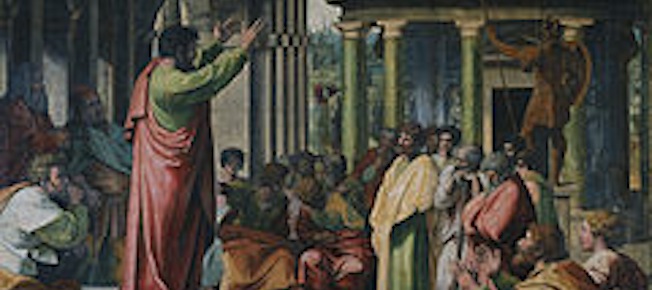 During the current discussions regarding leadership roles within the church, one area often referenced is that of an apostle.[1] What is an apostle? what are the qualifications? Is an apostle ordained to an office, or is it an inner calling manifested in a Spiritual Gift or both? What relevance is the apostle in the church today, and is the office or gift of apostle gender specific, or inclusive? The object of this article is to come to some initial conclusions regarding this type of ministry.
Statistical Findings
The Greek word for apostle is apostolos.[2] Apostolos is used 81 times in the N.T. It is used only once each in Matthew and Mark, six in Luke and 30 in Acts. Except for four references in Jude and Revelation, the remaining 38 references are found in Paul’s writings.
Etymology
Originally, the Greek word for apostle, apostolos, was used as an adjective.[3] Initially it denoted the dispatch of a “fleet (or army) on a military expedition.”[4] Later, it came to be applied to “the fleet itself and acquired the meaning of a naval expedition.”[5] Finally, it referred to a “group of men sent out for a particular purpose, e.g., an army . . . [or a] band of colonists.”[6] In Cynic-Stoic philosophy, it is a “technical term for commissioning and authorizing by a deity.”[7] And in Greek culture, an apostle was known as “the champion of one religion"--missionaries for “religious propaganda.”[8] When looking at Jewish literature, the term apostolos was “not widely used. . . [and] the term appears only twice in Josephus.”[9]
Word Group
The broader word group of which apostolos is associated, includes the verb apostello. “The frequency of apostello reflects the importance of being commissioned.”[10] “The noun apostole derives its meaning from apostello, and it describes the office of an apostle (apostolate), or the act of sending rather than the thing sent. In secular usage it was a noun of action used for the sending of ships, the shooting of a missile, and the sending of a mummy. It also described the sending of an expedition.”[11]
Lexical Meanings
The meanings for apostolos in First Century Greek were:
1) One sent forth (apo, from stello- to send)[12], ambassador[13], delegate[14], agent[15], envoy[16], any messenger[17]-in a general sense- anyone sent[18] (on a mission[19], service[20], business[21], assignment[22] or errand[23]), bearer of a commission[24], represent another person some way.[25]
2 ) Fleet, an expedition,[26] sea-faring and military expeditions[27].
Interestingly, in the N.T. apostolos never means the act of sending. It “always denotes a man who is sent, and sent with full authority.”[28] New Testament theologian Gerhard Kittel has commented that apostolos is a “commissioned representative of a congregation. . . [and] a bearer of the NT message.”[29]
Pre-Eminent Apostle: Jesus Christ
The first mention of an apostle in the New Testament is in the life of Jesus Himself. In His final prayer, Jesus declared that the Father had “sent”[30] Him. Throughout His life He had “manifested” the Father’s name,[31] “glorified” Him on earth[32] and represented Him so perfectly that when seeing Him, you saw “the Father.”[33] Jesus was sent as an Ambassador and Delegate of the Father. He was truly the first apostle, not only in time but in primacy. In fact, Hebrews makes this clear when it describes Him as “the Apostle and High priest of our profession.”[34] New Testament scholar Don Dent has noted that “before He sent out His own apostles, Jesus was Himself God’s apostle to the world. . . Jesus did not ask His apostles to do anything that He Himself had not already done.“[35] Therefore, when we consider the N.T. evidence for apostolos, we start with the Pattern for all others--Jesus Christ.
PHASE ONE: The Twelve
Jesus choose twelve men from those who followed Him, and named them apostles (“whom he also named apostles“[36]). Ellen White comments on the reason why Jesus did this, “that He might send them forth as His witnesses, to declare to the world what they had seen and heard of Him.”[37] Later, Jesus “sent”[38] His apostles on a missionary tour, for the purpose of proclaiming “the kingdom of God,”[39] “healing the sick,”[40] and “preaching the gospel.”[41] The criteria for belonging to this elite group was:
1) They must be with Jesus to witness His ministry[42]- “beginning from the baptism of John,” His ascension and “resurrection.”[43]
2) They would be “sent out to preach.”[44]
3) They were to “have power to heal the sick and cast out devils.”[45]
The Twelve continued to intact after Pentecost[46], but their mission shifted from being Ambassadors of Christ on earth, to the risen Christ in Heaven. The success of their mission was a result of two primary factors: first, they had been empowered by the Holy Spirit at Pentecost, second, they had been direct witnesses of Jesus’ ministry and learners of His teachings. The combination of these two factors enabled them “with great power” to give “witness of the resurrection of the Lord.”[47] The Twelve had been trained and experienced in entering new places to prepare the way for the Jesus to enter, as a result they played a critical role in leading a movement that was spreading out from Jerusalem.[48]
PHASE TWO: Office of Apostle
After the resurrection and ascension of Jesus, the disciples were no longer in training. While Christ was with them personally, they were simply referred to as apostles. In Acts 1:25, the disciples prayed that God would show them who should take Judas’ position, that “he may take part of this ministry and apostleship (apostole). . .” (KJV). This is the first instance that the work and role of the apostles was referred to as an office or an organized function. The word “apostleship” (apostole) has three basic meanings:
1) Sending away, sending off (of troops[49]),[50] dispatching,[51] expedition of ships[52], mission,[53] expedition[54]
2) Discharge, dismissal,[55] release[56]
3) Office of Apostle,[57] apostleship,[58] office of Apostolate,[59] special role of elite Ambassadorship,[60] office of one sent,[61] office of a special emissary.[62]
The first two definitions of “apostole” don’t seem to fit the context of Acts 1:25, since it is referring to a collective group or company of people. In commenting on Judas’ fall, the disciples recognized that he had left their assembly (Acts 1:25- “. . . apostleship, from which Judas by transgression fell“), thus the reference to an office. This office of The Twelve was a singular, non-repeatable ministry in the history of the church. Ellen White comments that “their office was the most important to which human beings had ever been called, and was second only to that of Christ Himself.”[63] They had been commissioned by Jesus as direct witnesses of His life. Ellen White seems to confirm this understanding when she wrote that “the twelve were called to the apostolate.”[64]
Interestingly, when The Twelve are mentioned in the N.T., the context contains words or phrases which identifies them[65]. When apostolos is referring to The Twelve, the following indicators confirm their identity: 1) the number twelve, 2) the specific names of the twelve (“Peter,” “John,” etc.), 3) Jesus in person, while He walked on earth, 4) the definite article preceding the word apostles ("THE Apostles"- Gr.-tous, tois, ton apostolos), and 5) the context (Acts 1:2- “He had chosen”; Acts 4:33- “witness to the resurrection”; 2 Pet. 3:2- “apostles of the Lord”, etc.). When one or any of these contextual markers are present, Scripture is signaling that the passage is only referring to this special office of the twelve apostles.
PHASE THREE: Paul and companions[66]
The expansion of the ministry of “apostolos” is seen in the work of Paul and his companions, Barnabas and Silas. “Paul was an apostle . . . because Jesus commissioned and sent him to accomplish His purpose. His commission was divine, because Jesus chose and sent him.”[67] “Galatians 1:1 makes it clear that Paul’s apostleship was not based on any human mediator, but was divinely authorized.”[68] Paul uses apostolos fourteen times for himself alone.[69]
There came a point, after Paul had been working for about one year, that both he and Barnabas were ordained as special messengers to the Gentiles. “The Holy Spirit said, ‘Separate Me Barnabas and Saul for the work I have called them.’ When they had fasted and prayed, and laid their hands on them, they sent them away” (Acts 13:2,3). Ellen White comments on this incident, “before being sent forth as missionaries to the heathen world [they] were solemnly dedicated to God by fasting and prayer and the laying on of hands.”[70]
Interestingly, Paul and Barnabas were called “missionaries” in this passage. This seems to be the modern equivalent of the word “apostolos." Paul references this “rite” later when he declares “I am ordained (KJV- set, put- footnote- not making a case for the meaning of ord.) a preacher and an apostle.”[71] It was at this point that Paul considered himself an apostle. Again, Ellen White comments on this incident, “Paul regarded the occasion of his formal ordination as marking the beginning of a new and important epoch in his lifework. It was from the time of this solemn ceremony, when, just before he was to depart on his first missionary Journey . . . that he afterward dated the beginning of his apostleship in the Christian church.”[72]
From this time onward, Paul introduces himself as an apostle,[73] and more specifically “an apostle to the Gentiles.”[74] His apostleship[75] appears to be specialized and singular, just as the office of the twelve was. In an apparent paradox, he calls himself “the least of the apostles, not worthy to be called an apostle,”[76] and yet asserts that he was “not inferior to the most eminent apostles.”[77] He basically declared that although his role as an apostle was different than the twelve, in taking the Gospel Commission to the Gentiles,he was not inferior to them.[78] The office of apostle (apostole) also applies to Paul and his companions. He refers to this three times in his own ministry: “we have received . . . Apostleship,”[79] “the seal of my apostleship,”[80] “Peter to the apostleship.”[81]
Interestingly, Luke calls Paul and Barnabas apostles “only after they go on their first missionary journey.“[82] It was when Paul and Barnabas were fulfilling the Great Commission that they were considered apostolos. They were on an “equal footing with the prominent apostles, but with a different sphere of ministry.”[83] Paul personally recruited both Silas and Timothy to join his missionary team, and their ministry functioned under his leadership (Acts 15:40-16:3). The fulfillment of the Gospel Commission through the labors of Paul, Barnabas, and his companions[84] completed this “phase” of the role of apostolos.
First Thess. 2:6-7 refers to Paul, Silvanus (Silas) and Timothy as apostolos. The most straightforward reading is that these three men were foundational as a “planting team” bringing the gospel to this city. “Paul considered Silas and Timothy to be apostles in close association with his own apostleship. Paul considered those who worked with him preaching the gospel and establishing new churches to be apostles of Christ.”[85]
PHASE FOUR: The Gift of Apostle
A shift in the biblical meaning of apostles took place after the initial establishment of churches. Up until this time the term apostolos was limited to those God had directly commissioned or ordained to fulfill the initial phase of the Gospel Commission. After the twelve, Paul and others had established churches, the apostolos became a spiritual gift through the agency of the Holy Spirit. It was no longer limited to the early church founders, but rather, those whom God gifted to be missionaries from the established churches. Ellen White explains:
Later in the history of the early Church, when in various parts of the world many groups of believers had been formed into churches, the organization of the church was further perfected. . . Some were endowed by the Holy Spirit with Special Gifts ‘and God has set some in the church, first apostles, secondarily prophets, thirdly teachers . . .’ [1 Cor. 12:28 quoted]. (my emphasis)[86]
Therefore, when the N.T. refers to the “Gift of Apostolos”- it seems to refer to the time after the initial establishment of churches had taken place (by the twelve, Paul, Barnabas, etc.), and the need for missionaries to be sent out from them was needed. Apostles have been needed in all ages and in all times since the apostolate closed in the first century. “Apostles are the first in a sequence of persons who build the church. . . [and] there is every indication that the gift was intended to be on-going.”[87] “Apostles lay the foundation of the church. Their ministry focuses on the initial stage of church planting. This work can be strenuous and ‘dirty’ and often forgotten by those who come in later stages, but the apostle is critical in establishing the strong base and general pattern for the church within a specific geographic or ethno-linguistic boundary.”[88] “Paul makes a careful distinction between their function as apostles and the calling as apostles of Christ to plant churches among the nations, by adding the modifier- ‘apostles OF CHRIST,’ ‘apostles OF THE CHURCHES’ or ‘apostles BEFORE ME.’”[89]
The debate regarding the ongoing role of apostles centers around whether Paul was teaching that missionary apostles are an on-going gift (1 Cor. 12:28 and Eph. 4:11), or whether he meant the unique ministries of eyewitnesses and specifically commissioned apostles. “The context of each passage seems to imply an on-going gift. The gift list in 1 Cor. 12 is in a chapter that emphasizes the diversity of gifts; the Body of Christ is not complete without all of them. If Paul assumed that apostles were not an on-going gift to the church, it seems incongruent with the basic argument of the chapter.”[90] The gifts mentioned in Ephesians 4:11 are given for the purpose of “equipping the saints to build up the church until we all attain to the fullness of Christ.”[91]
New Testament scholar Harold Hoehner has stated, “apostle [in Eph. 4:11, 1 Cor. 12:28] refers to . . . the gift of apostle. There were people in addition to the original twelve who had not been with Jesus in His ministry and did not witness His resurrection but who are listed as apostles. . . It seems the main function of an apostle is to establish churches in areas that have not been reached by others.”[92] Ephesians 4:11 teaches that the gift of Apostle is given until the Second Coming.[93]
Apostles are the first gift, though we should understand this as a priority of sequence rather than of status. In practical terms, the other gifts are on hold until apostle has planted the new church. As a “Gift of the Spirit”--“the church does not ‘raise up’ its apostles, but responds to the apostolic witness.”[94] Scholar David Garland notes: “Apostles appear first as the founders of the church communities.”[95]
Conclusion
This brief survey of apostolos highlights the fact that “New Testament writers, and especially Paul, did not limit the use of apostolos to eyewitnesses. . . He viewed the apostles primarily as those who were commissioned for spreading the faith. . . And Paul’s basic concept when using the word is the missionary role of church planting.”[96]
Apostolos has an evolving meaning in the New Testament. As was suggested, it goes through four general phases: Phase One: The Twelve- chosen by Jesus as His special witnesses of His Ministry from His baptism to His ascension; Phase Two: After Jesus ascension, their “training” had been completed, and they filled the office of the apostle. Their mission was to initiate and spread the Gospel Commission Jesus gave in Matt. 28, especially to the Jews; Phase Three: was seen in the ministry and office of Paul and his companions, in taking the gospel to the Gentiles, and planting churches throughout Asia and Asia Minor; Phase Four: represented a shift from an office to a spiritual gift. As delineated in 1 Cor. 12 and Eph. 4, the gift of apostle is gender inclusive, and based on an inner calling from God to a ministry of His choosing. “Apostles include men and women and children called and sent by God to fulfill the Great Commission through planting churches in pioneer areas.”[97] Therefore, it is not gender or age specific, but Spirit inspired and commissioned.
Reflections
Our understanding of the on-going role of apostles has several implications for our mission work in the modern church. The following application of the New Testament “Gift of Apostles” is worth noting:
1) Present day missionaries who proclaim the gospel and plant churches where Christ is not known, fulfill the same function as missionary apostles in the New Testament. While not all overseas ministry is apostolic in this sense, missions in every generation should prioritize this foundational role of apostles.
2 ) Mission work should develop with apostles as the base because they are God’s gift to lay the foundation of the church. Mission practice that is not built on apostles will likely have an inadequate foundation.
3 ) Apostles come from the churches, but the New Testament emphasizes that churches come from apostles.
4 ) The biblical model for the partnership of established churches with the work of apostles includes commissioning and releasing those who are called by God, hearing and affirming reports of what God is doing in pioneer areas, contributing to the financial support of apostles working in foreign lands.
5 ) When we view the apostle concept in terms of a spiritual gift fulfilled in a function, rather than an ecclesiastical office- we understand that “Apostleship” is not tied to a status, but to a task.[98]
Footnotes [1] Doug Batchelor, (Taken from An open letter from Doug Batchelor regarding the response to his sermon) Women’s Ordination:
A Biblical Prospective” On February 6, 2010, I presented a message to my home church in Sacramento, California. While Jesus engaged women to share the gospel, He called only men to serve in the capacity of apostle. When Judas died, his replacement was chosen from among men (Mark 3:14; Acts 1:21). This is just the beginning of the evidence.” http://www.womenministrytruth.com/portals/7/documents/An-Open-Letter-From-Pastor-Doug-Batchelor.pdf
Stephen Bohr--“Who intentionally chose 12 male apostles when there were women able in ministry that could have been chosen as well? Who chose to place the names of 12 males on the gates of the New Jerusalem and 12 males on the foundations of the city?” http://secretsunsealed.org/Downloads/newsletter2Q12web.pdf
Randy Roberts--“And Junia was identified by Paul as a leading apostle. Women filled every leadership role you can imagine.” http://session.adventistfaith.org/roberts-edited
[2] In the textus receptus
[3] Plat. Ep., VII, 346a; referenced in Kittel, Ibid, p. 407
[4] Kittel, Ibid, p. 407
[5] Kittel, Ibid, p. 407
[6] Kittel, Ibid, p. 407
[7] Kittel, Ibid, p. 409
[8] Kittel, Ibid, 411
[9] Kittel, Ibid, 411
[10] Don Dent, The Ongoing Role of Apostles in Missions: The Forgotten Foundation, p. 31
[11] Karl Rengstorf, “Apostello, exapostello, apostolos, pseudapostolos, apostole.” TDNT, ed. Gerhard Kittle, 1:398-446
The word appears four times in the New Testament (Acts 1:25; Rom. 1:5; 1 Cor. 9:2; Gal. 2:8)
[12] W.E. Vine; Expository Dictionary of N.T. Words
[13] Hermann Cremer, Biblico-Theological Lexicon of the New Testament
[14] Joseph H. Thayer; Thayer’s Greek-English Lexicon of the New Testament
[15] S. Bagster, The Analytical Greek Lexicon
[16] Walter Bauer, Greek-English Lexicon
[17] Edward Robinson, Greek and English Lexicon of the New Testament
E.W. Bullinger; Critical Lexicon and Concordance to the English and Greek N.T. George Berry; Greek-English Lexicon
[18] Hermann Cremer, Biblico-Theological Lexicon of the New Testament
[19] George Abbott-Smith, A Manual Greek Lexicon of the New Testament
[20] Henry George Liddell & Robert Scott; A Greek-English Lexicon
[21] Samuel C. Loveland; A Greek Lexicon: Adapted to the N.T.: with English Definitions
[22] Frederick William Danker, The Concise Greek-English Lexicon of the New Testament
[23] Samuel C. Loveland; A Greek Lexicon: Adapted to the N.T.: with English Definitions
[24] S. Bagster, The Analytical Greek Lexicon
[25] Alexander Souter; A pocket Lexicon to the Greek N.T.
[26] George Abbott-Smith, A Manual Greek Lexicon of the New Testament
Theologian Gerhard Kittel has noted- “Only occasionally in the Gk. Field does apostolos have a meaning related or apparently related ot that which it bears in the NT. . . In the older period apostolos is one of the special terms bound up with sea-faring, and more particularly with military expeditions; it almost a technical political term in this sense.”
(Gerhard Kittel, Theological Dictionary of the New Testament, Vol. 1, p. 407)
[27] In the older period apostolos is one of the special terms bound up with sea-faring, and more particularly with military expeditions; it almost a technical political term in this sense. (Gerhard Kittel, Theological Dictionary of the New Testament, Vol. 1, p. 407)
[28] Throughout the NT the word is used only of men, although according to the course of things women might also have been called apostles. Yet this would have been a self-contradiction, since it is a legal term and women have very restricted legal competence in Judaism. (Kittel, Ibid, p. 421)
[29] Kittel, Ibid, 422
[30] John 17:21,25
[31] John 17:6
[32] John 17:4
[33] John 14:9
[34] Heb. 2:18
[35] Dent, Ibid, p. 34
[36] Matt. 10:2
[37] EG White, Desire of Ages, 291
[38] Luke 9:2
[39] Luke 9:2
[40] Luke 9:2
[41] Luke 9:6
[42] Mark 3:14
[43] Acts 1:22
[44] Acts 3:14
[45] Acts 3:14
[46] Mathias replaced Judas- Acts 1:25,26
[47] Acts 4:31
[48] Dent, Ibid, p. 37
[49] W. Bauer, Gr./Eng. Lexicon of the N.T.
[50] Abbott-Smith, Gr. Lexicon of the N.T., Thayers, Gr..Eng. Lex. Of the N.T., E.W. Bullinger, Critical Lexicon & Concordance to the Greek N.T., Henry Liddell & Robert Scott, Greek English Lexicon
[51] Cremer, Biblico-Theological Dict. Of Gr. N.T.
[52] Ed. Robinson, Gr. & Eng. Lexicon of the N.T., Frederick Danker, Concise Gk/Eng. Lex. Of the N.T.
[53] Tyro’s Greek/English Lexicon
[54] S. Bagster, Analytical Gr. N.T., W. Perschbacher, New Analytical Greek Lexicon
[55] Abbott-Smith, Liddell & Scott, Ibid
[56] Thayers, Ibid
[57] Abbott-Smith, Robinson, Cremer, Perschbacher, Bullinger
[58] Tyro, Abbott-Smith, Robinson, Cremer, Thayer, Perschbacher, Danker
[59] Thayer, Ibid
[60] Danker, Ibid
[61] Bagster, Ibid
[62] Bauer , Ibid
[63] Desire of Ages, 291
[64] Desire of Ages, 290
[65] The exception is when Paul is mentioned. The Definite article is used for him as well.
[66] 1 Thess 1:1 identifies Paul, Silvanus and Timothy as the authors of 1 Thessalonians.
1.2. The man identified as Silvanus (Greek = Silouanos) in 1 Thess 1:1 as one of the authors of the letter is the same man known as Silas (Silas) in the Book of Acts. This is obvious from the fact that the movements of "Silvanus" in Paul's letters (1 Thess 1:1; 2 Thess 1:1; 2 Cor 1:19; see 1 Pet 5:12) coincide with those of "Silas" in the Book of Acts (Acts 15:22, 27, 32 (34), 40; 16:19, 25, 29; 17:4, 10, 14, 15; 18:5). This man's given name was Silas, which was a Jewish name (see Josephus, War 2.520; 3.11, 20; Ant. 14.40; 18.204; Life 89-90, 272; t. Ber. 2.10); he took a similar sounding Roman name, Silvanus, presumably in order to facilitate his evangelistic work. http://www.abu.nb.ca/courses/ntintro/1thess.htm
[67] Dent, Ibid, p. 39
[68] Dent, Ibid, p. 39
[69] Rom. 1:1; 11:13; 1 Cor. 1:1, 9:1,2; 2 Cor. 1:1; Gal. 1:1; Eph. 1:1; Col. 1:1; 1 Tim. 1:1; 2:7; 2 Tim. 1:1,11; Tit. 1:1
[70] RH 5/11/11
[71] 1 Ti. 2:7; 2 Ti. 1:11
[72] The Review and Herald, May 11, 1911
“Paul regarded his ordination as marking a new epoch in his life. From this time he afterward dated the beginning of his apostleship.” (Trials to Triumph, 87)
[73]1 Cor. 1:1; 2 Cor. 1:1; Gal. 1:1; Eph. 1:1; Col. 1:1; 1 Ti. 1:1; 2 Ti 1:1; Tit. 1:1
[74] Rom. 11:13
[75] 1 Cor. 9:
[76] 1 Cor. 15:9
[77] 2 Cor. 11:5- “most eminent” most likely referring to the Twelve Apostles.
[78] It was not to exalt self, but to magnify the grace of God, that Paul thus presented to those who were denying his apostleship, proof that he was “not a whit behind the very chiefest apostles.” 2 Corinthians 11:5. Those who sought to belittle his calling and his work were fighting against Christ, whose grace and power were manifested through Paul. The apostle was forced, by the opposition of his enemies, to take a decided stand in maintaining his position and authority. (AA 388)
[79] Rom. 1:5
[80] 1 Cor. 9:2
[81] Gal. 2:8
[82] Acts 4:36 and 9:27
[83] F.F. Bruce, Paul: Apostle of the Heart Set Free, 12
[84] Silas and Timothy according to Col. 1:23.
[85] Dent, Ibid, p. 53
[86] Ellen G. White, Acts of the Apostles, p. 91, 92
[87] Dent, Ibid, p. 64
[88] Dent, Ibid, p. 64
[89] Ellis, E. Earle, “Paul and his co-workers,” p. 445
[90] Crag S. Keener, Gift and Giver, p. 105
[91] Dent, Ibid, p. 58
[92] Harold Hoehner, “Ephesians, An Exegetical Commentary,” p. 541
[93] Craig S. Keener, Gift and Giver, p. 128
[94] Anthony Thiselton, The First Epistle to the Corinthians: A Commentary on the Greek Text, p. 1014
[95] David E. Garland, 2 Corinthians, p. 59
[96] Dent, Ibid, p. 5
[97] Dent, Ibid, p. 6
[98] Adapted from Dent, Ibid, p. 64,65
Why Johnny won’t read the Bible: postmodernism and the decline of Christian literacy

Associate Professor of English Literature at Southwestern Adventist University Karl G. Wilcox gives a lecture at Andrews University Oct. 2012 on postmodernism and the decline of Christianity. The lecture was part of a symposium put together by the Center for Secular and Postermodern Studies (CSPS), which is a department of the Office of Adventist Mission at the General Conference. If you haven't heard of CSPS, here is its mission and general information:
Mission
To inspire, mentor, and equip Seventh-day Adventist pastors, churches and organizations to successfully lead seculars and postmoderns into a real experience with God.
General Information
CSPS exists to help the Seventh-day Adventist church better understand secular and postmodern people, explore new evangelistic methods and provide practical, relevant tools to make disciples through a real experience with God.
La Sierra University's Edward C. Allred Center honors notorious abortionist

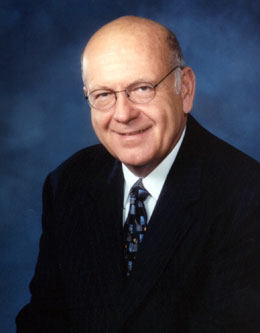 Edward C. Allred made a fortune owning a chain of abortion clinics, personally aborting hundreds of thousands of fetuses, and currently owns gambling venues in California and New Mexico. In 2010, La Sierra University founded the “Edward C. Allred Center for Financial Literacy and Entrepreneurship" in his honor.
It hardly seems possible that La Sierra University, which still purports to be a Seventh-day Adventist school, would name anything after a man who has left such a trail of wreckage in his wake, a man who made his fortune eliminating two generations of humanity, and now spends his days devising ways to separate gamblers from their money. And yet they did. But apparently they are not proud to be associated with his life work, as shown by the misleading information on their website:
Edward C. Allred made a fortune owning a chain of abortion clinics, personally aborting hundreds of thousands of fetuses, and currently owns gambling venues in California and New Mexico. In 2010, La Sierra University founded the “Edward C. Allred Center for Financial Literacy and Entrepreneurship" in his honor.
It hardly seems possible that La Sierra University, which still purports to be a Seventh-day Adventist school, would name anything after a man who has left such a trail of wreckage in his wake, a man who made his fortune eliminating two generations of humanity, and now spends his days devising ways to separate gamblers from their money. And yet they did. But apparently they are not proud to be associated with his life work, as shown by the misleading information on their website:
Dr. Allred has always been an entrepreneur, whether in his innovative and financially successful medical practice or in his lifelong commitment to the sport and business of quarter horse racing in the United States and Southern California in particular. To both he has brought not only sound and creative business practices but also a deep interest in his colleagues and employees and a genuine care for their well being.
To characterize a business with annual revenues of $70 million from 23 outlets in two states as a “medical practice” goes beyond spin and crosses over into dissimulation.
In 1969, Dr. Edward C. Allred, a graduate of La Sierra University and Loma Linda University, founded the “Avalon-Slauson Medical Group,” which was later renamed “Family Planning Associates.” Although this was before the Supreme Court effectively legalized abortion nationwide in Roe v. Wade (1973), California had already legalized abortion in several situations, and hence many women traveled to California to have abortions. “We had planeloads of people coming in,” recalled Allred to a Los Angeles Times reporter in 2002, “We'd meet them at the airport with a bus.”
In 1980, Allred claimed to have personally aborted a quarter of a million fetuses in the preceding 12 years. It may seem difficult to believe that one man could perform so many abortions, but Allred tried to spend no more than five minutes with each pregnant woman. “We've been pioneers in so many ways,” he once told a reporter. “We streamlined, we made efficiencies, we employed the suction technique better than anyone, and we eliminated needless patient-physician contact. We usually see the patient for the first time on the operating table and then not again.” Spending only five minutes per patient would have allowed Allred to perform as many as 100 abortions in a 10-12 hour working day, and 200 working days per year (50 four-day work weeks) would, over 12 years, add up to 240,000 aborted fetuses. So Allred's estimate of the number of abortions he performed during that time is credible.
You might wonder how a person who has aborted a very large city worth of human lives salves his conscience. The pioneers of abortion, such as Margaret Sanger, were quite explicit in favoring it as a means of weeding out undesirables and the unfit, and there was general agreement that the black race was undesirable. Dr. Allred has, at least on one occasion, voiced similar thoughts.
Population control is too important to be stopped by some right-wing pro-life types. . . . The Aid to Families with Dependent Children program is the worst boondoggle ever created. When a sullen black woman of 17 or 18 can decide to have a baby and get welfare and food stamps and become a burden to all of us, it's time to stop. In parts of South Los Angeles, having babies for welfare is the only industry the people have. Edward C. Allred, M.D. quoted in Anthony Perry, "Doctor's Abortion Business is Lucrative," San Diego Union, October 12, 1980, pages A-3 and A-14.
Family Planning Associates expanded to the point where Allred owned 21 abortion clinics in California and two in Chicago. According to a 2001 article in Forbes Magazine, Allred's business generated $70 million in annual gross revenues and $5 million in annual profits. Just as McDonald's founder Ray Kroc pioneered efficiencies and economies of scale in the hamburger business, Edward C. Allred pioneered efficiencies in the abortion clinic business, causing some to call Allred “the Ray Kroc of abortions.”
But things did not always go smoothly; there have been post-abortion deaths, and Allred has been sued many times. One abortion technique Allred used in the early days was saline amniocentesis--injecting saline in place of the normal amniotic fluid--which slowly poisons the baby while burning its skin. This method was usually used in late-term abortions, and the baby typically took an hour to 90 minutes to die. In 1977, Gianna Jessen's 17-year-old mother went to Dr. Allred's Avalon Clinic in Inglewood, California, seeking to abort a pregnancy of 29 weeks (seven months). Dr. Allred used the salt poisoning method, underestimating the amount of saline necessary to kill the fetus, which began struggling to escape the deadly womb. Gianna Jessen was born alive, and Dr. Allred is listed on her birth certificate as the doctor who delivered her. Gianna suffers from cerebral palsy, which she calls the gift of cerebral palsy, and today has become a prominent spokeswoman in the pro-life movement.
Dr. Allred sold Family Planning Associates in 2005, and has retired from the abortion business. He devotes his time to a hobby and passion he acquired while still in medical school: horse racing. Dr. Allred now owns Los Alamitos Race Track in Cypress, California, and Ruidoso Downs, in New Mexico. Horse racing is a very dangerous “sport,” and the exploitation of jockeys is one of the most under reported aspects of that “sport” (really just an excuse for gambling).
Jockeys are independent contractors who earn on average about $38,000 per year; for a basic “mount fee” of as little as $60.00 per race, they risk death and paralysis. In a typical year, at least one or two jockeys are killed or suffer catastrophic spinal cord injuries, and yet the tracks do not carry adequate insurance. A paralyzed jockey will typically burn through a million dollars in medical bills in the first 2 years after the accident. This isn't a theoretical concern; on September 2, 2011, Jacky Martin suffered a broken neck in a fall at Ruidoso Downs, is now a quadriplegic, and needs mechanical help to breathe. Ruidoso downs reportedly carries only $500,000 in accident insurance, and, as in almost every case of this type, that is grossly inadequate to provide for Jacky Martin's ongoing medical needs.
These men and women risk death an catastrophic injury almost solely to provide an occasion for gambling. At Los Alamitos, the daily “handle,” or total dollar amount of bets taken in, was reported to be $1.3 million. Allred decided to simulcast Los Alamitos races to other venues, thus enabling gamblers to bet and lose money on races that they did not attend. Ruidoso Downs had been losing money, but Allred and his partners made the track profitable by adding 300 slot machines, some of which are proudly shown on the track's website. Attendance at horse racing venues has sharply declined in recent years, and industry insiders say the “sport” cannot survive without casino-style gaming at the tracks. But is saving the tracks in the public's interest? According to the National Gambling Impact Study Commission (NGISC), more than one in three racetrack patrons is a pathological or problem gambler, so the tracks cause financial problems for the patrons, as well as causing jockeys to risk death and quadriplegia.
Back to La Sierra University. The Board of Directors is stocked with Adventist Church leaders. Pacific Union president Ricardo Graham is Chairman of the Board of Trustees, and all the affiliated conference presidents within the Pacific Union are also board members. These are all decent men, so it is difficult to understand how they could have allowed La Sierra to become associated with such a person as Edward C. Allred. This sad incident, along with previous stories—such as the issuing of tax-free bonds that came with a secularizing bond covenant, and the ongoing failure to prevent Darwinism being inculcated as truth—call into question whether the Board of Trustees is exercising any meaningful oversight at all.
If the church leadership in the region cannot reform La Sierra, world church leadership must take action. If La Sierra cannot be reformed, it must be clearly and publicly separated from the official church.
[AUDIO] Persecution good for the church?

Liberty magazine editor Lincoln E. Steed was a guest speaker at the Beaumont Seventh-day Adventist Church in Beaumont, Calif. His theme was perhaps it's not so bad for us to be persecuted after all.
 Liberty Magazine is freely circulated among legislators and individuals in positions of influence and highly respected and appreciated by people of all persuasions. Only about 10,000 Adventists, out of about one million in the North American Division, subscribe to Liberty, and according to Steed, 185,000 magazines are sent out each year.
[audio http://advindicate.com/audio/religiosliberty.mp3]
(If your current browser does not support HTML5 audio, or Flash Player is not installed, a direct download link will be displayed instead of the player.)
Coming to grips with evil

 On Friday, December 14, 2012 a young man pushed his way into a Connecticut elementary school and coldly murdered twenty six people. Twenty of them had never reached the age of eight. After one hour of evil, many will spend days, weeks, months, and years in grieving. All of us are challenged to confront evil itself. What can we do, personally and as a society, to protect ourselves from the destruction caused by evil?
As a society, we have tried to detect and imprison evil. We have removed those that seem evil from out of society. We have removed many perpetrators of evil from out of our lives. But evil still haunts us. We have achieved phenomenal accomplishments in engineering, in the arts, and in scientific discovery. A trip half way around the globe is now less stressful and time consuming than a trip over the hills and through the woods to grandma’s house used to be. But we have not achieved similar results in containing and eradicating evil. It is still present, revealing itself at random moments, reminding us of our helplessness to conquer it.
On Friday, December 14, 2012 a young man pushed his way into a Connecticut elementary school and coldly murdered twenty six people. Twenty of them had never reached the age of eight. After one hour of evil, many will spend days, weeks, months, and years in grieving. All of us are challenged to confront evil itself. What can we do, personally and as a society, to protect ourselves from the destruction caused by evil?
As a society, we have tried to detect and imprison evil. We have removed those that seem evil from out of society. We have removed many perpetrators of evil from out of our lives. But evil still haunts us. We have achieved phenomenal accomplishments in engineering, in the arts, and in scientific discovery. A trip half way around the globe is now less stressful and time consuming than a trip over the hills and through the woods to grandma’s house used to be. But we have not achieved similar results in containing and eradicating evil. It is still present, revealing itself at random moments, reminding us of our helplessness to conquer it.
All of the tools available to society may partially contain evil, but cannot eradicate it, for we can never force evil out of another person’s heart. The battle against evil is ultimately an individual battle. It is fought daily. It involves personally learning to recognize what is really good and what is not. It demands intellectual rigor to pierce the confusion and lies that still swirl around us for the purpose of protecting evil. It involves challenging the status quo and what seems normal, for our status quo offers us a means of survival while we accommodate evil. It is a “normal” that integrates evil with good.
The unconverted heart enjoys at least some evil, until it reaps its due reward. For the shooter of Newtown, there may have been a euphoric sense of power and control. For those of us who take our friends and family for granted, the pleasure of the movie we were watching or the friend we were commiserating with was temporarily more satisfying than expressing love and gratitude to someone close to us. We like evil, until we experience its downside.
The only way to eradicate evil is to remove it from each human heart. As long as it hides beneath the surface, it will find opportunities to highjack the human it resides in and destroy people.
And there is only one means of having personal victory over evil. It is the discovery of Jesus. Not the chanting of His name or the repetition of His titles. Not the attachment to a mythical persona. But the real appreciation of Him.
Let us stand figuratively in the shadow of His death and look at His life. Watch His nobility as He recognizes and actively provides comfort for his own mother and for women He passes along the way without asking for the least sympathy for the injustice and suffering of His impending execution. Earlier, He did not flinch when they took up stones to murder Him, but He weeps at the moral suicide committed by these “champions of morality” who are really a showcase of evil. He sees the leaders destroying their society, blaming anyone but themselves for their own evil conduct, and it breaks His heart. He cries with the fatherless, the powerless, and the widows. He helps the homeless, the disheartened, and those in the prison created by social stigma. His behavior stands faultless, throughout the record. He demonstrates love, compassion, moral courage, dignity, responsibility, determination, restraint, and all other virtues.
Look at the Person who was haunted by every evil imaginable, but refused to permit the first evil thought to linger in His heart. All of the evil that surrounded Him was never used as an excuse to permit any evil to come from Him. He took personal responsibility for refusing to say or do anything evil. Jesus never blamed anyone, or saw any circumstance as a justification for evil.
As we look at the most noble Person our world has ever witnessed, we will naturally see ourselves as individuals that have tolerated, accommodated, and even perpetrated evil in this world. Each of us has contributed to a world with evil. Some of us have given the world a double portion of that evil. Others have simply done nothing to conquer evil, feeling proud that we are not top contributors. But evil doesn’t need big donors only. Any contribution will do. And all of us have given at least our spare change.
Looking at the courage and the nobility of Jesus, we recognize that He and we cannot get along as long as any evil gets in the way. Each of us can be friends with Jesus only if we drop the evil, all of it.
At its root, every thought and every act of evil is not only an injustice or harm to some creature but an equal injustice to our Creator as well. We need Jesus to forgive us. We need pardon. We need to be saved and changed. This reconciliation is the only real remedy in the universe for evil. It is an individual solution. No one can experience it for another. It is a real and effective solution. It is a gratifying and thrilling solution. It is the answer to evil, all evil.
The cruel history of December 14, 2012 ought to drive us to a personal daily determination to look at Jesus, to resolve every difference between our sinful selves and His perfection. We ought to take that one December day’s horrible events as a reminder to pursue an evil-free life at any personal cost.
When we delay and dally with evil, we embrace it and provide it credibility and traction. As we tolerate evil, we become personally responsible for its existence. We have just witnessed in Newtown, Connecticut, a victory of evil in the day-to-day battle. Let us take courage and renew that day-to-day battle so that evil’s momentary achievement will be lost in resounding defeat. Let evil’s temporary win in the battle strengthen our commitment, and let us increase our resolve to be victorious in the war.
Unity equates to dirty nails

 The term unity flies around liberally these days. Another widely referenced term is equality. These terms are linked together on a regular basis intimating they are similar. In fact, they are not evenly matched, as there are many distinctions between these two words, one of which is the focus. Equality means just that – equal. If I have equal pieces of pie I have at least two pieces of pie with the same weight, size, ratio of crust to filling, dollop of whip cream, etc. The focus is on the items being compared. People often associate equality with an ideal situation; this is not always true. Parts of a healthy body are not equal, but rather thrive in a perfectly balanced, unified environment. This balance provides harmony of movement and direction and outlines the summative foundation for health, which is to focus on the whole, not on individual organs or functions. If the heart – as important as it is – demanded the same treatment as the brain the result would be fatal for the entire body.
Another evident difference between the two words is that equality compares internally and unity looks outward. Equality by its very nature requires internal comparison. Comparison seeks to attach measurements and values. This naturally leads to identifying levels of values, which lends to labeling one thing more desirable and another less desirable. Paul understood the folly of internal comparison when he wrote, “For we dare not class ourselves or compare ourselves with those who commend themselves. But they, measuring themselves by themselves, and comparing themselves among themselves, are not wise” (2 Corinthians 10:12). Matthew Henry’s (2002) commentary on this verse identifies the reality supported by scholarly studies (Dovidio & Fiske, 2012; Silvia, 2012) that biases play a key role in observations and as a result our judgments are shaped by the labels of the world around us rather than truth alone. This is fodder for error and cannot be the mode of operation of a Godly individual or organization.
The term unity flies around liberally these days. Another widely referenced term is equality. These terms are linked together on a regular basis intimating they are similar. In fact, they are not evenly matched, as there are many distinctions between these two words, one of which is the focus. Equality means just that – equal. If I have equal pieces of pie I have at least two pieces of pie with the same weight, size, ratio of crust to filling, dollop of whip cream, etc. The focus is on the items being compared. People often associate equality with an ideal situation; this is not always true. Parts of a healthy body are not equal, but rather thrive in a perfectly balanced, unified environment. This balance provides harmony of movement and direction and outlines the summative foundation for health, which is to focus on the whole, not on individual organs or functions. If the heart – as important as it is – demanded the same treatment as the brain the result would be fatal for the entire body.
Another evident difference between the two words is that equality compares internally and unity looks outward. Equality by its very nature requires internal comparison. Comparison seeks to attach measurements and values. This naturally leads to identifying levels of values, which lends to labeling one thing more desirable and another less desirable. Paul understood the folly of internal comparison when he wrote, “For we dare not class ourselves or compare ourselves with those who commend themselves. But they, measuring themselves by themselves, and comparing themselves among themselves, are not wise” (2 Corinthians 10:12). Matthew Henry’s (2002) commentary on this verse identifies the reality supported by scholarly studies (Dovidio & Fiske, 2012; Silvia, 2012) that biases play a key role in observations and as a result our judgments are shaped by the labels of the world around us rather than truth alone. This is fodder for error and cannot be the mode of operation of a Godly individual or organization.
However, for those who are quick to throw equality out with the bath water it must play a vital role in Christianity:
The secret of unity is found in the equality of believers in Christ. The reason all division, discord, and difference is found in separation from Christ. Christ is the center to which all should be attracted; for the nearer we approach the center, the closer we shall come together in feeling, in sympathy, in love, growing into the character and image of Jesus. RH December 22, 1891
Equality is measured through the eyes of our Leader, not in comparison to each other. We do not need to compare internally – as that is God’s job alone – but rather focus on Christ and we will fulfill the plan and purpose God intends for His church.
An interesting phenomenon I have observed finds many people have no issue pointing to a group and identifying it as disjointed or unequal. Few become uncomfortable in pointing out which subsections in the group are causing inequality. Some even consistently point out individuals as disruptive. Interestingly enough, the disrupters are always outside of those who point the fingers. The fact is you and I make up “us” – you and I cause disunity. I choose to not seek Christ as the center of my life or come together with fellow believers in the image of Jesus. I choose to disrupt the body of Christ and disruption is the antithesis of unity.
The fourteenth fundamental belief of the Seventh-day Adventist church references the body of Christ and the many members that must work in unity to “serve and be served without partiality or reservation” (“Fundamental Beliefs,” 2012). Service without reservation rarely equals equality, which raises a difficult point for what place equality has in the Seventh-day Adventist church. A search for the term “equality” in multiple Bible versions (ESV, ASV, and KJV) finds one verse that holds a word that is consistently translated as equality: 2 Corinthians 8:14. Paul uses the word equality to ensure that Christians did not feel they must aim for the top to be considered valuable, but rather should seek to serve those around them to ensure the burden is equally distributed to fulfill the true purpose of Christianity.
This concept proves hard for individuals. I admit this causes my eyebrows to raise a few notches, as I am not particularly interested in putting in a lot of work without providing apparent meaning to the whole. Recently I heard a statement that caught my attention: a group cannot be corporately what it is not individually. In essence, the sum cannot make up for what is lacking in the parts. A quick deduction identifies individual effort and interest as key to the group’s success. This is where I take heart. The bottom line is that each individual must take responsibility for his or her own participation and integrity and God adds the meaning. Ellen White agrees with this assertion and provides a natural progression and fail safe when facing disunity:
Here is the only safeguard for individual integrity, for the purity of the home, the well-being of society, or the stability of the nation. Amidst all life’s perplexities and dangers and conflicting claims the one safe and sure rule is to do what God says. Education, p. 225
In applying the basic statement of individual responsibility to this quote it can be remodeled to state the following: the bottom line for the individual Christian is to only seek and do what God says and the rest will fall into place.
I am going to be transparent and share my personal experience on this topic: I do not spend sufficient time understanding what God says. I can regurgitate verses – precious few – and point to overarching promises in His word, but I do not make time to unearth the depth of knowledge or understanding of God’s word. I imagine those around me who profess Christianity understand this reality in our fast-paced world. It is very easy to broadly brush across beliefs and trending topics, but taking the time to dig and become familiar with why I believe what I believe and establish a relationship with Christ on which eternity can be built proves to be more difficult.
The truth in God’s word has been likened to buried treasure that must be unearthed (Matthew 13:44). Working in my grandparent’s garden as a child I learned how to dig up the earth, to loosen it with the rototiller, shape it into rows, and dig holes in which to place either the seed or the young plant. This process made it very clear to me that my nails were going to be dirty at the end of the day. Not just a bit of dirt, but the imbedded kind of black dirt that takes some work to clean out with various tools. Interestingly enough, my nails were not just dirty that day. Daily watering, weeding, trimming, and general care produced dirty fingernails for a prolonged period of time from spring to early fall. At times I wondered if the dirt would ever be loosened. As much as I admittedly disliked gardening as a child, this intimate knowledge with the garden allowed me to navigate the bushy plants and many trees with ease and bring my visiting friends to their favorite food without delay. The caked dirt provided evidence of my activity – the more active the labor the more ingrained the dirt. Today I look at my proverbial Christian nails and I see very little dirt.
Let’s bring this home. A hot topic in the Seventh-day Adventist church is equality and unity. Applying the thought process delineated so far in this article it can be said each individual in the church must continually dig for what God says, continually get dirt under the nails. If I see few – if any – dirty fingernails at the end of my hands this means I am causing disunity in my church because I am not pulling my weight as a member of the body of Christ. Dirty fingernails means turning to God’s word and applying it in conversation, action, and in all perplexing topics rather than pure emotion, individual opinion, and popular streams of thought. This does not give us permission to go around inspecting everyone’s digits, but rather this means we need to make sure our nails hold as much dirt as possible. This is our only responsibility. If each of us looks to our own nails we will soon recognize that our little patch of unearthed treasures will grow and will meet up with others who are digging around us and before we know it the church will be unified in purpose and understanding and the conversation of equality will fade away.
A simple progression becomes clear by following the breadcrumbs as identified in the previous quote from the book Education: individuals do not seek God through His word and understand who He is, therefore the family does not join together as a unit to seek His will, which results in society consisting of nominal and face-value Christians, leaving our nation and ultimately our world filled with selfish, egocentric individuals. It always comes back to the individual. The disunity in our homes, society, nation, and yes, our denomination, comes back to me. The reason we are not unified and feel the need to exact equality is due to our individual lethargy and desire to do everything else but dig deep in the living Word for truth.
The good news is that I am an individual. I can change my understanding, my family, my society, my nation, my world, and my denomination through the grace of Christ. I plan to get dirt under my nails continually to learn about that grace, draw near to Christ, and be a Christian. I invite you to join me in this quest for unity.
References
Dovidio, J. F. & Fiske, S. T. (2012). Under the radar: How unexamined biases in decision-making processes in clinical interactions can contribute to health care disparities. American Journal of Public Health, 102(5), 945-952. Fundamental beliefs. (2012). Retrieved from http://www.adventist.org/beliefs/fundamental/index.html
Henry, M. (2002). Matthew Henry’s Concise Commentary on the Whole Bible. Peabody, Massachusetts: Hendrickson Publishers, Inc.
Silvia, J. E. (2012). The biases that limit our thinking about the economic outlook and policy. Business Economics 47(4), 297-301.
The new gnosticism


The New Gnosticism, or the Conspiracy Mongers
Conspiracy theories have always been around. I first encountered them as a teenager. Allow me to confess that I went through a phase where I was attracted to conspiracy theories. Around age 14, I read and was quite enthusiastic about a book titled None Dare Call it Conspiracy. In high school, I firmly believed there was a conspiracy to kill John F. Kennedy, and wrote a senior term paper arguing that there were two shooters at Dealey Plaza on November 22, 1963. (I have since learned more about evidence, and have repented of my naïve, teenage views.)
There is a conventional list of secret organizations that forms the architecture of all conspiracy theories; the “usual suspects” include the Knights Templars, the Illuminati, the Freemasons, the Jesuits, the Bilderbergers, the Trilateral Commission, the Federal Reserve, the Council on Foreign Relations, the Skull & Bones Society (Yale), the Bohemian Grove, and the Belizean Grove (a female counterpart to the Bohemian Club). (A recent addition was an outfit known as “the Priory of Sion,” featured in the books Holy Blood, Holy Grail and The Da Vinci Code. But, alas, the Priory of Sion has been exhaustively debunked as a hoax; it never actually existed as depicted in those novels.)
Typically, international Jewry is the villain at the center of conspiracy theories. The famous antisemitic literary hoax, The Protocols of the Elders of Zion, is an archetype of the genre, taught as truth in public schools in Nazi Germany and still a bestseller in the Muslim world today. Given its ongoing popularity, Protocols is probably the most noteworthy piece of conspiracy-mongering in human history. A few years ago, international communism was frequently featured as the villain of conspiracy theories, but even in communism's heyday it was usually depicted as merely a tool of, or a front for, international Jewry.
In Seventh-day Adventist circles, the basic conspiratorial architecture—the Illuminati, the Freemasons, etc.—remains the same but, in place of the Jews, the Papacy is cast in the role of villain, and the Jesuits are the secret agents who run the world behind the scenes. A book I recently perused claimed that the Jesuits were “the secret terrorists” who were behind every assassination of a U.S. President, and were even behind the sinking of the Titanic. This same author has another book arguing that the “black pope” (the “general” of the Society of Jesus) rules the world, that Jesuits control the U.S. Presidency, that the Jesuits have planned all the wars of the 20th Century, etc.
Another popular (in Adventist circles) conspiracy theorist argues that the religion of Islam is the creation of the Catholic Church, that Saddam Hussein died in 1999, four years before an American-led invasion of Iraq was launched to remove him from power, that the logos of all major sports teams worldwide include occult symbolism, that the European identity card, when turned upside down, depicts the goat of Mendes a Satanic symbol, and that the terrorist attack on the World Trade Center on September 11, 2001, was actually an inside job in which the buildings were pre-wired with explosives (making this person a “9/11 Truther,” as proponents of this all-too-common conspiracy theory have come to be known).
What is the appeal of conspiracy theories? If well presented, as in the novel Holy Blood, Holy Grail, conspiracy theories are quite entertaining, yet I have found genuine history to be more entertaining. The real appeal of conspiracy theories is the desire for, and pride in, secret knowledge. Conspiracy theorists are a contemporary echo of a 2nd Century heresy known as Gnosticism. The Gnostics believed that the material world was evil, and that esoteric knowledge was the way of salvation from this evil world. Knowledge of facts hidden to most others was, to the Gnostic (from the Greek gnostikos, meaning “learned”), the path to liberation.
Conspiracy theories seem harmless to many, but they are anything but harmless. There are a number of very real dangers awaiting those who embrace conspiracy theories, including the following:
Where's the Love?
If I have the gift of prophecy and can understand all secrets and every form of knowledge, and if I have absolute faith so as to move mountains but have no love, I am nothing. 1 Cor. 13:2
Conspiracy theories typically have not been innocent speculation. They have often been used to incite hatred against those who are said to be running things behind the scenes, typically the Jews. Actual violence, and even mass slaughter, has sometimes resulted from the promotion of conspiracy hoaxes such as The Protocols of the Elders of Zion. When we Adventists present our interpretations of Bible prophecy, we need to do so in love. We want to communicate love for Roman Catholics, many of whom are sincere Christians who are following all the truth that they know. We do not not want to incite hatred or unreasonable fear of Catholics. When we present Bible prophecy, we point out, with sadness, that the known facts of history show that the Roman Church answers the biblical description of the “little horn” in Daniel. It is not a close case; there is no need to add shaky or disputable “facts,” or conspiracy theories, in a misguided attempt to bolster the case, which brings me to my next point.
Gilding the Lily
A conspiracy-mongering filmmaker has uploaded to YouTube.com a video entitled “The Jay-Z Deception,” claiming that rapper “Jay-Z” (Shawn Corey Carter, b. 1969) is a Freemason. Our filmmaker claims that Mr. Carter has titled his albums, “Blueprint” “Blueprint2” and “Blueprint3” to correspond with the degrees of Freemasonry he has achieved. The three horizontal lines on the album cover for “Blueprint3” are said to represent the Egyptian trinity of Ptah, Ra, and Amun (also known as Osiris, Isis and Horus). The initiation rite of the 9th degree of Freemasonry involves an apron depicting a decapitation in which a sword is held in the the right hand and a severed head in the left hand. Our filmmaker argues that the beheading of Nick Berg in Iraq in 2004 was carried out exactly as depicted on the Freemason apron, and was a signal to all Freemasons and Illuminatists to begin to bring about the New World Order.
If these wild accusations are true, what should we do? What could we do in response? Well, it would be a good idea not to listen to Shawn Carter's “music” or watch his videos. But does anyone really need to believe that Mr. Carter is a Freemason in order to want to avoid his “creative output”? I think not. Here are the lyrics (just the first verse and the chorus) to Mr. Carter's “Is that Yo Bitch":
[Lyrics have been removed.]
And who could forget Mr. Carter's classic, “Nigga What, Nigga Who?” in which he glorifies gun violence and murdering anyone who snitches to the police:
[Lyrics have been removed.]
The rest of Mr. Carter's oeuvre is along these same lines, rapping about “niggaz,” drugs, gangs, murder, “bitches,” etc.
I cannot imagine that anyone would think Shawn Carter's output of obscenity, filth, and crude sex references would be acceptable if only he weren't a Freemason. Asserting that Mr. Carter is a Freemason is an instance of “gilding the lily,” which, idiomatically, means to make a superfluous addition to something that is already complete. The case for avoiding Mr. Carter's work is complete upon a quick survey of his lyrics, which are utterly unfit for any civilized human being, much less a Christian. Who cares whether he has ties to secret organizations? Why promote a disputable conspiracy theory about him when that which anyone can easily verify shows him to be far beyond the pale of Christian entertainment?
Studying what is not uplifting
Finally, brethren, whatsoever things are true, whatsoever things are honest, whatsoever things are just, whatsoever things are pure, whatsoever things are lovely, whatsoever things are of good report; if there be any virtue, and if there be any praise, think on these things. Philippians 4:8
Conspiracy theories are to be avoided for the same reason that the rap of Shawn Carter is to be avoided: it is unedifying even when it is not soiling, which it almost always is. To get deeply involved with studying evil is damaging to one's spiritual health. It is interesting that Ellen White acknowledged the existence of secret societies, and, in the strongest possible terms, warned Christians not to join them, but she never wanted to explore in detail what they were up to. To the contrary:
“I have been permitted to look in upon these secret societies, their feasts, their order, their works, and my prayer has been, ‘Hide them from my sight forever. Let me not understand more.’ One thing I do know, that those who remain in connection with them will be burned up with the bundles of tares, one with them in the last day. Manuscript Releases, vol. 20, p. 286
“Let me not understand more,” she said. Why? Because studying the deeds of darkness is not the best way to triumph in one's spiritual quest. To the contrary, we are to study Jesus Christ and His works of love and mercy. That is the spiritual food that will best nourish us on our pilgrim journey. It is enough to know that we are not to join secret societies, on pain of eternal death; there is no need to try to tease out their hidden, occult purposes, or speculate as to what crimes they may have caused to be committed in the past. To do so is to dwell on darkness.
Demoralization
Like the original Gnostics, who believed that all matter was evil, the new Gnostics believe that practically all states, institutions and organizations are Satanically (or Jesuitically) controlled, including—as some Adventist conspiracy mongers strongly hint—the Seventh-day Adventist Church. This has the effect of discouraging those who swallow the conspiracy theories. After all, what point is there in striving to vindicate truth, to keep God's church on the right track, when unseen forces control matters behind the scenes, and our efforts are doomed in advance?
The truth is that not all institutions are Satanically controlled. All human institutions are tainted by human sin, but that is far different from saying that everything is run by the adversary. There are limits on Satan's power. Satan in not self-existent (Ezek. 28:15), he cannot read our thoughts (Dan. 2; Mat. 4), he is not omnipresent, he is not omnipotent, and he is not the sovereign of the universe. Those who are in Christ can overcome Satan (1 John 2:13-14; Rev. 12:11) whose days are numbered (Rom. 16:20). Demonic powers cannot separate us from God’s love in Christ (Rom. 8:37-39), and Christ has assured us that the powers of hell will not gain control of His church (Mat. 16:18).
Although Satan is not in control of the Seventh-day Adventist Church, through the Jesuits or otherwise, there is a struggle over its character and the direction it will take. Many “cultural Adventists” would like to see the church jettison some or all of its distinctive doctrines and become just another evangelical Christian denomination. Others would like to see doctrine de-emphasized altogether, and subordinated to social welfare-type charitable outreach. If our Church is to continue to pursue its historic commission of heralding the soon return of Jesus Christ to earth and calling the world to worship on the day God hallowed and set aside as a memorial to His creative act, then we will need every believing Adventist at his post of duty. Moreover, we must not be demoralized by phantom conspiracies, indulging a fatalistic pessimism that the battle is already lost, the outcome determined by secret conspiracies. To the contrary, we must stand at our battle stations energized, knowing that the issue is not decided and our part may be crucial.
Bad politics
There is indeed a struggle over the direction of the Seventh-day Adventist Church. As with all polities of any significant size, the Adventist Church has a right, a left, and a center, and the center determines the direction of the church, depending upon which side they align with. As with all polities, the right and the left are competing with each other for the support of this broad, non-ideological center.
When conservative Adventists embrace conspiracy mongering, it hurts us in the political struggle in the church. Liberals use the wild and unsubstantiated conspiracies to discredit the conservative doctrinal beliefs with which the conspiracy theorist is also associated. It gives the other side a weapon they can use against us, and they are using it with gusto. Just last year, a liberal publication used the conspiracy theories of one conservative evangelist to try to discredit his creationism. The argument goes like this: (1) this man believes nutty things about Saddam Hussein, the terrorist attack on the twin towers, etc., (2) he is also a young earth creationist, therefore (3) young earth creationism is just as nutty as conspiracy mongering. This is a logical fallacy, a non sequiter, and also a form of guilt by association, but it nevertheless has argumentative or rhetorical value. The stakes are too high to hand liberal, “cultural” Adventists the means by which they can marginalize and dis-empower conservative Adventists who still believe and teach the doctrines of the Church.
Putting away childish things
When I was a child, I spoke as a child, I understood as a child, I thought as a child; but when I became a man, I put away childish things. 1 Cor. 13:11.
Do you remember when Cracker Jack and cereal boxes came with cheap plastic toys inside? (Do they still come with toys inside?) One of my all-time favorite cheap plastic toys was the “secret decoder ring.” Conspiracy theories function intellectually like the secret decoder ring, allowing the neo-Gnostic to cut through the fog of war, the many details and complex, multiple causations of history, the welter of conflicting expert opinion, and get right to the truth of the matter. They allow him to “decode” what remains unknown and mystifying to his neighbors. In sum, conspiracy theories have an appeal that is intellectually immature. But unlike the secret decoder ring, conspiracy theories are not harmless toys. They can do real damage, most of all to the person who delves too deeply into them.
It is time for conservative, believing Adventists to signal that conspiracy theories are not, or are at least no longer, an acceptable part of any evangelist's, lecturer's, or filmmaker's toolkit. It is time to put conspiracy theories away, along with the other relics of childhood and adolescence.
The narrow road of faith and the two ditches on either side (Part II)
While the fanatical belief that God will always heal us if we have enough faith is a ditch on one side of the straight and narrow path, an extension of this “ditch” is the fanaticism of presumption which is based on the erroneous idea that God will only work through natural means and miracles but not through the care of the physician. Consider the extreme beliefs of Breatharianism. These individuals believe that one of God’s eight doctors, sunshine, can provide them all that is necessary for life.
Read MoreADvindicate's top five posts for 2012

 ADvindicate is nearing its one year anniversary (Feb. 2, 2013), but as the current calendar year comes to a close, we would like to share the five most viewed posts for 2012.
5. Thoughts on the Columbia Union vote August (4,662 pageviews) - While this article came in at number five, it was the most talked about with over 700 comments.
ADvindicate is nearing its one year anniversary (Feb. 2, 2013), but as the current calendar year comes to a close, we would like to share the five most viewed posts for 2012.
5. Thoughts on the Columbia Union vote August (4,662 pageviews) - While this article came in at number five, it was the most talked about with over 700 comments.
4. La Sierra University professors prohibited from teaching creation April (4,869 pageviews) - Bond document discovered that appears to restrict La Sierra University from using their new science complex for sectarian instruction, devotional activities, religious worship or to be connected with any programs of any school or department of divinity.
3. Seventh-Gay Adventist film gives new meaning to ‘truth and freedom’ September (5,229 pageviews) - Film critique by Wayne Blakely.
2. An empty victory for the PUC majority, a feminine perspective August (9,723 pageviews) - ADvindicate writer reflects on the Pacific Union Conference vote regarding ordination of women to the gospel ministry.
1. Rape allegations surface in the Samuel Pipim kerfuffle June (11,201 pageviews) - The beginning of the end for Samuel Pipim's ministry as news surfaces about his affairs with at least four other young women.
We would like to hear what you enjoyed reading the most from ADvindicate, and what you would like to read more of in 2013.
A Christmas greeting from Ted Wilson

President of the world wide Seventh-day Adventist Church Ted Wilson asks his audience to consider the greatest gift ever given--Jesus Christ. The video begins with a short sermonette from Wilson, then a cello and guitar rendition of "What Child is This," followed by Nancy Wilson walking us through the nativity scene. Ted Wilson picks up again and the feature finally ends with more culture savvy Christmas music.
Ted Wilson // Christmas Greeting (Full) from The Adventist Church (Official) on Vimeo.


The most offended person in the room
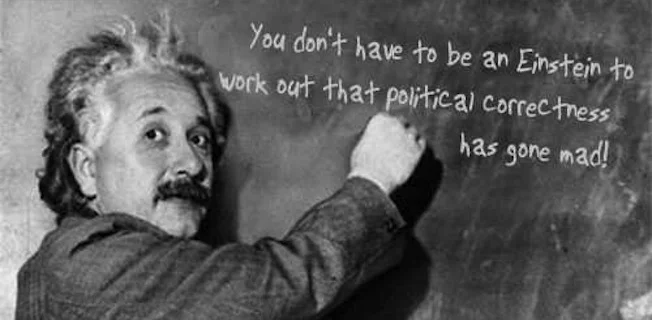
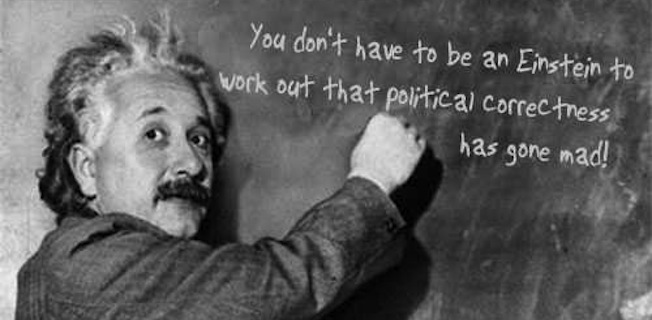 Ok.I detest political correctness.
I love straight talk.
Partly because the Good book says “Let your yea be yea.” Check.
I also like straight talk because I don’t like the bewildered way I feel after listening to political-correct stuff. Double-check.
Ok.I detest political correctness.
I love straight talk.
Partly because the Good book says “Let your yea be yea.” Check.
I also like straight talk because I don’t like the bewildered way I feel after listening to political-correct stuff. Double-check.
Political correctness usually causes one of two responses—I walk away mumbling as I scratch my significantly graying head, or I break into hearty laughter. But lately I‘ve been doing a lot of both, and it’s not easy to walk, mumble, and laugh at the same time.
Let’s face it. We live in a world where spin doctors abound. In this strange world of political correctness, yea doesn't mean yea, no doesn't mean no, and words are twisted into an alphabetic teething ring to pacify the most offended person in the room. Kind of a pedantic pacifier. Here are a couple examples. Cue Paul in Romans 1, “Thinking themselves to be wise they became fool...."
Portland Oregon, September 2012. In her zeal to conquer racism, Verenice Gutierrez (principal of Harvey Scott School in Portland) declared war on a vile offender of racial harmony. Sounds good, I guess. In fact, Verenice was determined to ferret out racism even if it is “sandwiched” between students’ kitchens and the school cafeteria. Her target? Peanut butter and jelly. “Huh!??!!” “HOW CAN PEANUT BUTTER AND JELLY BE Raci……!??!!” Because she says it is…
According to Verenice, PB&J “is a subtle form of racism.” She added that Somali and Hispanic students might not eat such sandwiches so she initiated training exercises among staff members to fight against this “white privilege.” Sorry Skippy, your racially charged sandwich spread is expelled from school until further notice! Had Verenice done some actual research, she might have discovered that peanut butter was partially invented by George Washington Carver. Diagnosis? Absurd political correctness. Conclusion: People like Verenice are not very nice.
Dayton, Ohio, November 23, 2012. JCrane Inc. was lifting new HVAC units onto the roof of Sinclair Community College. Since the college remained open during the project, JCrane took great care to install fencing, barricades, and warning signs to ensure that the public would not be endangered by the heavy-equipment work going on above their heads. All went well until the second morning of the project, when a Sinclair employee called the foreman of the crane company. The foreman was told that they needed to stop all work immediately until the “sexist” sign they had set up on the sidewalk was replaced. The offensive sign in question? “Men working” (I’m not making this up). Initially the foreman thought it was a prank and the workers (seven guys) kept working, chuckling at the sublime joke. They stopped laughing when a college construction department guy showed up in person and demanded that they stop all work immediately! His said his “boss” was having a fit. His boss was Elizabeth Verzi (who works at the college) and she was the most offended person in the room! Maybe in the whole city…
The crane company foreman and the union pipefitter foreman met with the disgruntled feminist (Verzi) to resolve the issue. The meeting didn’t go well, unless you enjoy being yelled at, told you are a sexist, and berated for having a “Men Working” warning sign out by the sidewalk to alert pedestrians. After the “meeting” the two foremen walked away thoughtfully. One said, “I’ve never seen a woman talk like that. She just seemed evil.” The other one said, “We are working with the devil him(her)self here.”
Faced with the prospect of working with this woman for another few months, the pipefitter foreman drove back to his office, turned in his keys and truck and quit. On the spot. A man in his late fifties with over twenty years in the Pipefitters Union, this woman was the end of his career.
Diagnosis Political correctness is a doctrine, fostered by a delusional, illogical minority, and rabidly promoted by an unscrupulous mainstream media and academia, which stubbornly clings to the belief that it is possible to pick up fresh excrement by the clean end.
On the surface, political correctness sounds ludicrous. And it is. In this strange muddled world the homeless are called under-housed and pirates are called seafaring entrepreneurs, the bald are folically–challenged and the fat are horizontally gifted. But at a deeper level, it is an ideology at war with the Biblical principle of honesty. For many, it becomes their religion and "evangelism" is accomplished by force and control (see Great Controversy chapter 35, a wonderfully straightforward book).
We see shameful situations created in our schools and universities in America that have fallen prey to Political Correctness. Some professors, students and publications are being attacked for expressing a point of view that differs from that imposed by a fanatical far left, under the guise of Political Correctness. Furthermore, in schools and workplaces we see that "diversity" has degenerated into reverse discrimination, where often the less qualified are admitted and the incompetent or unethical cannot be fired (see La Sierra for details).
Lamentation I've heard via teachers that some schools are doing away with GT (gifted/talented) classes. This would, of course be so kids in the regular classes don't start crying every day. At that age, most students are either too cool or too lazy to want to be in the egghead classes. And the nerd kids that actually want to learn should be given every opportunity to excel, even if that means segregating them from the students who would rather start fights or put pencils in their noses.
Sports are the same way. When I was a kid, you actually had to try out for sports teams (though you didn't necessarily have to be good, since I made the little league baseball team). Apparently nowadays, to avoid hurting kids' feelings, some sports leagues make the teams take anybody. While this may lead to some awesome videos on the FAIL blog, I don't think it's the best thing for the kids. That goofy kid may actually be good at something, but if we keep telling him he's good at everything when he's not, he'll never figure out what his talents are until it's too late. Then we'll just have one more hobo (er, I mean "Under-housed person") out there walking around with his knapsack full of cornbread. And food-stamps.
Conclusion Political Correctness (PC) originally flowered in academia and spread like a virus through the government and corporate worlds. It has devolved into a tyranny of the most offended person in the room. It now stands at the door of the church and knocks, and will be invited in by a liberal academia who often say “We want a place at the world’s table.” If we go down that road, we will lose the core of our message and mission—a message that is based on hard but essential truth.
As illustrated above, PC complaints now range from the sublime to the ridiculous, and they are stifling the honest assessment and debate of issues in our world. I’ve tried to play nice, but I genuinely don’t care if you’re offended by this article, my men working signs, the Great Controversy, or my Bible. And, please don’t worry about offending me in the comments section.
UPDATE REPORT: Walter Veith responds to EUD and is banned in German churches by European Adventist leaders
 An inquiry is currently underway in Germany concerning Walter Veith and anti-semitism charges. In our previously published report, the circumstances and dialogue that took place in this incident are outlined. On December 4, 2012, the EUD made the decision 45 in favour, 1 opposed, and 4 undecided to ban Walter Veith from speaking in German SDA Churches for the second time. The previous ban took place in 2004 due to his lectures on Bible translations and what was termed as "conspiracy theories" which were highly disapproved of by German leaders. The ban was lifted in 2010, but now has been reinstated.The following letter was sent on December 5, 2012 by Walter Veith to Bruno Vertallier in response to his November 30, 2012, letter of disapproval and request to meet.
Dear Brother Vertallier
Thank you for your letter to which I would like to respond. Firstly, I never received any e-mails from you as you might have sent them to an old address and our telephone lines have been stolen so you would not have been able to reach me on the land line. Secondly, from the tone of your letter it is obvious that you did not accept my explanation of the ‘small yellow cloth’ phrase and I therefore assume that you suppose that it was intentionally derogatory towards the Jews as a people. It seems as though some people are bent on assuming evil intent because that is what they want to hear. The fact of the matter is that my lectures are too close to home for some and therefore every word is placed on the gold scale to find something objectionable and they refuse to accept my explanation that it was an issue of language barrier and nothing else.
Let me spell it out for you: In my home language (Afrikaans) all diminutives are endearing and express empathy and we even have double diminutives and triple diminutives to express feelings. In German diminutives are often deemed derogatory and since German and Afrikaans share phrases it is natural for me to use Afrikaans nuances when speaking German. In fact I got into trouble before in Germany for saying that someone had a ‘small heart’ (kleines Herz) as opposed to ‘large heart’ (groβes Herz). In Afrikaans someone with a small heart (klein hartjie –which by the way is a double diminutive) is kind, full of empathy, gentle, easily hurt, or endearing, but in German it means ‘hard-hearted’ or ‘stingy’. In Afrikaans one would use the phrase ‘small cloth’ to distinguish it from the opposite extreme such as a large cloth like a bed sheet and no one would even think to interpret it otherwise. I therefore reiterate that I did not mean it in a derogatory sense and that I harbor no anti-Semitic sentiments. Moreover, having grown up in Africa and not in Germany, I was never associated with discrimination against the Jews nor did I ever side with or share any sentiments with those who did. On the contrary, discriminatory ideologies are abhorrent to me.
My statements have been wrenched out of all proportions and since the actions of the SDA leadership in German-speaking Europe during the war were not exactly exemplary (as is clear from their apology in the 2005 declaration on anti-Semitism and also the recent reiteration of that declaration) I assume that you overreacted for fear that the past should haunt you. In line with that declaration, I too am against all forms of discrimination on the grounds of race or religion and stand firmly for religious liberty but I draw a clear line of distinction between the theological issues and the racial issues involved. It seems to me that some find it difficult to distinguish between the two because they carry this burden of guilt. The fact that the SDA church in Germany shares this guilt does, however, not give them the right to transfer this baggage onto me and to swing to the opposite extreme of discriminating against the ‘antitypical Jews’ who preach the Three Angels’ Messages. If they do this, then their confession becomes a repentance of King Saul without the change of heart, because they demonstrate by their action that they are just as willing now to repeat their folly as they were then.
As Seventh-day Adventists we have been called to present a particular message – the Three Angels’ Messages - which will end in the clarion call to all who are trapped in Babylon to ‘Come out of her, My people’. The false ideologies must be laid bare and Babylon will be exposed or else no one will know what they are to come out of. The trumpet must give a certain sound so the people can rally under the Lord’s banner. This is the aim of my lectures and this should be the aim of every SDA evangelist as we are admonished ‘not to let anything else occupy our minds’. Modern Babylonian ideologies are closely associated with a literal state of Israel and must therefore be exposed as false and this alone is the aim of my lectures. The preaching of the Three Angels’ Messages is uncomfortable to those within our ranks who wish to be so politically correct that they are willing to sacrifice truth for worldly acceptance.
The German leaders never consulted me before issuing a public statement to the churches and thereby did not follow the Biblical process as outlined in Matthew 18:15-20, thereby aligning themselves with the accusers. Furthermore, the legal procedures that have been initiated against me are also out of harmony with Scripture and since the leadership has not distanced itself from this process, they too are in breach of the Biblical admonition in this regard. Your letter to me clearly shows that the EUD position is no different from the above and therefore I now have no choice other than to place this response and some concerns of my own in the public domain as well.
1. The modern ecumenical tendencies in our midst becloud the presentation of the Three Angels’ Messages and it seems that our representatives in Europe (as published recently in a German SDA journal) cannot even give a reason as to why we believe that the papacy is the antichrist or why we as a church deem it necessary to hand out the ‘Great Controversy’. Are we not admonished against ecumenical associations and will this not be a stumbling block to the propagation of our message?
2. Why is it that not a word of remonstrance is heard when false practices are brought into the church? Most of leadership seems unconcerned when Spiritual Formation comes into our ranks like a flood in spite of the fact that it has its roots in Jesuitical spirituality (as dealt with extensively in my lecture ‘The Jesuits and the Counterreformation’). We go even further and advertise books with these sentiments in official church publications. Why was there no public rebuke when a speaker at one of our institutes in Europe advocated blessings by Wiccan witches and why was this speaker even permitted to speak at other SDA institutes? Were those involved ever given letters of rebuke? I am aware that this is not only a European problem and that other institutes have permitted Jesuits and other such speakers to speak at Adventist forums.
3. Why is it that our youth is led astray at official gatherings with music and performances that have no semblance of heaven? I have watched shocking videos of youth and church leaders in Europe engaging in events that would even make other denominations blush. Are we so bent on apostasy that concerned brethren are driven to cry between the porch and the altar for all the evil that is done in Israel? Even Conference Presidents have expressed their deep sadness with regard to this issue to me personally. Again, I acknowledge that this is a worldwide problem, but that the leadership should lead the way in this apostasy, is indeed astounding.
4. Why is it that we willingly adopt the practices of non-SDA mega churches and emerging church theologies that change our message and our outreach to one of ‘correction of social injustices’ rather than a message of salvation? It seems this is the new wave. Did those who teach these things ever receive letters of rebuke? Is it right that these new methods should be drummed into our students and that we should embrace these practices when we are not only admonished by the Spirit of Prophecy that we should steer clear of such things but are even warned that they would come in like a flood. Do we really want to be part of this fulfillment of prophecy or should we do all in our power to stop it?
5. Why is it that there was no official letter of rebuke from Europe when most of the delegates of that territory voted against the clarification of our position regarding the literal Six-day Creation? Why are evolutionary ideologies not only embraced in our ranks, but the ‘princes of Israel’, who are supposed to lead the flock in the ancient paths align themselves publicly with this apostasy? When the testimonies that were once believed are marginalized and relegated to the ‘trash heap of nineteenth century literature’, then the road to perdition is sure to follow. Why are leading figures allowed to slight and ridicule the testimonies and no action is taken against them? Does the Spirit of Prophecy not form part of our fundamental beliefs?
6. Where does Europe stand when it comes to the ordination issue? Irrespective of where we stand on the issue personally, why are there rumblings of secession from the ranks because pet theories are placed above church unity? Did Christ pray in vain for unity? Is it necessary to print an additional watered-down evangelically-minded Sabbath School lesson book just to avoid the sentiments expressed in the Spirit of Prophecy and hereby cause divisions in the church in Europe and indeed in the world?
The list could go on and on but I will leave it there. There are many voices of concern regarding these issues, not least of which is that of Elder Ted Wilson who stands out like a beacon of hope and I believe that God has placed him there for a time like this. It is shameful how he was and still is treated by some in our ranks. We can no longer remain silent in the face of these things or else we will be found wanting. We will have to meet these challenges head on (“Iceberg ahead – meet it!”) and may God be gracious to us during the shaking which must come.
Regarding the issue of Freemasonry and the Jesuits, these matters are clearly outlined in the Spirit of Prophecy and I feel that further discussions would not be fruitful. If we disregard the Spirit of Prophecy, how will we ever understand our SDA mission? Therefore nothing that I could say would change your perceptions. I have stated my case in the past and up to date have never received any reply regarding these documents and I append them again for your clarification.
I wish to assure you that I love Christ and His truth, as given to our pioneers, with all my heart. I believe that this church will go through to the Kingdom and I will continue to do all in my power to call people into its ranks and it is my prayer that the church will unify on the true Advent message as it was preached from 1842 to 1846 {GCB, April 6, 1903 par. 35; 1 MR 52.2}. I thank God for the pioneers and godly Adventists who as late as 1952 published our first declaration of fundamental beliefs under the official auspices of the General Conference in the book “Principles of Life”. I stand by this Adventism and by the grace of God will not be moved.
I wish to make an appeal to you in the words of the Spirit of prophecy:
Seventh-day Adventists are now to stand forth separate and distinct, a people denominated by the Lord as His own. Until they do this, He cannot be glorified in them. Truth and error cannot stand in copartnership. Let us now place ourselves where God has said that we should stand.... We are to strive for unity but not on the low level of conformity to worldly policy and union with the popular churches.--Lt 113, 1903. {2MCP 559.2}
Your Brother in Christ Walter Veith
Appended Documents: Walter Veith's response to BRI (May 2004) – no response ever received.
"Every man must do two things alone; he must do his own believing and his own dying." ~ Martin Luther
Source: Amazing Discoveries
Walter Veith's statements: judge for yourself

 Walter Veith has received a lot of attention regarding comments made in a presentation he gave Oct. 20 in Nurnburg, Germany, at the Marienberg Seventh-day Adventist Church. The original presentation was given in German, but we're posting the English version for everyone to watch for themselves. So we invite you to watch the presentation for yourself and judge whether or not his comments were antisemitic. We've also included EANN's article disputing some of Veith's statements below the video.
Veith's dangerous game with the Jewish question--a disturbing fact-check
Walter Veith has done for years with his interpretation of the world a name. His presentations on DVDs and Internet video as widespread. He sees the world in a "war of ideologies". For centuries, the Pope fighting as the biblical Antichrist true Christians. For this, the Jesuits developed profound strategies. The Masons spread the insidious ideology all over the world. Political, business, church and society are penetrated by the Jesuit-Masonic conspiracy. Your goal is to confuse the "biblical ideology" of the true, other Christians.
Veith shares with many other conspiracy theorists, the same enemy: Jesuits, Freemasons, Illuminati. But a group that is at most other No. 1 on the list of dangerous enemies found at Veith been little attention: the Jews.
But that's different now. His latest series of lectures called "storm from the north." The private Missions "Amazing discoveries" recorded lectures onto a Nuremberg community center and transferred it live on the Internet. Later they will be sold as DVDs. In a lecture ("The King of the North, 2"), held on 20 October 2012, Veith is devoted extensively to the Jewish people. He drew extensively from the murky waters of Anti-Semitism. According to the organizer the Internet broadcast to over 700 units is viewed. (Read more)
This article was translated with Google Translator.
Theology of Ordination study committee membership complete, names released

 Following the assignment of representatives from the 13 global divisions of the Seventh-day Adventist Church, the names of the 100-member Theology of Ordination Study Committee were announced November 29, 2012 by committee chairman Artur A. Stele, a general vice president of the General Conference of Seventh-day Adventists.
The 100 individuals – see table for the complete list – span a range of viewpoints and roles within the movement. Membership includes Tara VinCross, an Adventist pastor in Philadelphia, Pa.; former U.S. Ambassador to Malta Kathryn L. Proffitt; Gerard Damsteegt, a professor of church history at the Seventh-day Adventist Theological Seminary; Doug Batchelor, senior pastor of Sacramento Central Church in California and president of Amazing Facts; and Lisa M. Beardsley-Hardy, education director for the General Conference. Adventist Review and Adventist World editor and executive publisher Bill Knott is also a member of the committee.
Following the assignment of representatives from the 13 global divisions of the Seventh-day Adventist Church, the names of the 100-member Theology of Ordination Study Committee were announced November 29, 2012 by committee chairman Artur A. Stele, a general vice president of the General Conference of Seventh-day Adventists.
The 100 individuals – see table for the complete list – span a range of viewpoints and roles within the movement. Membership includes Tara VinCross, an Adventist pastor in Philadelphia, Pa.; former U.S. Ambassador to Malta Kathryn L. Proffitt; Gerard Damsteegt, a professor of church history at the Seventh-day Adventist Theological Seminary; Doug Batchelor, senior pastor of Sacramento Central Church in California and president of Amazing Facts; and Lisa M. Beardsley-Hardy, education director for the General Conference. Adventist Review and Adventist World editor and executive publisher Bill Knott is also a member of the committee.
The top three officers of the General Conference are ex-officio members of the committee, but neither Pastors Ted N.C. Wilson, president; G.T. Ng, secretary; nor Robert E. Lemon, treasurer, have a voice or vote on the panel.
“The main reason for releasing the names is to kindly invite every member of the Seventh-day Adventist Church to pray for these names,” Stele said in a statement. “We are in need of God’s guidance and leading in this study process.”
The statement also summarized the main tasks confronting the panel:
- Review the history of the study of ordination in the Seventh-day Adventist Church.
- Develop a Seventh-day Adventist theology of ordination.
- Study the subject of ordination of women to the gospel ministry.
- In areas of disagreement, focus on potential solutions that support the message, mission, and unity of the Seventh-day Adventist Church.
According to Stele, “The Theology of Ordination Study Committee will prayerfully study the issues presented above trying to reach a consensus on each assignment. In the areas where consensus will not be reached, the TOSC will present several reports and will also work on potential solutions. These steps will ensure that the process will be open, fare, and transparent.”
Stele said the steering committee has already met twice, and “we are suggesting that the first meeting of the TOSC in January 2013 will be totally dedicated to the study of the first step. A group of scholars has been given the assignment to work on the first draft of the Theology of Ordination document.”
He added, “We are planning to present the first draft to the TOSC in January, discuss it, and based on the contributions of the whole committee, to prepare a second draft and send it out to all Division [Biblical Research Committees, or BRC]. We will ask each Division BRC to send in their suggestions, contributions, agreements, and disagreements. Based on the discussions involving all BRCs, a third draft will be prepared and we hope to come to a final draft that could be ‘hopefully’ accepted by the TOSC the first day of our meetings in July, 2013.”
Stele said, “after concluding the study on Theology of Ordination, we will start working on the issue of women’s ordination.”
He concluded, “The TOSC starts its work in total reliance on God’s guidance. Please, pray for the right spirit and openness for God’s leadership.”
Although women have functioned in various ministry roles from the beginnings of the Seventh-day Adventist Church, ordination has come up as an issue before church leaders several times in the recent past. At present, the Church does not ordain women to ministry, following votes at General Conference sessions in 1990 and 1995 on the question, where the issue was a major focus of the international deliberations.
By Mark Kellner Source: Adventist Review
Report on antisemitism allegations against Walter Veith

 Amazing Discoveries reports on antisemitism allegations made against Walter Veith, an ordained evangelist in South Africa who is one of its main speakers.
"It is probable that the people who lodged the complaint are the group from EANN (the German equivalent of SPECTRUM MAGAZINE) because they propagated such action immediately after the lecture," Veith said in a letter dated Nov. 28, 2012, to the Transvaal Conference. While EANN was originally involved in a complaint against Veith to the German Union, it has declined responsibility for the inquiry "lodged at the public prosecutor’s office in Nuremberg to investigate whether Walter Veith in the said presentation had commited [sic] sedition," according to Amazing Discoveries. It is still unknown who made the inquiry.
Amazing Discoveries reports on antisemitism allegations made against Walter Veith, an ordained evangelist in South Africa who is one of its main speakers.
"It is probable that the people who lodged the complaint are the group from EANN (the German equivalent of SPECTRUM MAGAZINE) because they propagated such action immediately after the lecture," Veith said in a letter dated Nov. 28, 2012, to the Transvaal Conference. While EANN was originally involved in a complaint against Veith to the German Union, it has declined responsibility for the inquiry "lodged at the public prosecutor’s office in Nuremberg to investigate whether Walter Veith in the said presentation had commited [sic] sedition," according to Amazing Discoveries. It is still unknown who made the inquiry.
Below is the beginning of Amazing Discoveries' full report regarding Veith's situation, along with correspondence between Veith and church leaders:
On October 20, 2012, Walter Veith preached the lecture “King of the North (Part 2)” from the new series Repairing the Breach in German [German title Sturm aus dem Norden] in Marienberg SDA Church in Nurnberg, Germany, to an audience of approximately 350 people. The lecture was also live-streamed to approximately 1500 people. Almost immediately after the presentation, Walter Veith received violent opposition by way of an article by EANN about his claims of Freemason/Jesuit involvement in the creation of the State in Israel after WWII and the way he expressed himself in regards to the Jews during Hitler’s regime. Although EANN is run by a few Adventist individuals, it is not an official institution of the SDA church in Germany but a privately funded online news magazine that designates itself as an “Independent Journal for Religion, Church and Society”. Three points specifically were brought up as points of contention:
- The usage of the words “little yellow cloth” [German “gelbes Tüchlein”] in reference to the markings the Jewish people had to wear during the post Napoleonic era and during Hitler’s regime.
- The usage of the word “herded” when referring to the situation of the Jews after the end of the war as a result of Hitler’s persecution and their transference to the newly formed State of Israel, as well as the lack of compassion on the part of many countries, including Canada, the UK, and others who refused entrance to Jews that had escaped the Nazi totalitarian regime.
- The use of quotes from the book Facts are Facts by the Jewish author Benjamin Freedman, as evidence that most Jews aren’t really of Jewish descent, because Freedman is considered an anti-Semitic.
The writer of the EANN article felt these comments were derogatory towards the Jews and as a result raised severe opposition towards Walter Veith, accusing him of anti-Semitism and a “relativization of the holocaust” because Walter connected it to secret plans to create a modern Jewish State in Palestine.
When the SDA leadership of the two German unions was confronted with these allegations, including a personal letter of the EANN author to the two union presidents, it attempted to make contact with Veith without success. Since they felt that the situation was potentially explosive in nature the German Union (including the SDA administrators of Austria and Switzerland) decided to take immediate action by publishing a statement which condemned in very strong terms Veith’s usage of “herding” and “little yellow cloth”, his manner of dealing with other religions as well as his supposed “conspiracy theories” about the involvement of secret societies in history and in general. They requested that local churches not provide a platform for “events like this”. The statement was to be circulated via email to all pastors and elders, via Adventist press agencies, and printed in the monthly church organ “Adventisten Heute”. Furthermore, the document was styled as a reiteration of an official 2005 statement of the German speaking SDA church where it confessed its shortcomings during the time of the Nazi regime thus lending momentous significance to the statement against Walter Veith.
As soon as Walter returned to South Africa, he wrote the following letter to the German brethren explaining that he did not mean anything derogatory in his remarks, and that the expression “little yellow cloth” was due to German being his second language. (Read full report)
Bridging the gap


God Speaks
I’m telling you to love your enemies and do good to them. Lend to people without expecting to get anything back. If you do this, you will have a great reward. You will be children of the Most High God. Yes, because God is good even to the people who are full of sin and not thankful. Luke 6:35
My Response
“I do not want to do it! I cannot do it! But help me do it anyway.”
Bridging The Gap
I am ashamed of it, but I must confess its truth. I have read this verse numerous times without ever really considering what it means. Recently, I have had to consider it more closely.
Law school is not a safe place. God is not mentioned there. It is a place where religion is a byword. Needless to say, my trip to law school significantly challenged to my way of thinking. Life is no longer neat and clean.
The difficulties I faced in school did not come from wicked unbelievers who assaulted my faith by spewing forth heresies. Rather, my troubles arose from my reading of Scripture. My challenges materialized when I realized that Jesus was not merely calling me to be “pure,” but to be and do something entirely new. He was asking me to “love my enemies.”
Now, you say, “What is the problem? You seem like a nice chap, and therefore probably did not have any enemies in school. And, even if you did, why could you not love them?”
I Do Not Want To! I cannot do it!
Well, there were two reasons why I could not love them. Ready?
First, my classmates were really bad people. I mean it! I will not list my reasons for saying this, as I am sure that you can imagine some gross sins without my assistance (and your imagination would probably be right in this case).
As a “good” person, I had nothing in common with these people--nothing! As a result, I was neither universally liked nor appreciated. I would even say that I had some enemies. I came to terms with this reality. I was even content with leaving them alone. “At least I will remain pure,” I thought.
But then everything changed. I read Luke 6:35: “I’m telling you to love your enemies and do good to them. Lend to people without expecting to get anything back. If you do this, you will have a great reward. You will be children of the Most High God. Yes, because God is good even to the people who are full of sin and not thankful.”
Wow!
I told God that I could not do it. I said, “They are awful! They do not like me! I do not like them! I simply cannot love them!” I really struggled with the idea of loving my enemies.
Despite my resistance, Luke 6:35 did not change. I really wanted it to change, but it did not budge. Finally, I gave in and told God that I was willing to do it--to love those scofflaws.
This brought me to the second hurdle, which was twice as challenging as the first. This obstacle was more difficult because Jesus had something specific in mind when He said, “love your enemies.” He did not mean for the command to merely be aspirational. Rather, the text was to be applied practically. This troubled me because I wanted to love my classmates inwardly. You know, I expected to think happy thoughts about my enemies and maybe, if they were lucky, I would smile at them once in a while.
Well that is not what Jesus had in mind.
Right there in Luke 6:35, I read that we are to “do good” to our enemies. To give, expecting nothing in return. Then I read that we are to “forgive” our enemies (verse 37). And, finally, I went to Matthew’s rendition of the passage and found that I was to “pray” for my enemies (Matthew 5: 44). Jesus wanted me to do three things to love those “evil” people. I was to: serve; forgive; and pray for them.
When I realized what God wanted me to do, I seriously considered returning to what I fondly refer to as my “purity theology” because I recognized that it was a lot easier to keep myself clean by avoiding flawed people than to actually practice Bible religion.
I again had a choice.
After much deliberation, I surrendered to God. I attempted to put His words into practice. Although my efforts were by no means perfect, I worked to fulfill Christ’s calling to serve, forgive, and pray for my enemies.
Results?
I do not know if my efforts changed my classmates. I can honestly say, however, that applying God’s word to my life changed me. It helped me realize that I was not so good after all--that I, like my classmates, was in need of grace (I highly recommend the word “grace”; if you have not done so already, add it to your lexicon, for it is grace that helps us do the impossible--to be aligned with God).
Grace bridges the gap
I graduated in May of this year. Just prior to commencement, some of the younger students at the law school formed a Christian organization. This organization is still going strong today. I like to think that God’s realignment of my thinking may have helped establish this group and ultimately changed my school for Christ’s sake.
Now, think what God can do if we continue to take Him at His word! Blessings!
Child TV star Angus T. Jones is baptized into SDA Church

 Actor Angus T. Jones, best known for his role as “Jake Harper” on the hit television show “Two and a Half Men,” has become a Seventh-day Adventist. Jones plays the son of “Alan Harper” (played by actor Jon Cryer) and the nephew of “Charlie Harper” (played by Charlie Sheen before he left the show and was replaced by Ashton Kutcher).
Jones was born in Austin, Texas. His family moved to California when he was four years old, when his father took a job working for a relative who lived about an hour west of Los Angeles. Jones' parents decided to see if he could become a child actor, and he met with rare early success, appearing in several television commercials. At the age of eight, Jones auditioned for “Two and a Half Men,” a show created by producer and “show runner” Chuck Lorre. After three meetings, the last of which was a reading with Sheen, Jones was given the role. The show became a ratings winner, and has run for ten seasons (notwithstanding that star Charlie Sheen was fired during the eighth season after making disparaging personal comments about Lorre).
Actor Angus T. Jones, best known for his role as “Jake Harper” on the hit television show “Two and a Half Men,” has become a Seventh-day Adventist. Jones plays the son of “Alan Harper” (played by actor Jon Cryer) and the nephew of “Charlie Harper” (played by Charlie Sheen before he left the show and was replaced by Ashton Kutcher).
Jones was born in Austin, Texas. His family moved to California when he was four years old, when his father took a job working for a relative who lived about an hour west of Los Angeles. Jones' parents decided to see if he could become a child actor, and he met with rare early success, appearing in several television commercials. At the age of eight, Jones auditioned for “Two and a Half Men,” a show created by producer and “show runner” Chuck Lorre. After three meetings, the last of which was a reading with Sheen, Jones was given the role. The show became a ratings winner, and has run for ten seasons (notwithstanding that star Charlie Sheen was fired during the eighth season after making disparaging personal comments about Lorre).
Jones attended a Christian school when not on the set; when he was shooting, studio tutors kept him up to date with the classwork at his school. Midway through his senior year in high school, Jones began to be strongly drawn to God. During a conversation with a school friend, Jones felt what he later described as a “baptism of the Holy Spirit;” he felt that God was using his friend to prompt him to change his life and take his religion seriously. Jones visited a variety of Sunday churches, often several in one day, but did not find one that seemed a good fit for him.
Through a friend who “could never go out with us on Friday Night,” Jones learned of the Seventh-day Adventist Church and began attending the Valley Crossroads Church, a predominantly black SDA church in Pacoima, in the northeastern San Fernando Valley of suburban Los Angeles. The first time he attended, the pastor's message spoke to him personally in a powerful way. After attending Valley Crossroads for several weeks, Jones was approached by the church's Bible worker, Nelson Jones, and asked if he wanted to study the Bible. Angus was impressed by what he was shown and eventually made a decision to be baptized. He was baptized on the Friday evening before he graduated from high school, with several relatives and family members present. He continues to learn and grow in the faith, and currently attends meetings on Monday and Thursday nights.
Jones' interview with Connie Vandeman Jeffery at the Adventist Channel can be seen here:
Jones has also given an interview to Christianity Today, which can be read here:
Although baptizing a celebrity presents the Seventh-day Adventist Church with opportunities for publicity, in this instance it has caused our Church more headaches than benefits. Unfortunately, Jones gave a video interview--subsequently uploaded to YouTube--to an independent interviewer, not affiliated with the official church, who holds a number of eccentric and conspiracy-oriented views. Tabloids and celebrity gossip sites in the United States and even Great Britain have wrongly characterized the interviewer as Jones' “spiritual advisor” and, worse, have attributed the interviewer's eccentric personal views to the larger Seventh-day Adventist Church.
Jones' public testimony has created a professional conflict in his own life, as well. “Two and a Half Men” glorifies the Charlie Sheen character's playboy lifestyle, depicting him in numerous casual encounters with numerous women--obviously, the show did not call for Sheen to play anyone other than himself--while depicting the Jon Cryer character, who pines for the ex-wife who divorced him, as a hapless loser. In the interview uploaded to YouTube, Jones called the show “filth” and urged viewers of the interview not to watch the show. Naturally, a highly-paid actor (Jones reportedly earns upward of $300,000 per episode) telling people not to watch his show created a buzz on celebrity gossip and showbiz sites. On November 27th, Jones' publicist issued a statement that affirmed Jones' gratefulness to the producers, writers, cast and crew of the show, but pointedly did not retract Jones' stated view that the show is not appropriate viewing for a Christian believer:
“I am grateful to and have the highest regard and respect for all of the wonderful people on Two and Half Men with whom I have worked over the past ten years and who have become an extension of my family. . . . I apologize if my remarks reflect me showing indifference to and disrespect of my colleagues and a lack of appreciation of the extraordinary opportunity of which I have been blessed. I never intended that.”
The problems created by one rogue interview demonstrate how careful and discreet the church needs to be with regard to celebrity members. It would have been good idea to assign Jones a church publicist shortly after his baptism to advise him on public statements and interviews. Such a procedure might have spared Jones and the Church the considerable embarrassment the bad interview has caused both. It is to be hoped that this incident will prompt the church to develop a policy for future such situations, even though they will be very rare.
The falling mantle: from Anabaptist to Advent believer


My mantle was a black, broad-brimmed hat and pants that buttoned
And then a new mantle fell. It was called
"the Advent Movement."
American religious history is filled with churches you’ll never find on 5th Avenue or, for that matter, on main street in Paducah, Kentucky. Hundreds are listed in any comprehensive handbook of denominations. Just for a sampling, you’ll encounter such oddities as the Dunkards and Shakers, the Two-Seed-in-the-Spirit Predestinarian Baptists, Hephzibah Faith Missionary Association, Fire Baptized Holiness Church of God of the Americas, and, if that isn’t enough, the Old German Baptist Brethren.
That was my church, as it had been for seven generations of my family.
It’s not anymore, and that’s the reason for this story.
Most of you’ve probably never heard of an Old German Baptist congregation and surely have not attended one--though recently Perspective Digest printed an Adventist pastor’s report of visiting one in Washington State. Old German Baptists originated in Schwarzenau, Germany, in 1708. A blend of Mennonite, Anabaptist, and Pietism, they moved to American in 1729, where they found freedom to worship God in peace. Today they number only about 5,200, and are generally viewed as either Amish or Mennonites. Think of them as Amish in Chrysler Minivans.
Certainly nothing in my childhood motivated me to leave my church. Boyhood memories overflow with scenes of sincere worship and fellowship. That 80 percent of German Baptist youth remain in the church is testimony to the attraction of the German Brethren way of life. My people have ever valued hard work; thus the skill to start one’s own business is treasured more than an academic degree. So it was with me. I had 25 years of construction experience under my belt when I turned 40 last year. I also had a solid, TV-free education in the ABCs and enough of the rest of the alphabet to know the difference between good and evil.
Elijah’s Mantle
As you might expect of a church with direct ties to the Anabaptist Reformers, membership doesn’t come like royal birth; you make the choice for believer’s baptism when you’re ready, not before. For me, this choice came in 1984, two years after marriage. I was baptized in the chilly spring that flowed through my Uncle Carl’s farm in Covington, Ohio. I witnessed no heavenly phenomenon as I brushed the water from my eyes--just the quiet realization that I was carrying the torch for another generation. My fellow members expected this of me, and I determined to fulfill my twentieth-century Anabaptist role as best I could.
An ancient story stoked my determination. In my mind’s eye I saw Elijah and Elisha cross the Jordan. They stood for a moment, the hand of the elder resting gently on the shoulder of the younger. A request is made, a conditional promise given, and they move on. Then, a celestial chariot swoops down, and Elijah steps on board. Behind he leaves only the emblem of a fulfilled promise. Nothing on earth is so precious to Elijah as that old piece of cloth. . . that old piece of Elijah’s mantle. Twelve years ago the Lord led me back to this story and left me with the conviction that I too had been given a mantle. My mantle was a black broad-brimmed hat and pants that buttoned. (No genuine mantle would have a zipper.) And it came with a question every believer must answer: Did your mantle fall from heaven or from men? Little did I know at that moment the answer I must give....
My Better Half
My wife’s name is Nancy [Nancy Riley]. (She has no middle name, Roland. There were 12-children and they evidently ran out..). She grew up in Scottville, Michigan, with her eleven siblings in a barn converted into a house. Like me, she completed a total of eleven grades of education. Unfortunately she received her diploma through a GED program 2-years ago. Now she’s a lot smarter than me, a little fact that comes up occasionally.
 How did we meet? At church of course. Nancy and I saw each other across crowded rooms from 1977-1980. Instantly we knew. That it was too crowded-I mean. We finally met after church one night in Maple Grove, Ohio (October 25, 1981). I was 21 years old, and Nancy was 18. My older sister was so excited that we were finally meeting, that she stood faithfully by my side and answered every question that Nancy asked me. My sister meant well. As Nancy and I stood outside under the shadow of those beautiful fall-colored maple trees for which the place was named, the trees were almost ugly by comparison.
As a baptized member of the church, Nancy wore a dress made according to pattern. Her modest dresses differed only in pattern and color from that of other German Baptist women. She also wore a lace "prayer covering" --symbolic of the head covering (veil) Paul advocates in his letter to Corinth. She was now living in Ohio with close friends of her family. Unable to erase the memory of her from my mind, I phoned her two nights later. She said yes.
Our first date consisted of attending a baptizing together. I picked her up and we went to church that night, joining 150 other German Baptists to witness the immersion of four young people into the church. I had attended a hundred of these events throughout my childhood, but this was a magic evening. Not yet a member of the church, I was already feeling the clarion call to commit my life to the way of my fathers. I knew that I would walk down into that water someday soon. What was I waiting on? I was waiting until I was completely ready, because I wanted to give the Lord my all. However, I must confess that the young woman at my side consumed most of my attention that evening.
Our second date (courtship) consisted in going to church together again at a communion time for the Stillwater congregation of German Baptists (near Dayton Ohio). People had journeyed a few hundred miles to convene in this annual communion service. Nancy and I were excited to be together again. After seven months of dating (on Mother’s day 1982), I asked Nancy another question. She said yes, and we were married in the fall of 1982-almost a year after we began being sweethearts.
We were united on October 2, 1982 in Brookville, Ohio. It is not the custom of my people to conduct weddings inside their church buildings--thus we were married in a community center owned by my Uncle Glen Miller. Another uncle of mine performed the ceremony--the same one in whose creek I was baptized (Carl Bowman). He did a good job--like always.
 Probably 200 guests were present. Decorations were very modest (maybe a few flowers and some candles). Nancy wore a white dress made in the uniform pattern of the church and I (because I wasn’t yet a member of the church) wore a rented tuxedo. Pretty snazzy stuff.
Normally, a member of the church is not encouraged to marry a non-member, but in this case, people knew that it was just a matter of time before I made my commitment to God. The Lord soon gave us two sons, Dylan and Nathan. They are 16 and 13 as I write this.
By late 1986, I had been a baptized member of the Old German Baptist Brethren church for almost three years. It was a good life; I felt comfortable in the approval of my peers.
In October of 1986 Nan served me our usual breakfast of bacon and eggs. I drank my usual cup of orange juice, carried my breakfast dishes as usual, kissed Nancy on the cheek as usual, and headed out to my business workshop--again, as usual. Little did I know that the Lord was planning something most unusual for me. He was about to deliver a mantle, a mantle that constituted a potentially life-changing question--Had it come from God or from man?
Nights of the Burning Heart
Next month (November), Nancy and I shared a Saturday evening meal in the home of a business partner (Eric and Shirley Rich, the couple who Nancy had lived with here in Ohio). As we ate, Eric showed me a colorful brochure that had been put into his mailbox advertising something called a Daniel and Revelation seminar. Eric and I discussed it at length, and we finally decided to attend the opening meeting that very night. Knowing the suspicion with which our church colleagues regarded anything our church had not originated, we didn’t advertise our decision and determined that if it wasn’t "good," we wouldn’t go back. Though I can’t speak for the rest of the audience that night, I can tell you that two German Baptist listeners were bit between the ears with something powerful, something not of this earth! There was indeed a revelation of Jesus Christ, and I found myself irresistibly drawn to him.
On the following Monday night Eric and I gathered up our families and returned. Early! Got a good seat. Night after night the Holy Spirit opened my mind to hitherto unseen Bible truths. Like the disciples of old on the Emmaus Road, we said to each other, "Did not our hearts burn within us as he opened the Scriptures to us?" I attended all twenty-one of the remaining meetings, even after circumstances prevented Eric from returning. By the close of the seminar I had learned three compelling truths:
The Bible is held together by extraordinary power. That power is a Person. That person is Jesus, the Christ!
A Complete Nitwit
The evangelist preacher was Dr. Pieter Barkhuizen. A powerful preacher from South Africa, he was the Ohio Conference Evangelist for a while. About 45 years old, he and his wife Yvonne made a good team for truth. To these great foundational truths, Pieter had added others: the conditional immortality of the soul, the impending judgment all must face, the everlasting gospel, the Sabbath rest, and the panoramic view of redemptive history (Great Controversy). These wonderful revelations were like water from a deep well, all pointing to Jesus and his unbelievable love. Now I had a problem! Where had these truths been for seven generations? "Where were you, Jesus? Why have these plain truths been hidden from me?" I was shaken to the core. Revelation seminar indeed!
I did the only thing I could think of. I got out my Bible and began to study it carefully. Maybe I’d missed something. Seven generations can’t be wrong! So I resolved to disprove this new message. During the next two years of intensive study, I learned that if a pillar of faith topples, it is a false pillar, without biblical foundation.
At the end of two years of research, I had earned the suspicion of my wife, who silently observed her well-respected husband confirm a message he had sought to refute. Her fears were realized: I was about to go from well-respected husband and church member to complete nitwit in the eyes of my family and erstwhile friends. Had I mistaken the strictures of conviction that bound me for a mantle? I was sorely torn between the pull of my heritage and the power of the Advent message. One night in the spring of 1988, I fell to my knees and prayed with the intensity of one faced with loss of home and heritage. "Father, please help me! You alone know and understand the struggle within me. Take it out of my hands. May your will be done."
That did it. When morning broke, a startling series of events revealed the guidance of a heavenly hand. God had heard. Now he was guiding. I had passed through my Gethsemane. My feet were directed step by step in the path of the Advent movement. And, believe me, not one step went unreported! Rumors spread from Ohio to California and back again, embellished several times over. In two weeks I became a social and spiritual pariah. Through it all I clung to the revelation of Jesus Christ that had challenged and then transformed my heart. I recall thinking that it should really bother me to walk away from the heritage of my forefathers, but it hadn’t. Nothing mattered to me but doing the will of my heavenly Father. Nothing. The Advent mantle had fallen in my path. I picked it up and made it mine. Jesus is coming soon, and I wanted to be ready!
Walking Together
Walking away from seven centuries of tradition--particularly in such a close-knit distinctive body as that of the Old German Baptist Brethren--is never easy nor casually done. But for me it was the only road to peace. I surrendered to God in late 1988, and the peace he brought still warms my heart. On January 7th of 1989, I was baptized into the Advent Movement without Nancy’s support. Only a husband or wife can know the trauma and tension when only one is baptized into a new faith, particularly when one continues to live with neighbors of the old tradition. You can imagine my joy when, on August 19, 1989, Nancy ended her own spiritual struggle and joined me in the fellowship of the Seventh-day Adventist Church. Once again, no divine presence appeared over the Wagoner household to signal God’s approval to the community. Nor did a heavenly being make itself visible in our kitchen or workshop. However, the Scriptures I had loved as a boy blossomed into living truths, foremost that one who said, "I am the way and the truth and the life" (John 14:6 NW). And that presence is indeed a heavenly phenomenon.
Reflections
Now, as a defender of the Advent heritage, I find myself asking whether Adventists can learn anything from the descendants of the Anabaptists. You bet! Let’s start with............
Simplicity
Funny how modesty and simplicity often keep company. Take clothing, for example. My wife and I occasionally find ourselves missing the simplicity of our Anabaptist days. We share a longing sharpened by the world’s fascination with seduction. We see attire (or the lack of it) in Adventist pews--seductive attire-that would not have made it up the aisle of our former church. There. Got that off my chest! Simplicity has other dimensions, like never feeling any pressure to keep up with the proverbial Joneses. We can cultivate a virtue treasured by my family from my boyhood--the virtue of gratefulness stripped of material competition. (However, I do suspect that some of my grandfather’s friends may have occasionally coveted their neighbor’s new buggy or horse-drawn plow. On this point, the Lord may have some sanctification to develop in both pastures.)
Manual skills
Good craftsmanship is a receding shoreline in America. I know this as a contractor. People are slowly losing the desire and ability to work skillfully with their hands. The Anabaptists have moved into this vacuum, surprised at first to learn that the skills they take for granted are highly prized. My Amish cousin Abe once hung his head when he showed me a beautiful handmade bureau chest he had made for a daughter. "I’m not really a craftsman like the man down the road," he apologized. I almost laughed out loud. In New York City they would fight each other for a chance to own one of his oak and walnut bureaus. No cheap plastic in this masterpiece.
Sure, it could be argued that Amish technology is sub par; after all, they use air saws and hand tools to get the job done. But in this setting, skill is an easy master over the electrical cord. Hands can be trained, as were the Lord’s in his youth. Most Anabaptist daughters are taught at minimum the invaluable skills of cooking and sewing, well fitting them to be homemakers.
Historically, Adventists have placed a premium upon academics linked to vocational skills. I’ve learned that until a few decades ago, one could not graduate from an Adventist college without having acquired aptitude in some vocation. Perhaps it was inevitable that in an increasingly urban-oriented age exploding with new discoveries, that church members would gravitate to population centers. I’m happy, of course, for the Adventist church’s medical ministry, though teaching how to live and alter lifestyles, emphasized in the early sanitariums, seems to have been substantially diminished in America. As for education, I’m all for it, when it’s the right kind. Some types close more doors than they open. Somehow, I think I’d be even happier if Adventist youth were being taught quality manual skills. This was good enough for the Lord, it should be good enough for his church. May he grant each of us a degree in wisdom.
Family Togetherness.
I read much today about parents spending quality time with their children. The term seems to excuse a minimum of time with them if one shouts love instead of whispering it. Quality time doesn’t come during a 70-mile-per-hour day; it comes in quiet times when time itself slows down and love blossoms. It begins when we learn it’s okay to say no for the sake of the family. We need to ask whether it’s really necessary for both father and mother to work. Or is it made necessary only by our desire for the things of a world that is passing away? Most Anabaptists have avoided this pitfall. They also take the marriage vow seriously and look for ways to strengthen the union rather than for loopholes to put asunder what the Lord has joined. I’m grateful for their example.
I must also reflect for a moment on the harmonious alliance between the genders of my former people. Men and women gratefully accept their own roles and live in peace. The lines are clear and without friction between them. I am grateful for this example too.
Entertainment
Most Anabaptists grow up without a television set, as Nancy and I did. After we became Adventists, we tried havine a TV for two months, the time it took for us to see what television is made of and that it "ain’t gittin any better" (as Grandma would say). So we threw the set out, along with its sinister influence. When people ask why we don’t have one, we just say, "We can’t afford it." And that surely is true.
Another reason: We are having too much fun without one. We have a woodworking shop out behind the house, where the whole family can get excited about a project. We have a designated welding area also. We also have a dirt bike track back in the woods, where you could often find Dylan-16, Nathan-13, and me. We have a softball field in our four-acre yard. We’re just too busy for Hollywood. Yes, we’ve got enough money for a TV. But, as I said, we just can’t afford it. I hope you can’t either.
Wearing the Mantle
Isn’t there something the Anabaptists can learn from us? Yes. Much! So much. Just look at the precious truths that the Lord has given us, truths that were lost sight of throughout the Middle Ages. Truths that were trampled during the long age of apostasy and persecution. The Anabaptists, their tree planted firmly on the Reformation waterside, often paid the supreme price as they sought to pass on the doctrine of Believer’s baptism. But like the other Reformers, they laid down their spiritual weapons too early, and spent their remaining energy holding onto the truths they had rather than continuing their search. Thus it remained for the Lord to raise up a small band in the 1800s who were willing to challenge the world with the news that Jesus is coming again.
Today my Anabaptist friends desperately need many of the Scriptural insights that we Adventists have. Too few have a desire to look deeper into Bible teachings. Too often they simply set their feet in the path to truths grandpa walked. “If it was good enough for Grandpa ........". Knowing the power of the truth that laid hold of me, I am persuaded that many of my former brethren will stand with me when they discover what I discovered in the Scriptures--not simply academic truths intellectually presented and absorbed. Rather, the truth as it is in Jesus. Powerful! Living! Convicting!
Look! There’s a mantle on the ground in front of you. Old. Worn. Threadbare. Lacking the luster of discovery. A mantle that symbolizes how some who have been long in the way--years, decades, centuries--regard truth. Yes, them, descendants of the Anabaptists. But also us, descendants of the Adventist pioneers.
No parent can put that mantle on our shoulders. No grandparent. It doesn’t work that way. It works the way it did with me. A Bible in hand. Knees bent in prayer. Conviction pressed home on the heart by the Holy Spirit.
There’s a mantle in front of you! Pick it up, my friend. Look at it. Ask yourself: Did your mantle fall from heaven or from men?